
Submitted:
07 April 2025
Posted:
08 April 2025
You are already at the latest version
Abstract
The underrepresentation of women in Science, Technology, Engineering, and Mathematics (STEM) remains a persistent challenge, influenced by socio-cultural norms, educational barriers, workplace inequalities, and limited participation at various levels. The review examines the challenges that contribute to gender disparities in STEM and explores interventions aimed at fostering inclusion in the South African context. The study identifies key factors affecting gender representation using a structured screening and data extraction process. The findings highlight the importance of multifaceted interventions to bridge the gender gap, emphasising the promotion of role models, mentorship programs, STEM education improvements at the high school level, professional development for educators, hands-on experiential learning, and parental involvement. This review provides insights into effective strategies that policymakers, educators, and industry stakeholders can implement to create a more inclusive and equitable STEM landscape.
Keywords:
Science
; Technology
; Engineering
; Mathematics
1. Introduction
One of the core functions of the Engineering Council of South Africa (ECSA) is to regulate the engineering profession according to the Engineering Profession Act, 46 of 2000. It is, therefore, of utmost importance for ECSA to register competent engineering practitioners within the country. However, there has been a persistent gender gap in STEM disciplines that has significant implications for economic growth, innovation, and social equity. Globally, women remain underrepresented in many STEM fields, particularly in engineering and technology, exacerbating inequalities and hindering the full utilisation of available talent pools (United Nations Educational, Scientific and Cultural Organization, 2024).
In South Africa, this challenge is particularly pronounced, with women comprising a minority in engineering and technology-related careers (Dlamini, Gamede & Ajani, 2021; Mlambo, 2021; Mkhize, 2023; Sikhosana, Malatji & Munyoro, 2023; Sedebo, Shafi, Muchie & Shatalov, 2024). This underrepresentation contributes to the 'leaky pipeline,' a phenomenon describing the progressive attrition of women as they advance through STEM education into professional roles (Ahn, Luna-Lucero & Lamnina, 2016). Studies reveal that female students in South Africa are less likely than their male counterparts to pursue STEM-related disciplines in tertiary institutions (Dlamini, Gamede & Ajani, 2021; Mlambo, 2021; Mkhize, 2023; Sikhosana, Malatji & Munyoro, 2023; Sedebo, Shafi, Muchie & Shatalov, 2024). Understanding these barriers within South Africa is essential to developing targeted interventions to drive meaningful and lasting change in STEM fields.
1.1. Research Objectives
- To analyse the current state of female representation in STEM fields in South Africa.
- To identify the key barriers hindering female participation in STEM.
- To recommend strategies for fostering gender inclusivity and diversity in STEM.
1.2. Problem Statement and Significance of the Study
According to the 2023/24 ECSA annual report (2024), there are 8,002 female engineering professionals registered with the council out of a total of 50,588 registered engineering professionals. This means that women constitute approximately 15.8% of all registered engineering professionals in South Africa. Despite some progress, the representation of women in engineering remains inadequate. The significance of this study lies in its focus on identifying evidence-based strategies to bridge the gender gap in STEM. By addressing the barriers and proposing practical interventions, this research aims to contribute to the development of an inclusive STEM ecosystem that empowers women and drives national progress.
2. Literature Review
While there are efforts to promote inclusivity in STEM fields, women in South Africa continue to face significant challenges that hinder their participation and advancement (Sedebo, et al., 2024). These barriers span cultural, educational, and professional domains, creating a multifaceted problem that requires targeted interventions (Saxton, Burns, Holveck, Kelley, Prince, Rigelman, & Skinner, 2014). Understanding the underlying issues is essential to developing effective strategies that address the systemic inequalities affecting women in STEM. The following subsections explore the socio-cultural norms, educational challenges, and workplace inequalities that contribute to the persistent gender gap in STEM disciplines.
2.1. Socio-Cultural Norms
Mkhize (2023) purports that traditional gender roles and societal expectations discourage girls from pursuing STEM subjects, often labelling them as 'masculine' fields. These stereotypes are perpetuated through early socialisation processes where girls are guided towards humanities and caregiving roles while boys are encouraged to explore technical and scientific pursuits (Mkhize, 2023). Parental attitudes, community expectations, and media portrayals reinforce these biases, limiting girls' aspirations (Dahiya, 2024). In some rural areas, cultural norms may prioritise domestic responsibilities for girls over academic or professional ambitions, further constraining their participation in STEM fields (Saxton, et al., 2014; Mkhize, 2023).
In some rural areas in SA, some young girls are subjected to practices such as Ukuthwalwa, which further exacerbates gender disparities in STEM education. Ukuthwala has traditionally been described as a practice that often involves forced abduction and marriage of underage girls (Matshidze, Kugara, & Mdhluli, 2017; Mkhize & Vilakazi, 2021). According to Matshidze, et al. (2017), ukuthwala in its current form has increasingly become a tool for perpetuating child marriage. This custom not only infringes upon the constitutional rights of girls but also disrupts their access to education, trapping them in cycles of poverty and dependence as many girls subjected to ukuthwala are forced to drop out of school (Mkhize & Vilakazi, 2021). The United Nations Children's Fund (UNICEF) (2021) has highlighted that child marriage is directly correlated with lower educational attainment among girls. These girls are often removed from school to fulfil domestic and marital duties, depriving them of the opportunity to build careers and achieve financial independence (Mkhize & Vilakazi, 2021; UNICEF, 2021).
In contrast, their male peers continue their education uninterrupted, further widening the gender gap in educational and professional achievements. A study conducted by Nkosi (2014) found that child brides are more likely to drop out of school due to the pressures of marital and reproductive responsibilities. The same study reported that girls who experienced ukuthwala often expressed regret over losing educational opportunities, recognising education as a means of escaping poverty and achieving self-sufficiency.
2.2. The Men's Club Culture in STEM
The concept of a men's club refers to informal networks of men who dominate professional spaces and influence decision-making, often excluding women from career opportunities and social integration (Pollack, 2015; Ruder, Plaza, Warner & Bothwell, 2018). In South Africa, this culture is particularly evident in STEM fields, where men significantly outnumber women. Moore (2024) indicated that male-dominated environments often reinforce a culture of exclusion perpetuated by unconscious biases, gender stereotypes, and workplace norms that prioritise masculinity. In her research on gender disparities in South African engineering firms, Moore (2024) highlights how traditional views of masculinity shape workplace dynamics. Women in engineering often report feeling isolated in their workspaces, with little access to mentorship or networks that could support their career growth (Smith & Gayles, 2018). The prevalence of informal male networks means that women are often excluded from key decision-making processes, further entrenching their marginalisation (Smith & Gayles, 2018).
2.3. Educational Challenges
Many schools in South Africa, particularly in rural and underprivileged areas, lack the resources and skilled educators necessary to provide quality STEM education (Sedebo, et al., 2024). Infrastructure deficiencies, such as poorly equipped laboratories and inadequate access to technology, hinder the effective teaching and learning of STEM subjects (Dlamini, et al., 2021). This lack of resources disproportionately affects female students, who may already face societal discouragement from striving in these fields. Moreover, Reinking, and Martin (2018) and Ayar (2015) often encounter limited exposure to STEM activities, such as coding, robotics, and hands-on experiments, which are crucial for fostering interest and confidence in these subjects. Manavathu and Zhou (2012) further stated that language barriers also pose a significant challenge, as many students are taught in a language that is not their first, making it difficult to grasp complex scientific concepts. Furthermore, extracurricular programs and STEM-related competitions are often inaccessible to students in marginalised communities, restricting opportunities for skill development and engagement.
2.4. Limited Participation
Bengesai and Pocock (2021) highlight that only 40% of engineering students persist to completion, with female students comprising a smaller proportion of this group. Similarly, Letsoalo et al. (2019) emphasise that male students consistently outperform female students in key STEM-related subjects such as mathematics and science at the high school level. This limits their access to STEM careers, contributing to the gender imbalance in STEM-related university programs. In addition, UNESCO (2024) reports that across sub-Saharan Africa, only 30% of STEM professionals are women, reflecting systemic challenges in gender equity. A study by Sikhosana, et al. (2023) further indicates that societal expectations and cultural norms deter girls from pursuing STEM subjects, particularly in rural areas where traditional gender roles are more entrenched. A case study by Mlambo (2021) revealed that in mixed-gender classrooms, male students were more likely to be called upon for problem-solving tasks in mathematics, fostering greater confidence among boys. This cumulative disadvantage results in fewer women entering STEM pipelines and contributes to their underrepresentation in high-demand fields such as engineering.
2.5. Workplace Inequalities
Banchefsky and Park (2018) identified the alienation experienced by women in male-dominated STEM workplaces. The literature indicates a pervasive sense of 'not belonging' for females in STEM (Banchefsky & Park, 2018; Rainey, Dancy, Mickelson, Stearns, & Moller, 2018; Xu & Lastrapes, 2022). Ruder et al. (2018) similarly revealed that women in STEM fields often feel pressured to conform to masculine norms and be taken seriously. For example, they may suppress their femininity, adopt assertive communication styles, or overcompensate through excessive work to prove their competence (Banchefsky & Park, 2018; Moore, 2024; Ruder et al.,2018). This pressure to conform can lead to burnout and a sense of disillusionment.
Second, microaggressions and overt discrimination contribute to the alienation of women (Banchefsky & Park (2018). Burke and Simmons (2020) documented cases where women face dismissive attitudes, exclusion from team discussions, and even harassment in STEM workplaces. These experiences not only harm women's mental health but also contribute to high attrition rates, with many women leaving STEM fields (Burke & Simmons, 2020; Dengate, Peter, Farenhorst, & Franz-Odendaal, 2019; Robinson, McGee, Bentley, Houston & Botchway, 2016)
3. Methodology
This study followed a systematic review approach using the Preferred Reporting Items for Systematic Reviews and Meta-Analyses (PRISMA) guidelines. This method provided a clear and transparent way to search, identify, and analyse relevant research studies. The PRISMA guidelines further ensured that the review is well-structured and organised.
3.1. Data Extraction
An extensive search of peer-reviewed articles and books was conducted using Elsevier, Google Scholar, Sabinet, Sage, Science Direct, Taylor and Francis and institutional repositories. Keywords included 'gender gap in STEM,’ 'South Africa,’ 'women in engineering,' and 'STEM education inclusion.' Studies were selected based on their relevance to barriers and strategies for improving female participation in STEM fields in South Africa.
3.2. Inclusion and Exclusion Criteria

Table 1.
Inclusion and exclusion criteria.
| Inclusion criteria | Exclusion criteria |
|---|---|
| Studies on gender equity in STEM education and careers | Studies focusing exclusively on non-STEM disciplines. |
| Publications from 2010 to 2025 | Studies published in a language other than English |
| Journal articles, books, and grey literature | Systematic reviews and meta-analysis |
3.3. Screening Process
A screening process was done to ensure that only the most relevant studies were included in the study's final analysis. The initial step in this process involved screening studies based on their title and abstract to determine whether they aligned with the objectives of the current research. The titles were reviewed to identify whether they were related to key themes such as women in STEM education, engineering education, STEM profession, gender disparities in STEM, systemic barriers in higher education, and policy interventions. Studies with titles that indicated relevance to these topics were retained for further review, while those unrelated were excluded at this stage. The abstracts were reviewed for studies that passed the title screening. The abstracts were carefully reviewed to assess their scope, methodology, and relevance. The abstract screening process followed key criteria, including reviewing the study's purpose, the type of study, the research design, and the research approach. These steps helped to select only the most useful and reliable studies for further review.
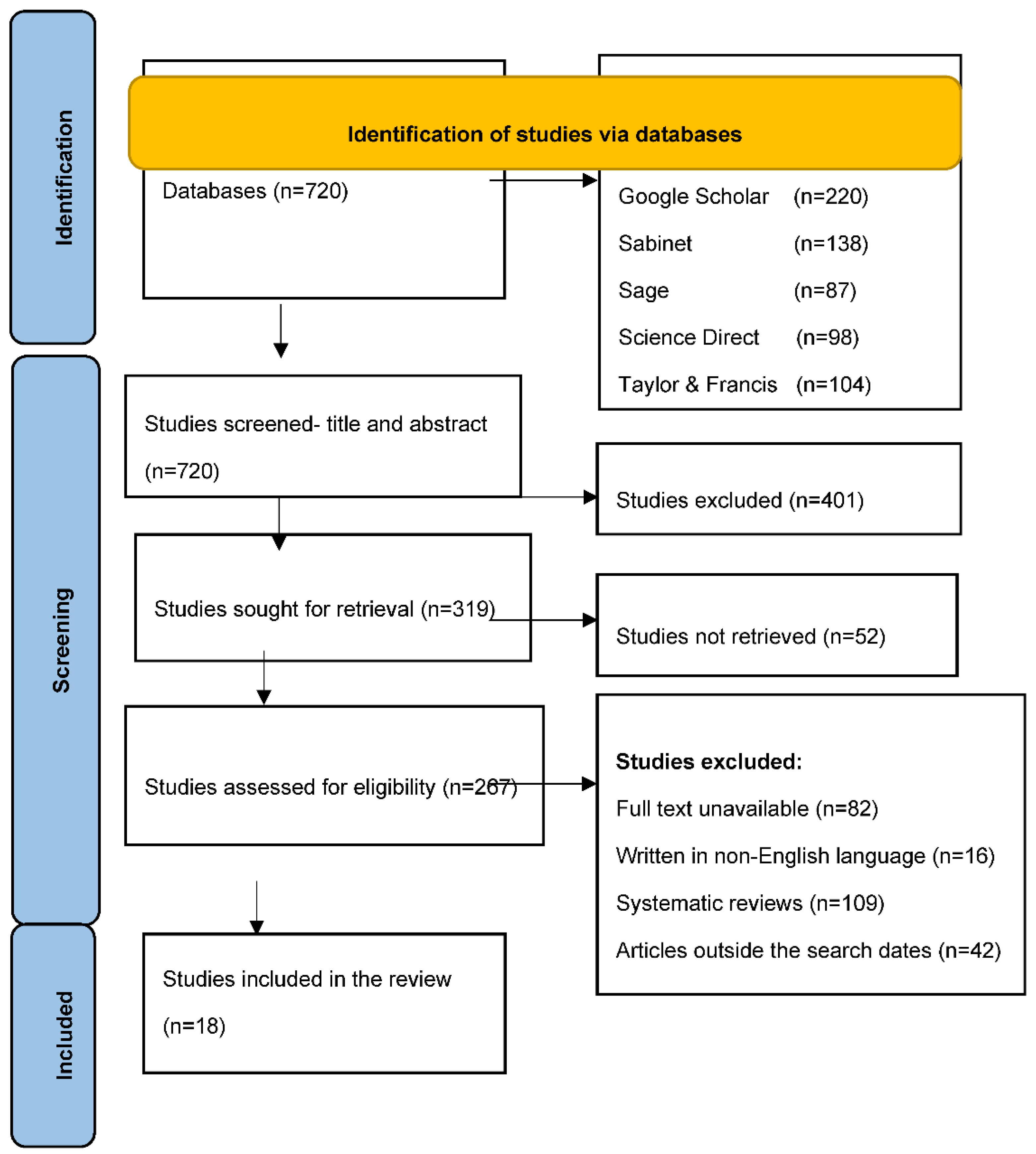
Studies sought after the title and abstract screening process were selected for full-text review, while those lacking sufficient relevance and methodological approach were excluded. The full-text review screening process was conducted to ensure that only the most relevant and accessible studies were included in the final analysis. Some studies were excluded due to several reasons. First, studies were removed if their full text was unavailable (n=82), as they could not be fully assessed for relevance and quality. Additionally, articles written in non-English languages (n=16) were excluded to maintain consistency in language comprehension. Systematic reviews (n=109) were also excluded to avoid duplication of findings and ensure that only primary research studies were considered. Lastly, studies published over 15 years ago were excluded to ensure that only recent and relevant literature was included. After the screening process, total (n=18) articles were retained for data analysis. Four other data sources were included as part of grey literature (annual reports (n=1), government websites (n=1), and university websites (n=2). Figure 1 below indicates the process followed in the identification of studies.
3.4. Data Analysis
Thematic coding was applied to categorise strategies and best practices in bridging the gap in STEM education and profession, providing a foundation for actionable recommendations.
Table 2.
Studies included in the review.
| Title | Authors | Year | Objective | Methods | Findings |
|---|---|---|---|---|---|
| Patterns of Persistence Among Engineering Students | Bengesai & Pocock | 2021 | To examine patterns of persistence in engineering education in South Africa | Quantitative: Descriptive statistics and decision tree analysis | Persistence rates were shaped by gender, race, financial aid, and admission points |
| Curriculum Bridging the Gap between Secondary and Higher STEM Education – The Case of STEM school | De Meester et al. | 2020 | To examine ways to close the gap between secondary and higher STEM education to ensure an adequate number of well-prepared and qualified students enrolling in STEM programs at the tertiary level | Quantitative: Quasi-experimental | The study found that integrating STEM subjects authentically, as seen in real-world challenges, enhances understanding and fosters creativity, inquiry, and collaboration among students and teachers. |
| Gender Bias Produces Gender Gaps in STEM Engagement | Moss-Racusin et al. | 2018 | To explore the impact of gender bias on STEM engagement | Experimental: Simulated scenarios | Gender bias diminishes women's sense of belonging and lowers their aspirations in STEM fields. |
| Analysis of barriers supports and the gender gap in the choice of STEM studies in secondary education | Merayo & Ayuso | 2022 | To analyse gender disparities in STEM education, | Quantitative: Chi-square and Lambda tests | Boys receive more encouragement toward STEM careers, while girls lean toward health and education fields. The lack of visibility of female scientists reinforces the perception of physics as a male-dominated field. |
| Challenging gender stereotypes: Young women's views on female role models in secondary school science textbooks | Lindner & Makarova | 2024 | To investigate the effects of gender disparity in physics teaching materials on female students aged 15 to 18 and to assess the significance they attribute to female role models in their learning experience. | Qualitative: Interviews | The lack of awareness of female scientists among female students reinforces the perception of physics as a male-dominated field. |
| STEM education and the gender gap: Strategies for encouraging girls to pursue stem careers | Warsito, et al |
2023 | To investigate the reasons women often steer away from STEM careers and to identify effective strategies for increasing their participation and engagement in STEM fields. | Qualitative: Interviews | The study highlights key factors for increasing women's participation in STEM: (1) early exposure, (2) positive role models, (3) an inclusive and supportive learning environment, and (4) active efforts to eliminate gender bias and stereotypes. |
| Gender gap in STEM education and career choices: what matters? | Tandrayen-Ragoobur & Gokulsing | 2022 | To explore how a combination of personal, environmental, and behavioural factors may impact engagement and participation in STEM education and careers. | Mixed methods | The results indicate a gender disparity in STEM degree choices, with female students being less likely to enroll in STEM programs compared to their male counterparts. |
| Overcoming the STEM Gender Gap: from School to Work | Cavaletto & Berra | 2020 | To establish best practices aimed at closing the gender gap in STEM, both in education and the workforce, ensuring greater inclusion and representation for women in these fields. | Mixed methods | The study highlights a gap between perception and reality, showing that the imagined labor market differs significantly from actual workforce conditions. |
| Challenging Media Stereotypes of STEM: Examining an Intervention to Change Adolescent Girls' Gender Stereotypes of STEM Professionals | Steinke & Duncan | 2023 | To evaluate the effectiveness of a media-based intervention in reducing gender-STEM stereotypes among adolescent girls and enhancing their awareness of STEM career opportunities. | Mixed methods | Quantitative and qualitative data confirm positive shifts in adolescent girls' perceptions of women in STEM professions. |
| Black African Women in Engineering Higher Education in South Africa Contending with History, Race, and Gender | Mlambo | 2021 | To investigate how race and gender, shaped by historical and national contexts, impact the career decisions of Black women engineers in South Africa, leading them to pursue industry roles over academic careers. | Qualitative: Interviews | Black African women remain underrepresented in South African engineering academia, where faculty remains predominantly white and male despite efforts to increase Black student access. |
| "A Bridge Between High School and College": A Case Study of a STEM Intervention Program Enhancing College Readiness Among Underserved Students | Lane, Morgan, & Lopez | 2017 | To assess the impact of a STEM intervention program in helping underserved students overcome academic challenges and gain context-specific knowledge necessary for success in STEM fields | Qualitative: Case study | Findings identified nine key practices that enhanced students' readiness for the STEM curriculum and college expectations |
| Increasing Student Engagement, Fraction Knowledge, and STEM Interest Through Game-Based Intervention |
Hunt, Taub, Marino, Holman, & Womack-Adams |
2025 | To assess the impact of a game-based supplemental fraction curriculum on student engagement, fraction comprehension, and STEM interest in inclusive elementary mathematics classrooms. | Quantitative: Experimental pretest-post-test | These findings underscore the potential of game-based learning in mathematics education for foundational STEM concepts, advocating for further research on scalability and broader application |
| Girls in STEM: Is It a Female Role-Model Thing? |
González-Pérez, de Cabo & Sáinz | 2020 | To examine the impact of female role models on girls' interest and preferences for STEM education and careers. | Quantitative: Experimental pretest-post-test | The role-model intervention positively impacts math enjoyment, perceived importance, success expectations, and girls' STEM aspirations while reducing gender stereotypes. |
| The Impact of Female Role Models Leading a Group Mentoring Program to Promote STEM Vocations among Young Girls |
Guenaga, Eguíluz, Garaizar & Mimenza | 2022 | To evaluate the impact of a group mentoring initiative led by a female STEM role model on participants' perceptions and experiences, while examining gender-based differences in its effects. | Quantitative: Experimental pretest-post-test | The program influenced students' attitudes toward technology, expanded their awareness of female STEM figures, and improved their perceptions of science and technology careers. The impact was stronger among girls, though they still showed lower enthusiasm for technology compared to boys. |
| The impact of longitudinal stem careers introducing Intervention on students' career aspirations and on Relating occupational images |
Kotkas & Rannikmäe | 2019 | To investigate the impact of a two-year STEM-career intervention on middle school students and their perceptions of the competence needed for their desired careers. | Quantitative: longitudinal pre- & post-test experimental-control group design |
The study found that integrating career education into science teaching positively supports students' aspirations in STEM fields. |
| Enhancing 21st-Century Skills, STEM Attitudes, and Career Interests Through STEM-Based Teaching: A Primary School Intervention Study | Çalişkan & Pehlivan | 2024 | To examine how STEM-based teaching influences students' 21st-century skills, attitudes toward STEM, and their interest in pursuing careers in STEM fields. | Quantitative: Experimental pretest-post-test | Posttest results showed improvement in students' 21st-century skills, STEM attitudes, and career interest, with the highest gains in career awareness over other skills like critical thinking, innovation, and leadership. |
| Gender gap in STEM education and career choices: what matters? | Tandrayen-Ragoobur, & Gokulsing | 2021 | To assess the gender gap in STEM tertiary education and career | Mixed methods approach | The study found that parental and teacher support significantly increases young women's likelihood of enrolling in STEM higher education compared to males. |
| Exploring the Challenges of Teaching and Learning of Scarce Skill Subjects in Selected South African High Schools | Dlamini et al | 2021 | To explore the perspectives of teachers on learners' performance in scarce skill subjects. | Qualitative: Semi-structured interviews | Overcrowded classrooms, inadequate infrastructure, and insufficient teacher appointments contributed to poor academic performance in scarce skill subjects. |
4. Discussion
This section examines key strategies for bridging gaps in STEM education and increasing participation, particularly among underrepresented groups. It explores different interventions from the literature, including how role models and mentorship programs can inspire students, especially young women, to envision themselves in STEM careers. Additionally, it discusses the role of high school initiatives in creating clear pathways for students to transition successfully into STEM fields, ensuring early exposure and support. The discussion also highlights the importance of professional development for educators, emphasising the need for well-trained teachers to deliver engaging and effective STEM instruction. It also highlights the impact of practical and experiential learning, which allows students to connect theoretical concepts with real-world applications, fostering deeper understanding and long-term interest. Moreover, the role of parental involvement is examined, recognising family support as a critical factor in encouraging girls to pursue STEM education and careers. By addressing these interconnected elements, this discussion provides valuable insights into effective strategies for strengthening STEM education, broadening participation, and developing a more diverse and skilled workforce.
4.1. Promoting Role Models
Role models are pivotal in shaping career aspirations, particularly for young women who face societal and cultural barriers to pursuing STEM fields. Moss-Racusin, Sanzari, Caluori and Rabasco (2018) emphasise that visible representation of successful women in STEM can help dismantle stereotypes and challenge the notion that STEM careers are male domains. Research by Merayo and Ayuso (2022) stressed the importance of role models in motivating female students. Their study found that women who had access to female lecturers or professionals in STEM were more likely to persist in their studies, as they could envision themselves succeeding in similar roles. This aligns with global findings, such as those by Dasgupta and Stout (2014), who highlight the stereotype inoculation effect when women see others like them succeeding in STEM, which then reduces the impact of negative stereotypes and fosters self-confidence. Similarly, González-Pérez, Mateos de Cabo & Sáinz (2020) found that promoting role models is an effective strategy to encourage females to pursue STEM education. Lindner & Makarova (2024) asserted that role models in STEM expose young girls to individuals who are successful in the STEM field, which motivates young girls. Tandrayen-Ragoobur and Gokulsing (2022) added that female role models could be promoted by contextualising or using the achievements of females in STEM as case studies to shift the learners' views on the negative conceptions of STEM education. This was also said to have the potential to broaden girls' vision about the STEM profession in the modern world.
4.2. Mentorship Programmes
Mentorship provides young women with the guidance, encouragement, and resources needed to navigate the challenges of STEM careers. Lindner and Elena Makarova (2024) advocate for structured mentorship programs that pair female students with experienced professionals, providing a platform for career advice, networking, and emotional support. This is particularly critical in South Africa, where women in STEM often face isolation and a lack of support in male-dominated environments. The literature indicates that mentorship helps women overcome barriers such as workplace discrimination, lack of career advancement opportunities, and work-life balance challenges (Cavaletto & Berra, 2020; Lindner & Makarova, 2024; Tandrayen-Ragoobur & Gokulsing, 2022; Warsito, Siregar & Rosli, 2023). Mentors not only provide practical advice but also act as advocates for their mentees, helping them gain visibility and access to opportunities (Tandrayen-Ragoobur & Gokulsing, 2022). Furthermore, mentorship programs can address the issue of retention, as women are less likely to leave STEM fields when they feel supported and valued (Çalışkan & Şenler, 2024; Steinke & Duncan, 2023).
Several South African initiatives demonstrate the efficacy of mentorship and role models in promoting gender equality in STEM. The Department of Science and Innovation's (DSI) Women in Science Awards program celebrates female achievements in STEM, creating visibility for role models who inspire the next generation (Department of Science and Innovation, 2024). South African universities have also made progress in implementing mentorship programmes in the STEM field to bridge gender gaps. The University of Pretoria (UP), through its community engagement initiatives, has made significant strides in promoting STEM education among learners from underprivileged township and rural schools. One of its notable efforts is the Joint Community Projects (JCP) module, where students from the Faculty of Engineering, Built Environment, and Information Technology (EBIT) dedicate their time and expertise to mentor and teach these learners (University of Pretoria, 2025). The program focuses on igniting interest in Science, Technology, Engineering, and Mathematics (STEM) careers, providing learners with the foundational knowledge and encouragement needed to pursue opportunities in these fields (University of Pretoria, 2025).
Another successful mentorship and role model program in South Africa is the Targeting Talent Program (TTP), a flagship initiative by the Student Equity and Talent Management Unit (SETMU) at the University of the Witwatersrand. SETMU was established to promote gender equity in STEM and provide mentorship, career guidance, and exposure to young women interested in pursuing science and technology careers from disadvantaged communities (SETMU Annual Report, 2022). The TTP identifies high-potential female students from underprivileged backgrounds and equips them with resources, mentorship, and access to STEM opportunities. The program pairs high school learners with university mentors and STEM academics, fostering a strong support system that inspires and prepares them for success. Additionally, SETMU organises workshops and winter camps where students engage with role models from various STEM fields, helping to demystify the challenges of STEM careers and showcase the achievements of women in science and engineering. By creating an inclusive and supportive environment, SETMU has played a crucial role in increasing female enrollment and retention in STEM disciplines at Wits University and beyond (SETMU Annual Report, 2022). These initiatives demonstrate the effectiveness of mentorship programs and their potential for broader implementation within the South African context.
4.3. Initiatives to Improve STEM Education at High School Level
De Meester et al. (2020) found that a collaboration between secondary schools and universities can make a difference in STEM education. The collaboration can create a platform where university lecturers and educators share ideas, improve teaching methods, and create better ways to help students learn (Merayo & Ayuso, 2022). This collaboration can also help educators try new ways of teaching while also using proven strategies that work (De Meester et al., 2020; Merayo and Ayuso, 2022). When all stakeholders, including educators, higher education representatives, and policymakers, are brought together with a clear vision of the goals and strategies for STEM education, a momentum for meaningful change can be established, and such an approach can ensure that everyone involved understands their role and is motivated to contribute to improving STEM education (De Meester et al., 2020; Lindner & Elena Makarova, 2024; Merayo and Ayuso, 2022).
Various institutions have launched programs designed to bridge gaps in STEM access, exposure, and support for underprivileged students. Each of these programs plays a unique role in strengthening STEM education and improving representation in STEM careers. Nelson Mandela University (NMU) has proactively improved STEM education through its STEM in ACTION initiative (Nelson Mandela University, 2025). This program directly supports learners and educators by offering experimental learning and e-learning opportunities to enhance STEM understanding. It primarily targets underprivileged schools, equipping students with the knowledge and confidence needed to improve their National Senior Certificate results and pursue careers in STEM (Nelson Mandela University, 2025). NMU STEM in Action drives the Selected Learner Project (SLP), which focuses on academically strong Grade 9 learners, preparing them for future engineering studies (Nelson Mandela University, 2025). The program provides academic support, mentorship, and exposure to STEM careers to ensure students develop the skills and motivation to pursue STEM fields (Nelson Mandela University, 2025). The literature indicates that early STEM interventions significantly increase students' likelihood of choosing STEM careers (De Meester et al., 2020; Lindner & Elena Makarova, 2024; Merayo and Ayuso, 2022). In South Africa, where socio-economic challenges often hinder access to quality education, early interventions can play a role in bridging the gap by offering talented learners the resources and opportunities they might otherwise lack (Mlambo, 2021).
A major barrier to STEM education in South Africa is the lack of proper facilities and trained educators, especially in disadvantaged areas (Dlamini et al., 2021). Many students in these regions do not have access to functional laboratories, preventing them from gaining practical STEM experience (Dlamini et al., 2021). The SSP addresses this challenge by offering students hands-on exposure to experiments, helping them develop problem-solving skills essential for STEM fields.
4.4. Professional Development of Educators
Tandrayen-Ragoobur & Gokulsing (2022) suggested that educators could do much to encourage girls towards STEM at an early age. They shared that gender stereotypes begin in the classroom, where educators can discourage negative biases. According to Tandrayen-Ragoobur and Gokulsing (2022), to bridge the gap in STEM, proper teacher training is necessary to understand how to engage and empower young women. They also stress that schools should foster an environment in which girls feel encouraged, capable, and welcome in STEM programs. Tandrayen-Ragoobur & Gokulsing (2022) state that when girls see STEM as something they can relate to and succeed in, they are far more likely to explore these fields confidently. The more females are exposed to hands-on science, technology, and problem-solving, the more likely they are to see themselves thriving in STEM education and profession. At the heart of it, representation, encouragement, and the right support can turn STEM from an intimidating field into a field full of possibilities for young women. Similarly, Bengesai and Pocock (2021) argued that the state of career counselling in South Africa is fundamentally inadequate and contributes to the high dropout rate in STEM programmes. Bengesai and Pocock (2021) further stated that specialised training for educators and lecturers in career counselling could improve educators' ability to provide students with tailored guidance that aligns with their skills and interests.
4.5. Practical and Experiential Learning
Hunt, Taub, Marino, Holman, and Womack-Adams (2025) highlight the importance of providing hands-on STEM exploration opportunities activities such as coding clubs, robotics clubs, and science–art summer camps that can spark girls' interest in science and technology. Unlike traditional classroom learning, these activities focus on creativity and engagement rather than grades, allowing girls to experience STEM as a fun and expressive hobby rather than a purely academic obligation (Lane, Morgan, & Lopez, 2020; Dasgupta & Stout, 2014). For example, teaching coding empowers children to bring their ideas to life by developing an app, designing digital art, creating wearable technology, or building robots to address real-world challenges (Dasgupta & Stout, 2014). However, a one-size-fits-all approach is ineffective, as girls may be drawn to STEM for different reasons. While some may enjoy programming a robot, others may prefer using coding for music, medical technology, or artistic expression. This diversity of interests underscores the need to align STEM activities with girls' existing passions, ensuring that engagement is both meaningful and inclusive (Dasgupta & Stout, 2014).
Dasgupta and Stout (2014) further argue that collaboration between K-12 schools and science and technology museums creates powerful learning experiences by bridging abstract classroom concepts with real-world applications. Museums offer interactive demonstrations that illustrate how science and technology address real-world challenges, highlighting STEM fields' collaborative and altruistic nature. These experiences help students recognise the societal impact of STEM, making the subjects more relatable and inspiring. However, they propose that for museum visits to be truly effective, they must be strategically integrated with students' STEM curriculum. Aligning museum experiences with classroom learning ensures that students can reinforce and apply the concepts they encounter, maximising the educational value of these engagements.
5. Parental Involvement
Parental support in informal STEM activities significantly influences students' interest and performance in these fields. Research highlights the importance of partnerships between parents and schools to encourage and sustain children's engagement with STEM subjects and careers (Dlamini et al., 2021; Steinke & Duncan, 2023; Tandrayen-Ragoobur & Gokulsing, 2022; Warsito et al., 2023). Dasgupta and Stout (2014) highlight that parents play a crucial role in fostering their children's interest in STEM by encouraging participation in enrichment activities beyond the classroom. These activities provide valuable opportunities for children and adolescents to engage with science and technology in meaningful ways, expanding their exposure and sparking curiosity in STEM fields.
Tandrayen-Ragoobur and Gokulsing (2022) argue that challenging stereotypes about females' abilities in STEM must begin at home, with parents playing a vital role in shaping young girls' perceptions of science and technology. By fostering a positive mindset and encouraging a shift in attitudes among both parents and teachers, misconceptions about STEM fields can be dismantled, making it easier for young women to see themselves in STEM careers. Early intervention is crucial, as girls who develop negative perceptions about STEM at a young age are likelier to avoid these subjects (Dlamini et al., 2021; Warsito et al., 2023).
Tandrayen-Ragoobur and Gokulsing (2022) highlight parental support as a key factor in increasing female enrollment in STEM higher education. They state that parents should not solely rely on schools and teachers to guide their children toward STEM; instead, they should actively seek opportunities beyond the classroom to nurture their interest in science and technology. Engaging in extracurricular STEM activities, such as visits to science museums, zoos, scouting organisations, STEM clubs, and summer programs, can spark curiosity and sustain interest (Steinke & Duncan, 2023; Tandrayen-Ragoobur and Gokulsing, 2022). Additionally, parents can help by connecting their daughters with mentors who can guide and support them. This is particularly valuable in male-dominated fields such as engineering, where mentorship benefits aspiring young women and provides ongoing support to those already navigating STEM careers. By actively fostering STEM engagement, parents can equip young girls with the confidence and inspiration needed to thrive in STEM professions.
6. Conclusion
This study reviewed the literature to identify challenges and interventions for bridging the gender gap in STEM in South Africa. The findings reveal that socio-cultural norms, exclusionary workplace cultures, educational barriers, and limited participation opportunities continue to hinder women's entry and advancement in STEM fields. Additionally, workplace inequalities, such as biased hiring practices and restricted career advancement opportunities, further reinforce gender disparities. To address these challenges, various interventions have been identified. Promoting role models and mentorship programs has proven effective in inspiring young women to pursue STEM careers. High school initiatives to strengthen STEM education and create accessible pathways for female students are also crucial in increasing participation. Furthermore, professional development for educators ensures that teachers are well-equipped to deliver inclusive and supportive STEM instruction.
Practical and experiential learning opportunities such as STEM clubs, hands-on workshops, and industry collaborations allow students to apply theoretical knowledge in real-world settings, making STEM subjects more engaging and relatable. Additionally, parental involvement plays a significant role in shaping students’ aspirations, and fostering family support for young girls in STEM can help break down gender biases that discourage participation. While these interventions offer promising solutions, their long-term success depends on sustained implementation, policy support, and institutional commitment. A coordinated effort among educators, policymakers, industry leaders, and families is essential to creating an inclusive STEM ecosystem that empowers women and strengthens South Africa’s STEM workforce.
7. Recommendations
Based on the findings from the systematic review of gender disparities in STEM in South Africa, the following recommendations are proposed to address key challenges and promote greater inclusion of women in STEM fields:
- To strengthen STEM education and early exposure, ECSA must advocate for STEM curriculum enhancements in collaboration with the Department of Basic Education and engineering companies.
- To promote the visibility of successful women in STEM, ECSA must establish a mentorship framework to support young engineering females.
- To promote diversity in hiring and career advancement, ECSA must encourage industry compliance with gender equity in engineering firms through policy recommendations and professional standards.
- To address socio-cultural barriers, ECSA must collaborate with government and civil society to promote gender-inclusive STEM education and professional practice policies.
- To improve access to STEM technology for hands-on learning, ECSA must work with engineering firms and universities to develop internship and experiential learning programs for aspiring female engineers.
- To increase scholarships and financial support for women pursuing STEM degrees, ECSA must lead policy advocacy efforts to influence national strategies on STEM gender equity and monitor industry compliance.
References
- Ahn, J.N., M. Luna-Lucero, and M. Lamnina. (2016) Motivating Students' STEM Learning Using Biographical Information. International Journal of Designs for Learning, 7(1). [CrossRef]
- Ayar, M. C. (2015). First-hand Experience with Engineering Design and Career Interest in Engineering: An Informal STEM Education Case Study. Educational Sciences: Theory and Practice, 15(6), 1655-1675.
- Banchefsky, S., & Park, B. (2018). Negative gender ideologies and gender-science stereotypes are more pervasive in male-dominated academic disciplines. Social Sciences, 7(2), 27. [CrossRef]
- Bengesai, A. V., & Pocock, J. (2021). Patterns of persistence among engineering students at a South African university: A decision tree analysis. South African Journal of Science, 117(3-4), 1-9. [CrossRef]
- Burke, & Simmons, 2020; Dengate, Peter, Farenhorst, & Franz-Odendaal, 2019; Robinson, McGee, Bentley, Houston & Botchway, 2016).
- Burke, P. R., & Simmons, K. (2020). Beating the odds: Winning strategies of women in STEM. Center for Creative Leadership.
- Çalışkan, C., & Şenler, B. (2024). Enhancing 21st-Century Skills, STEM Attitudes, and Career Interests Through STEM-Based Teaching: A Primary School Intervention Study. International Primary Education Research Journal, 8(2), 221-232.
- Cavaletto, G. M., & Berra, M. (2020). Overcoming the stem gender gap: From school to work. Italian Journal of Sociology of Education, 12(Italian Journal of Sociology of Education 12/2), 1-21. [CrossRef]
- Dahiya, K. (2024). A Review on Gender Stereotypes and Career Preferences Among Students. Library of Progress-Library Science, Information Technology & Computer, 44(1).
- Dasgupta, N., & Stout, J. G. (2014). Girls and women in science, technology, engineering, and mathematics: STEMing the tide and broadening participation in STEM careers. Policy Insights from the Behavioral and Brain Sciences, 1(1), 21-29.
- Department of Science and Innovation. (2024). Department of Science and Innovation honours the best and brightest in science at the 2024 South African Women in Science Awards. Accessed from: https://www.dsti.gov.za/index.php/media-room/latest-news/4351-department-of-science-and-innovation-honours-the-best-and-brightest-in-science-at-the-2024-south-african-women-in-science-awards#:~:text=The%20Department%20of%20Science%20and,(STEMI)%20in%20South%20Africa. Date Accessed: 2 February 2025.
- De Meester, J., Boeve-de Pauw, J., Buyse, M. P., Ceuppens, S., De Cock, M., De Loof, H.,... & Dehaene, W. (2020). Bridging the Gap between Secondary and Higher STEM Education–the Case of STEM@ school. European Review, 28(S1), S135-S157. [CrossRef]
- Dengate, J., Peter, T., Farenhorst, A., & Franz-Odendaal, T. (2019). Selective incivility, harassment, and discrimination in Canadian sciences & engineering: A sociological approach. International Journal of Gender, Science and Technology, 11(2), 332-353.
- Dlamini, S. D., Gamede, B. T., & Ajani, O. A. (2021). Exploring the challenges of teaching and learning of scarce skills subjects in selected South African high schools. International Journal of Innovation, Creativity, and Change, 15(9), 200-217.
- Engineering Council of South Africa. 2024. Annual report. Accessed from: Date Accessed: 28 January 2025.
- Engineering Profession Act, 46 of 2000.
- González-Pérez, S., Mateos de Cabo, R., & Sáinz, M. (2020). Girls in STEM: Is it a female role-model thing?. Frontiers in psychology, 11, 564148. [CrossRef]
- Guenaga, M., Eguíluz, A., Garaizar, P., & Mimenza, A. (2022). The impact of female role models leading a group mentoring program to promote STEM vocations among young girls. Sustainability, 14(3), 1420. [CrossRef]
- Hunt, J. H., Taub, M., Marino, M., Holman, K., & Womack-Adams, K. (2025). Increasing Student Engagement, Fraction Knowledge, and STEM Interest Through Game-Based Intervention. Journal of Special Education Technology, 0(0). [CrossRef]
- Kotkas, T., Holbrook, J., & Rannikmäe, M. (2019). The impact of longitudinal stem careers introducing intervention on students' career aspirations and on relating occupational images. In EduLearn19 Proceedings (pp. 1678-1686). IATED.
- Lane, T. B., Morgan, K., & Lopez, M. M. (2020). "A Bridge Between High School and College": A Case Study of a STEM Intervention Program Enhancing College Readiness Among Underserved Students. Journal of College Student Retention: Research, Theory & Practice, 22(1), 155-179. [CrossRef]
- Letsoalo, M. E., Masha, J. K., & Maoto, R. S. (2019). The overall performance of Grade 12 mathematics and physical science learners in South Africa's Gauteng Province. African Journal of Gender, Society & Development, 8(1), 9. [CrossRef]
- Lindner, J., & Makarova, E. (2024). Challenging gender stereotypes: Young women's views on female role models in secondary school science textbooks. International Journal of Educational Research Open, 7, 100376. [CrossRef]
- Manavathu, M., & Zhou, G. (2012). The impact of differentiated instructional materials on English language learner (ELL) students' comprehension of science laboratory tasks. Canadian Journal of Science, Mathematics and Technology Education, 12(4), 334-349. [CrossRef]
- Master, A. H., & Meltzoff, A. N. (2020). Cultural stereotypes and sense of belonging contribute to gender gaps in STEM. Grantee Submission, 12(1), 152-198.
- Matshidze, P., Kugara, S. L., & Mdhluli, T. D. (2017). Human rights violations: probing the cultural practice of ukuthwala in KwaZulu-Natal Province, South Africa. Gender and Behaviour, 15(2), 9007-9015.
- Merayo, N., & Ayuso, A. (2023). Analysis of barriers, supports and gender gap in the choice of STEM studies in secondary education. International Journal of Technology and Design Education, 33(4), 1471-1498. [CrossRef]
- Mkhize, G., & Vilakazi, F. (2021). Rethinking gender and conduits of control: A feminist review. Image & Text, (35), 1-22. [CrossRef]
- Mkhize, Z. (2023). Is it transformation or reform? The lived experiences of African women doctoral students in STEM disciplines in South African universities. Higher Education, 86(3), 637-659. [CrossRef]
- Mlambo, Y. A. (2021). Black African women in engineering higher education in South Africa: Contending with history, race, and gender. In Gender Equity in STEM in Higher Education International Perspectives on Policy, Institutional Culture, and Individual Choice (pp. 160-176). Routledge.
- Moore, K. K. (2024). Resilience in the face of sexism: attracting, retaining, and promoting women and girls in STEM (Doctoral dissertation, Pepperdine University).
- Moss-Racusin, C. A., Sanzari, C., Caluori, N., & Rabasco, H. (2018). Gender bias produces gender gaps in STEM engagement. Sex Roles, 79(11), 651-670. [CrossRef]
- Nelson Mandela University. (2025). Change the world: STEM in ACTION. Accessed from: https://steminaction.mandela.ac.za/projects Date accessed: 3 February 2025.
- Nkosi, M. (2014). Ukuthwala "bride abduction" and education: critical challenges and opportunities faced by school principals in rural Kwazulu-Natal. Journal of Social Sciences, 41(3), 441-454. [CrossRef]
- Pollack, E. (2015). The Only Woman in the Room: Why Science Is Still a Boys' Club. Boston: Beacon Press.
- Rainey, K., Dancy, M., Mickelson, R., Stearns, E., & Moller, S. (2018). Race and gender differences in how sense of belonging influences decisions to major in STEM. International journal of STEM education, 5, 1-14. [CrossRef]
- Reinking, A., & Martin, B. (2018). The gender gap in STEM fields: Theories, movements, and ideas to engage girls in STEM. Journal of new approaches in educational research, 7(2), 148-153.
- Robinson, W. H., McGee, E. O., Bentley, L. C., Houston, S. L., & Botchway, P. K. (2016). Addressing negative racial and gendered experiences that discourage academic careers in engineering. Computing in Science & Engineering, 18(2), 29-39. [CrossRef]
- Ruder, B., Plaza, D., Warner, R., & Bothwell, M. (2018). STEM women faculty struggling for recognition and advancement in a "men’s club” culture. Exploring the toxicity of lateral violence and microaggressions: Poison in the water cooler, 121-149.
- Saxton, E., Burns, R., Holveck, S., Kelley, S., Prince, D., Rigelman, N., & Skinner, E. A. (2014). A common measurement system for K-12 STEM education: Adopting an educational evaluation methodology that elevates theoretical foundations and systems thinking. Studies in Educational Evaluation, 40, 18-35. [CrossRef]
- Sedebo*, G. T., Shafi, A. A., Muchie, M., & Shatalov, M. Y. (2024). Inclusive STEM education to fight poverty and inequality: The case of South Africa. African Journal of Science, Technology, Innovation and Development, 1-9. [CrossRef]
- Sikhosana, H., Malatji, H., & Munyoro, A. (2023). Experiences and challenges of black women enrolled in a STEM field in a South African urban university: A qualitative study. Cogent Education, 10(2), 2273646. [CrossRef]
- Smith, K. N., & Gayles, J. G. (2018). “Girl power”: Gendered academic and workplace experiences of college women in engineering. Social sciences, 7(1), 11. [CrossRef]
- Steinke, J., & Duncan, T. (2023). Challenging media stereotypes of STEM: Examining an intervention to change adolescent girls’ gender stereotypes of STEM professionals. International Journal of Gender, Science and Technology, 15(2), 136-165.
- Student Equity And Talent Management Unit. (2022). Annual Report. Accessed from: https://www.wits.ac.za/media/wits-university/students/setmu/documents/setmu-annual-report2022.pdf Date Accessed: 04 February 2025.
- Kotkas, J. Holbrook, M. Rannikmäe (2019). The impact of longitudinal stem careers introducing intervention on students´ career aspirations and on relating occupational images. The 11th International Conference on Education and New Learning Technologies Proceedings, pp. 1678-1686.
- Tandrayen-Ragoobur, V., & Gokulsing, D. (2022). Gender gap in STEM education and career choices: what matters?. Journal of Applied Research in Higher Education, 14(3), 1021-1040. [CrossRef]
- United Nations Educational, Scientific and Cultural Organization. (2024). What You Need to Know about the Challenges of STEM in Africa. Accessed from: https://www.iicba.unesco.org/en/what-you-need-know-about-challenges-stem-africa Date Accessed: 03 February 2025.
- United Nations Children’s Fund. 2021. Towards Ending Child Marriage: Global trends and profiles of progress, UNICEF, New York.
- University of Pretoria. (2025). Community Project Module: Joint Community-Based Project (JCP). Accessed from: https://www.up.ac.za/community-project-module/article/3029594/preview?module=cms&slug=content-pages&id=3029594 Date Accessed: 05 February 2025.
- Warsito, W., Siregar, N. C., & Rosli, R. (2023). STEM education and the gender gap: Strategies for encouraging girls to pursue STEM careers. Prima: Jurnal Pendidikan Matematika, 7(2), 191-205. [CrossRef]
- Xu, C., & Lastrapes, R. E. (2022). Impact of STEM sense of belonging on career interest: The role of STEM attitudes. Journal of Career Development, 49(6), 1215-1229. [CrossRef]
Figure 1.
PRISMA flow diagram on the identification of articles.
Disclaimer/Publisher’s Note: The statements, opinions and data contained in all publications are solely those of the individual author(s) and contributor(s) and not of MDPI and/or the editor(s). MDPI and/or the editor(s) disclaim responsibility for any injury to people or property resulting from any ideas, methods, instructions or products referred to in the content. |
© 2025 by the authors. Licensee MDPI, Basel, Switzerland. This article is an open access article distributed under the terms and conditions of the Creative Commons Attribution (CC BY) license (http://creativecommons.org/licenses/by/4.0/).
Copyright: This open access article is published under a Creative Commons CC BY 4.0 license, which permit the free download, distribution, and reuse, provided that the author and preprint are cited in any reuse.


