
Submitted:
16 April 2025
Posted:
17 April 2025
You are already at the latest version
Abstract
The rise of antimicrobial resistance poses a significant challenge to global health, necessitating the exploration for novel antimicrobial agents. Eucalyptus species, widely used in traditional African medicine, have shown promise in this regard. This systematic review investigates the antimicrobial potential of Eucalyptus species used in Africa. A systematic search was conducted via PubMed, Scopus, and Embase for African studies investigating the antimicrobial potential of Eucalyptus using the query: "Eucalyptus" AND ("Antimicrobial" OR "Antibacterial") AND (list of African countries). A total of 585 studies were retrieved and exported to Mendeley Desktop for de-duplication. Based on the Preferred Reporting Items for Systematic Reviews and Meta-Analyses (PRISMA) criteria, only African research on the antibacterial activity of eucalyptus were included in the selection of studies. The included studies covered nine (9) countries across various regions in Africa, and twenty (20) Eucalyptus species with the most frequently studied species being Eucalyptus globulus, Eucalyptus camaldulensis, and Eucalyptus torelliana. The Eucalyptus extracts were reported to exhibits good inhibitory actions against a wide range of microorganisms. The findings emphasize the importance of species selection and extraction methods in maximizing antimicrobial efficacy and calls for their exploitation as therapeutic agents in various biomedical applications.
Keywords:
Antimicrobial potential
; Traditional medicine
; Bioactive compounds
Introduction
Antimicrobial resistance is a growing worldwide health concern, presenting a serious risk to the efficient management of infectious illnesses (Salam et al., 2023; Prestinaci et al., 2015). The World Health Organization (WHO) has highlighted antimicrobial resistance as one of the ten most critical global public health threats confronting humanity (WHO, 2018). This alarming rise in resistance is primarily driven by the overuse and abuse of antibiotics, leading to the evolution of pathogens that are resistant to many antibiotics (Ahmed et al., 2024; Muteeb et al., 2023). Therefore, the search for novel antimicrobial drugs that are capable of successfully combating resistant forms of microbes is urgently needed.
Traditional medicine has long been a valuable resource in the search for new therapeutic agents (Fokunang et al., 2011; Yuan et al., 2016). Throughout the world, in numerous countries, particularly in Africa, plants are used extensively in traditional medicine to manage various ailments, including infectious diseases. Among these plants, Eucalyptus species are notable for their widespread use and reported antimicrobial properties (Aleksic Sabo & Knezevic, 2019; Tyagi & Malik, 2011; Salvatori et al., 2023; Sebei et al., 2015). Eucalyptus, a genus of over 700 species native to Australia (Rehman et al., 2015) but widely cultivated in Africa, has been traditionally used for its medicinal properties, including its ability to treat respiratory infections, skin conditions, and other ailments.
Previous studies have highlighted the antimicrobial potential of various Eucalyptus species, attributing their efficacy to a range of bioactive compounds (Chandorkar et al., 2021; Nasir Shah et al., 2023; Nortjie et al., 2024). These compounds include tannins, flavonoids, terpenoids, alkaloids, and essential oils, which have demonstrated activity against a variety of microbial pathogens. Despite the potential of this plant, comprehensive reviews specifically focusing on the antimicrobial potential of Eucalyptus species used in Africa are limited.
This study aimed to systematically review and analyze the available evidence on the antimicrobial potential of Eucalyptus species used in Africa.
Methods
Search Strategy
We searched three bibliographic databases PubMed, Scopus and Embase for African studies on antimicrobial potential of Eucalyptus using the search query "Eucalyptus" AND ("Antimicrobial" OR "Antibacterial") AND ("Algeria" OR "Angola" OR "Benin" OR "Botswana" OR "Burkina Faso" OR "Burundi" OR "Cabo Verde" OR "Cameroon" OR "Central African Republic" OR "Chad" OR "Comoros" OR "Democratic Republic of the Congo" OR "Republic of the Congo" OR "Djibouti" OR "Egypt" OR "Equatorial Guinea" OR "Eritrea" OR "Eswatini" OR "Ethiopia" OR "Gabon" OR "Gambia" OR "Ghana" OR "Guinea" OR "Guinea-Bissau" OR "Ivory Coast" OR "Kenya" OR "Lesotho" OR "Liberia" OR "Libya" OR "Madagascar" OR "Malawi" OR "Mali" OR "Mauritania" OR "Mauritius" OR "Morocco" OR "Mozambique" OR "Namibia" OR "Niger" OR "Nigeria" OR "Rwanda" OR "Sao Tome and Principe" OR "Senegal" OR "Seychelles" OR "Sierra Leone" OR "Somalia" OR "South Africa" OR "South Sudan" OR "Sudan" OR "Tanzania" OR "Togo" OR "Tunisia" OR "Uganda" OR "Zambia" OR "Zimbabwe"). The search result were exported as Research Information Systems (RIS) and BibTeX files from the databases and imported into Mendeley Desktop where duplicates were removed. We did not register a protocol for this study.
Study Selection Criteria
We included only studies conducted in Africa which reported investigating the antimicrobial potential of Eucalyptus plant. Review articles, studies without accessible full texts, and non - African studies were excluded. Study identification, screening and inclusion was guided by the Preferred Reporting Items for Systematic Reviews and Meta-analysis guidelines.
Data Extraction
Data extraction, de-duplication, was performed by Denis Bahati Lonzima under the supervision of Naheem Adekilekun Tijani and Emmanuel Eilu after which titles and abstract screening was performed independently by Denis Bahati Lonzima and Naheem Adekilekun Tijani. For all studies that met the inclusion criteria, (Denis Bahati Lonzima, Naheem Adekilekun Tijani, and Emmanuel Eilu) accessed the full text and extracted relevant data using a Microsoft Excel (2019) spreadsheet. The spreadsheet had columns labeled as follows: authors’ name, year of publication, country of study, plant species used, part of plant used, and solvent used for Extraction and test organism.
Data Analysis
Data analysis of included studies was strictly descripting utilizing frequencies and percentages.
Results
Study Selection and Characteristics
A Systematic search of PubMed, Embase and Scopus databases from inception through 25th April 2024 returned 585 studies. One hundred and fourty-nine (149) duplicates were removed, and four hundred and thirty-six (n=436) studies were subjected to title and abstract screening. Four hundredn and thirty-six (436) studies were subject to titles and abstracts screening after which two hundred and sixty eight (n = 268) records were excluded for not meeting the inclusion criteria. One hundred sixty eight (n=168) records where screened for accessibility of full text at which point seventy one (n = 71) records inaccessible in full text were excluded. Ninety seven (n = 97) full text were screened for all components of the inclusion criteria were seventy four (n = 74) non-African studies and 7 studies with poorly presented data were excluded, sixteen (n = 16) studies met all components of the inclusion criteria and were included in this study as illustrated in Figure 1 below.
Across 9 African countries, antimicrobial potential of Eucalyptus species have been documented. Majority of the studies exploring the potential of the plant in the management of pathogenic microorganisms were conducted in Nigeria (n=5) followed by Algeria (n=3), and Tunisia (n=2). Egypt, Ethiopia, Morocco, Burkina Faso, Cameroun, and Uganda all have one study (n= 1) each.
Plant Species and Parts Used
The studies investigated twenty (20) Eucalyptus species, with E. globulus (n=4), E. camaldulensis (n=4), and E. torelliana (n=3) being the most frequently studied. Other species included E. grandis, E. cassia, E. melliodora, E. paniculata, E. transcontinentalis, E. bosistoana, E. salmonopholia, E. sideroxylon, E. gomphocephala, E. cinerea, E. blakelyi, E. griffithsii, E. hemiphloia, E. lesouefii, E. longicornis, E. pyriformis, E. viminalis, and E. wandoo. The most commonly used plant part was the leaves, though some studies also used stem bark, flowers, inflorescence, and whole plants.
Extraction Methods and Solvents
Various extraction methods were employed across the 16 African studies, including maceration, Soxhlet extraction, decoction, and Hydrodistillation. The solvents used for extraction included methanol, acetone, chloroform, distilled water, N-hexane, ethanol, and aqueous solutions. Methanol (n = 8), and distilled water (n = 5) were the most commonly used solvents.
Antimicrobial Activity
Across the continent, twenty (n = 20) Eucalyptus species (Table 2). The antimicrobial activity of Eucalyptus extracts was tested against a wide range of microorganisms, including Gram-positive and negative bacteria and Fungi. Gram positive test bacteria included Staphylococcus aureus, Bacillus subtilis, Bacillus cereus, Bacillus polymyxa, Bacillus anthracis, Streptococcus faecalis, Streptococcus pneumoniae, Staphylococcus epidermidis, Listeria monocytogenes, Mycobacterium tuberculosis, and Mycoplasma bovis. Gram-negative bacteria tested include; Escherichia coli, Pseudomonas aeruginosa, Klebsiella pneumoniae, Proteus stuartii, Proteus vulgaris, Helicobacter pylori, Enterobacter aerogenes, Acinetobacter baumannii. In regards to antifungal potential of Eucalyptus, the fungal species tested include: Candida albicans, Aspergillus sp., and Rhizopus nigricans
Minimum Inhibitory Concentration (MIC)
The MIC values of the extracts varied widely, depending on the Eucalyptus species, solvent, and microorganism. The lowest MIC recorded was 0.39 µg/ml for E. grandis stem bark extract against H. pylori, while the highest was 50mg/ml for E. gomphocephala leaves extract against P. aeruginosa.
Bioactive Compounds
The studies identified a range of bioactive compounds (Table 1) responsible for the antimicrobial activity, including: Tannins, Saponins, Flavonoids, Terpenoids, Alkaloids, Phenolic compounds, Eucalyptol, α-Pinene, trans-Pinocarveol, p-cymene, neoverbanol, Monoterpenoids, Sesquiterpenoids, Glycosides, Phloroglucinols, Polyphenols, Cardiac glycosides, Reducing sugars, Carbohydrates and Anthraquinones
Discussion
The findings of this systematic review highlight the substantial antimicrobial potential of various Eucalyptus species used in Africa, corroborating earlier studies that have demonstrated the efficacy of Eucalyptus extracts against a broad spectrum of pathogens (Takahashi et al., 2004; Elbhnsawi et al., 2023; Elaissi et al., 2012; Gilles et al., 2010; De Siqueira Mota et al., 2015; Aleksic Sabo & Knezevic, 2019; Ameur et al., 2021; Sebei et al., 2015; Siddique et al., 2018). Notably, Eucalyptus globulus, and E. camaldulensis emerged as the most frequently studied species, showing significant antimicrobial activity. These results are consistent with previous research, which has also reported similar efficacy for these species against common bacterial strains, including Staphylococcus aureus and Escherichia coli (Ghareeb et al., 2018; Elaissi et al., 2012). The low minimum inhibitory concentration (MIC) values, particularly for E. grandis against Helicobacter pylori, suggest a strong potential for therapeutic applications, aligning with findings from studies in other regions that have documented the antimicrobial properties of Eucalyptus species against this pathogen (Parreira et al., 2017; Nayim et al., 2023; Safavi et al., 2015)
Extraction Methods and Solvents
A noteworthy aspect of this review is the variety of extraction methods employed across the studies. While maceration and Soxhlet extraction were the most commonly used methods, studies that utilized Hydrodistillation reported varying results in antimicrobial efficacy. For instance, Kouki et al., (2022) observed that Hydrodistillation yielded essential oils with potent activity against multi-drug resistant bacteria, whereas studies using maceration predominantly extracted phenolic compounds. This discrepancy underscores the importance of extraction techniques in determining the bioactive profile and resultant antimicrobial activity of Eucalyptus extracts (Shekar et al., 2015). The use of methanol as a solvent in many studies further emphasizes its effectiveness in solubilizing a broad range of polar compounds, including flavonoids and tannins, which are known for their antimicrobial properties (Plaskova & Mlcek, 2023; Muhamad et al., 2014).
Bioactive Compounds and Mechanisms
In addition to highlighting the efficacy of Eucalyptus species, this review identified a diverse array of bioactive compounds that contribute to their antimicrobial properties. Compounds such as tannins, flavonoids, and Eucalyptol, α-Pinene, trans-Pinocarveol, p-cymene, neoverbanol, Monoterpenoids, Sesquiterpenoids for essential oils have been previously documented for their ability to disrupt microbial cell membranes, inhibit protein synthesis, and exhibit antioxidant properties (Parham et al., 2020; Nwabor et al., 2021; A. Shaaban, 2020).The presence of these compounds in Eucalyptus extracts provides a scientific basis for their traditional use in treating infections. Comparatively, other studies on medicinal plants have shown similar bioactive compounds with antimicrobial properties, reinforcing the notion that plants serve as a rich source of natural antimicrobials (Sharma et al., 2020). This similarity indicates that the mechanisms through which these compounds exert antimicrobial effects may be conserved across different plant species, suggesting that Eucalyptus can be further investigated alongside other medicinal plants (Barbieri et al., 2017).
While the findings from this review are promising, they also raise several questions regarding the mechanisms of action of Eucalyptus extracts and their potential to overcome antimicrobial resistance. The ability of Eucalyptus compounds to synergize with conventional antibiotics, as reported in studies by Pereira et al., (2014) and (Elangovan & Mudgil, 2023), may offer a strategic approach to enhance therapeutic efficacy and mitigate resistance. Furthermore, the application of nanotechnology in enhancing the bioavailability of bioactive compounds from Eucalyptus extracts represents a significant advancement in this field. Recent studies have demonstrated that encapsulating plant extracts in nanoparticles can improve their solubility, stability, and controlled release, ultimately leading to enhanced antimicrobial activity (Matouskova et al., 2016; Hajibonabi et al., 2023). This innovative approach could maximize the therapeutic potential of Eucalyptus species and address the limitations of current antimicrobial treatments.
Implications for Drug Discovery and Antimicrobial Resistance
The findings from this review highlight the potential of Eucalyptus species as sources of new antimicrobial agents, which could help in the fight against antimicrobial resistance. The diverse range of bioactive compounds in Eucalyptus extracts suggests that they could be developed into effective treatments for various infections, including those caused by drug-resistant pathogens.
Limitations and Future Directions
While this review provides valuable insights, we observed a variability in study methodologies and the lack of standardization in reporting MIC values. Future research should focus on standardizing extraction and testing protocols, as well as conducting in vivo studies to confirm the efficacy and safety of Eucalyptus-based antimicrobial agents.
Conclusion
This systematic review provides evidence for the antimicrobial potential of Eucalyptus species used in Africa, with significant implications for drug discovery and public health. The presence of different bioactive compounds highlight the importance of these plants in combating microbial infections. Future research should focus on standardized extraction methods, in vivo studies to validate efficacy, and the application of nanotechnology to optimize the bioavailability of Eucalyptus extracts.
Funding
This study was not funded
Data availability
All raw data will be available on request from corresponding author.
Conflict of interests
The authors declare no conflict of interest
References
- Abdella, G., Mirutse, G., Gobena, A., & Adane, W. (2013). In vitro anti-mycobacterial activity of selected medicinal plants against Mycobacterium tuberculosis and Mycobacterium bovis strains. BMC Complementary and Alternative Medicine, 13(291), 1–6. http://www.biomedcentral.com/1472-6882/13/291.
- Adeniyi, B. A., Onwubuche, B. C., Anyiam, F. M., Ekundayo, O., & Mahady, G. B. (2009). Anti-Helicobacter pylori activities of Eucalyptus grandis: Effects on susceptibility, urease activity and cell surface hydrophobicity. Pharmaceutical Biology, 47(1), 13–17. [CrossRef]
- Adeniyi, C. B. A., Lawal, T. O., & Mahady, G. B. (2009). In vitro susceptibility of Helicobacter pylori to extracts of Eucalyptus camaldulensis and Eucalyptus torelliana. Pharmaceutical Biology, 47(1), 99–102. [CrossRef]
- Ahmed, S. K., Hussein, S., Qurbani, K., Ibrahim, R. H., Fareeq, A., Mahmood, K. A., & Mohamed, M. G. (2024). Antimicrobial resistance: Impacts, challenges, and future prospects. Journal of Medicine, Surgery, and Public Health. [CrossRef]
- Aleksic Sabo, V., & Knezevic, P. (2019). Antimicrobial activity of Eucalyptus camaldulensis Dehn. plant extracts and essential oils: A review. In Industrial Crops and Products. [CrossRef]
- Ameur, E., Sarra, M., Yosra, D., Mariem, K., Nabil, A., Lynen, F., & Larbi, K. M. (2021). Chemical composition of essential oils of eight Tunisian Eucalyptus species and their antibacterial activity against strains responsible for otitis. BMC Complementary Medicine and Therapies. [CrossRef]
- Bouharb, H., Badaoui, K. El, Zair, T., Shisseh, H., Chakir, S., & Alaoui, T. (2014). Antibacterial evaluation and phytochemical screening of Eucalyptus gomphocephala DC against Pseudomonas aeruginosa. Asian Journal of Pharmaceutical and Clinical Research, 7(5), 264–267.
- Boukhalfoun, L., Kirouani, A., Behidj, N., & Gana, S. (2020). Assessment of Some Biological Activities of Eucalyptus blakelyi Maiden Using the Essential Oil, Methanolic and Aqueous Extracts. Journal of Essential Oil-Bearing Plants, 23(2), 266–275. [CrossRef]
- Boulekbache-Makhlouf, L., Slimani, S., & Madani, K. (2013). Total phenolic content, antioxidant and antibacterial activities of fruits of Eucalyptus globulus cultivated in Algeria. Industrial Crops and Products, 41(1), 85–89. [CrossRef]
- Bouras, M., Abbaci, N. B., & Bennadja, S. (2016). In vitro antibacterial proprieties of aqueous extract and essential oil of Eucalyptus globulus against multi-resistant Klebseilla pneumoniae isolated from hospitalized patients. Der Pharma Chemica, 8(16), 48–51.
- Barbieri, R., Coppo, E., Marchese, A., Daglia, M., Sobarzo-Sánchez, E., Nabavi, S. F., & Nabavi, S. M. (2017). Phytochemicals for human disease: An update on plant-derived compounds antibacterial activity. In Microbiological Research. [CrossRef]
- Chandorkar, N., Tambe, S., Amin, P., & Madankar, C. (2021). A systematic and comprehensive review on current understanding of the pharmacological actions, molecular mechanisms, and clinical implications of the genus Eucalyptus. In Phytomedicine Plus. [CrossRef]
- De Siqueira Mota, V., Turrini, R. N. T., & De Brito Poveda, V. (2015). Antimicrobial activity of Eucalyptus globulus oil, xylitol and papain: A pilot study. Revista Da Escola de Enfermagem. [CrossRef]
- Elaissi, A., Rouis, Z., Salem, N. A. B., Mabrouk, S., ben Salem, Y., Salah, K. B. H., Aouni, M., Farhat, F., Chemli, R., Harzallah-Skhiri, F., & Khouja, M. L. (2012). Chemical composition of 8 eucalyptus species’ essential oils and the evaluation of their antibacterial, antifungal and antiviral activities. BMC Complementary and Alternative Medicine. [CrossRef]
- Elangovan, S., & Mudgil, P. (2023). Antibacterial Properties of Eucalyptus globulus Essential Oil against MRSA: A Systematic Review. In Antibiotics. [CrossRef]
- Elbhnsawi, N. A., Elwakil, B. H., Hassanin, A. H., Shehata, N., Elshewemi, S. S., Hagar, M., & Olama, Z. A. (2023). Nano-Chitosan/Eucalyptus Oil/Cellulose Acetate Nanofibers: Manufacturing, Antibacterial and Wound Healing Activities. Membranes. [CrossRef]
- Egwaikhide, P. A., Okeniyi, S. O., & Gimba, C. E. (2009). Screening for anti-microbial activity and phytochemical constituents of some Nigerian medicinal plants. Journal of Medicinal Plants Research, 3(12), 1088–1091.
- Elkolli, H., Elkolli, M., Ataya, F. S., Salem-Bekhit, M. M., Zahrani, S. Al, Abdelmageed, M. W. M., Ernst, B., & Benguerba, Y. (2023). In Vitro and In Silico Activities of E. radiata and E. cinerea as an Enhancer of Antibacterial, Antioxidant, and Anti-Inflammatory Agents. Molecules, 28(20). [CrossRef]
- Evans, C. E., Banso, A., & Samuel, O. A. (2002). Efficacy of some nupe medicinal plants against Salmonella typhi: An in vitro study. Journal of Ethnopharmacology, 80(1), 21–24. [CrossRef]
- Fokunang, C. N., Ndikum, V., Tabi, O. Y., Jiofack, R. B., Ngameni, B., Guedje, N. M., Tembe-Fokunang, E. A., Tomkins, P., Barkwan, S., Kechia, F., Asongalem, E., Ngoupayou, J., Torimiro, N. J., Gonsu, K. H., Sielinou, V., Ngadjui, B., Angwafor, I., Nkongmeneck, A., Abena, O. M., … Kamsu-Kom. (2011). Traditional medicine: Past, present and future research and development prospects and integration in the national health system of Cameroon. African Journal of Traditional, Complementary and Alternative Medicines. [CrossRef]
- Ghareeb, M. A., Habib, M. R., Mossalem, H. S., & Abdel-Aziz, M. S. (2018). Phytochemical analysis of Eucalyptus camaldulensis leaves extracts and testing its antimicrobial and schistosomicidal activities. Bulletin of the National Research Centre. [CrossRef]
- Gilles, M., Zhao, J., An, M., & Agboola, S. (2010). Chemical composition and antimicrobial properties of essential oils of three Australian Eucalyptus species. Food Chemistry. [CrossRef]
- Hajibonabi, A., Yekani, M., Sharifi, S., Nahad, J. S., Dizaj, S. M., & Memar, M. Y. (2023). Antimicrobial activity of nanoformulations of carvacrol and thymol: New trend and applications. In OpenNano. [CrossRef]
- Ikinyom, N., Lamwaka, A. V., Malagala, A. T., Ndyomugyenyi, E. K. (2024). Antimicrobial activity of selected nutraceutical plants used in Northern. African Journal of Clinical and Experimental Microbiology, 25(1), 103–111. [CrossRef]
- Kouki, H., Polito, F., De Martino, L., Mabrouk, Y., Hamrouni, L., Amri, I., Fratianni, F., De Feo, V., & Nazzaro, F. (2022). Chemistry and Bioactivities of Six Tunisian Eucalyptus Species. Pharmaceuticals, 15(10). [CrossRef]
- Khedhri, S., Polito, F., Caputo, L., Manna, F., Khammassi, M., Hamrouni, L., Amri, I., Nazzaro, F., De Feo, V., & Fratianni, F. (2022). Chemical Composition, Phytotoxic and Antibiofilm Activity of Seven Eucalyptus Species from Tunisia. Molecules, 27(23). [CrossRef]
- Kouki, H., Polito, F., De Martino, L., Mabrouk, Y., Hamrouni, L., Amri, I., Fratianni, F., De Feo, V., & Nazzaro, F. (2022). Chemistry and Bioactivities of Six Tunisian Eucalyptus Species. Pharmaceuticals, 15(10), 1–17. [CrossRef]
- Kwansa-Bentum, B., Okine, B. A., Dayie, A. D., Tetteh-Quarcoo, P. B., Kotey, F. C. N., Donkor, E. S., & Dayie, N. T. K. D. (2023). In Vitro effects of petroleum ether, dichloromethane, methanolic and aqueous leaf extracts of Eucalyptus grandis on selected multidrug-resistant bacteria. PLoS ONE, 18(3 March), 1–10. [CrossRef]
- Lawal, T. O., Adeniyi, B. A., Adegoke, A. O., Franzblau, S. G., & Mahady, G. B. (2012). In vitro susceptibility of Mycobacterium tuberculosis to extracts of Eucalyptus camaldulensis and Eucalyptus torelliana and isolated compounds. Pharmaceutical Biology, 50(1), 92–98. [CrossRef]
- Lawal, T. O., Adeniyi, B. A., Moody, J. O., & Mahady, G. B. (2012). Combination studies of eucalyptus torelliana F. Muell. leaf extracts and clarithromycin on helicobacter pylori. Phytotherapy Research, 26(9), 1393–1398. [CrossRef]
- Matouskova, P., Marova, I., Bokrova, J., & Benesova, P. (2016). Effect of encapsulation on antimicrobial activity of herbal extracts with lysozyme. Food Technology and Biotechnology. [CrossRef]
- Muhamad, N., Muhmed, S. A., Yusoff, M. M., & Gimbun, J. (2014). Influence of solvent polarity and conditions on extraction of antioxidant, flavonoids and phenolic content from Averrhoa bilimbi. Journal of Food Science and Engineering. [CrossRef]
- Muteeb, G., Rehman, M. T., Shahwan, M., & Aatif, M. (2023). Origin of Antibiotics and Antibiotic Resistance, and Their Impacts on Drug Development: A Narrative Review. In Pharmaceuticals. [CrossRef]
- Nasir Shah, S., Khan, I., Tul Muntaha, S., Hayat, A., Ur Rehman, M., Ali Shah, T., Siddique, F., Salamatullah, A. M., Mekonnen, A. B., & Bourhia, M. (2023). Bioactive, antioxidant and antimicrobial properties of chemically fingerprinted essential oils extracted from Eucalyptus globulus: in-vitro and in-silico investigations. Frontiers in Chemistry. [CrossRef]
- Nayim, P., Mbaveng, A. T., & Kuete, V. (2023). Anti-Helicobacter pylori activities of African medicinal plants. Advances in Botanical Research. [CrossRef]
- Nortjie, E., Basitere, M., Moyo, D., & Nyamukamba, P. (2024). Assessing the Efficiency of Antimicrobial Plant Extracts from Artemisia afra and Eucalyptus globulus as Coatings for Textiles. Plants, 13(4). [CrossRef]
- Nwabor, O. F., Singh, S., Syukri, D. M., & Voravuthikunchai, S. P. (2021). Bioactive fractions of Eucalyptus camaldulensis inhibit important foodborne pathogens, reduce listeriolysin O-induced haemolysis, and ameliorate hydrogen peroxide-induced oxidative stress on human embryonic colon cells. Food Chemistry. [CrossRef]
- Okba, M. M., El-Shiekh, R. A., Abu-Elghait, M., Sobeh, M., & Ashour, R. M. S. (2021). Hplc-pda-esi-ms/ms profiling and anti-biofilm potential of eucalyptus sideroxylon flowers. Antibiotics, 10(7), 1–17. [CrossRef]
- Ouattara, L. P., Maiga, I., Bazie, B. V., Zerbo, M., Bationo, K. R., Zongo, C., Savadogo, A., & Nebie, C. H. R. (2022). Phytochemical screening and antimicrobial activity of extracts of five aromatic and medicinal plants from Burkina Faso. International Journal of Biological and Chemical Sciences, 16(5), 2228–2237. [CrossRef]
- OUMAIMA NAILI, HADJER TAOUS, R. M. (2022). Phytochemical Screening and Effect of Three Plants Collected from the Region of Khenchela, Algeria against Multi-drug Resistant Pathogenic Bacteria. Indian Journal of Novel Drug Delivery, 14(1), 29–35.
- Parham, S., Kharazi, A. Z., Bakhsheshi-Rad, H. R., Nur, H., Ismail, A. F., Sharif, S., Ramakrishna, S., & Berto, F. (2020). Antioxidant, antimicrobial and antiviral properties of herbal materials. In Antioxidants. [CrossRef]
- Parreira, P., Soares, B. I. G., Freire, C. S. R., Silvestre, A. J. D., Reis, C. A., Martins, M. C. L., & Duarte, M. F. (2017). Eucalyptus spp. outer bark extracts inhibit Helicobacter pylori growth: in vitro studies. Industrial Crops and Products. [CrossRef]
- Pereira, V., Dias, C., Vasconcelos, M. C., Rosa, E., & Saavedra, M. J. (2014). Antibacterial activity and synergistic effects between Eucalyptus globulus leaf residues (essential oils and extracts) and antibiotics against several isolates of respiratory tract infections (Pseudomonas aeruginosa). Industrial Crops and Products. [CrossRef]
- Plaskova, A., & Mlcek, J. (2023). New insights of the application of water or ethanol-water plant extract rich in active compounds in food. In Frontiers in Nutrition. [CrossRef]
- Prestinaci, F., Pezzotti, P., & Pantosti, A. (2015). Antimicrobial resistance: A global multifaceted phenomenon. In Pathogens and Global Health. [CrossRef]
- Rehman, R., Hayat, U., Idrees Jilani, M., & Nadeem, F. (2015). A Review on Eucalyptus globulus: A New Perspective in Therapeutics. In IJCBS.
- Shaaban, H. A. (2020). Essential Oil as Antimicrobial Agents: Efficacy, Stability, and Safety Issues for Food Application. In Essential Oils - Bioactive Compounds, New Perspectives and Applications. [CrossRef]
- Safavi, M., Shams-Ardakani, M., & Foroumadi, A. (2015). Medicinal plants in the treatment of Helicobacter pylori infections. In Pharmaceutical Biology. [CrossRef]
- Salam, M. A., Al-Amin, M. Y., Salam, M. T., Pawar, J. S., Akhter, N., Rabaan, A. A., & Alqumber, M. A. A. (2023). Antimicrobial Resistance: A Growing Serious Threat for Global Public Health. In Healthcare (Switzerland). [CrossRef]
- Salvatori, E. S., Morgan, L. V., Ferrarini, S., Zilli, G. A. L., Rosina, A., Almeida, M. O. P., Hackbart, H. C. S., Rezende, R. S., Albeny-Simões, D., Oliveira, J. V., Gasparetto, A., Müller, L. G., & Dal Magro, J. (2023). Anti-Inflammatory and Antimicrobial Effects of Eucalyptus spp. Essential Oils: A Potential Valuable Use for an Industry Byproduct. Evidence-Based Complementary and Alternative Medicine. [CrossRef]
- Sebei, K., Sakouhi, F., Herchi, W., Khouja, M. L., & Boukhchina, S. (2015). Chemical composition and antibacterial activities of seven Eucalyptus species essential oils leaves. Biological Research, 48, 7. [CrossRef]
- Shekar, C., Nagarajappa, R., Singh, R., & Thakur, R. (2015). Antimicrobial efficacy of Acacia nilotica, Murraya koenigii L. Sprengel, Eucalyptus hybrid, and Psidium guajava on primary plaque colonizers: An in vitro comparison between hot and cold extraction process. Journal of Indian Society of Periodontology. [CrossRef]
- Siddique, S., Parveen, Z., Firdaus-E-Bareen, Mazhar, S., & Chaudhary, M. N. (2018). Antibacterial and antioxidant activities of essential oils from leaves of seven Eucalyptus species grown in Pakistan. Journal of Animal and Plant Sciences.
- Takahashi, T., Kokubo, R., & Sakaino, M. (2004). Antimicrobial activities of eucalyptus leaf extracts and flavonoids from Eucalyptus maculata. Letters in Applied Microbiology. [CrossRef]
- Tyagi, A. K., & Malik, A. (2011). Antimicrobial potential and chemical composition of Eucalyptus globulus oil in liquid and vapour phase against food spoilage microorganisms. Food Chemistry. [CrossRef]
- Tankeo, S. B., Lacmata, S. T., Noumedem, J. A. K., Dzoyem, J. P., Kuiate, J. R., & Kuete, V. (2014). Antibacterial and antibiotic-potentiation activities of some Cameroonian food plants against multi-drug resistant gram-negative bacteria. Chinese Journal of Integrative Medicine, 20(7), 546–554. [CrossRef]
- WHO. (2018). World Health Organization Antimicrobial Resistance. Department of Agriculture and Water Resources.
- Yuan, H., Ma, Q., Ye, L., & Piao, G. (2016). The traditional medicine and modern medicine from natural products. Molecules. [CrossRef]
Figure 1.
Study Selection Flowchart.
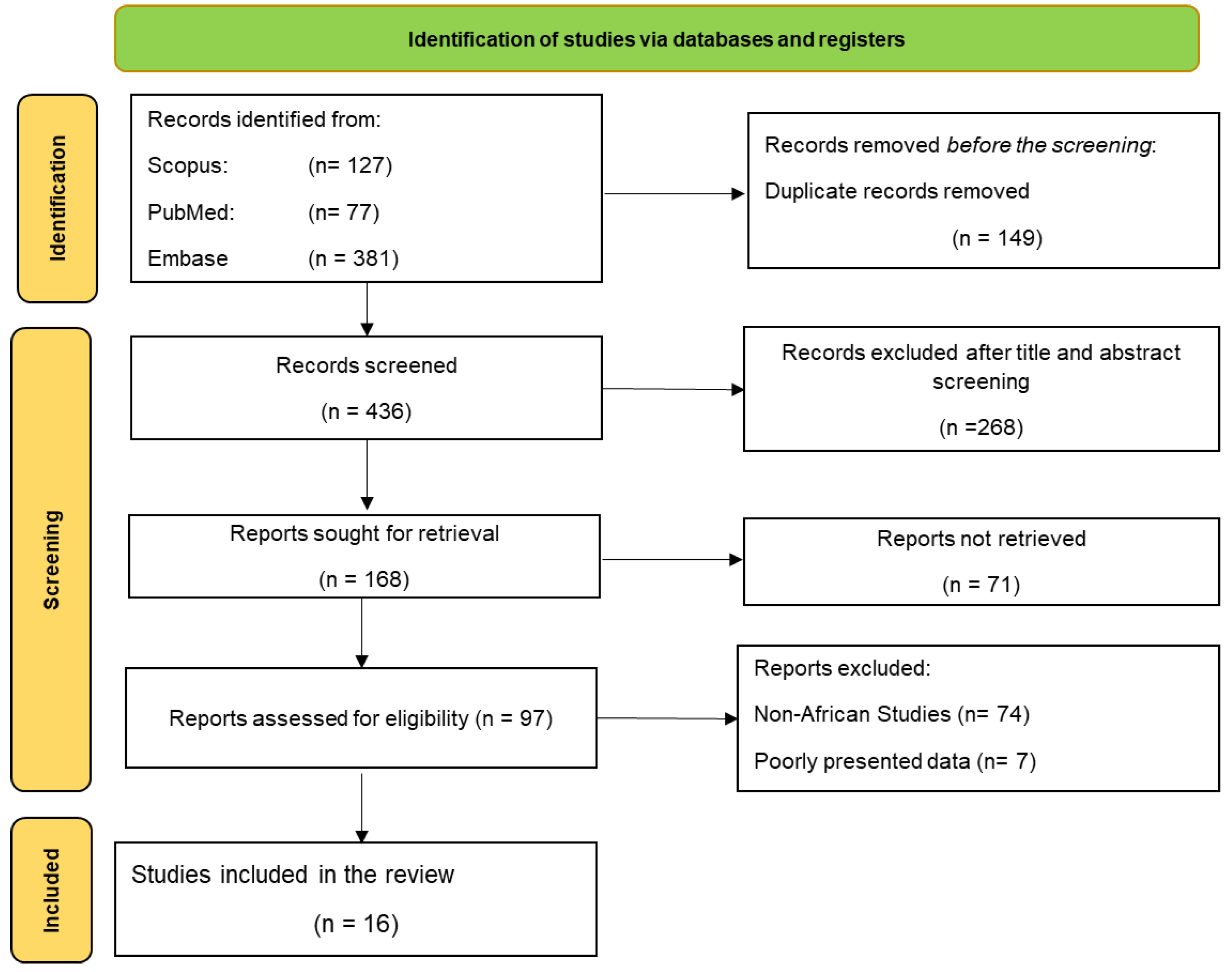

Table 1.
Characteristics of Included Studies.
| Author | Year | Country | Plant Specie | Part of Plant used |
Organisms tested | Solvent used | Type of extraction | Extract MIC (mg/ml) | Positive Control | Control Conc. (µg/ml) |
Bioactive Compounds |
|---|---|---|---|---|---|---|---|---|---|---|---|
| Ikinyom et al | 2024 | Uganda | E. globulus Labill | Leaves |
S. pneumoniae K. pneumoniae |
Acetone | Maceration | 1.25 2.5 |
Ciprofloxacin | 0.04 0.04 |
Tannins, saponins, terpenoids, glycosides, alkaloids, phenolic compounds, cardiac glycosides, terpenes, reducing sugars, carbohydrates, flavonoids. |
| Evans et al | 2002 | Nigeria | E. cassia | Leaves Stem inflorenscence |
S. typhi | Distilled water Ethanol |
Decoction | 1 2 |
Not reported | Not reported |
Saponins, Alkaloid Tannins |
| Kouki et al | 2022 | Tunisia |
E. melliodora, E. paniculata, E. transcontinentalis E. bosistoana E. salmonopholia |
Leaves |
S. aureus L.monocytogenes, P. aeruginosa E. coli, A. baumannii |
N-hexane | Hydrodistillation | 0.026 -0.032 | Tetracycline | 23-27 µL/mL | Eucalyptol, α-Pinene, trans-Pinocarveol, p-cymene, neoverbanol, Monoterpenoids, Sesquiterpenoids. |
| Adeniyi et al | 2009 | Nigeria |
E. camaldulensis E. torelliana |
Leaves Stem bark |
H. pylori | Chloroform Methanol |
Soxhlet extraction |
0.0125 – 0.4 | Clarithromycin | 0.5 | Tannins saponins, cardenolides |
| Bouharb et al | 2014 | Morocco | E. gomphocephala | Leaves | P. aeruginosa | Distilled water | Maceration | Aq = 6.25-12.5 Hex = 9.37- 50 |
Gentamicin | 15 | tannins, flavonoids, saponins triterpenes |
| Adeniyi et al | 2009 | Nigeria | E. grandis | Stem bark | H. pylori | N-Hexane Methanol |
Soxhlet extraction |
0.00039 -0.00156 | Bismuth citrate | 25 | Tannins, essential oils and saponins |
| Gemechu et al | 2013 | Ethiopia | E. camaldulensis | Leaves |
M. tuberculosis M. bovis |
Methanol | Maceration | 0.00625-0.1 | Rifampicin | 32 | Tannins and saponins |
| Okba et al | 2021 | Egypt | E. sideroxylon | Flowers |
B. subtilis S. aureus E. coli P. aeruginosa C. albicans |
Methanol | Maceration | 0.5-1.2 1.2 1.2 3.0 |
Gentamicin | 10 | Phloroglucinols, Flavonoids Tannins. |
| Ouattara et al | 2022 | Burkina-Faso | E. camaldulensis | Whole plant |
E. coli K. pneumoniae S. aureus S. epidermidis S. saprophyticus C. albicans Aspergillus sp |
Methanol | Maceration | 0.156 - 5 | Ciprofloxacin | 5 | Tannins Flavonoids Saponins |
| Naili et al | 2022 | Algeria | E. globulus | Leaves |
E. coli K. pneumoniae P. aeruginosa E. aerogenes S. aureus B. subtilis |
Ethanol & Distilled water |
Maceration |
6.25 |
Tetracycline Vancomycin, Oxacillin. | 30 30 5 |
Flavonoids Tannins, free quinones Terpenoids |
| Lawal et al | 2012 | Nigeria |
E. camaldulensis E. torelliana |
Leaves Stem bark |
M. tuberculosis | N-hexane, Chloroform Methanol | Maceration | 0.0495 0.04699 |
Rifampicin | 4–0.0156 | Tannins Triterpenes saponins, Anthraquinones Glycosides |
| Boulekbache-Makhlouf et al | 2013 | Algeria | E. globulus | Fruits |
S. aureus B. subtilis K. pneumoniae |
Acetone & distilled water | Maceration | 0.03 0.08 |
Gallic and tannic acids | none | Phénols Tannins Flavonoids |
| Khedhri et al | 2022 | Tunisia |
E. griffithsii E. hemiphloia E. lesouefii E. longicornis E. pyriformis, E. viminalis E. wandoo |
Leaves |
baumannii P. aeruginosa E. coli S. aureus L. monocytogenes |
N-hexane | Hydrodistillation | 25-38 µL/mL | tetracycline | 23- 24 µL/mL | The oxygenated monoterpenes, hydrocarbon monoterpenes, Eucalyptol, Eucalyptol, α-pinene, o-cymene, trans-pinocarveol, neo-verbenol, α-terpineol, cumin aldehyde, terpinene-4-ol, dihydrocarveol, pinocarvone, p-menth-1-en-7-al, carvacrol, p-cymene, iso-menthol, β-pinene, m-cymen-8-ol, sabina ketone, spathulenol, sabina ketone, pinocarvone, cryptone, acetate, pinocarvone, sesquiterpenes, β-eudesmol, rosifoliol, α-eudesmol. |
| Tankeo et al | 2014 | Cameroon | E. robusta | Leaves |
P. stuartii P. aeruginosa K. pneumoniae E. coli E. aerogenes E. cloacae |
Methanol | Soxhlet extraction |
0.064 |
Chloramphenicol | 2.5 | Alkaloids Anthocyanins, anthraquinones, Flavonoids Phenols saponins sterols tannins triterpenes |
| Lawal et al | 2012 | Nigeria | E. torelliana | Leaves Stem bark |
H. pylori | N-Hexane Chloroform Methanol |
Soxhlet extraction | 0.050 to 0.1 | Clarithromycin | 0.25–0.0625 | tannins, triterpenoid saponins and cardiac glycosides |
| Bouras et al | 2016 | Algeria | E. golobulus | Leaves | K. pneumoniae | Distilled water | decoction | 0.3 – 0.4 | dimethylsulfoxid (DMSO) | 10 | Not reported |
E (plant species column) = Eucalyptus; MRSA: Methicillin resistant staphylococcus aureus; MDR: Multidrug resistant; Streptococcus pneumoniae ; Klebsiella pneumoniae; Salmonella typhi; Staphylococcus aureus; Listeria monocytogenes; Pseudomonas aeruginosa; Escherichia coli; Acinetobacter baumannii; Helicobacter pylori ; Mycobacterium tuberculosis; Mycoplasma bovis ; Bacillus subtilis; Candida albicans; Staphylococcus epidermidis ; Staphylococcus saprophyticus; Aspergillus sp; Enterobacter aerogenes; Streptococcus faecalis; Bacillus stearothermophelus; Bacillus cereus; Bacillus polymyxa; Bacillus anthracis; Pseudomonas fluorescens; Enterococcus feacalis; Listeria innocua; Klebsiella oxytoca; Rhizopus nigricans; Providencia stuartii ; Enterobacter cloacae.
Disclaimer/Publisher’s Note: The statements, opinions and data contained in all publications are solely those of the individual author(s) and contributor(s) and not of MDPI and/or the editor(s). MDPI and/or the editor(s) disclaim responsibility for any injury to people or property resulting from any ideas, methods, instructions or products referred to in the content. |
© 2025 by the authors. Licensee MDPI, Basel, Switzerland. This article is an open access article distributed under the terms and conditions of the Creative Commons Attribution (CC BY) license (http://creativecommons.org/licenses/by/4.0/).
Copyright: This open access article is published under a Creative Commons CC BY 4.0 license, which permit the free download, distribution, and reuse, provided that the author and preprint are cited in any reuse.


