

Submitted:
17 April 2025
Posted:
18 April 2025
You are already at the latest version
Abstract
Climate change significantly impacts agricultural infrastructure, particularly in communal land farming systems, where socio-economic vulner-abilities intersect with environmental stressors. This study examined the effects of climate change (extreme weather events) on different agri-cultural infrastructures (bridges, arable land, soil erosion control structures, dipping tanks, roads, and fences) using a multivariate ordered probit model (MVOP). A survey was conducted using structured questionnaires to collect data from communal farmers (n=60) in uKhahlamba Munic-ipality, Bergville. The MVOP results reveal that, floods, drought, strong winds and frost significantly influence the perceived impacts on infra-structure. Extreme weather events, including flooding and frost, are critical drivers of infrastructure damage, particularly for smallholder farmers. The findings show that bridges, soil erosion control structures, and dipping tanks are the most vulnerable, with cumulative impacts from repeated exposure to extreme weather. Roads and fences also suffer considerable damage, exacerbated by heavy rainfall, flooding and hail. These results underscore the need for climate-resilient infrastructure investments, gender-sensitive adaptation strategies, and targeted support for smallholder farmers. The study highlights the urgency of adaptive measures to mitigate the localized impacts of climate change on rural agricultural systems, contributing to the broader understanding of sustainable agricultural development and land use in vulnerable communities. The study demon-strated urgent need for implementation of strategies and policies on climate adaptation and mitigating measures.
Keywords:
climate change
; agricultural infrastructure
; communal farming systems
; multivariate ordered probit
; extreme weather events
; land use
1. Introduction
Climate change has emerged as one of the most pressing global challenges, significantly affecting agricultural systems worldwide [1,2,3]. While much of the research has focused on the direct impacts of climate change on crop productivity and food security [4], water availability [5], and pest outbreaks [6], less attention has been given to its indirect and direct effects on agricultural infrastructure particularly in KwaZulu-Natal province, which serves as the backbone of farming activities. Infrastructure components such as roads, bridges, soil erosion control structures, storage facilities, and fences are critical for ensuring the seamless functioning of agricultural operations [7]. These structures support the timely delivery of inputs, access to markets, and overall productivity [7]. However, the increasing frequency and intensity of extreme weather events—such as floods, droughts, and heavy rains—are undermining the functionality of these infrastructures, particularly in resource-constrained communal farming systems [8].
Communal farming systems are particularly vulnerable to climate-induced disruptions due to their reliance on shared infrastructure and limited capacity to implement mitigation and adaptation strategies [9]. Infrastructure degradation caused by climate change can result in cascading challenges, including delayed land preparation, planting, and harvesting; spoilage of crops; and significant income and livelihood losses [10]. For example, heavy rains often render rural roads impassable and damage bridges, isolating farmers from markets and critical agricultural services [11]. Similarly, soil erosion caused by extreme weather events compromises the integrity of erosion control structures, reducing land quality and exacerbating environmental degradation [12]. Despite these critical challenges, research on the interplay between climate change and agricultural infrastructure remains limited, particularly in communal farming systems, where vulnerabilities are most pronounced. Therefore, this study seeks to bridge this knowledge gap by providing empirical insights into the impacts of climate change on agricultural infrastructure and its consequences for farming operations and rural livelihoods. This study critically examines how infrastructure elements are affected by climate variability and how these disruptions translate into challenges for communal farmers. By doing so, it contributes to the broader discourse on climate resilience in agriculture, emphasizing the need for targeted interventions that prioritize climate-resilient infrastructure to sustain farming systems in vulnerable regions.
The primary aim of this study is to evaluate the extent to which climate change affects agricultural infrastructure in communal land farming systems and to explore the downstream effects on farming practices and livelihoods. The findings will provide actionable recommendations for building climate-resilient infrastructure and inform policies that support sustainable rural development. In doing so, this study aligns with global development priorities, including the United Nations Sustainable Development Goals (SDGs), particularly SDG 2 (Zero Hunger), SDG 9 (Industry, Innovation, and Infrastructure), and SDG 13 (Climate Action). By focusing on communal farming systems, this research offers valuable insights into the intersection of climate change, agricultural infrastructure, and rural resilience, advancing the state of knowledge in this critical area.
2. Materials and Methods
2.1. Study Area
The study was conducted in uThukela Municipal District, KwaZulu-Natal, South Africa. One local municipality was selected of which is oKhahlamba Local Municipality (Figure 1), located in the western region, encompasses a vast and diverse area that includes the town of Bergville and the Drakensberg (oKhahlamba) Mountains [13]. Geographically, it lies in 28°43'52"S 29°20'30"E, with an area spanning approximately 3,466 km². The municipality is part of the oKhahlamba-Drakensberg World Heritage Site, renowned for its breathtaking landscapes and ecological significance. This region is characterized by a temperate climate with an average annual rainfall of approximately 800–1200 mm, predominantly during the summer months [13].
Agriculture plays a pivotal role in the livelihoods of Okhahlamba’s rural population, who rely heavily on communal farming systems. In addition, Drakensberg foothills are strategic areas for food security in the province [14]. The main agricultural activities include the cultivation of maize, dry beans, and various vegetables, alongside livestock farming [15]. The municipality’s infrastructure, such as rural roads, soil erosion control structures, bridges, and irrigation systems, underpins these agricultural practices, facilitating market access and supporting subsistence and smallholder farmers. With a population of approximately 137,724 people, predominantly living in rural areas, the region represents a hub of traditional and subsistence, and commercial agricultural practices [15].
In recent years, climate variability has emerged as a critical challenge for the municipality, manifesting through extreme weather events such as heavy rainfall, droughts, and unseasonal frosts. These events have exacerbated soil erosion, disrupted farming activities, and severely damaged essential agricultural infrastructure [13,15]. Furthermore, the mountainous terrain and fragile soils of the Drakensberg exacerbate the region’s vulnerability to climate-induced environmental changes.
Municipality is an important contributor to the region’s ecosystem services, such as water provision, biodiversity conservation, and carbon sequestration. However, the municipality faces challenges related to soil erosion, deforestation, and increasing infrastructure vulnerability due to climate change [13,15]. These challenges are compounded by limited financial and technical resources available to communal farmers, making the municipality a critical case study for understanding the impact of climate change on agricultural infrastructure in resource-constrained contexts. The municipality’s reliance on agriculture for economic and subsistence purposes highlights the importance of this study, which aims to examine how climate change affects agricultural infrastructure and the subsequent implications for farming activities and livelihoods. By focusing on this region, the study provides insights into the vulnerabilities and resilience strategies of communal farming systems in the face of climate change.
The Drakensberg Climate Potential map (Figure 2) provides further spatial insight into the environmental heterogeneity of the oKhahlamba Local Municipality. The map reveals that the region encompasses areas of variable climate suitability for agriculture, ranging from zones with very good to poor climate potential. These differences are shaped by altitude, rainfall patterns, and ecological sensitivity, especially within the oKhahlamba Drakensberg Park and surrounding foothills. The presence of high-value biodiversity areas, major water bodies, and limited community access roads highlights both the ecological significance and infrastructural challenges faced by communal farmers. This variability in climate potential has direct implications for agricultural productivity and resilience, particularly as climate change intensifies. The map underscores the critical need for climate-informed agricultural planning in rural systems, where infrastructure such as roads, bridges, and arable and grazing lands are increasingly vulnerable. As such, this spatial context enriches the study’s analysis by linking climate variability to the functional state of rural infrastructure, which is foundational to sustaining smallholder agriculture in this mountainous region.
2.2. Questionnaire Design
The questionnaire used in this study was meticulously designed to capture the impact of climate change on agricultural infrastructure within communal land farming systems in oKhahlamba Local Municipality. It was structured to collect quantitative data from participants, focusing on their perceptions, experiences, and observations regarding climate-induced challenges to agricultural infrastructure. The questionnaire predominantly used close-ended questions with multiple-choice or Likert scale options to ensure consistency and ease of analysis. The design of the questionnaire was guided by the objectives of the study, with questions structured to establish relationships between climate change impacts and agricultural infrastructure resilience. To ensure validity and reliability, the questionnaire was pre-tested with a small sample of respondents from the study area. This pre-testing process allowed for adjustments to ambiguous or unclear questions before full-scale data collection. Informed consent and confidentiality were incorporated into the questionnaire design to protect the rights and privacy of the participants. Furthermore, all ethical standards were in line with the “The Declaration of Helsinki” in 1964 as a considerable ethical framework.
2.3. Data Collection and Analysis
Data for this study were collected in oKhahlamba Local Municipality, KwaZulu-Natal, focusing on communal land farming systems in and around Bergville. The data collection process utilized a structured questionnaire designed to capture the impacts of climate change on agricultural infrastructure and farming practices. The questionnaire, administered in-person by trained field researchers, targeted active communal farmers relying on local agricultural infrastructure. This method ensured comprehensive coverage and allowed for clarification of questions where necessary.
2.3.1. Data Collection
The survey was conducted over a two-weeks period and targeted 60 respondents selected through purposive sampling. The selection criteria included:
- I.
- Active involvement in farming within communal land systems.
- II.
- Dependence on infrastructure such as roads, bridges, fences, and soil erosion structures.
- III.
- Direct experiences with climate change impacts on farming activities.
Researchers conducted interviews at community centers, local markets, and farms to maximize accessibility for participants. The questionnaire was administered in English and isiZulu to accommodate local language preferences and ensure inclusivity. Field researchers were trained to facilitate ethical and culturally sensitive interactions, ensuring informed consent and confidentiality for all participants.
2.3.2. Data Analysis
The collected data were systematically cleaned, coded, and analyzed using quantitative methods. Statistical analysis was conducted in STATA Version 18.5 to explore the relationships between climate change impacts, infrastructure conditions, and agricultural outcomes. Descriptive analysis was used to summarize key variables, such as the condition of agricultural infrastructure, frequency of climate-related disruptions (e.g., soil erosion, delayed planting, etc), and perceived impacts on farming livelihoods. Percentages were calculated to provide an overview of the dataset.
2.3.3. Empirical Model Specification: Multivariate Ordered Probit Regression Model
The study utilizes a Multivariate Ordered Probit Regression Model (MOPRM) to examine the impacts of various socio-demographic and environmental factors on different forms of agricultural infrastructure (bridges , arable land, dipping tanks, fences, roads, and soil erosion control structures) under the influence of climate change. This model is suitable because the dependent variables are categorical and ordinal, capturing the severity of impacts on each type of agricultural infrastructure.
The ordered probit model assumes that there is an unobserved continuous latent variable for each dependent variable, which determines the observed ordinal categories [17]. The general form of the multivariate ordered probit model is as follows:
where:
represents the latent variable for the -th infrastructure type (bridges ,arable land, dipping tanks, fences, roads, soil erosion control structures) for the -th respondent. is a vector of independent variables (socio-demographic and environmental factors) for the th respondent, including gender, age, education, type of farmer, duration of observing climate change, access to climate change information, and specific climate impacts (e.g., frost, strong winds,drought, flooding, and hail.). a vector of coefficients to be estimated for the -th infrastructure type. is the error term for the -th dependent variable, assumed to follow a normal distribution with zero mean and constant variance.
The observed categorical dependent variable takes one of three possible values:
The latent variable is mapped into the observed categorical outcomes through threshold values, such that:
where:
and are the threshold parameters that define the cut-points for the ordinal categories.
Model for Each Infrastructure Type
The model is applied separately to each of the five dependent variables (infrastructure types), with the corresponding equations for each infrastructure type being equation 3 to equation 8:
2.3.4. Independent and dependent Variables
The dependent variables in this study capture the extent to which various types of agricultural infrastructure are impacted by climate change. Dependent variables: Bridges measure the severity of climate change impact on community bridges which allows them to access the input supplies, markets, arable land amongst others. This variable is measured in three-point scale (1= less affected, 2= moderately affected, and 3=highly affected). Arable land measures the severity of climate change impacts on farmland, such as soil degradation, erosion, and reduced fertility [18], on a three-point scale: (1= less affected, 2= moderately affected, and 3=highly affected).
Dipping tanks represent water storage systems used for livestock health, with impacts measured on a three-point scale: (1= less affected, 2= moderately affected, and 3=highly affected). Fences, essential for farm and livestock protection, are measured on the same three-point scale. Roads represent the condition and usability of transport infrastructure used by farmers to access their farms, input supplies, markets, and essential services. Lastly, soil erosion control structures, designed to, reduce runoff, prevent land degradation, are measured to capture the weakening effects of climate events such as flooding, and frost with prolonged exposure to climate change expected to increase damage over time [19].
The independent variablesinclude the following socio-demographic and climate-related factors:
Gender (male or female) is hypothesized to influence infrastructure management perceptions, with men likely reporting greater impacts on systems like bridges, fences, dipping tanks, and erosion control structures due to their active roles in maintaining these systems [20]. Age is measured in categories (18–29, 30–44, 45–59, 60–70, 71 or older), with older respondents expected to report higher impacts due to their longer exposure to farming and climate challenges [21]. Education, ranging from no education to university level, is anticipated to correlate negatively with infrastructure damage perception, as better-educated farmers may have access to improved management practices [22]. Type of farmer, categorized as subsistence, smallholder, or commercial, is expected to influence reported impacts, with subsistence and smallholder farmers likely to experience greater challenges due to their reliance on communal and poorly maintained infrastructure [23].
Farmers’ duration of observing climate change is categorized as the past 5 years, 10 years, 20 years, or more, with longer durations expected to correlate with higher perceived impacts, particularly for cumulative damages to erosion structures and arable land. Access to climate change information (yes, no, or not sure) is hypothesized to increase awareness and reporting of climate change impacts, while the source of climate change information, such as radio, newspapers, or extension officers, may also affect perceptions, with modern sources providing better insights into infrastructure vulnerabilities [24]. Farming distance, categorized as less than or more than 5 km, is expected to influence the perceived impact of climate change on roads and other infrastructure due to accessibility challenges [24].
Environmental variables capture the severity of climate events. Frost is expected to significantly impact arable land, dipping tanks, and soil erosion control structures by damaging crops and weakening soil stability [25]. Strong winds are anticipated to worsen the condition of fences and arable land through physical damage, while flooding is likely to degrade dipping tanks, roads, and arable land by causing waterlogging and erosion [26]. Drought may significantly impact roads and arable land by causing soil cracking, damaging road pavement structures and reducing productivity [27]. Lastly, hail is expected to damage fences, roads, and soil erosion structures, further compounding the degradation of agricultural infrastructure [28]. These variables collectively provide a comprehensive view of the factors driving climate change impacts on agricultural systems.
3. Results
3.1. Descriptive Analysis
The results in Table 1 reveal significant demographic, educational, and farming characteristics among respondents, shedding light on their exposure to climate change and its impacts. The sample is predominantly male (72%), consistent with studies showing male dominance in farming, particularly in rural areas where men often engage in more commercial-oriented agriculture while women focus on household subsistence [29,30]. Furthermore, the farming population is aging, with 78% of respondents aged 45–70 years. This aligns with global trends, particularly in developing regions, where youth migration to urban areas leaves older generations managing farms, contributing to concerns about the sustainability of rural agriculture [31].
Table 1 also shows that education levels highlight a significant barrier to agricultural innovation, with 10% of respondents having no education and 85% limited to primary or high school education. Limited access to higher education (only 3% have university qualifications) reflects challenges in rural areas, where educational opportunities are constrained. This is critical as studies indicate that higher education correlates with the adoption of advanced farming technologies and climate-smart practices, which are vital for building resilience against climate change [32]. The dominance of smallholder farmers (78%) in the sample is typical of rural agricultural systems in developing countries, where small-scale farming is the backbone of food security but often faces resource constraints that exacerbate vulnerabilities to climate change [32].
Regarding climate change, the majority of respondents (93%) have access to information, primarily through radio and television, while extension services are notably absent. This reflects a reliance on mass media for disseminating agricultural information in rural areas, but it also highlights the limitations of agricultural extension systems, which are often underfunded and understaffed [33]. Moreover, 48% of respondents have observed the impacts of climate change over the past 20 years, suggesting increasing awareness of its long-term effects. Proximity to farms, with 92% located within 5 km, further underscores the smallholder context, where accessibility to land and resources plays a critical role in farmers’ adaptation strategies [34].
The impacts of extreme weather events are stark, with flooding identified as the most severe challenge—82% of respondents reported extreme impacts from flooding, highlighting its destructive potential. This finding is consistent with global evidence showing that flooding is one of the most devastating climate-related events, particularly for smallholder farmers with limited adaptive infrastructure [35]. Similarly, drought is a significant concern, with 67% experiencing extreme impacts. This is in line with studies showing that rain-fed agriculture, common among smallholder farmers, is particularly vulnerable to prolonged dry spells, reducing crop yields and water availability [36]. Hail and frost also pose considerable risks, with high and extreme impacts reported by over 70% of respondents for both events, corroborating research on their potential to cause sudden and widespread crop damage. Strong winds were another major concern, with 91% of respondents reporting severe impacts, reflecting their capacity to disrupt agricultural activities and compound existing vulnerabilities.
3.2. Level of Impact of Extreme Weather Events on Agricultural Resources and Infrastructure
The results from the survey on the impact of extreme weather events like flooding and heavy rainfall on agricultural resources and infrastructure indicate a significant vulnerability of key farming assets to extreme weather events. The results show that bridges are among the most severely affected agricultural infrastructure components in the study area, with 85% of respondents indicating that bridges were highly affected by climate change-related impacts. In contrast, only 10% reported that bridges were moderately affected, and a mere 5% considered them to be less affected. The study has revealed that the study area is dominated by gravel roads with low-lying bridges (Figure 3), and in most instances without bridges, rendering the area to be highly vulnerable to flooding during heavy rainfall (Figure 4a,b). This situation disrupt access to essential farming services collapsing food systems. Arable land was reported to be heavily affected, with 81% of respondents indicating that it was highly affected by flooding. This suggests that flooding severely damages crops, erodes soil, and reduces the productivity of farmland, making it highly susceptible to the adverse effects of extreme weather. A smaller portion of respondents (12%) reported moderate effects, and only 7% indicated that their arable land was less affected, highlighting the widespread damage flooding causes to farmland.
Access roads to agricultural fields—essential for transporting inputs, moving harvested produce, and facilitating market access—emerged as the most severely affected type of infrastructure in the study area. A striking 87% of respondents reported that roads were highly affected, primarily due to flooding and related extreme weather events. In contrast, only 8% indicated that roads were moderately affected, and a mere 5% reported them as less affected. This highlights the major disruption caused by flooded roads, which impede farmers’ ability to access markets, transport goods, and receive emergency services, further compounding the economic and operational challenges farmers face during floods.

Table 2.
Level of impact of extreme weather events.
| Affected Agricultural Resources and infrastructure | Less affected | Moderately affected | Highly affected |
|---|---|---|---|
| Percent (%) | |||
| Bridges | 5 | 10 | 85 |
| Arable land | 7 | 12 | 81 |
| Dipping tanks | 13 | 32 | 55 |
| Fences | 22 | 15 | 63 |
| Roads | 5 | 8 | 87 |
| Soil Erosion Control structures | 2 | 17 | 81 |
In terms of dipping tanks, which are crucial for managing livestock health, 55% of respondents reported that they were highly affected by flooding, while 32% indicated moderate effects. This points to the significant disruption flooding causes in maintaining livestock health, as damaged dipping tanks can hinder efforts to control livestock parasites, such as ticks and associated diseases. Only 13% reported that dipping tanks were less affected, emphasizing the vulnerability of these facilities during flooding events. Fences, another critical component for livestock management and protecting crops, were highly affected by floods in 63% of cases, with 15% reporting moderate effects. Fences play a key role in keeping livestock contained and safeguarding crops from damage, and their destruction during flooding can lead to further agricultural losses. The extensive impact on fences suggests that flooding significantly disrupts farm operations and poses a threat to the security of agricultural land.
Soil erosion control structures, which are essential for preventing soil degradation, reducing runoff of water, and maintaining land productivity, were highly affected in 81% of cases. Only 2% reported less affected structures, and 17% reported moderate effects. Flooding compromises the effectiveness of these structures, leading to soil erosion and long-term degradation of land. This result underscores the vulnerability of erosion control infrastructure during extreme weather events, which exacerbates the challenge of sustaining soil health and agricultural productivity.
3.3. Econometric Analysis: Multivariate Ordered Probit Regression Analysis
The results presented in Table 3 highlight the significant impact of various socio-demographic and environmental factors on agricultural infrastructure under the effects of climate change. These findings underscore the differentiated vulnerabilities faced by farmers based on their gender, farming type, exposure to climate information, and experience with extreme weather events such as frost, flooding, and drought.
Table 3 shows that gender plays a significant role on how farmers perceive the impacts of climate change on agricultural infrastructure. Gender is statistically significant at 5% significant level, three agricultural infrastructures (has negative association with dipping tanks, and positives association with both roads and soil erosion control structures). Male respondents are more likely to report greater impacts on dipping tanks while women are more likely to report on roads and soil erosion control structures. This suggests that men, who are often more involved in managing physical infrastructure, may perceive more damage due to their direct engagement in maintaining these systems. Conversely, women, typically involved in household-related activities, may report fewer impacts. These results align with [37], who found that gendered roles affect the perception of climate risks, with men being more involved in infrastructure management. The negative effect of gender on roads suggests that men might experience fewer challenges related to road infrastructure due to differences in road usage patterns. Type of farmer is another key determinant of climate change impacts and has a positive and statistically significant on three agricultural infrastructures (dipping tanks (p<0.01), roads (p<0.05) and soil erosion control structures (p<0.05)).
Access to climate change information is positive and statistically significant (p<0.1) influences perceptions of dipping tanks. Farmers with access to climate information report greater impacts on these systems, likely because they are more aware of the risks posed by climate change. However, this heightened awareness may also amplify their perception of vulnerability. Similarly, the source of climate change information (p<0.1) shows that farmers relying on limited or traditional sources of information tend to perceive fewer impacts, possibly due to a lack of understanding of long-term infrastructure vulnerabilities.
4. Discussion
The findings of the study indicated significant impacts of climate change on agricultural infrastructure and resources such as bridges, roads, soil erosion control structures, fencing, dipping tanks, arable land, which are key for agricultural productivity and indispensable for sustainable food systems. The results imply that smallholder and subsistence farmers reported significantly more damage to roads, soil erosion control structures, bridges, and dipping tanks. The negative impact on infrastructure experienced by these farmers can be attributed to their reliance on communal or poorly maintained systems and limited resources for adaptation. This is consistent with the [38], who highlighted that smallholder farmers face greater challenges due to financial constraints and their dependence on shared infrastructure. These farmers’ vulnerability to infrastructure degradation highlights the need for targeted support and investments in resilient infrastructure systems.
Furthermore, the study revealed that the impact of climate change on bridges was significantly influenced by two key variables: the type of farmer and the level of impact from flooding. Specifically, full-time farmers were more likely to report severe impacts on bridge infrastructure compared to part-time farmers, as indicated by the positive coefficient and a marginally significant p-value of 0.075. This suggests that full-time engagement in agriculture heightens dependency on physical infrastructure for daily operations, input acquisition, and market access [39]. Bridges serve as critical nodes in rural value chains, and their impairment disrupts transportation efficiency, increases transaction costs, and limits timely access to markets. Such disruptions lead to unsustainable food systems and food insecurity. Similar conclusions were drawn by [39], who emphasized that full-time farmers are disproportionately affected by infrastructure vulnerabilities under changing climate conditions.
The analysis indicated a statistically significant and positive relationship between flooding and damage to bridges (p = 0.050). This relationship is economically intuitive; increased flood intensity and frequency under climate change scenarios result in structural degradation, washouts, and the eventual collapse of rural bridges [39]. The destruction of such infrastructure not only isolates farming communities but also hinders supply chain efficiency and emergency response capabilities. These findings are corroborated by [39)], who noted that flooding has emerged as one of the most economically destructive climatic events for transport and communication systems in rural areas. Therefore, the evidence suggests that targeted investment in flood-resilient infrastructure is imperative to safeguarding rural economies and ensuring the continuity of agricultural production systems.
The duration of observing climate change also plays a significant role in the perceived impact on soil erosion control structures at 1% significant level and it is negative. Farmers who have observed climate change impacts for longer periods report more severe degradation of erosion control structures. This is likely due to the cumulative effects of repeated extreme weather events, as long-term exposure increases awareness of vulnerabilities in infrastructure systems, a finding supported by [40]. These results suggest that prolonged exposure to climate risks enhances farmers’ understanding of infrastructure degradation over time.
The use of indigenous knowledge is positive and statistically significant for arable land agricultural resource and fences which are agricultural infrastructure both at 10% significant level. Farmers who rely on indigenous knowledge report more severe impacts on these infrastructures. This suggests that while indigenous knowledge can provide valuable coping strategies, it may not be sufficient on its own to mitigate modern climate risks [41]. The need for modern, climate-resilient practices alongside traditional knowledge is apparent.
Extreme weather events like drought, frost, and hail show strong effects on infrastructure. Frost events affect arable land, dipping tanks, and roads, respectively reducing soil fertility, disrupting water systems and causing ice formation leading to hazardous road conditions. Drought impacts roads by causing soil cracking, degrade road pavements, and weakening road structures, while hail damages roads and soil erosion control structures, compounding infrastructure degradation. These results align with [42], who noted that frost reduces soil stability and infrastructure resilience, and [43], who highlighted hail’s role in damaging both crops and infrastructure.
Flooding significantly affects dipping tanks and arable land. Flooding leads to physical damage to water storage systems, reducing their functionality, and causes soil erosion and waterlogging, further degrading arable land. These results support findings by [44], which emphasized flooding’s dual impact on both land and infrastructure.
The results imply that climate change impacts on agricultural infrastructure are multifaceted and differ based on socio-demographic factors, exposure to climate information, and extreme weather events. Male and smallholder farmers are more likely to report significant damage to infrastructure, likely due to their direct involvement with, and reliance on, these systems. The findings also emphasize that climate change awareness and information access can heighten farmers’ perceptions of vulnerability, although this can sometimes lead to an overestimation of impacts. The results underscore the need for gender-sensitive adaptation strategies, targeted support for smallholder farmers, and investments in climate-resilient infrastructure to mitigate the impacts of extreme weather events. These findings are consistent with global literature that highlights the disproportionate vulnerability of smallholder farmers and the gendered nature of climate adaptation challenges [45,46].
5. Conclusions
This study highlights the profound impacts of climate change on agricultural infrastructure within communal land farming systems, emphasizing the vulnerability of key resources such as bridges, arable land, dipping tanks, fences, roads, and soil erosion control structures. The findings reveal that socio-demographic factors, such as gender and type of farmer, as well as environmental stressors like frost, flooding, and drought, significantly influence the extent of damage to agricultural infrastructure. Roads, bridges, dipping tanks and soil erosion control structures emerged as the most impacted, with smallholder farmers and those with prolonged exposure to climate change reporting higher vulnerabilities. These results underscore the urgent need to address both structural and socio-economic factors contributing to the degradation of agricultural infrastructure in vulnerable rural communities.
To mitigate these impacts, several targeted recommendations are proposed. First, investments in climate-adaptive and climate-resilient infrastructure are essential to improve the durability of roads, bridges, dipping tanks, and soil erosion control systems against extreme weather events. Technologies such as flood-resistant structures and erosion control mechanisms should be prioritized. In addition, investments on good quality roads, high-level bridge construction are critical as these infrastructure improve connectivity, facilitate access to essential services and markets thus contributing to sustainable food systems, improved rural livelihoods and sustainable food security. Second, gender-sensitive adaptation strategies should be integrated into climate policies, recognizing the unique challenges faced by male and female farmers and promoting equitable access to resources. Third, tailored support for smallholder and subsistence farmers, including access to funding, technical assistance, and agricultural insurance, is critical to enhancing their resilience to climate impacts. Fourth, promoting capacity building and education on climate change adaptation through extension services and access to reliable climate information will empower farmers to adopt sustainable practices. Fifth, there is urgent need for government to implement its Policies and Strategies including National Climate Change Adaptation Strategy; Climate Smart Strategic Framework; National Spatial Development Framework; Presidential Climate Change Commission. Lastly, integrating indigenous knowledge with modern solutions can provide holistic and context-specific approaches to managing agricultural infrastructure under changing climatic conditions. In light of the aforementioned proposed study recommendations, the authors further propose an in-depth interrogation on the key production systems used in communal land. The authors propose immediate responsiveness fostered by local government in exploring the varied degrees of severity in both crop and livestock production systems. Exploratory interventions should prioritize establishing local facilities that support agricultural resilience of resources such as establishing community seed banks that can preserve genetic diversity of crops including indigenous seeds as a form of insurance against crop losses. In addition, investment in innovative and indigenous rural storage facilities must be locally enacted to reduce losses and spoilage. Moreover, the accessibility of mobile veterinary services is fundamental to mitigate against climate change's impact on livestock health. As the trends of climate change continue, monitoring and evaluation from impact assessments managed by local government should be more agile in rural settings and more futuristically inclined rather than event reactive. Future research must explore an adaptive capacity analysis bearing in mind the interrelated challenges reported which have a two-pronged impact on mixed crop farmers using communal land farming systems. Addressing these challenges requires a collaborative effort among policymakers, agricultural stakeholders, and rural communities to ensure sustainable agricultural systems and the long-term resilience of rural livelihoods. The limitation of the study is that the survey was not conducted in other sub-wards around uKhahlamba Local Municipality due to the limitation in financial resources. Future research is necessary that will focus on impact of climate change on local food systems based on the climate variability effects on agricultural infrastructure attested in this study.
Author Contributions
Bonginkosi Mthembu: Conceptualization, Investigation, Study design, Data collection, Writing - review & editing, Validation, Methodology, Investigation, Funding acquisition, Resources. Thobani Cele: Methodology, Software, Resources, Formal analysis, Writing - Original draft, Writing – review & editing, Visualization, Validation. Xolile Mkhize: Project administration, Study design, , Investigation, Data collection, Methodology, Writing – review & editing, Supervision. All authors have read and agreed to the published version of the manuscript.
Funding
This research was funded by the Mangosuthu University of Technology.
Institutional Review Board Statement
This study was conducted in accordance with the guidelines of the Mangosuthu University of Technology (MUT) Research Ethics Committee (NScI/03/2021). Ethical approval was obtained prior to the commencement of the study, ensuring compliance with all institutional policies on research involving human participants.
Informed Consent Statement
Informed consent was obtained from all participants involved in the study. Participants were briefed about the purpose of the study, their rights, and how the collected data would be used. Participation was voluntary, and respondents were assured of confidentiality and anonymity in the reporting of results.
Data Availability Statement
Not applicable
Conflicts of Interest
The authors declare no conflicts of interest.
References
- Dube-Takaza: T., B. Maumbe, and C. Parwada, Vulnerability to Resilience for Smallholder Small Grain Farmers. The Case of Semi-Arid Regions of Southern Zimbabwe. Proceedings in Food System Dynamics, 2024: p. 127-146.
- Adesina, J.A.; Liu, Y.; Tang, X.; Ren, Y. Assessing the Impact of Geospatial Susceptibility on the Rural Agricultural Landscapes of Village Settlements in Southwestern Nigeria. Land 2024, 13, 1719. [Google Scholar] [CrossRef]
- Balsas, C.J.L. Enthralling Prefigurative Urban and Regional Planning Forward. Land 2023, 12, 1973. [Google Scholar] [CrossRef]
- Sharma, H.C. Climate Change Effects on Insects: Implications for Crop Protection and Food Security. J. Crop. Improv. 2014, 28, 229–259. [Google Scholar] [CrossRef]
- Nguyen, T.P.L.; Mula, L.; Cortignani, R.; Seddaiu, G.; Dono, G.; Virdis, S.G.; Pasqui, M.; Roggero, P.P. Perceptions of Present and Future Climate Change Impacts on Water Availability for Agricultural Systems in the Western Mediterranean Region. Water 2016, 8, 523. [Google Scholar] [CrossRef]
- Skendžić, S.; Zovko, M.; Živković, I.P.; Lešić, V.; Lemić, D. The impact of climate change on agricultural insects pests. Insects 2021, 12, 440. [Google Scholar] [CrossRef] [PubMed]
- Pawlak, K.; Kołodziejczak, M. The Role of Agriculture in Ensuring Food Security in Developing Countries: Considerations in the Context of the Problem of Sustainable Food Production. Sustainability 2020, 12, 5488. [Google Scholar] [CrossRef]
- Rosa, L. Adapting agriculture to climate change via sustainable irrigation: biophysical potentials and feedbacks. Environ. Res. Lett. 2022, 17, 063008. [Google Scholar] [CrossRef]
- Toromade, A.S.; Soyombo, D.A.; Kupa, E.; Ijomah, T.I. Reviewing the impact of climate change on global food security: Challenges and solutions. Int. J. Appl. Res. Soc. Sci. 2024, 6, 1403–1416. [Google Scholar] [CrossRef]
- ESCAP, U. and J.U.N.P.o. HIV/AIDS, People and planet: addressing the interlinked challenges of climate change, poverty and hunger in Asia and the Pacific. 2024.
- Njogu, H. , Effects of droughts and floods on infrastructure in Kenya. 2020: Kenya Institute for Public Policy Research and Analysis.
- Eekhout, J.P. and J. de Vente, Global impact of climate change on soil erosion and potential for adaptation through soil conservation. Earth-Science Reviews, 2022. 226: p. 103921.
- Tamako, N.; Chitja, J.; Mudhara, M. The Influence of Farmers’ Socio-Economic Characteristics on Their Choice of Opinion Leaders: Social Knowledge Systems. Systems 2022, 10, 8. [Google Scholar] [CrossRef]
- Mthembu, B.E.; Mkhize, X.; Arthur, G.D. Effects of COVID-19 Pandemic on Agricultural Food Production among Smallholder Farmers in Northern Drakensberg Areas of Bergville, South Africa. Agronomy 2022, 12, 531. [Google Scholar] [CrossRef]
- Mathinya, V. , et al., Can small-scale farming systems serve as an economic engine in the former homelands of South Africa? Frontiers in Sustainable Food Systems, 2023. 7: p. 1222120.
- Ndoro, J., M. Mudhara, and M. Chimonyo, Livestock Extension Programmes Participation And Impact On Smallholder Cattle Productivity In Kwazulu-Natal: A Propensity Score Matching Approach. South African Journal of Agricultural Extension (SAJAE, 2014. 42(2): p. 65.
- Shen, L.; Wang, F. Can Market-Oriented Allocation of Land Factors Promote the Adoption of Cropland Quality Protection Behaviors by Farmers: Evidence from Rural China. Land 2024, 13, 665. [Google Scholar] [CrossRef]
- Prăvălie, R.; Patriche, C.; Borrelli, P.; Panagos, P.; Roșca, B.; Dumitraşcu, M.; Nita, I.-A.; Săvulescu, I.; Birsan, M.-V.; Bandoc, G. Arable lands under the pressure of multiple land degradation processes. A global perspective. Environ. Res. 2021, 194, 110697. [Google Scholar] [CrossRef] [PubMed]
- Chen, J.; Li, Z.; Xiao, H.; Ning, K.; Tang, C. Effects of land use and land cover on soil erosion control in southern China: Implications from a systematic quantitative review. J. Environ. Manag. 2021, 282, 111924. [Google Scholar] [CrossRef]
- Rola-Rubzen, M.F.; Paris, T.; Hawkins, J.; Sapkota, B. Improving Gender Participation in Agricultural Technology Adoption in Asia: From Rhetoric to Practical Action. Appl. Econ. Perspect. Policy 2020, 42, 113–125. [Google Scholar] [CrossRef]
- Adzawla, W. , et al., Analysis of farm households’ perceived climate change impacts, vulnerability and resilience in Ghana. Scientific African, 2020. 8: p. e00397.
- Mwangi, M.W., S. M.W. Mwaniki, and F. Ngesa, To Determine the Influence of Farmer’s Educational Level on Adoption of Agricultural Water Management Practices in Rongai Sub-county, Nakuru County, Kenya. Asian Journal of Agricultural Extension, Economics & Sociology, 2024. 42(4): p. 11-19.
- Gwaka, L.; Dubihlela, J. The Resilience of Smallholder Livestock Farmers in Sub-Saharan Africa and the Risks Imbedded in Rural Livestock Systems. Agriculture 2020, 10, 270. [Google Scholar] [CrossRef]
- Atube, F.; Malinga, G.M.; Nyeko, M.; Okello, D.M.; Alarakol, S.P.; Okello-Uma, I. Determinants of smallholder farmers’ adaptation strategies to the effects of climate change: Evidence from northern Uganda. Agric. Food Secur. 2021, 10, 1–14. [Google Scholar] [CrossRef]
- Melnikov, V.P.; Osipov, V.I.; Brouchkov, A.V.; Falaleeva, A.A.; Badina, S.V.; Zheleznyak, M.N.; Sadurtdinov, M.R.; Ostrakov, N.A.; Drozdov, D.S.; Osokin, A.B.; et al. Climate warming and permafrost thaw in the Russian Arctic: potential economic impacts on public infrastructure by 2050. Nat. Hazards 2022, 112, 231–251. [Google Scholar] [CrossRef]
- Njogu, H.W. Effects of floods on infrastructure users in Kenya. J. Flood Risk Manag. 2021, 14, e12746. [Google Scholar] [CrossRef]
- de Abreu, V.H.S.; Santos, A.S.; Monteiro, T.G.M. Climate Change Impacts on the Road Transport Infrastructure: A Systematic Review on Adaptation Measures. Sustainability 2022, 14, 8864. [Google Scholar] [CrossRef]
- Thakre, G., V. Kaushal, and M. Najafi, A Comparative Impact Assessment of Hail Damage to Tile and Built-Up Roofing Systems: Technical Review and Field Study. 2024.
- Ndlovu, T.; Mjimba, V. Drought risk-reduction and gender dynamics in communal cattle farming in southern Zimbabwe. Int. J. Disaster Risk Reduct. 2021, 58. [Google Scholar] [CrossRef]
- Umunna, M.O. , et al., Analysis of gender participation in fish farming in Borgu local government area, Niger state, Nigeria. NIU Journal of Social Sciences, 2021. 6(4): p. 133-140.
- Nandi, R.; Pratheepa, C.M.; Nedumaran, S.; Rao, N.; Rengalakshmi, R. Farm Parent and Youth Aspirations on the Generational Succession of Farming: Evidence From South India. Front. Sustain. Food Syst. 2022, 5. [Google Scholar] [CrossRef]
- Acharyya, A. , Climate-Smart Agriculture in Developing Economies: An Analysis of Strategies and Policies, in Environmental Economics in Developing Countries. 2022, Routledge India. p. 231-257.
- Boyd, D.; Spencer, R. Sustainable farmer-to-farmer extension – the experiences of private service providers in Zambia. Int. J. Agric. Sustain. 2021, 20, 438–448. [Google Scholar] [CrossRef]
- Ojo, T.; Adetoro, A.; Ogundeji, A.; Belle, J. Quantifying the determinants of climate change adaptation strategies and farmers' access to credit in South Africa. Sci. Total. Environ. 2021, 792, 148499. [Google Scholar] [CrossRef]
- Dharmarathne, G.; Waduge, A.; Bogahawaththa, M.; Rathnayake, U.; Meddage, D. Adapting cities to the surge: A comprehensive review of climate-induced urban flooding. Results Eng. 2024, 22. [Google Scholar] [CrossRef]
- Tegegn, M.G.; Berlie, A.B.; Utallo, A.U. Patterns and probabilities of dry spells and rainfall for improved rain-fed farming in Northwestern Ethiopia. Discov. Sustain. 2024, 5, 1–18. [Google Scholar] [CrossRef]
- Khalid, R. and C. Lemanski, Infrastructure and gender: navigating urban energy transitions. Handbook on Gender and Cities, 2024: p. 237-247.
- Ndlela, S.; Worth, S. Creating self-reliance and sustainable livelihoods amongst small-scale sugarcane farmers. J. Agric. Educ. Ext. 2020, 27, 325–339. [Google Scholar] [CrossRef]
- Goyol, S.; Pathirage, C. Farmers Perceptions of Climate Change Related Events in Shendam and Riyom, Nigeria. Economies 2018, 6, 70. [Google Scholar] [CrossRef]
- Bishaw, B. , et al., Farmers’ strategies for adapting to and mitigating climate variability and change through agroforestry in Ethiopia and Kenya. 2013.
- Ford, J.D.; King, N.; Galappaththi, E.K.; Pearce, T.; McDowell, G.; Harper, S.L. The Resilience of Indigenous Peoples to Environmental Change. One Earth 2020, 2, 532–543. [Google Scholar] [CrossRef]
- Reed, A. , et al., The Forest in the Tree: How Fungi Shape the Earth. 2020: CSIRO PUBLISHING.
- Thakre, G.; Kaushal, V.; Najafi, M. Assessment of Hail Damage for Tile Roofing System: A Technical Review. 10th Congress on Forensic Engineering. LOCATION OF CONFERENCE, United StatesDATE OF CONFERENCE; pp. 1071–1082.
- Diakakis, M.; Boufidis, N.; Grau, J.M.S.; Andreadakis, E.; Stamos, I. A systematic assessment of the effects of extreme flash floods on transportation infrastructure and circulation: The example of the 2017 Mandra flood. Int. J. Disaster Risk Reduct. 2020, 47. [Google Scholar] [CrossRef]
- Chandra, A.; McNamara, K.E.; Dargusch, P.; Caspe, A.M.; Dalabajan, D. Gendered vulnerabilities of smallholder farmers to climate change in conflict-prone areas: A case study from Mindanao, Philippines. J. Rural. Stud. 2017, 50, 45–59. [Google Scholar] [CrossRef]
- Ayanlade, A.; Oluwatimilehin, I.A.; Ayanlade, O.S.; Adeyeye, O.; Abatemi-Usman, S. Gendered vulnerabilities to climate change and farmers’ adaptation responses in Kwara and Nassarawa States, Nigeria. Humanit. Soc. Sci. Commun. 2023, 10, 1–15. [Google Scholar] [CrossRef]
Figure 1.
The location of Okhahlamba Local Municipality (Source: [16]).
Figure 1.
The location of Okhahlamba Local Municipality (Source: [16]).
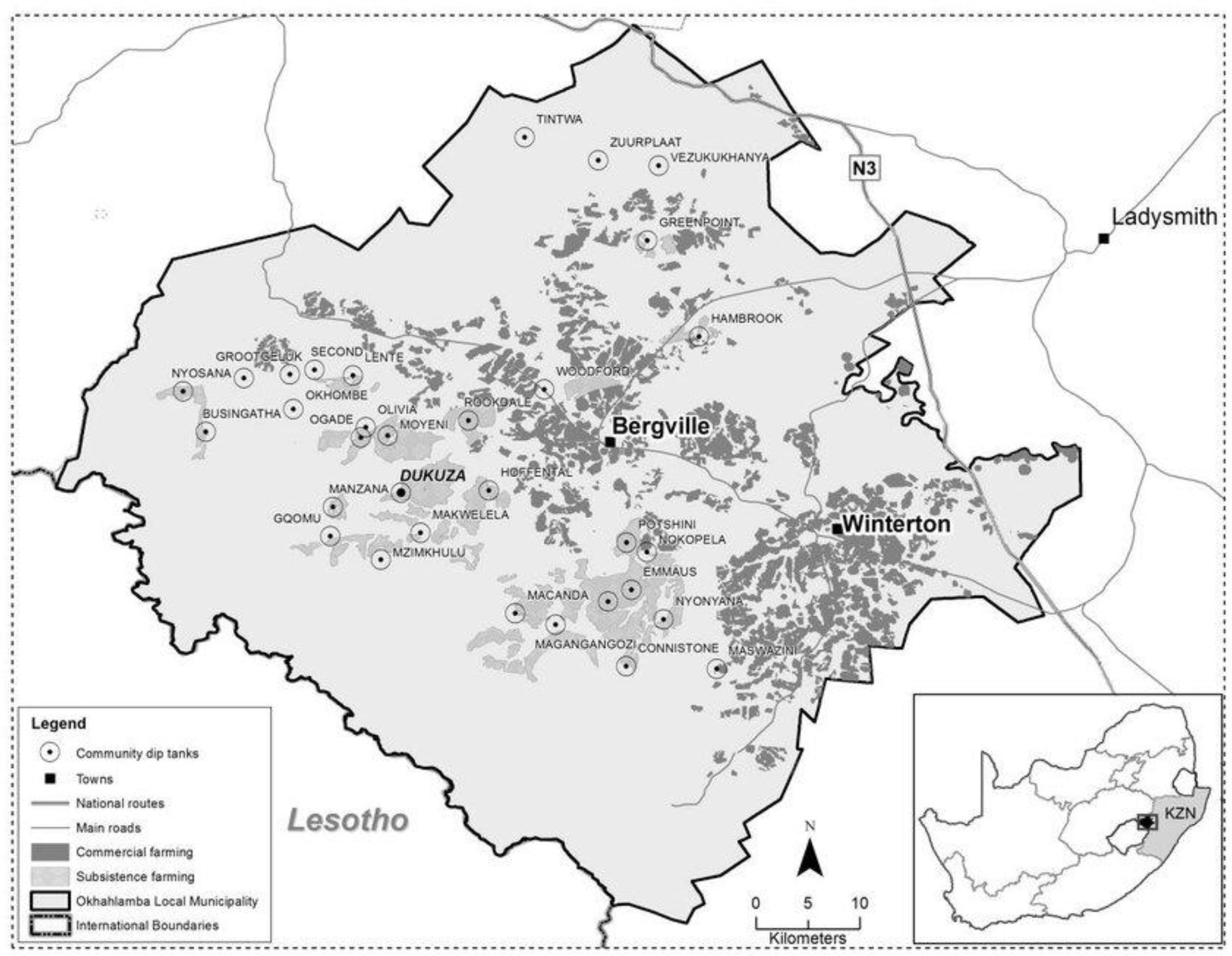
Figure 2.
The Drakensberg Climate Potential map (Source: own map).
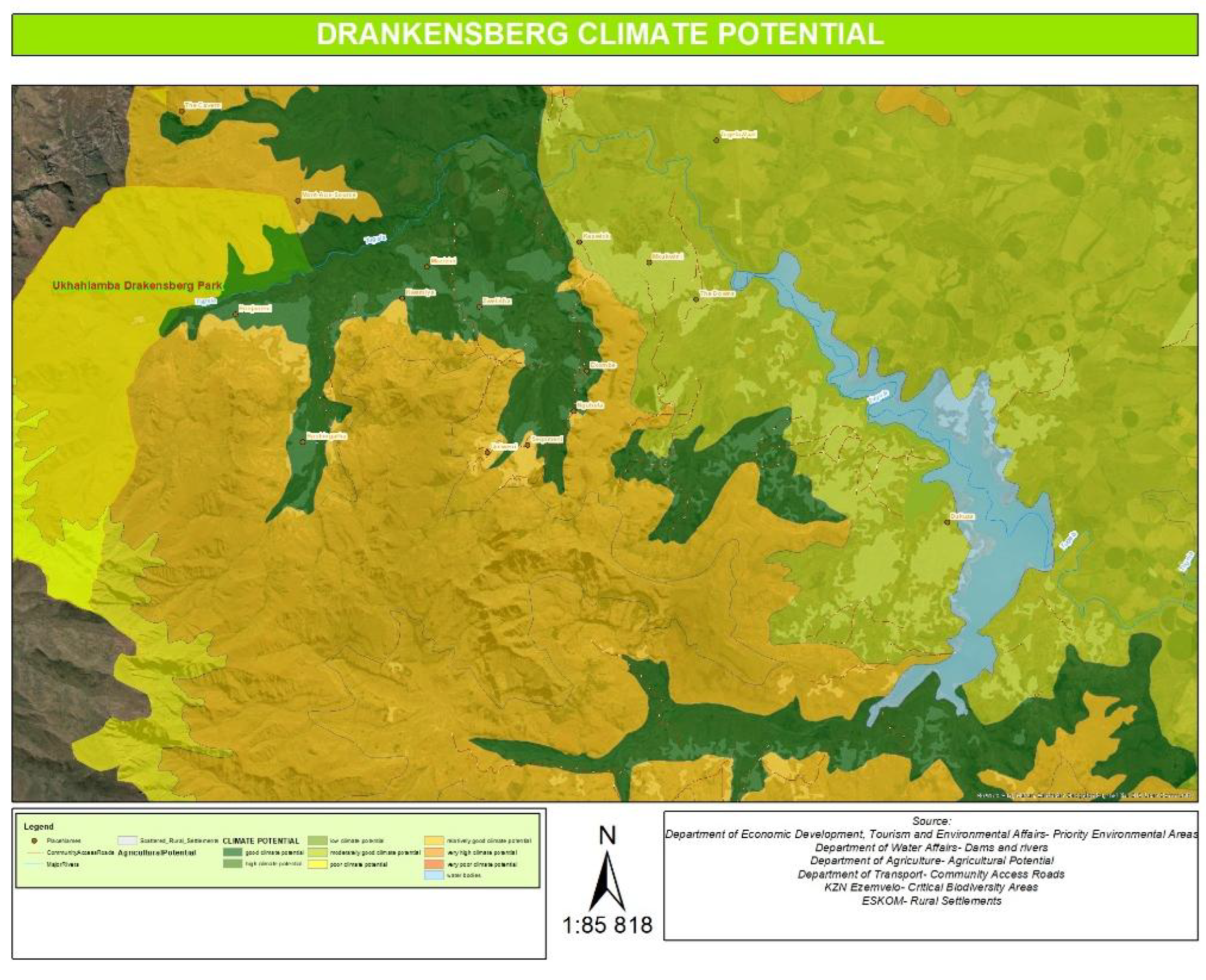
Figure 3.
Gravel road with low-lying bridge in the study area (Source: own photo).
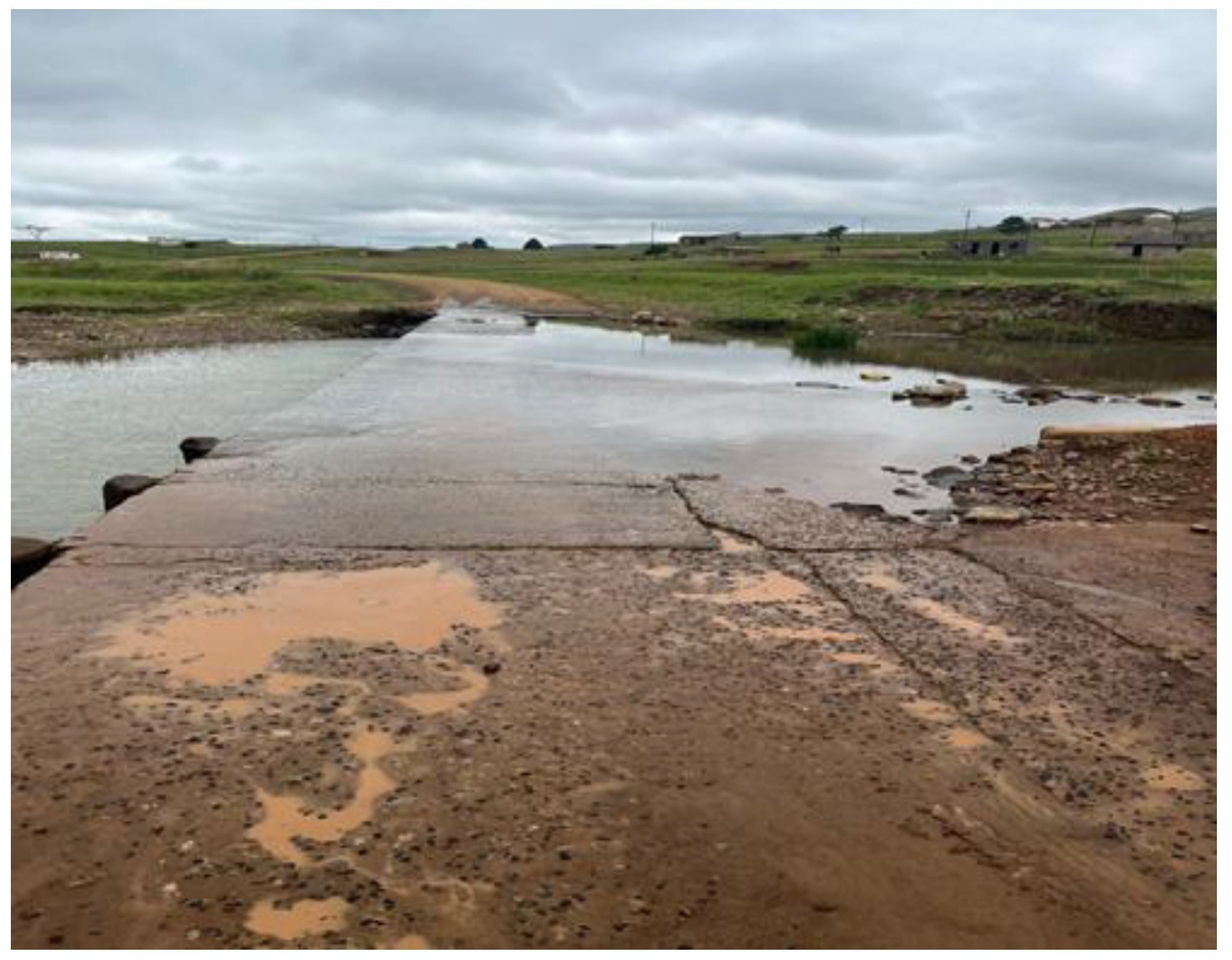
Figure 4.
a and b: Gravel Road without a bridge in the study area leading to unsustainable food systems (Source: Own photos).
Figure 4.
a and b: Gravel Road without a bridge in the study area leading to unsustainable food systems (Source: Own photos).
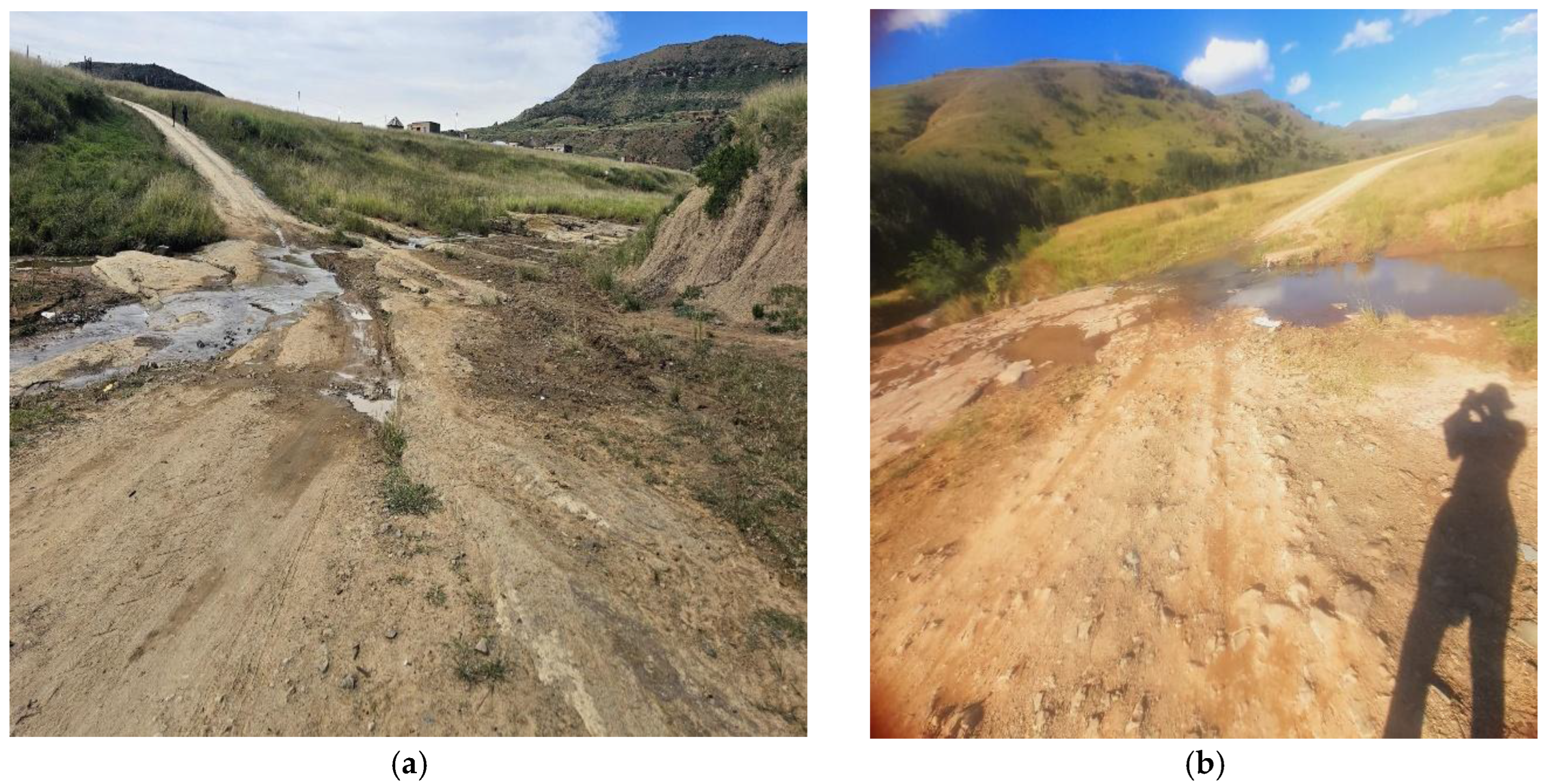
Table 1.
Descriptive analysis of independent variables.
| Variables | Measurements | Percent (%) |
|---|---|---|
| Gender | 1= Male | 72 |
| 2= Female | 28 | |
| Age | 1= 18-29 Years | 3 |
| 2=30-44 Years | 17 | |
| 3= 45-59 Years | 36 | |
| 4=60-70 Years | 42 | |
| 5= 71 or older | 2 | |
| Education | 1= No Education | 10 |
| 2= Primary school | 30 | |
| 3- High School | 55 | |
| 4= TVET College | 2 | |
| 5= University | 3 | |
| Type of farmer | 1= Subsistence Farmer | 18 |
| 2= Smallholder Farmer | 78 | |
| 3= Commercial farmer | 4 | |
| Duration of Observing Climate change | 1= Past 20 Years | 48 |
| 2= Past 10 Years | 33 | |
| 3= Past 5 Years | 12 | |
| 4= Last Years | 7 | |
| Access to climate change information | 1= Yes | 93 |
| 2= No | 5 | |
| 3= Not sure | 2 | |
| Source of climate change information | 1= Radio/TV | 93 |
| 2= Newspaper | 7 | |
| 3= Extension Officers | 0 | |
| Farming distance km | 1= less than 5km | 92 |
| 2= More than 5km | 8 | |
| Use of Indigenous knowledge | 1=Detect weather | 3 |
| 2= Restore soil & plant health | 87 | |
| 3= Treat livestock diseases | 8 | |
| 4= Purify water | 2 | |
| Level of impact by extreme weather events (EWEs) | ||
| Frost | 1= Low | 20 |
| 2=High | 48 | |
| 3= Extreme | 32 | |
| Strong Winds | 1= Low | 9 |
| 2=High | 43 | |
| 3= Extreme | 48 | |
| Flooding | 1= Low | 2 |
| 2=High | 17 | |
| 3= Extreme | 82 | |
| Drought | 1= Low | 18 |
| 2=High | 15 | |
| 3= Extreme | 67 | |
| Hail | 1= Low | 13 |
| 2=High | 47 | |
| 3= Extreme | 40 | |
Table 3.
Impact of Climate change on Agricultural Infrastructure.
| Variables | Bridges | Arable land | Dipping tanks | Fences | Roads | Soil Erosion Control structures |
| Coefficient (Standard Errors), p-value | ||||||
| Gender | 1.392 (1.074)0.195 | -0.346 (0.687), 0.615 | -1.040 (0.477), 0.029 ** | 0.772 (0.531), 0.146 | 3.224 (1.488), 0.030 ** | 2.499 (1.021), 0.014 ** |
| Age | -0.171 (0.369)0.645 | 0.518 (0.373), 0.164 | -0.162 (0.261), 0.535 | -0.006 (0.264), 0.982 | -0.374 (0.429), 0.383 | 0.056 (0.438), 0.898 |
| Education | -0.367(0.294)0.211 | -0.093 (0.302), 0.757 | -0.075 (0.249), 0.763 | -0.393 (0.228), 0.084 * | -0.352 (0.331), 0.287 | -0.136 (0.296), 0.645 |
| Type of farmer | 1.381 (0.776)0.075* | 0.183 (0.662), 0.782 | 1.698 (0.499), 0.001 *** | 0.426 (0.486), 0.381 | 2.239 (0.937), 0.017 ** | 1.546 (0.736), 0.036 ** |
| Duration of observing CC | -0.182 (0.288)0.527 | -0.171 (0.292), 0.557 | 0.206 (0.224), 0.358 | 0.255 (0.226), 0.258 | -0.146 (0.391), 0.709 | -1.066 (0.394), 0.007 *** |
| Access to CC info | 4.916 (677)0.994 | 5.434 (577.774), 0.992 | 1.729 (1.002), 0.084 * | 5.209 (345.225), 0.988 | 6.996 (560.984), 0.990 | 4.371 (509.127), 0.993 |
| Source of CC info | 4.606(1272)0.997 | -1.421 (0.998), 0.154 | 0.953 (0.818), 0.244 | -0.576 (0.824), 0.484 | 6.580 (769.737), 0.993 | -1.548 (0.879), 0.078 * |
| Farming distance km | 5.86511(883.6067)0.995 | 6.187 (606.253), 0.992 | 1.309 (0.947), 0.167 | 0.858 (0.836), 0.304 | 0.912 (1.228), 0.458 | -0.769 (1.010), 0.446 |
| Use of indigenous knowledge | 0.302(0.7195105)0.674 | 2.383 (1.281), 0.063 * | 0.394 (0.608), 0.517 | 1.015 (0.571), 0.076 * | -0.150 (0.929), 0.872 | 0.780 (0.766), 0.308 |
| Level of impact by frost | -0.341 (0.595)0.567 | 1.279 (0.563), 0.023 ** | 1.016 (0.430), 0.018 ** | -0.463 (0.413), 0.262 | 0.473 (0.653), 0.468 | 1.235 (0.663), 0.062 * |
| Level of impact by strong winds | 0.742 (0.4705906)0.115 | 0.844 (0.439), 0.054 * | -0.194 (0.394), 0.622 | 0.620 (0.381), 0.103 | 0.475 (0.656), 0.469 | 0.801 (0.500), 0.109 |
| Level of impact by Flooding | 0.923(0.471807)0.050** | 1.052 (0.581), 0.070 * | -2.249 (0.894), 0.012 ** | 0.591 (0.437), 0.176 | -0.809 (0.893), 0.365 | 0.779 (0.664), 0.241 |
| Level of impact by Drought | 1.392(1.073)0.195 | -0.471 (0.359), 0.189 | 0.130 (0.304), 0.668 | -0.441 (0.326), 0.175 | 1.046 (0.504), 0.038 ** | -0.145 (0.382), 0.705 |
| Level of impact by frost Hail | -0.171(0.3698)0.645 | -0.872 (0.542), 0.108 | -0.223 (0.366), 0.542 | 0.534 (0.382), 0.162 | -1.014 (0.622), 0.103 | -1.364 (0.631), 0.030 ** |
| LR Chi2(14) | 17.40 | 23.45 | 40.67 | 23.23 | 22.41 | 24.49 |
| Prob > Chi2 | 0.02357 | 0.0533 | 0.0002 | 0.0566 | 0.0707 | 0.0399 |
| Pseudo R2 | 0.07977 | 0.3275 | 0.3525 | 0.2139 | 0.3883 | 0.3835 |
NB: *, **, *** means significant at 10%, 5% and 1%, respectively.
Disclaimer/Publisher’s Note: The statements, opinions and data contained in all publications are solely those of the individual author(s) and contributor(s) and not of MDPI and/or the editor(s). MDPI and/or the editor(s) disclaim responsibility for any injury to people or property resulting from any ideas, methods, instructions or products referred to in the content. |
© 2025 by the authors. Licensee MDPI, Basel, Switzerland. This article is an open access article distributed under the terms and conditions of the Creative Commons Attribution (CC BY) license (http://creativecommons.org/licenses/by/4.0/).
Copyright: This open access article is published under a Creative Commons CC BY 4.0 license, which permit the free download, distribution, and reuse, provided that the author and preprint are cited in any reuse.


