

Submitted:
19 April 2025
Posted:
21 April 2025
You are already at the latest version
Abstract
As the adoption of Integrated Project Delivery (IPD) progresses, increasing evidence highlights its potential to improve project outcomes. However, as an emerging practice, there remains a lack of structured mechanisms to evaluate the maturity of its implementation, which can limit opportunities for learning and improvement. Therefore, this study introduces an IPD Capability Maturity Model (IPDCMM) to evaluate the maturity of IPD implementation at the project level. This model enables organizations to benchmark their IPD capabilities against established best practices, facilitating structured development and continuous improvement. This model is designed as a post-project assessment tool that evaluates the maturity of IPD practice upon project completion, providing critical insights for learning and future project enhancements. The methodology, underpinned by a pragmatic philosophy and guided by the principles of Design Science Research (DSR), prioritizes achieving practical outcomes (artifact). It combines insights from IPD frameworks, maturity models from other fields, and three case studies. The IPDCMM was developed alongside the IPD Maturity Assessment Tool (IPD-MAT), an artifact validated via evaluation sessions and feedback interviews with key stakeholders of IPD case studies. This model provides a structured framework for assessing IPD implementation maturity and facilitates a pathway for enhancing IPD practices and achieving efficiency in project delivery.
Keywords:
integrated project delivery
; IPD capabilities
; IPD Maturity Model
; IPD assessment tool
1. Introduction
Integrated Project Delivery (IPD), defined by the American Institute of Architects [1] as a project delivery approach that integrates people, systems, business structures, and practices into a collaborative process aimed at optimizing project outcomes and improving efficiency, has grown in popularity as a collaborative approach to project delivery [2]. This is evidenced by an increasing number of cases which have demonstrated its effectiveness over traditional project delivery systems, speaking to its transformative approach within the construction industry [3]. These documented cases exhibit a wide range of maturity levels in their implementation, highlighting variability and potential for improvements in its application [4,5]. In other domains, maturity models were utilized to enable organizations to benchmark their practices against industry best practices and, therefore, structure their development. However, the absence of mechanisms specifically tailored to evaluate the performance of IPD deployment constrains the ability to fully understand and systematically evaluate its implementation [6].
The evolution of capability-maturity models across diverse disciplines illustrates their critical role in enabling organizations to benchmark their practices against industry best practices, identify areas for improvement, and strategically advance their capabilities [7]. Maturity levels allow distinction between immature and mature entities, processes, and operations, allowing for a precise evaluation and clear path for progression [8]. Originating in the software engineering domains, these models have proven instrumental in diverse fields, such as IT and information systems management, supply chain, human resources, and organizational development. Similarly, in construction-related disciplines like project management, Lean, and Building Information Modeling (BIM), maturity models have served to outline clear pathways for the adoption and development of these methodologies [9].
Existing capability-maturity models from closely related fields to IPD, such as project management, supply chain management, BIM, and Lean, offer a valuable foundation, providing insights beneficial for IPD assessments [6]. Yet, these models fall short of addressing the unique aspects of the IPD approach, such as its distinct processes, implementation phases, and the specific capabilities necessary for effective execution. There is therefore a notable gap in available models to precisely gauge and guide the adoption and implementation of IPD. Developing a dedicated maturity model for IPD appears as an important step in its development as a collaborative project delivery method with the potential to overcome many of the construction industry’s shortcomings.
The study aims to address this gap by developing a capability maturity model for IPD to enable assessment at the project level. The proposed IPD Capability Maturity Model (IPDCMM) is specifically designed to support projects and organizations in benchmarking their IPD practices against established best practices, structuring their development, and facilitating ongoing improvement. Critically, the primary focus of this study is to utilize the IPDCMM to assess the maturity of IPD practice at the conclusion of a project. By concentrating on the post-project review phase, this paper highlights the utility of the IPDCMM as a post-project assessment tool, enabling informed evaluations that are pivotal for deriving lessons learned and continuous improvement of IPD implementation.
While the model is initially focused at the project level, its implications extend to organizational learning. It facilitates the transfer of successful practices and lessons learned from one project to another, thereby progressively enhancing overall organizational proficiency in IPD.
To achieve the main objective and develop the IPDCMM, five elements (sub objectives) were addressed:
- Defining IPD Maturity Levels: Establishing distinct maturity levels within IPD practices and providing clear criteria for progressing through these levels.
- Identifying IPD Capabilities: Undertaking a detailed examination, identification, and categorization of specific capabilities essential for successful IPD implementation.
- Identifying IPD Capability Indicators: Identifying indicators of capabilities derived directly from practical applications of IPD.
- Developing the IPD Maturity Matrix: Integrating IPD Capabilities and IPD Maturity Levels to form a detailed maturity matrix that outlines the indicators of each capability within each maturity level.
- IPD Maturity Assessment Tool: Transforming the detailed maturity matrix into a tool that enables evaluation and determines the maturity level of different capabilities.
The methodology employed in this study, underpinned by a pragmatic philosophy and guided by the Design Science Research (DSR) methodological approach, was designed to prioritize achieving practical outcomes in the form of artifacts that can be beneficial in improving IPD implementation. This approach aligns with established methodological frameworks for creating maturity models, specifically those detailed by [10,11]. The process combined insights from existing IPD frameworks, maturity models, and three case studies. Through staged development, the IPD Maturity Model was created, leading to the creation of the IPD Maturity Assessment Tool, which was validated via evaluation sessions and feedback interviews with key stakeholders of IPD case studies.
The paper begins by exploring established maturity models from other domains and the foundational IPD frameworks in the background section. A detailed methodology section follows, outlining the processes and validation techniques employed. Subsequent sections present the results, including the Maturity Levels, the IPD Capabilities, the Capabilities Indicators, the IPD Maturity Matrix, and the IPD Maturity Assessment Tool, before moving to the discussion and conclusion, which discuss the results and highlight the implications of the research in the field.
2. Background
2.1. Established Maturity Models
The Materials Maturity models have been widely used across different fields to measure organizational and process maturity, supporting entities in progressing from ad-hoc toward optimized practices. Though maturity models are very common in fields like Human Resources, IT, Construction Process, Project Management, Supply Chain, BIM, Lean, and Digital Transformation, their adaptation to the IPD domain presents unique challenges due to the uniqueness in processes and capabilities of IPD. Nonetheless, they still provide valuable insights for creating a maturity model specifically tailored to the requirements of IPD [12].
Maturity models in domains such as IT, human resources, and construction use structured frameworks to measure capabilities and readiness. Examples include the People Capability Maturity Model for human resources [13], COBIT for IT [14], and the SPICE for construction processes [8] as examples of ways in which such frameworks facilitate informed evaluation and enhancement in asset management, risk management, and process optimization maturity. Additionally, the LESAT model in Lean [15], the PM2 in project management [16], and the SCM in supply chain management [17] assess and refine the integration of principles and practices within organizational operations.
In the field of Building Information Modeling (BIM), the development of models like the BIM Maturity Matrix (BIMMM) [7], the NBIMS CMM Maturity Model [18], as well as the Indiana University’s BIM Proficiency Matrix [19], emphasizes assessing the capabilities of BIM and driving improvement in implementation and adoption within the construction industry. These models deal with different aspects, ranging from selecting the team to measuring performance.
Despite the broad application of maturity models across various domains, only a few studies have touched, although indirectly, on IPD maturity through integrating IPD with BIM and Lean. For instance, one study proposes a preliminary framework for evaluating organizational productivity through the combined application of BIM, IPD, and Lean Construction (LC), highlighting capabilities such as strategic problem-solving, collaborative governance, and enhanced decision-making capabilities. Another study has introduced the BIM, IPD, and Lean Integration Maturity Model (BILMM) to identify critical maturity attributes for BIM, IPD, and LC integration, emphasizing the importance of communication skills, process optimization, and the facilitation of continuous improvement [12]. This cross-domain synthesis underlines a significant gap in maturity models explicitly tailored for IPD that distinctly address its unique processes and capabilities. This study aims to bridge the gap by introducing a maturity model designed explicitly for IPD processes and capabilities.
2.2. Established IPD Frameworks
Given the lack of prior studies developing a maturity model for IPD, this review concentrated on existing IPD frameworks. Although few, they offer a comprehensive overview and detailed insights into IPD’s elements, components, and capabilities. They aid in developing a holistic understanding of IPD by deconstructing its complex structure into categorizable components aligned with distinct phases and capabilities necessary for effective adoption and implementation, as detailed in Table 1.
One foundational guide in this field is the American Institute of Architecture’s “Integrated Project Delivery: A Guide,” which segments IPD into eight phases: conceptualization, criteria design, detailed design, implementation documents, agency review, buyout, construction, and closeout. Each phase focuses on specific capabilities and collaborative practices essential for IPD’s successful execution [1]. Similarly, the framework by [20] serves as a practical blueprint for IPD, offering a detailed perspective for top management and emphasizing aspects like project organization, communication strategies, risk management, and performance metrics. It underscores the importance of strategic capability, including team formation and decision-making processes, crucial for effective IPD implementation.
Other frameworks have also provided detailed categorizations of IPD elements and capabilities. [4] introduced ‘markers’ to categorize IPD elements into context, legal/commercial, and leadership/management, which were developed from extensive workshops with North American industry experts. [5] refined these into stages, such as Making the Case for IPD, Framing the Project, and Executing the Work, to align closely with IPD implementation. Additionally, an R&D framework for IPD, developed in the preceding step of this research project, aims to create more targeted and effective progress in academia and practice. This framework outlines six primary themes—Choosing IPD, Framing the Project, Setting the Context, Executing the Work, Optimizing Excellence, Reaping the Benefits—organized into 19 categories to support structured IPD research and development [21].
Furthermore, [22] categorize IPD into contract, technology and processes, and culture, emphasizing the necessity of collaboration and integration at each stage. [23] introduce “The Simple Framework” in their book “Integrating Project Delivery,” which integrates organization, processes, information, and systems to streamline IPD practices. This framework specifically addresses contracting and traditional contract issues while detailing high-performing buildings, collaboration, co-location, metrics, and leadership in IPD, offering a detailed view crucial for developing IPD capabilities. [24] proposes a dual framework: the macro-framework focuses on overarching contract terms and business configurations, while the micro-framework delves into operational protocols such as work design, information design, and team formation strategies. These elements together provide a detailed overview of the operational elements critical for IPD success.
These existing frameworks provide an overview of IPD’s diverse elements, showcasing theoretical foundations and practical applications. Although they provide useful insights, they do not clearly define a process or method for evaluating IPD practices or determining implementation maturity. Their primary focus has been on bringing together the different components of IPD, constructing its overarching framework, and identifying critical success factors for this approach, rather than defining the specific capabilities required for successful IPD implementation. Therefore, a review of these frameworks reveals a clear gap in the characterization of IPD capabilities and the absence of a structured framework and mechanisms for assessing and advancing IPD implementation. This lack underscores the necessity for a maturity model specifically tailored to IPD that assesses its practices and outlines a clear progression path to refine and advance IPD capabilities. This study aims to fill this gap by introducing a capability-maturity model at the project level that builds on these established frameworks, as detailed in Section 3.2 and Section 4.2. This model provides a systematic approach to the assessment and continuous improvement of IPD practices at the project level, which allows for refining practices that directly influence the success of IPD implementation and enhances its adoption.
3. Methodology
The methodology for developing the IPD capability maturity model in this study was guided by the design science research (DSR) principles, which are characterized by the intent to develop and test artifacts to solve complex problems [25]. Therefore, this methodology exceeds the aim of understanding a phenomenon to attempt to change it by introducing novelty and innovation. DSR normally follows the cycle of identification of a problem, creating an artifact to solve that, and iterative testing and refinement to ensure effectiveness and utility. The iterative nature draws out the essential features of design science: dynamic, adaptive, and open to ongoing improvements or adaptations of the artifact based on feedback and changing requirements [25,26].
To further structure and guide this process, the methodology was enriched by the procedural frameworks of [10,11], which outline comprehensive procedures for maturity model development. These references complement the DSR approach by providing detailed procedures that ensure maturity models are developed with clear objectives and scope, thorough comparative analysis with existing models, and iterative development cycles.
Accordingly, the development of this model involves five main stages, each designed to build upon the insights and foundations established by the preceding stages, followed by a validation and feedback step, as shown in Figure 1.
3.1. Developing the General IPD Maturity Levels
To establish general maturity levels for IPD, the process begins by analyzing existing maturity models across various domains. This cross-disciplinary review aims to identify common patterns and effective strategies that have been successful in other fields such as Human Resources, IT, Project Management, Supply Chain Management, Digital Transformation, Lean, and BIM. These models provided an understanding of the strategies, structure, and patterns of the progression of maturity from one level to another within this wide range of fields [10]. Understanding these patterns provided valuable insights into how different maturity levels might be framed and evolved in the context of IPD, using approaches that proved effective in other fields.
3.2. Defining IPD Capabilities
Following the establishment of the general IPD maturity levels, the next step was to define IPD capabilities, supported by a thorough review and analysis of existing IPD frameworks, as documented in several key sources listed in sec 2.2. Each framework was meticulously examined to identify and consolidate essential capabilities for successfully implementing IPD projects. This exercise involved synthesizing the phases, practices, procedures, and distinct capabilities included in these frameworks, showing how exactly they engage and enable the efficacy of IPD.
To identify and validate the capabilities, a systematic process that entailed a comparison of components across various frameworks in order to identify common themes was conducted. Through this comparative examination, crucial capabilities that were commonly stressed as part of successful IPD implementations were identified. This was to ensure that the capabilities were rooted in the well-established practices and theoretical foundations of IPD.
All the capabilities were then grouped according to their capacity to impact certain aspects of project delivery, for instance, contract development, project governance, and management and oversight. This categorization process was crucial for ensuring that each capability was theoretically valid and practically applicable. Furthermore, the R&D framework (Arar et al., 2024), developed in the preceding stage of this research project, was utilized as a guiding template in mapping each capability set to a particular aspect of the IPD deployment. It was important that this mapping enabled each capability to be contextualized in the lifecycle of the IPD project, to ensure it is valid and can sustainably support different phases of project delivery.
3.3. Identifying IPD Capabilities Indicators
In the third step, a thematic analysis of three IPD case studies was conducted to identify capabilities indicators and their maturity levels extracted directly from practical implementations of IPD. The capabilities that were identified in the previous step acted as a coding framework. Therefore, the process formalized the observable behaviors, norms, policies, activities, tools, and practices that represent the indicators of IPD capabilities and their different maturity levels of implementation. This approach validates the capabilities identified in the previous phase and also ensures that the maturity model reflects real-world complexities and interactions. The resulting indicators serve as measurable elements translated into assessment statements within the Maturity Assessment Tool developed in the following steps.
Three case studies were chosen to provide real-world settings for the capabilities. These cases possess a diverse range of asset types, locations, sizes, and scopes, thereby providing a broad understanding of various contexts in IPD. The dataset comprises 37.7 hours of stakeholder interviews, insights from survey responses from 36 team members, and over 100 project documents. Part of the data regarding these three cases was reported in detail in [5], in a study that investigated the success factors of IPD.
- Case study 1: A municipal aquatic facility in British Columbia, Canada was renovated and enhanced with the goals of improving resilience, energy efficiency, and reducing greenhouse gas emissions. The project involved 10 signatories to the multiparty agreement.
- Case study 2: Two state-of-the-art educational institutions were built in Alberta, Canada, underpinned by the principles of 21st-century learning and design. The project involved 13 signatories to the multiparty agreement.
- Case study 3: A shared infrastructure in Ontario, Canada was developed through collaboration between two public entities, intended for three distinct first responder agencies. A centralized campus was designed to streamline the planning and execution of programs for these responders. The project involved 15 signatories to the multiparty agreement.
3.4. Developing the IPD Maturity Matrix
In the fourth step, the IPD maturity matrix was developed by systematically integrating the general maturity levels with the IPD capabilities identified earlier. To develop the framework, the process involved laying out the capabilities along one axis and the maturity levels along another. Each intersection in the matrix was then assessed to determine the extent to which a particular capability demonstrated characteristics of a given maturity level, based on indicators identified in the previous steps.
This step was important for categorizing each capability into detailed maturity levels, allowing for the assessment of IPD practices maturity. The resulting matrix provided a clear representation of where each capability stood in terms of development and implementation.
3.5. Creating the IPD Maturity Assessment Tool (IPD-MAT)
This step involved transforming the IPD maturity matrix into a user-friendly tool called the IPD Maturity Assessment Tool (IPD-MAT). Designed to be applied at the conclusion of a project, the IPD-MAT facilitated a structured evaluation of how IPD practices were implemented relative to established maturity levels. This tool, structured as a questionnaire, utilizes a five-point Likert scale to allow users to assess the maturity level of their IPD projects across the identified capabilities. Each capability is broken down into key indicators to allow for a detailed evaluation. The tool was designed with a scoring system that enabled the determination of the maturity level for each capability within the project, as detailed in Section 4.5.
3.6. Validation and Feedback
In accordance with the Design Science Research, the validation process emphasized the artifact’s utility and applicability in real-world project settings based on user feedback. This targeted feedback approach is not merely about achieving broad generalizability. Rather, the artifact is judged based on its utility, which is crucial for refining the model’s practical effectiveness and ensuring its relevance to the specific contexts of IPD projects [26,27]. Therefore, the validation of the study findings was conducted through a series of interactive sessions tailored specifically to assess the tool and the model’s applicability on actual projects. The process involved returning to the three case studies that served as the basis for development. Initially, key stakeholders within each project were identified and engaged, with particular emphasis on owner representatives, especially those involved in the projects, to gather key insights.
- Evaluation Sessions: These sessions entailed administering the IPD Maturity Assessment Tool questionnaire to owners’ representatives to assess the maturity levels of various capabilities within their projects.
- Maturity Reporting: After the evaluations, detailed reports were compiled to outline the IPD maturity of identified capabilities in each project, providing a detailed overview of current practices and maturity levels.
- Feedback Interviews: Follow-up interviews were conducted with these stakeholders to discuss the findings detailed in the reports and evaluate the overall utility of both the Assessment Tool and the maturity model.
4. The IPD Capability Maturity Model (IPDCMM)
The overall findings of this study resulted in the IPD Capability Maturity Model articulated through five distinct yet interconnected elements. The elements include (1) IPD Maturity Levels, (2) IPD Capability Sets, (3) IPD Capabilities Indicators, (4) IPD Maturity Matrix, and (5) IPD Maturity Assessment Tool.
4.1. IPD Maturity Levels
A maturity level is an indicator that allows for a stepwise distinction between immature and mature entities/processes/projects in regard to a certain approach or method. It refers to clearly outlined evolutionary stages that introduce and establish new skills/capabilities for skill development within an organization/project (Sarshar et al., 2000, as cited in Succar, 2010). To develop maturity levels for IPD, various established maturity models, were synthesized and tailored to form unique levels of IPD. This was done by observing and comparing the patterns among this diverse range of maturity models and reflecting them on the IPD maturity levels as detailed in Table 2.
The first pattern observed was the progressive sophistication from a basic understanding of an approach to the advanced level of capability and optimization, often in five or six stages, as exemplified by models such as P-CMM, COBIT, SCM and SPICE. In this research, the IPD Capability Maturity Model is designed with a baseline assumption that all assessed projects have implemented IPD at some level by the time of their post-project completion evaluation. Consequently, the model begins at what is termed the ‘Initial’ level, where basic IPD practices are already in place. This is in contrast to the typical starting point of ‘Level 0’ or ‘non-existent’ level suggested by [10,11], where no practices are assumed to be present. Incorporating a ‘Level 0’ would not be suitable for this model, as it specifically targets projects that have already adopted the IPD approach, therefore assuming the existence of some foundational IPD practices.
The second pattern observed was regarding level 1, where capabilities are still emerging and inconsistently applied, illustrated by models such as SPICE, SCM, 301in, and OBIMA. Therefore, the first level in the IPD maturity levels has been identified as Initial reflecting an early stage of IPD implementation where capabilities related to IPD could be limited or inconsistently applied. The third pattern, concerning the beginning of standardization and effective management, is seen in models such as OBIMA, SPICE, SCM, and BIM Maturity Matrix (BIMMM). Consequently, the second and third levels have been identified as Defined and Managed respectively, emphasizing the beginning of establishing and consistently applying IPD practices. Moving to the higher levels, another pattern was observed regarding Level 4, where practices are applied and deeply embedded in the project, as noticed in models such as 301in, SPICE, and OBIMA. Therefore, level 4 in IPD maturity levels is characterized as Proficient reflecting that IPD practices are deeply embedded in the project’s culture.
The last pattern was the notion of advanced implementation, which represents continual optimization and innovation as a sign of advanced maturity as observed in models like COBIT, and SPICE. Therefore, the last stage in IPD maturity levels, level 5, is characterized as Advanced where capabilities related to IPD are highly developed and continuously improved to enhance project performance and outcomes.
4.2. IPD Maturity Levels
Identifying the IPD capabilities was based on a review of established IPD frameworks listed in Table 1, which served to inform the development process. The analysis involved an examination and synthesis of these frameworks to integrate their key thematic elements into a unified set of capabilities. This approach facilitated the creation of a set of capabilities that aim to be as extensive as possible in their coverage and tailored to the practical application of IPD. The process resulted in the identification of 21 capabilities, categorized into six main sets as detailed in Table 3, providing the foundation for developing the IPD maturity model.
Understanding and Facilitation Capability Set: This set focuses on establishing a robust understanding of IPD principles and processes to effectively adopt and implement this approach. This is represented in two capabilities: “IPD Comprehension,” which focuses on equipping team members with a comprehensive knowledge of IPD fundamentals, and “Facilitation,” which concerns establishing an effective facilitation process that addresses any gaps in the team IPD knowledge and provides training on new tools and techniques. In addition, this set includes strategic efforts for building a cohesive team culture, “Building and Sustaining Teams,” to reflect the values of mutual respect, trust, shared responsibility, and working collaboratively.
Goal Setting and Contract Development Capability Set: This capability set focuses on aligning project team members around shared goals and values and integrating these principles into formal agreements that manifest a true IPD contract. The capability “Developing Project Goals (Validation Process)” involves collaboratively determining project specifics, including design, budget, and timeline, in a workshop setting and translating these specifics into clear, measurable, and achievable goals. The “Defining Project Values” capability is crucial for clearly defining and communicating the project’s core values, ensuring they are referenced throughout the decision-making process and that there is a commitment to these values from the entire team. Lastly, the “Contract Formulation” capability represents the legal knowledge and awareness to create contracts that integrate IPD principles, enhance collaboration, and support the transparent and integrated nature of IPD projects.
Project Governance Capability Set: This capability set focuses on establishing governance mechanisms in IPD projects, which is essential for defining roles, enhancing decision-making, and ensuring effective management and owner involvement. The “Defining Roles and Responsibilities” capability involves setting clear roles, responsibilities, and accountability structures within the IPD team to promote an efficient work environment. This fosters a clear understanding among team members of their duties and expectations and enhances overall project coordination. The “Establishing Decision-Making Process” capability is key to establishing a framework that supports transparency, inclusivity, and collaboration. It is designed to ensure that all decisions are guided by the overarching project goals and values. The “Establishing Management Structure” capability develops a multilayer management framework that effectively outlines different roles and ensures seamless project execution and coordination. Lastly, the “Owner Involvement” capability emphasizes the owner’s active participation in both decision-making and day-to-day project management, essential for championing the IPD approach throughout the project lifecycle.
Operational Excellence Capability Set: This set focuses on the integration of BIM and Lean, fostering improved collaboration, communication, and multidisciplinary dynamics within IPD projects. The “Operational Culture” capability promotes a Lean and collaboration culture by embedding Lean values and fostering an environment of continuous improvement and a no-blame culture. The “Operational Principles” capability integrates continuous improvement, waste reduction, and value maximization principles with core IPD principles to enhance operational efficiency. “Tools” utilizes advanced tools and technologies, including BIM and Lean, to enhance collaboration and process efficiency. The “Dynamics” capability focuses on establishing and managing multidisciplinary teams that leverage collective expertise to solve problems and responding to project demands with efficiency and agility. “Engagement” promotes open and transparent communication among all project members, which is necessary for developing a participatory environment in which ideas and feedback lead to better decision-making and project alignment. Lastly, the “Work Environment” capability optimizes physical and virtual spaces for collaboration, notably through the creation of a ‘Big Room’ environment that fosters inclusivity and immediate communication, enhancing overall project efficiency and culture.
Management and Oversight Capability Set: This capability set focuses on collaborative and transparent financial management, collective risk mitigation, information management, and integrated monitoring practices. The “Financial Practices” capability involves managing project costs and enhancing project value through transparent financial management. This includes involving team members in financial decision-making and fostering a culture of shared financial responsibility while maintaining individual accountability. It also involves designing and implementing incentive mechanisms that encourage sustained team collaboration. The “Risk Practices” capability focuses on a collaborative approach to risk management, jointly identifying, assessing, mitigating risks, and enhancing risk collective ownership within the project. This includes integrating all team members in the process using collaborative tools and practices for effective risk management. The “Information Management” capability is important for supporting collaborative decision-making, ensuring data consistency, and enhancing accessibility across the project team. Finally, the “Performance Monitoring” capability establishes and manages a set of unified metrics that synthesize data from all project members to track and measure key performance indicators, ensuring continuous monitoring and adjustment based on regularly updated data.
Continuous Learning Capability Set: This capability set focuses on promoting ongoing learning and the systematic integration of feedback within IPD projects. It establishes a culture of continuous learning and knowledge sharing to refine and enhance IPD practices. The “Continuous Learning and Improvement” capability involves systematically gathering, analyzing, and sharing lessons learned from the project, such as the effectiveness of IPD practices, client satisfaction, and stakeholder feedback. This process ensures that insights gained are actively utilized to drive project success and continuous improvement.
4.3. IPD Capability Indicators
In this stage of the study, the aim was to identify indicators for the previously defined capabilities, forming the final building blocks of the IPD maturity model and underpinning the development of the IPD Maturity Assessment Tool. Utilizing the capability sets as a coding framework, this phase concentrated on capturing the diverse behaviors, norms, activities, policies, and tools that exemplify the capabilities in action. A thematic analysis of data from three IPD case studies was conducted, and 112 different indicators were identified and categorized under 21 capabilities as illustrated in Table 3. The resulting indicators were grounded in empirical observations and contributed to defining the criteria within the maturity model. They represent the measurable elements that directly inform the assessment statements used in the IPD Maturity Assessment Tool.
This set of indicators underpins the model’s utility by providing metrics for assessment across various dimensions of IPD implementation. For example, indicators for “Understanding and Facilitation” illustrate the depth of IPD comprehension and the effectiveness of facilitation mechanisms, such as recognizing the relevance of IPD to project success and evaluating the impact of training and facilitation on culture establishment and team building practices. For the “Goal Setting and Contract Development” set, capability indicators highlight the strategic basis of IPD projects. These indicators focus on collaborative and structured goal setting and assessing how project values are communicated and integrated into decisions, in addition to the indicators that concern how effective collaboration is in contract development and the incorporation of IPD principles. Furthermore, “Operational Excellence” includes several indicators under its six capabilities, which demonstrate how lean practices are emphasized, the use of technology like BIM, and the improvement of collaborative work environments, in addition to the details of the engagement and communication strategies and the aspects that impact the multidisciplinary team dynamics.
The indicators of the “Management and Oversight” set reflect aspects of information management, open-book accounting, and collaborative risk management processes. These represent how transparency, trust, and stakeholder engagement are fostered within the IPD project. Lastly, in the “Continuous Learning and Improvement” set, the indicators focus on the regular assessment and feedback and its integration and impact on continues learning to enhance IPD practices effectiveness and outcomes.
4.4. IPD Maturity Matrix
The IPD Maturity Matrix was designed to outline maturity levels across the different IPD capabilities. It combines three components identified in previous research phases: IPD Maturity levels, IPD Capabilities, and IPD Capabilities Performance Indicators. This matrix features a detailed layout of capabilities across different maturity levels from ‘Initial’ to ‘Advanced,’ allowing for a detailed examination of IPD implementation, as shown in Table A1 (Appendix A).
The process involved mapping each IPD capability against its relevant performance indicators at successive maturity levels. This mapping involved examining how each capability manifested at different stages of maturity within real project environments. This real-world application perspective was brought into the process through the list of indicators extracted from three IPD case studies, showing how capabilities manifest at various maturity levels.
For instance, consider the capability of Facilitation, which includes indicators such as “Assessment of Gaps in Understanding of IPD Practices” and “Training of New Team Members on IPD Tools.” In the first case study, the project team did not assess members’ understanding of IPD principles, procedures, and tools; however, they did engage an external facilitator to conduct IPD training. The second case study showed a more robust approach: an assessment of IPD comprehension was carried out, followed by targeted training and facilitation. This was aided by including a facilitator into the team as a signatory member, allowing for continuous evaluation and addressing knowledge gaps. In contrast, the third case study lacked both the assessment of team understanding and a formalized training program on IPD, relying solely on internal facilitation. This example of the implementation of this capability demonstrates how the IPD Maturity Matrix’s indicators can effectively capture the diversity in implementation approaches and demonstrate the distinct maturity levels across projects.
Therefore, this matrix can help the projects benchmark their IPD implementation and gather lessons that can aid them in strategically planning their developmental pathways toward advanced IPD practices in future projects.
4.5. IPD Maturity Assessment Tool (IPD-MAT)
In the final stage, theoretical frameworks established earlier were transformed into a practical artifact—the IPD Maturity Assessment Tool (IPD-MAT). This tool offers a practical way to systematically assess IPD practices, facilitating further improvements in the IPD approach. This tool leverages a structured questionnaire formatted with a five-point Likert scale to assess the maturity of IPD practices. The questionnaire was structured based on the capabilities’ framework, and each question corresponds to a specific indicator within a capability set. These indicators, defined in the previous steps, serve as measurable elements that are translated into assessment statements within the IPD-MAT.
This approach resulted in a detailed assessment tool that includes 112 questions based on the indicators across 21 different capabilities. Each indicator has five possible responses, ranging from ‘Strongly Disagree’ to ‘Strongly Agree,’ each assigned a score starting from 1 for ‘Strongly Disagree’ to 5 for ‘Strongly Agree.’ The consolidated score for all indicators within a capability and the average score is calculated. Based on this average score, the maturity level is determined within the following intervals:
- Initial (1.0 - 1.9)
- Defined (2.0 - 2.9)
- Managed (3.0 - 3.9)
- Proficient (4.0 - 4.5)
- Advanced (4.6 - 5.0)
It is important to note that the maturity levels of ‘Proficient’ and ‘Advanced’ are conceptually closer to each other compared to the earlier stages, both representing a high level of capability and best practices within the processes. However, a crucial distinction is maintained between these two top tiers to underscore the pivotal role of innovation. This scoring strategy ensures that the ‘Advanced’ level is clearly linked to innovations in implementation, representing the peak of the maturity model.
4.6. Application and Validation of the Maturity Model and Assessment Tool
The model’s and tool’s utility and effectiveness in capturing the IPD implementation maturity levels were validated by assessing two case studies out of the three cases included in this research; attempts to engage with the third project were unsuccessful. As described in Section 3.6, this validation strategy was guided by Design Science Research principles, focusing on the artifact’s utility and applicability rather than generalizability. This strategy emphasizes the utilization of feedback derived from real-world project implementations, which plays a significant part in improving and defining the maturity assessment tool. Engaged case study stakeholders provided key insights that were essential in verifying and improving the tool so that it could reflect actual-world usage. The validation process consists of three steps that include the assessment sessions for the two case studies, the development of a maturity report for both projects, and follow-up interviews with the projects’ stakeholders for the purpose of discussing and commenting on the relevance and utility of the assessment tool and the maturity model.
The maturity assessment conducted for two cases (Case Study 1 and Case Study 3) demonstrated that even successful IPD projects exhibit varied capability maturity levels. For instance, the first case study showed a relatively high level of maturity, particularly excelling in the decision-making process and the collaborative work environment, which was rated as “advanced.” However, lower maturity levels were observed in areas such as tools, information management, and facilitation, indicating gaps in the consistent application and integration of IPD tools. Comparatively, the third case study had a less mature implementation as a whole, with most of the capabilities being at the “ managed “ level. Exceptionally, some capabilities are graded as “advanced,” such as the work environment, and some are graded as just “defined,” such as the contract development capability.
The results of each project assessment were presented in a report that provides an executive summary and a quick overview of the maturity levels across the main capability sets, followed by detailed scores for each capability. For demonstration, Figure 2 illustrates the summary of capabilities assessment as it appears in the maturity report prepared for the third case study.
The follow-up sessions with stakeholders from the two projects provided important feedback, which led to some refinement and adjustment. One of the key outputs of the process was revisiting the scoring method for defining the five maturity levels. Configured initially with equal distribution, the process indicated a need for a recalibration of the scoring to more accurately mirror the difficulty of reaching the last maturity level, which is linked with signs of innovation in the implementation. Moreover, an issue was identified and corrected concerning a negatively worded question in the questionnaire that impacted the scoring metrics, thus improving clarity and accuracy in the evaluation process.
5. Discussion
The IPD Capability Maturity Model (IPDCMM) introduced in this study advances the field of IPD by offering a novel framework and artifact specifically designed to evaluate the maturity at the post-project phase as part of the learning process. By focusing on project-level evaluation, the IPDCMM facilitates targeted improvements that are directly actionable, providing a clear path for continuous refinement of IPD practices. Unlike existing models, the IPDCMM integrates empirical data from extensive IPD case studies with established theoretical frameworks, ensuring a robust foundation grounded in theory and practice and confirming the model’s relevance to real-world applications.
Comparatively, IPDCMM aligns with the existing IPD frameworks in incorporating their core principles, contractual elements, and operational processes that differentiate IPD from other forms of project delivery. IPDCMM integrates and extends upon critical markers and thematic categories from seminal works in the field (e.g., [1,4,5,20,23,24]) to form a comprehensive capability framework that directly corresponds to practical IPD applications across diverse project settings and resulting in a structure that could be particularly beneficial for practitioners, providing them with a model and tool that reflects the actual dynamics of project implementation. However, the IPDCMM is distinguished from these frameworks by introducing a novel assessment tool that utilizes over 112 empirically derived indicators. This tool offers a detailed and structured evaluation of IPD practices, facilitating precise assessments and targeted improvements.
Furthermore, the IPDCMM aligns with established maturity models from other domains, including BIM, Lean, and project management [7,15,16], in that it follows a structured progression through distinct maturity levels that outline steps toward greater sophistication in implementing IPD practices. However, many existing maturity models are criticized for lacking solid theoretical backing and for being hypothesized without a precise indication of their practical application [28,29]. This study directly addresses the need for a theoretical foundation for the maturity model by introducing the IPD capability framework that represents the theoretical underpinning upon which the maturity model was developed. In addition, this study addresses the need for precise practical application by introducing the maturity assessment tool. This tool ensures there is a clear pathway for how this maturity model can be effectively put into practice. Furthermore, many of the existing maturity models are developed without the support of empirical data, leading to critiques of their applicability and relevance [28]. This concern has been addressed in the IPDCMM through the integration of empirical data from three IPD case studies, ensuring that the framework is aligned with real-world data and practices, thereby enhancing its validity and applicability.
The IPDCMM is distinguished from traditional maturity models, which often focus on organizational maturity assessments, by specifically targeting the project level. This focus allows for a nuanced understanding of IPD practices within the dynamic context of individual projects, a perspective not commonly addressed by broader organizational models like the Supply Chain Management maturity model [17], BIM QuickScan [30], and the BIM Maturity Matrix [7]. Further, by concentrating on post-project reviews, the IPDCMM facilitates a detailed analysis of the practices implemented and the lessons learned, directly feeding into a continuous improvement cycle essential for IPD progression. Notably, while the direct evidence from this study is confined to project-level impacts, it is reasonable to speculate that consistent application of this model across multiple projects and continuous evaluation and refining of IPD practices may naturally extend IPDCMM benefits to organizational learning and, therefore, influence broader organizational maturity towards IPD.
That said, there are some considerations regarding the model and the artifact’s scope limits. Specifically, the model’s primary focus on the post-project phase pinpoints opportunities to apply it during earlier project stages, such as planning and pre-construction, and throughout the project duration remains largely unexplored. These phases offer critical opportunities for early intervention and continuous assessment that could further enhance project outcomes. Thus, extending the model’s framework to include readiness evaluations at project inception and ongoing assessments throughout the project lifecycle could significantly broaden its utility and impact.
Furthermore, while using a self-assessment approach in the tool can be effective in understanding and improving processes, it introduces a limitation in the form of subjectivity, where participants may hold biases toward their work, affecting the accuracy of the maturity [31]. To mitigate individual biases, the assessment tool could be administered to all project parties to combine diverse insights for a more balanced view of implementation maturity, potentially reducing subjectivity. Moreover, implementing such a tool, if guided by an external evaluator or facilitator knowledgeable about the IPD, may also ensure objectivity. These approaches would lead to less bias and simultaneously increase the validity and reliability of results.
6. Conclusions
This study introduces the IPD Capability Maturity Model (IPDCMM) alongside the IPD Maturity Assessment Tool (IPD-MAT), designed to enable a systematic evaluation of IPD practices and guide their advancement within the construction industry. The development of the model was guided by a DSR methodological approach that utilized three data sources: existing maturity models from other fields, established IPD frameworks, and three IPD case studies. The development of this model fills a notable gap in the literature, addressing the lack of dedicated tools to assess the varying levels of IPD implementation maturity at the project level.
The model comprises several key components: (1) IPD Maturity Levels, which provide a pathway for progression; (2) IPD Capabilities, identifying the skills and processes essential for successful implementation; (3) Capability Indicators that enable measuring capability levels; (4) the IPD Maturity Matrix, which aligns capabilities with maturity levels for detailed evaluation; and (5) the IPD Maturity Assessment Tool (IPD-MAT), a practical questionnaire-based tool for assessing project maturity. Combined, these components contribute to developing an IPD model that provides both diagnostic and developmental guidance for improving IPD implementation. The model and its components offer theoretical and practical insights that enable a structured evaluation and refinement of IPD practices.
The study’s implications, although centered on project-level assessments, extend beyond individual projects, providing a framework for organizations to build maturity in their IPD practices over time. The maturity assessment of IPD practices reveals underlying weaknesses and highlighted strengths in a structured manner. This level of detail could help organizations and industry practitioners better understand the context and performance of their IPD projects, thereby enhancing their ability to objectively measure and systematically improve their IPD capabilities.
However, this research does not consider the Organizational-wide-ranging influences proposed here. Further research should, therefore, be specifically designed to consider how such a structured post-project evaluation approach might influence wider organizational practices and test the potential benefits of IPD Capability Maturity Model applications at organizational levels.
This research validation approach mainly involved revisiting two case studies from the three cases that contributed to the model’s development by assessing each of these cases, followed by preparing a detailed maturity report and follow-up interviews to discuss the tool’s relevance and utility. This methodological choice aligns with the principles of DSR in emphasizing the practical utility and effectiveness of the artifact based on application feedback rather than broad generalizability. However, future research could explore its application across a more diverse range of projects and contexts to further expand the model’s applicability. This can contribute to a broader understanding of its effectiveness in varying IPD environments.
Additionally, while the artifact proposed are limited to the maturity evaluation at the post project phase, future research could explore the possibility of extending the utility of capability framework in other phases such as the planning and pre-construction phases to evaluate the readiness and during the execution phase for continuous assessment.
Author Contributions
Conceptualization, A.J.A. and E.P.; methodology, A.J.A. and E.P.; validation, A.J.A., E.P. and S.S.; formal analysis, A.J.A.; investigation, A.J.A.; resources, A.J.A. and E.P.; data curation, A.J.A.; writing—original draft preparation, A.J.A.; writing—review and editing, A.J.A., E.P. and S.S.; visualization, A.J.A.; supervision, E.P. and S.S; project administration, A.J.A; funding acquisition, E.P. All authors have read and agreed to the published version of the manuscript.
Funding
This research was funded by Mitacs (through the Accelerate program) and the Integrated Project Delivery Alliance (IPDA).
Data Availability Statement
The original data presented in the study are openly available at: 10.6084/m9.figshare.28821782.
Conflicts of Interest
The authors declare no conflicts of interest.
Appendix A

Table A1.
IPD Maturity Matrix.
| Capability Set | # | Capability | Level 1 | Level 2 | Level 3 | Level 4 | Level 5 |
|---|---|---|---|---|---|---|---|
| Initial | Defined | Managed | Proficient | Advanced | |||
| Understanding and Facilitation | 1.1 | IPD Comprehension | Limited awareness of IPD principles, processes, and key success factors. | Demonstrates familiarity with IPD principles and processes and understands their relevance to project success. | Possesses a solid understanding of IPD principles and processes, actively beginning to integrate and apply these concepts in the project’s execution. | Possesses an in-depth understanding of IPD principles and processes and effectively implements IPD strategies and practices across the project. | Exhibits advanced comprehension of IPD principles, processes, and drivers for success, allowing them to adapt and refine IPD practices based on project needs. |
| 1.2 | Facilitation | Facilitation processes are not well-established and may not address team needs adequately within the IPD framework. | Facilitation processes are being developed and are beginning to address the fundamental needs of the team in terms of general knowledge about IPD and its processes and stages. | Established facilitation processes are in place, providing necessary knowledge about IPD and its processes, in addition to any needed training on the tools and techniques that will be applied during the project. | Effective facilitation techniques are employed, addressing the team’s specific needs (or knowledge gaps) based on thorough assessment and training the team on achieving a collaborative IPD project environment. | Innovates in facilitation practices and training to equip the team with the knowledge, latest methods, and tools to be most effective and contribute to establishing a favorable culture. | |
| 1.3 | Building and Sustaining Teams | Efforts and resources invested to establish a unified and cohesive team culture are limited. | Attempts to build a cohesive team culture are emerging, with steps to reduce hierarchy and encourage open communication. | Continuous efforts and plans to establish a cohesive team culture are designated as an integral part of the project activities. | Team-building efforts are prioritized and recognized as one of the key drivers for project success. The project culture is supportaive and encourages participation. | Innovative practices are in place to foster a cohesive culture and unity, leading to an exemplary team environment that enhances ownership and encourages active participation and collaboration. | |
| Goal Setting and Contract Development | 2.1 | Developing Project Goals (Validation Process) | The validation process is unstructured and conducted with limited collaboration. The validation report is unclear and lacks detail. | Initial efforts at structuring the validation process are visible, with some collaboration among team members beginning to take shape. The validation report is basic and lacks clarity and depth. | The validation process is effectively conducted, with clear project objectives, base target costs, and schedules established through collaborative efforts. Provides a clear validation report and results. | The validation process is highly efficient, detailed, and collaborative, resulting in precise project objectives, costs, and schedules. Delivers a detailed and structured validation report for owner assessment. | The project team excels in the validation process, demonstrating innovation and leading to an insightful validation report that aids owner decision-making. Effectively uses the validation phase to seed and enhance a collaborative project culture. |
| 2.2 | Defining project values | The project values are not defined or unclear. The project team has limited understanding and awareness of these values, and they are not referred to in the decision-making process. | Project values are identified but not fully integrated into project processes. There’s an emerging effort to communicate these values to the team, though reference to them in decision-making is limited. | Core values are clearly defined and communicated across the project. The values are frequently referred to in the decision-making processes; however, their application is inconsistent. | Project values are clearly defined and consistently applied in the decision-making processes. The project team frequently does values checks to ensure consistent commitment and alignment. | The project values are clear and deeply integrated into the project’s operations and decision-making processes. The team adopts innovative methods to reinforce values and ensure their active influence on the project’s culture and outcomes. | |
| 2.3 | Contract Formulation | Contract formulation lacks true collaboration. Some IPD elements, such as liability waiver, are absent. | Contract formulation is done somewhat collaboratively. Main IPD principles are incorporated into the contract. | Contracts are formulated through a collaborative process with the active participation of all stakeholders. The contract fully integrates IPD principles. | Contract formulation is highly collaborative, leveraging advanced techniques such as workshops and expert consultations. The contract reflects a true IPD project with all its features. | The contract formulation process is highly collaborative, featuring signs of innovation, with attempts to go beyond standard IPD contracts to enhance stakeholders’ collaboration and optimize contract terms to precisely reflect the project conditions. | |
| Project Governance | 3.1 | Defining Roles and Responsibilities | Limited understanding of individual and collective roles within the project. Roles are not clear, overlapping, and in some cases conflicting, which affects team synergy. | Awareness of roles begins to form. Efforts are made to include all parties in discussions on roles and responsibilities, with leading roles for individuals with prior experience with IPD. | Roles and responsibilities are clearly defined and communicated, emphasizing the importance of each member’s contribution to project success. | The team adopts a new entity mindset and deeply understands their interconnected roles, accountability structure, and how they contribute to the project’s success. | Roles and responsibilities, accountability structure, and unique contributions of each party to the project’s success are deeply understood, allowing for flexibility and adaptability in roles. This enables the team to adjust roles as needed to ensure project success. |
| 3.2 |
Establishing Decision-Making Process |
The decision-making process is made with limited transparency and collaboration and with limited guidance from project goals and values. | The team begins to establish a decision-making process that is guided by project goals and values. However, the process does not include all team members, and documentation is inconsistent. | A collaborative decision-making process is in place, with team members actively participating in open discussions that lead to decisions grounded in shared project values. Decision matrices and other tools are employed to evaluate alternatives, with most decisions being well-documented. | Decision-making is highly inclusive and reflective of the project’s joint management approach. Effective use of tools like decision matrices to assess alternatives, alongside thorough documentation of decisions’ context and rationale. | In addition to inclusivity, transparency, collaboration, and thorough documentation, the decision-making process is characterized by adaptability, agility, and responsiveness to evolving project needs. | |
| 3.3 |
Establishing Management Structure |
The management structure is undefined or poorly organized. Lack of coordination among SMT, PMT, and PIT leads to confusion and inefficiencies, impacting project flow. | Initial efforts to establish a structured management framework are in place, improving communication between management levels. However, these structures are not fully optimized, resulting in some operational inefficiencies. | A clear management structure is established, with distinct roles and responsibilities across the management levels (SMT - PMT - PIT). This structure enhances project coordination, effective decision-making, and project progression. The PMT does most of the project work, with limited roles for the SMT and PITs. | The management structure operates efficiently and is marked by highly coordinated efforts between SMT, PMT, and PIT, each with a distinct role that is performed entirely to ensure smooth project execution. The PMT performs as the operational core, driving most project activities. The SMT plays a supervisory and conflict-resolution role and stays continuously informed and engaged. PITs are active as multidisciplinary teams handling specific project areas with expertise. | The management structure operates with full efficiently and is characterized by adaptability to the project needs and innovation in management practices to boost collaboration and efficiency across SMT, PMT, and PIT. | |
| 3.4 | Owner involvement | Owner involvement is minimal, with little engagement in daily management or decision-making. | The owner begins to take a more active role, though involvement is still limited to key decisions or milestones. | The owner is actively involved in project governance, contributing to decision-making and supporting the IPD approach. | The owner plays a central role in project governance, fully embracing the IPD model and contributing to its success through active participation and leadership. | The owner is the actual leader of the project and the primary champion of IPD. Their involvement is transformative, where they drive the project forward with a deep commitment to IPD principles, fostering collaboration, and creating a distinct team culture. | |
| Operational Excellence | 4.1 | Operational Culture | The operation culture is primarily traditional, and no efforts are made to encourage a shift towards Lean thinking, collaborative work, and a no-blame culture. | Efforts and initiatives to shift from traditional practices to a Lean and collaborative culture, including adopting a no-blame culture, are emerging, and their importance is increasingly recognized. | Determinate and continuous efforts are in place to promote a Lean, collaborative, and no-blame culture. Various practices are implemented and regularly assessed for effectiveness. | A lean and collaborative culture, underpinned by a no-blame environment, is well-integrated into the project’s daily activities and significantly influences its operations. | The team fully embodies a Lean and collaborative culture, with a solid commitment to a no-blame culture that drives ongoing innovation in practices and implementation. |
| 4.2 | Operational Principles | Integrating Lean design and construction principles with IPD principles into the project operations is minimal. | Lean design and construction and IPD key principles are starting to be integrated into the project process, and there is growing recognition of their importance for project success. | Key Lean design and construction and IPD principles are effectively applied, and their influence on project operations is visible. | Lean design and construction principles are fully integrated into IPD processes. The project’s operational activities are driven by Lean principles, focusing on streamlining workflows, reducing waste in methods and materials, and maximizing value. | Lean design and construction principles are an essential part of the project management approach and have a tangible influence on project efficiency with notable innovation and continuous improvement in the application. | |
| 4.3 | Tools | Basic use of BIM for visualization without integration of Lean tools, with no substantial contribution to project coordination or collaboration. | BIM is integrated into the project for basic coordination tasks such as clash detection, but its full collaborative potential remains largely untapped. Utilization of lean tools is limited to planning tools such as pull planning and the last planner. | BIM is effectively utilized, directly enhancing project coordination and collaboration. The model is collaboratively developed and regularly updated. A wider range of Lean tools, such as pull planning, last planner, plus/delta, and target value design, are being used. | BIM is a central element of the project management strategy, facilitating advanced project coordination and communication and significantly improving workflow. Lean tools are extensively applied, streamlining workflows and reducing waste in processes and materials. | BIM facilitates advanced project coordination and communication, provides a verified source of information in the project, and is characterized by driving innovative practices. Lean tools and techniques are the core of the project’s operational practices, significantly influencing project efficiency. | |
| 4.4 | Dynamics | Multidisciplinary team integration is minimal, with limited inclusivity. Teams are initially formed and remain fixed throughout the project, with no adaptability to project needs. | Teams include a broader range of participants. There is minimal adaptability in team formation based on project demands, and teams take limited responsibility for tasks. | Multidisciplinary teams are fully inclusive. There is emerging flexibility in forming teams as project needs arise, and they are given clearer responsibilities. | Multidisciplinary teams operate with high efficiency and are fully adaptable to project needs. They are empowered to manage their tasks comprehensively. | Multidisciplinary teams are highly effective, fully adaptable, and seamlessly integrate all relevant disciplines and stakeholders. Their work is central to the project’s success, driving innovation and efficiency through true integration. | |
| 4.5 | Engagement | Communication is predominantly formal, confined mostly to emails and paper documents. There is minimal effort to facilitate and enhance active engagement. | Begins to expand beyond formal correspondence with more exchange channels, such as big-room meetings, facilitating greater stakeholder engagement. | Effective, routine communication and engagement practices are well-established. Active participation from all team members is evident, supported by both structured communication protocols and informal channels, such as collaboration platforms. | Communication and engagement strategies are effective and inclusive, including the on-site team to keep them in the loop and aligned with the project’s culture and objectives. Engagement features the appropriate use of tools, including various digital communication means. | Innovates in communication and engagement strategies that facilitate communication and active participation, reflecting a superior collaborative culture. | |
| 4.6 | Work Environment | Initial use of Big Room. Infrequant meetings are occurring (physical or virtual) with minimal impact on project collaboration. | Frequent Big Room meetings occur (physical or virtual). Meetings are primarily traditional in format, with limited impact on team collaboration and culture. | Big Room sessions are frequent and tailored to maximize team interaction. The meeting spaces are arranged to encourage open dialogue, and sessions include all team members and featured by being highly collaborative and productive. | Big Room sessions are integral to the project’s workflow. Sessions include advanced setups that promote superior collaboration and inclusivity. Cultural practices such as equal seating and a no-title zone are evident, enhancing team unity and engagement. | Innovative approaches in Big Room facilitation regarding accommodations and tools. The dominant culture reflects a true unity and harmony that masters collaboration and engagement. | |
| Management and Oversight | 5.1 | Information Management | Information sharing is not structured and is often paper-based, with little to no integration of digital tools. | Establishes basic protocols for data management that support the needs of IPD projects. Begins to enhance information accessibility and organization to facilitate better collaboration. | Manages a structured flow of information, offering enhanced data accuracy and real-time access to all project members, facilitated by digital tools like BIM. | Advanced information management systems are fully integrated, providing comprehensive data access and utilization across platforms, supporting collaborative practices and decision-making. | Innovate in information management within IPD projects, with the use of cutting-edge technologies such as AI, digital twins, and VR that are employed to enhance data utilization and collaborative decision-making. |
| 5.2 | Financial Practices | Limited engagement in collaborative financial practices. Financial activities are mostly siloed with minimal transparency, and there are no incentive mechanisms to sustain collaboration through out the project phases. | Recognizes the benefits of collaborative financial practices and start to implement open-book accounting. Efforts to involve team members in financial discussions are underway, fostering a culture of shared financial responsibility. Incentive mechanisms are introduced but are in early stages. | Regularly integrates team members in financial decision-making, ensuring financial transparency and shared responsibility. Incentive mechanisms are in place but need further refinement to effectively sustain team collaboration throughout the project. | Team members are fully integrated in financial decisions, with highly transparent operations and established practices of shared responsibility and individual accountability. Incentive mechanisms are well-defined and strategically designed to sustain collaboration throughout the project phases. | Demonstrates innovative strategies and tools to integrate team members in financial decision-making with a mature culture of shared financial responsibility and solid individual accountability. The incentive mechanisms are sophisticated, effectively maximizing team performance and fostering sustained collaboration. | |
| 5.3 | Risk Practices | Initial steps are taken to collaboratively identify risks using shared tools like risk registers. Awareness of collective risk management practices is emerging among team members. | Regular use of collaborative tools such as risk registers to identify and assess risks. Team members start to actively engage in joint mitigation efforts and establish clear roles in risk ownership. | Routinely conducts comprehensive risk assessments collaboratively. Strategies for risk mitigation are collaboratively developed and implemented, demonstrating a mature understanding of shared risk ownership. | Advanced integration of risk management practices, with all team members actively using and updating risk management tools like risk registers. Collective ownership of risk mitigation processes is well-established, with proactive strategies effectively minimizing risks. | Risk management processes are innovative and fully integrated into every phase of the project, with exceptional team engagement and a strong culture of collective risk ownership. | |
| 5.4 | Performance Monitoring | Basic data collection is in place with minimal integration. There is little to no use of unified data forms or dashboards. | Project dashboards are introduced, visualizing basic performance metrics like budget and schedule adherence. Efforts are made to standardize data collection, but comprehensive integration is lacking. | Regular use of project dashboards that track a broader range of metrics, such as safety and culture, tailored to the specific needs of the project. Data from various project members starts to be unified, enhancing the accuracy of performance reviews. | Comprehensive integration of performance metrics into regularly updated dashboards that facilitate decision-making and prompt resolution of emerging issues. Metrics are fully unified across all project disciplines, providing a holistic view of the project status. | Innovates in performance monitoring practices. Employing a Cutting-edge tools and technologies that allow real-time data to be integrated into sophisticated dashboards offer comprehensive insights into all critical project aspects and drive continuous improvement. |
|
| Continuous Learning | 6.1 | Continuous Learning and Improvement | Recognizes the need to capture lessons learned but lacks a formal process with minimal systematic analysis. | Begins to implement structured processes for gathering lessons learned, including basic tools for capturing feedback on IPD practices, client satisfaction, and stakeholder feedback. | Regularly gathers and analyzes lessons learned using established methods. Information from projects is systematically collected and reviewed. Initial steps are taken to integrate findings into project planning and feedback loops. | Effectively capture, analyze, and share lessons learned. Practices are well-integrated, with clear protocols for using feedback to refine project practices. | Innovate in techniques and tools utilized in lessons-learned practices for continuously capturing, analyzing, and applying insights to improve IPD practices and outcomes. |
References
- A. I. A. Guide, “Integrated project delivery: A guide,” American Institute of Architects, California, 2007.
- A. Rashed and I. Mutis, “Trends of integrated project delivery implementations viewed from an emerging innovation framework,” Engineering, Construction and Architectural Management, vol. 30, no. 3, pp. 989–1014, 2023.
- M. W. Ibrahim, A. Hanna, and D. Kievet, “Quantitative Comparison of Project Performance between Project Delivery Systems,” Journal of Management in Engineering, vol. 36, no. 6, p. 04020082, Nov. 2020. [CrossRef]
- R. Cheng and A. Johnson, “Motivation and Means: How and Why IPD and Lean Lead to Success,” Lean Construction Institute and Integrated Project Delivery Alliance, Report, 2016. Accessed: Apr. 23, 2021. [Online]. Available online: http://conservancy.umn.edu/handle/11299/198897.
- E. Poirier, A. J. Arar, S. Staub-French, P. Zadeh, and D. Bhonde, “INVESTIGATING FACTORS LEADING TO IPD PROJECT SUCCESS IN CANADA,” May 2022. [CrossRef]
- S. Rashidian, R. Drogemuller, and S. Omrani, “The compatibility of existing BIM maturity models with lean construction and integrated project delivery,” Journal of Information Technology in Construction, vol. 27, pp. 496–511, Apr. 2022.
- B. Succar, “Building Information Modelling Maturity Matrix,” in Handbook of Research on Building Information Modeling and Construction Informatics: Concepts and Technologies, IGI Global, 2010, pp. 65–103. [CrossRef]
- M. Sarshar et al., “SPICE: a business process diagnostics tool for construction projects,” Engineering, construction and Architectural management, vol. 7, no. 3, pp. 241–250, 2000.
- R. Wendler, “The maturity of maturity model research: A systematic mapping study,” Information and Software Technology, vol. 54, no. 12, pp. 1317–1339, Dec. 2012. [CrossRef]
- J. Becker, R. Knackstedt, and J. Pöppelbuß, “Developing Maturity Models for IT Management,” Bus. Inf. Syst. Eng., vol. 1, no. 3, pp. 213–222, Jun. 2009. [CrossRef]
- T. De Bruin, M. Rosemann, R. Freeze, and U. Kaulkarni, “Understanding the Main Phases of Developing a Maturity Assessment Model,” in Australasian Conference on Information Systems (ACIS), D. Bunker, B. Campbell, and J. Underwood, Eds., CD Rom: Australasian Chapter of the Association for Information Systems, 2005, pp. 8–19. Accessed: Dec. 22, 2023. [Online]. Available online: https://eprints.qut.edu.au/25152/.
- S. Rashidian, R. Drogemuller, and S. Omrani, “Building Information Modelling, Integrated Project Delivery, and Lean Construction Maturity Attributes: A Delphi Study,” Buildings, vol. 13, no. 2, Art. no. 2, Feb. 2023. [CrossRef]
- B. Curtis, B. Hefley, and S. Miller, “People capability maturity model (P-CMM) version 2.0,” Software Engineering Institute, p. 18, 2009.
- J. W. Lainhart IV, “COBITTM: A methodology for managing and controlling information and information technology risks and vulnerabilities,” Journal of Information Systems, vol. 14, no. s-1, pp. 21–25, 2000.
- L. A. Initiative, “Lean Enterprise Self-Assessment Tool (LESAT) Version 1.0,” Aug. 2001, Accessed: Dec. 17, 2023. [Online]. Available online: https://dspace.mit.edu/handle/1721.1/81903.
- Y. H. Kwak and C. W. Ibbs, “Project Management Process Maturity (PM)2 Model,” J. Manage. Eng., vol. 18, no. 3, pp. 150–155, Jul. 2002. [CrossRef]
- A. Lockamy and K. McCormack, “The development of a supply chain management process maturity model using the concepts of business process orientation,” Supply Chain Management: An International Journal, vol. 9, no. 4, pp. 272–278, Jan. 2004. [CrossRef]
- N. I. of B. Sciences (NIBS), “National building information modeling standard version 1.0. Part 1: Overview, principles, and methodologies.” NIBS Washington, DC, 2007.
- “Standards: For Consultants & Contractors: Capital Projects: Capital Planning & Facilities: Indiana University,” Capital Planning & Facilities. Accessed: Apr. 17, 2025. [Online]. Available online: https://cpf.iu.edu/capital-projects/consultants-contractors/standards-archived-page.html.
- M. Allison, H. Ashcraft, R. Cheng, S. Klawens, and J. Pease, “Integrated Project Delivery: An Action Guide for Leaders,” Jun. 2018, Accessed: Aug. 03, 2021. [Online]. Available online: http://conservancy.umn.edu/handle/11299/201404.
- A. J. Arar, E. Poirier, and S. Staub-French, “A research and development framework for integrated project delivery,” Construction Management and Economics, Aug. 2024, Accessed: Aug. 25, 2024. [Online]. Available online: https://www.tandfonline.com/doi/abs/10.1080/01446193.2024.2390529.
- A. R. Aslesen, R. Nordheim, B. Varegg, and O. Laedre, “IPD in Norway,” in 26th Annual Conference of the International Group for Lean Construction: Evolving Lean Construction Towards Mature Production Management Across Cultures and Frontiers, IGLC 2018, July 16, 2018 - July 22, 2018, in IGLC 2018 - Proceedings of the 26th Annual Conference of the International Group for Lean Construction: Evolving Lean Construction Towards Mature Production Management Across Cultures and Frontiers, vol. 1. Chennai, India: The International Group for Lean Construction, 2018, pp. 326–336. [CrossRef]
- M. Fischer, H. W. Ashcraft, D. Reed, and A. Khanzode, Integrating Project Delivery. Hoboken, New Jersey: Wiley, 2017.
- H. W. Ashcraft, “The IPD Frameworke.” Jun. 04, 2012. [Online]. Available online: https://www.hansonbridgett.com/-/media/Files/Publications/IPD_Framework.pdf.
- J. vom Brocke and A. Maedche, “The DSR grid: six core dimensions for effectively planning and communicating design science research projects,” Electron Markets, vol. 29, no. 3, pp. 379–385, Sep. 2019. [CrossRef]
- J. Venable, J. Pries-Heje, and R. Baskerville, “FEDS: a Framework for Evaluation in Design Science Research,” European Journal of Information Systems, vol. 25, no. 1, pp. 77–89, Jan. 2016. [CrossRef]
- A. Hevner and S. Chatterjee, “Design Science Research in Information Systems,” in Design Research in Information Systems, vol. 22, in Integrated Series in Information Systems, vol. 22, Boston, MA: Springer US, 2010, pp. 9–22. [CrossRef]
- K. Normann Andersen, J. Lee, T. Mettler, and M. J. Moon, “Ten Misunderstandings about Maturity Models,” in Proceedings of the 21st Annual International Conference on Digital Government Research, in dg.o ’20. New York, NY, USA: Association for Computing Machinery, Jun. 2020, pp. 261–266. [CrossRef]
- L. A. Lasrado, R. Vatrapu, and K. N. Andersen, “Maturity models development in is research: a literature review,” 2015, Accessed: Nov. 28, 2024. [Online]. Available online: https://aisel.aisnet.org/iris2015/6/.
- R. Sebastian and L. van Berlo, “Tool for benchmarking BIM performance of design, engineering and construction firms in the Netherlands,” in Integrated Design and Delivery Solutions, Routledge, 2010, pp. 254–263. Accessed: Dec. 23, 2023. [Online]. Available online: https://www.taylorfrancis.com/chapters/edit/10.4324/9781849775731-5/tool-benchmarking-bim-performance-design-engineering-construction-firms-netherlands-rizal-sebastian-l%C3%A9on-van-berlo.
- F. Lasrado, “Self-Assessments: Conducting an Excellence Maturity Assessment for an Organisation,” in Achieving Organizational Excellence: A Quality Management Program for Culturally Diverse Organizations, F. Lasrado, Ed., Cham: Springer International Publishing, 2018, pp. 103–120. [CrossRef]
Figure 1.
IPD Capability Maturity model development process flowchart.
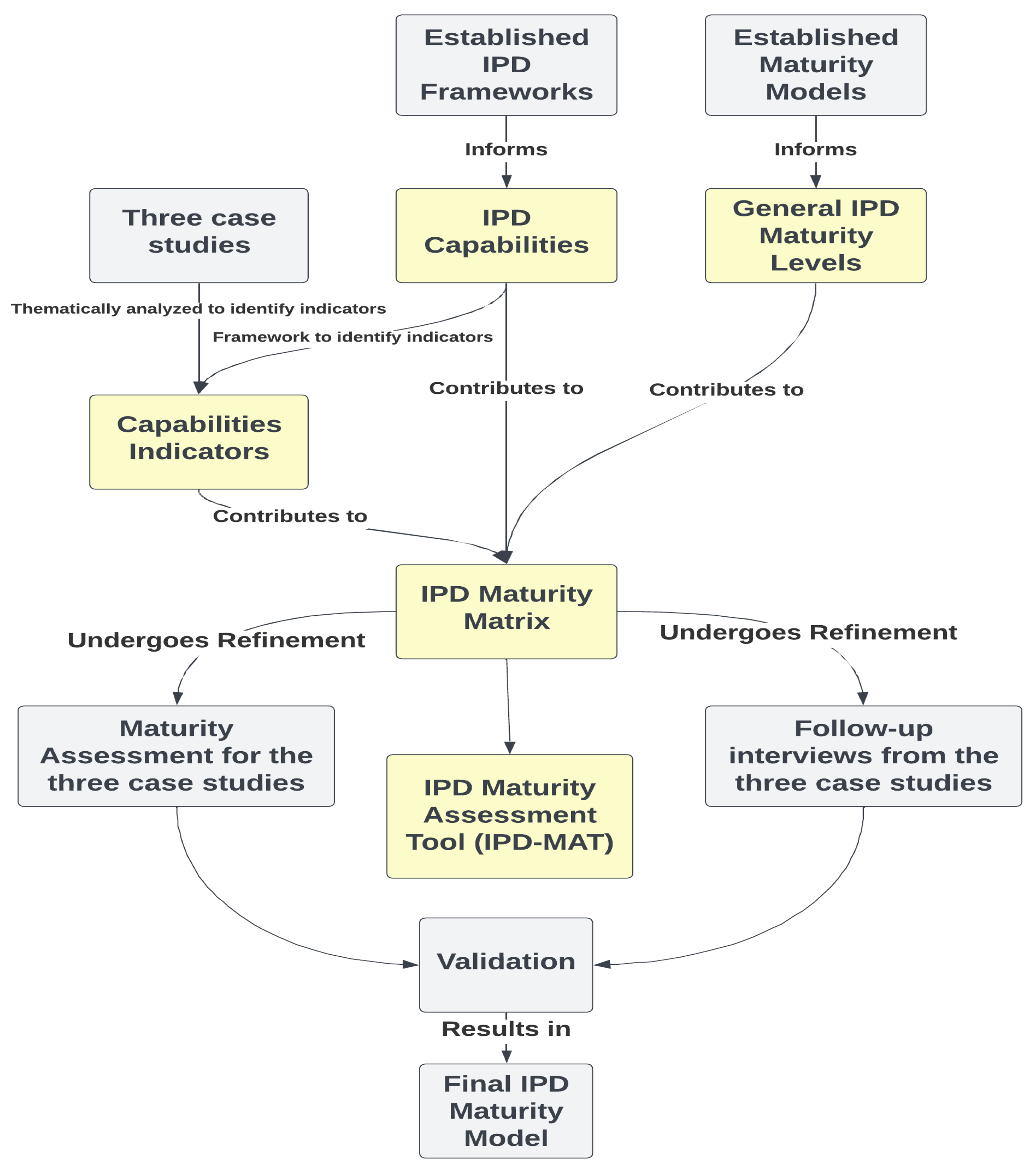
Figure 2.
IPD Maturity Assessment Report – Case Study 3 – Summary of Capabilities.
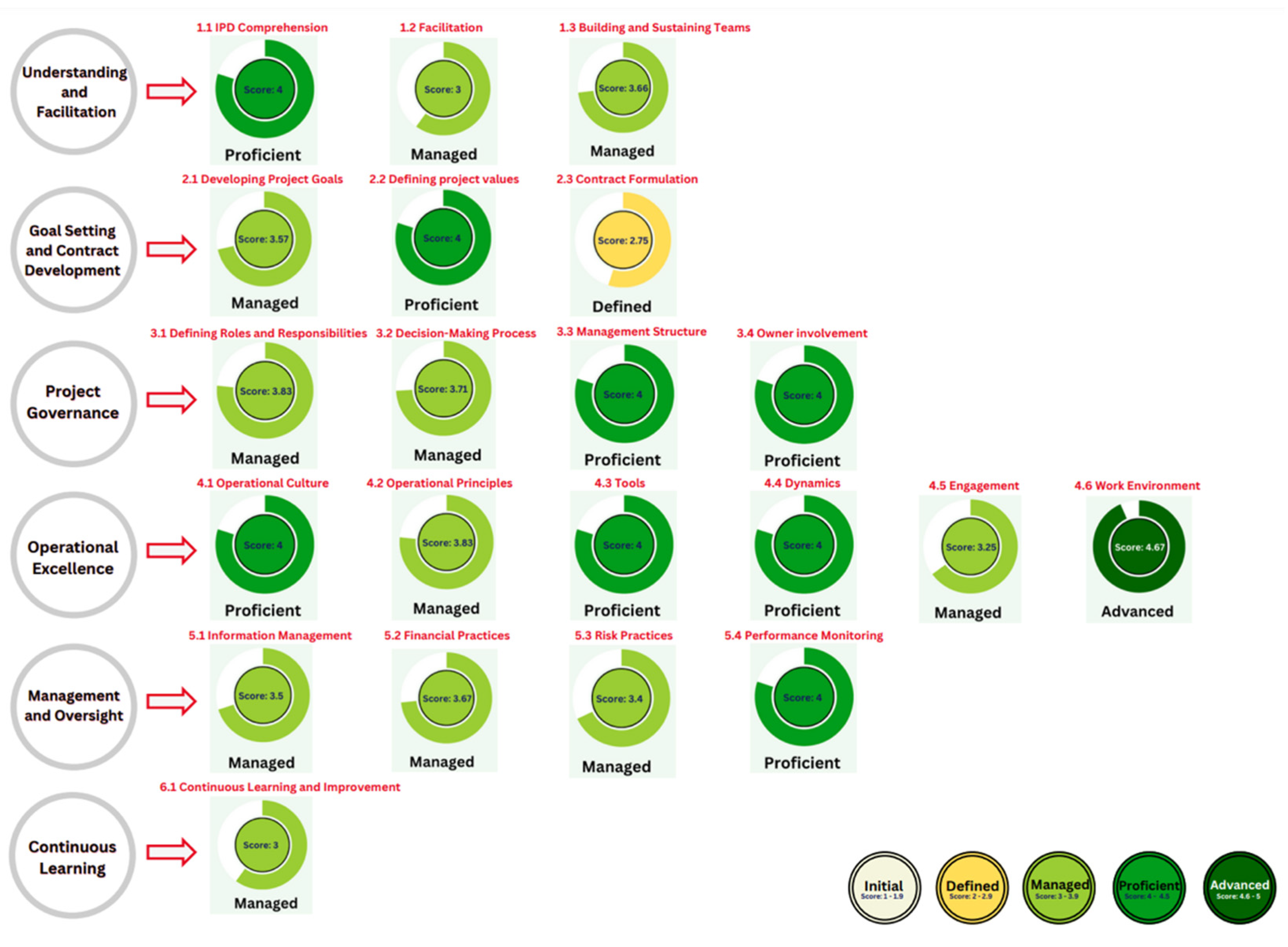
Table 1.
Established IPD Frameworks.
| # | Framework/Study Title | Citation | IPD Framework Components |
| 1 | Integrated Project Delivery: A Guide | [1] | Phases: Conceptualization, Criteria design, Detailed design, Implementation documents, Agency review, Buyout, Construction, Closeout. |
| 2 | Integrated Project Delivery: An Action Guide for Leaders | [20] | Project structuring, Team composition, Decision-making process, Communication, Risk mitigation, Performance evaluation. |
| 3 | Motivation and Means: How and Why IPD and Lean Lead to Success | [4] | Context, Legal/Commercial, Leadership/Management, Processes/Lean, Alignment/Goals, Building Outcomes. |
| 4 | Investigating Factors Leading to IPD Project Success in Canada | [5] | Making the Case for IPD, Framing the Project, Choosing the Team, Setting the Context, Executing the Work, Maintaining Excellence, Reaping the Benefits. |
| 5 | A research and development framework for integrated project delivery | [21] | Choosing IPD, Framing the project, Setting the context, Executing the work, Optimizing excellence, Reaping the benefits. |
| 6 | IPD in Norway | [22] | Contract, Technology and Processes, Culture. |
| 7 | Integrating Project Delivery / The Simple Framework | [23] | Integrated information, Integrated organization, Integrated processes, Integrated building systems. |
| 8 | The IPD Framework | [24] | Macro-Framework: Contract terms, Business configuration; Micro-Framework: Operational protocols, Work design, Information design, Team formation. |
Table 2.
IPD Maturity Levels.
| # | Maturity Level | Description |
|---|---|---|
| Level 1 | Initial | IPD capabilities are at their foundational level. Practices related to IPD are not yet fully developed, with limited systematic application across the project. |
| Level 2 | Defined | Basic IPD capabilities are established, although their application may still be inconsistent. Practices are in the early stages of systematic development but need further refinement for consistency. |
| Level 3 | Managed | IPD capabilities are developing steadily, with partial consistency in their application across the project. Key practices are becoming more established, though some variability and gaps may still exist in their execution. |
| Level 4 | Proficient | IPD capabilities are well-developed, consistently applied, and deeply integrated into project management activities. Practices are standardized and effectively adopted across the project, demonstrating a high level of maturity. |
| Level 5 | Advanced | IPD capabilities are fully developed, integrated, and continually optimized for maximum effectiveness. Practices reflect innovation and are continuously improved to enhance project outcomes. |
Table 3.
IPD Capability Framework.
| Set | Capability | Capability Indicators |
|---|---|---|
| Understanding and Facilitation | IPD Comprehension | (1) Understanding of IPD Principles and Processes, (2) Recognition of the Relevance of IPD to Project Success, (3) Integration of IPD in Execution, (4) Adaptation of IPD Practices Based on Project Needs. |
| Facilitation | (1) Assessment of Gaps in Understanding of IPD Practices, (2) Training of on IPD Tools, (3) Effectiveness of Facilitation in Enhancing IPD Understanding, (4) Contribution of Facilitation to Culture Establishment. | |
| Building and Sustaining Teams | (1) Establishment of Team Culture, (2) Implementation of Flat Hierarchy, (3) Open Communication, (4) Encouragement of Participation, (5) Continuous Improvement of Team-Building Methods. | |
| Goal Setting and Contract Development | Developing Project Goals (Validation Process) | (1) Validation Process, (2) Collaboration in Validation, (3) Participation in Validation, (4) Impact of validation on team culture, (5) Defining Project Goals, (6) Clarity and Comprehensiveness of Validation Report, (7) Introduction of New Methods in Validation. |
| Defining project values | (1) Defining Core Values, (2) Communication of Values, (3) Reference to Values in Decision-making, (4) Revisitation of Values, (5) Strengthening of Values Through New Methods. | |
| Contract Formulation | (1) Participation in Contract Formulation, (2) Integration of All IPD Principles, (3) Utilization of Facilitation Means, (4) Contract Optimization. | |
| Project Governance | Defining Roles and Responsibilities | (1) Definition of roles and responsibilities, (2) Overlaps and conflicts, (3) Discussion of Roles and Responsibilities, (4) Communication of Roles and Responsibilities, (5) Understanding of Roles and Accountability, (6) Adaptation of Roles. |
| Establishing Decision-Making Process | (1) Inclusion in Decision-Making, (2) Transparency in Decision-Making, (3) Guidance by Project Goals, (4) Use of Decision Tools, (5) Decision Outcomes, (6) Documentation of decisions, (7) Adaptability and Agility in Decision-Making. | |
| Establishing Management Structure |
(1) Defining Management Structure, (2) Coordination of Activities Across Management Levels, (3) Coordination of Decisions, (4) Adaptability of management strategies, (5) Integration of New Management Strategies. | |
| Owner involvement | (1) Involvement in Decision-Making, (2) Involvement in Day-to-Day Operations, (3) Role in Project Governance, (4) Support for the IPD Model, (5) Contribution to Collaborative Environment, (6) Contribution to Team Culture, (7) Leadership. | |
| Operational Excellence | Operational Culture | (1) Promotion of Lean Practices, (2) Support for a Collaborative Work Environment, (3) Adoption of a No-Blame Culture, (4) Assessment and Implementation of Practices Enhancing Lean Culture, (5) Encouragement of New Methods to Enhance Collaborative Culture. |
| Operational Principles | (1) Streamlining of Workflows, (2) Emphasis on Waste Reduction, (3) Emphasis on Value Maximization, (4) Emphasis on Continuous Improvement, (5) Integration of Lean and IPD Principles, (6) Role of Operational Principles in Advancing Project Management Practices. | |
| Tools | (1) Use of BIM, (2) Enhancement of Collaboration and Communication through BIM, (3) BIM as Information Source, (4) BIM’s Role in Information Quality, (5) Use of Lean Tools, (6) Integration of Lean Tools and Techniques Into Operational Practices. | |
| Dynamics | (1) Structuring of Multidisciplinary Teams, (2) Flexibility of Team Formations, (3) Definition of Responsibilities Within Teams, (4) Decision-Making Authority Within Teams, (5) Cross-Disciplinary Collaboration. | |
| Engagement | (1) Use of Formal Communication, (2) Direct and Informal Engagement, (3) Communication and Engagement Strategies, (4) Continuous Improvement of Engagement Techniques and Strategies. | |
| Work Environment | (1) Frequency of Big Room Meetings, (2) Big Room Setup, (3) Impact of Big Room Sessions on Engagement, (4) Impact of Big Room Sessions on Team Unity, (5) Impact of Big Room Sessions on Collaboration, (6) Incorporation of Advanced Tools and Techniques in Big Room Settings. | |
| Management and Oversight | Information Management | (1) Information Structure, (2) Information Sharing, (3) Access to Data, (4) Use of Advanced Technologies to Enhance Data Utilization and Support Decision-Making. |
| Financial Practices | (1) Integrating Team members in Financial Discussions, (2) Financial Transparency, (3) Financial Responsibility, (4) Use of Incentive Mechanisms, (5) Role of Incentive Mechanisms in Collaboration and Performance Enhancement, (6) Financial Decision-Making Tools. | |
| Risk Practices | (1) Risk Management Practices Inclusivity, (2) Frequency of Risk Management Practices, (3) Use of Collaborative Tools, (4) Risk Ownership, (5) Improvement of Risk Management Practices. | |
| Performance Monitoring | (1) Use of Dashboards, (2) Data Collection and Analysis, (3) Adaptation of Metrics, (4) Metrics’ Role in Decision-Making, (5) Data and Metrics updates. | |
| Continuous Learning | Continuous Learning and Improvement | (1) Capture of Lessons Learned, (2) Analysis of IPD Practices Feedback, (3) Analysis of Stakeholder Feedback, (4) Assessment of Client Satisfaction, (5) Feedback Integration, (6) Continuous Improvement in Feedback Capturing and Utilization. |
Disclaimer/Publisher’s Note: The statements, opinions and data contained in all publications are solely those of the individual author(s) and contributor(s) and not of MDPI and/or the editor(s). MDPI and/or the editor(s) disclaim responsibility for any injury to people or property resulting from any ideas, methods, instructions or products referred to in the content. |
© 2025 by the authors. Licensee MDPI, Basel, Switzerland. This article is an open access article distributed under the terms and conditions of the Creative Commons Attribution (CC BY) license (https://creativecommons.org/licenses/by/4.0/).
Copyright: This open access article is published under a Creative Commons CC BY 4.0 license, which permit the free download, distribution, and reuse, provided that the author and preprint are cited in any reuse.


