

Submitted:
18 April 2025
Posted:
21 April 2025
You are already at the latest version
Abstract
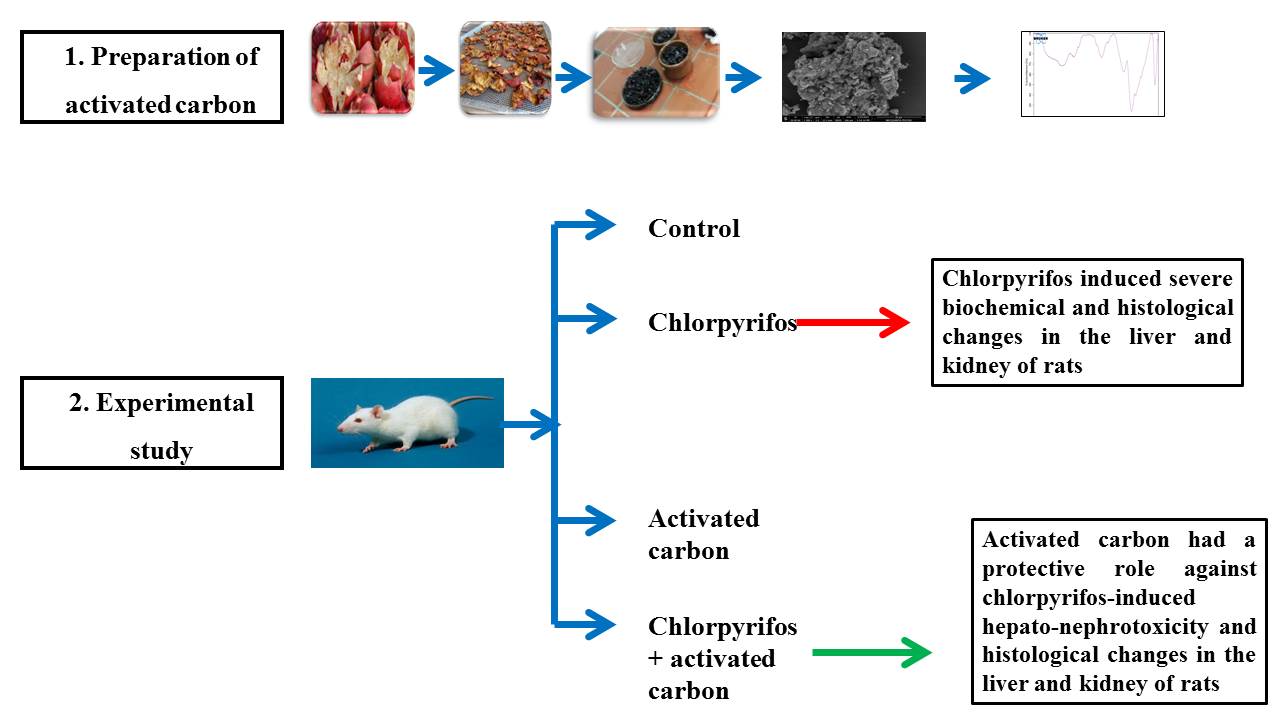
Chlorpyrifos is a highly toxic commonly used broad-spectrum pesticide and can seriously harm human health and environmental impacts. Punica granatum L. peels (PgP) has been applied as for preparation of activated carbon (ACs) and PgP–derived activated carbon (PgP-ACs) was produced. TEM was applied to describe the features of the particle shape and particle size of the prepared ACs and FTIR was used to study the functional groups in ACs. The study assessed the potential of PgP-ACs to attenuate liver and kidney toxicities caused by chlorpyrifos in rats. Animals were assigned into four groups: Group I (Control), Group II (Chlorpyrifos, 3.0 mg/kg.b.w. daily ( ̴ 1/50 of the LD50), Group III (PgP-ACs), and Group IV (Chlorpyrifos + PgP-ACs). In the group treated with chlorpyrifos, PgP-ACs effectively ameliorated serum kidney injury markers, creatinine, uric acid, and urea. PgP-ACs ameliorated lipid profile markers, cholesterol, triglycerides, and LDL levels in rats treated with chlorpyrifos. It significantly increases HDL. PgP-AC offered protection as evidenced by inhibiting the rise in serum activities of ALP, AST, ALT, and γ-GGT. The effect of PgP-ACs on body weight gain and feed intake was recorded. Chlorpyrifos substantially provoked several tissue alterations histological abnormalities in organs. For four weeks, PgP-ACs at a concentration of 5.0% w/w in the diet strongly protected rats against many biochemical and histological alterations caused by chlorpyrifos.
Keywords:
chlorpyrifos
; activated carbon
; TEM and FTIR
; Punica granatum
; biochemical analysis
; liver and kidney
; lipid profile
; weight gain
; rats
1. Introduction
The use of pesticides, including organophosphorus (OP) chemicals is on the rise in many parts of the world and therefore their hazardous increases [1]. The overuse of these chemicals is linked to increased risk of acute and chronic illnesses, mortality and morbidity, and is on the rise in many parts of the world [2,3]. Chlorpyrifos is a widely used broad-spectrum OP pesticide to control various pathogens and insects and hence widely employed in indoor and agricultural fields [4,5]. Chlorpyrifos is one of the most widespread pesticides in agricultural soils collected from many Egyptian Governorates especially Sinai and Ismailia Governorates [4,5]. It is dispersed into different environmental components, including air, soil, surface water (rivers, canals, and lakes), and groundwater when used for agricultural purposes, affecting ecosystem functioning [1,2,3]. The consumption of contaminated food or direct exposure along with the inhalation or skin adsorption is the routes that chlorpyrifos can reach humans and animals [6]. Residue accumulation of chlorpyrifos in the environment has been associated with serious adverse reactions in humans as well as livestock [2,6].
To date, many studies have been conducted on its toxicity [2,3]. Chlorpyrifos toxicity causes nitrosative and oxidative stress, apoptosis, DNA damage, and inflammation in vital organs such as the testis, brain, kidney, liver, and kidney [2,7,8,9]. Its use was associated with several harmful consequences especially liver and kidney injuries [7,8]. Punica granatum L. peels (PgP) has been reported to enhance liver functioning, reduced DNA fragmentation, caspase-3, and malondialdehyde levels, and increased enzymatic and nonenzymatic antioxidants due to the injection of toxic chemical such as diethylnitrosamine [10].
There is considerable evidence suggesting that agriculture wastes could be effective in conferring protection against chemical /drug-induced toxicity, including liver and kidney injuries [10,11,12,13]. Additionally, considerable studies reported that fruit wastes effectively attenuate chlorpyrifos-associated toxicities and highlight the on-going challenges in liver and kidney disease management [14,15]. Fruit wastes have been investigated for nutritional and/or functional qualities.
Since ancient times in the Mediterranean region and with a world production of around one million tons, Punica granatum L. (pomegranate fruit) has been cultivated [15,16]. Significant amount of lignocellulosic waste in the form of P. granatum peels has produced as one of the agriculture and industry wastes. Consequently in recent years there has been a growing interest in finding ways to reuse and valorize this waste [17,18].
Punica granatum (Family Lythraceae) contains abundant phytochemicals that are potent antioxidants, including polyphenols, tannins, anthocyanins, flavonoids, phenolic acids, and catechins [15]. Punicalagin, cyanidin-3-O-glucoside and ellagic acid were the main components of juice. The peel also contains these components. These components act by scavenging reactive oxygen species, enhancing oxidative biomarkers, and neutralizing them. Punica granatum gained widespread attention for its potential food and medicine homology properties. The extracts from different parts of the pomegranate plant have a wide range of biological effects, including antiviral, antibacterial, anti-diabetic, improvement in sperm quality, cardioprotective, cancer prevention, antioxidant properties, as well as anti-inflammatory [15].
Punica granatum peels (PgP) is a fantastic source of protein, bioactive peptides, polysaccharides, and phenolic components [19,20]. PgP could significantly decreased total lipid, blood glucose, and low-density lipoprotein cholesterol, while it increases high density lipoprotein cholesterol levels, as well as improved kidney and liver functions [19].
More significantly, the possible use of fruit waste (mainly lignocellulosic biomass) has yet to be recognized. Thus, upgrading fruit waste to carbonaceous-rich materials for producing biochar or activated carbon is an alternative sustainable treatment [21].
Currently, many industrial and agricultural wastes (food-based biomass wastes, agricultural biomass residues, and energy crops) are studied as low-cost, renewable, and abundant precursors to produce sustainable activated carbons ACs [22,23]. This being involves an ecofriendly valorization process and which also an alternative source to conventional precursors. One of the best-known processes for producing ACs is the chemical activation. A study used a lignocellulosic waste material such as fruit peels as the activated carbon precursor, which was not harmful and was sustainable adsorbent for the renewable energy production [17].
Because of their easy synthesis process, readily adjustable surface chemistry, porosity, and cost-effectiveness, biochar, and activated carbon have attracted the scientific community’s attention, allowing various uses for these materials [15,21,24]. These materials include almond shells [25], bean pods [26], cherry stones [27], olive stones [28,29], rice husks [30], and wild sugarcane [31].
In this context, Hussain et al. [32] reported that the activated carbon-derived P. granatum peels PgP-ACs showed a surface area of183.89 m2/g, whereas the energy-dispersive X-ray indicated the existence of carbon, oxygen, silicon, and potassium, in addition to aluminum. Also, the activated carbon-derived P. granatum peels PgP-ACs significantly removed chlorpyrifos from water, by 97.6%. According to these findings, ACs derived from Punica granatum peels may be used as an alternative pesticide adsorbent. Therefore, this study aims to explore the use of activated carbon derived from pomegranate peels to mitigate chlorpyrifos toxicity in rats.
2. Materials and Methods
2.1. Plant Materials
Punica granatum L. (Pomegranate) was bought at a local market in Cairo, Egypt in January 2022. The plant was recognized, and authenticated by Mrs. Terase Labib, senior specialist of plant taxonomy, floral and taxonomy department, El-Orman Garden, Giza, Egypt. Voucher specimens (PgF-NRC-22) are kept in the Faculty of Agriculture, Cairo University, Giza (Egypt).
2.2. Preparation of Punica granatum Peels
Pomegranate fruits were carefully cleansed with distilled water to eliminate any dust or dirt adhering to the peel. After washing, the fruits were wiped dry. The fruit peels were hand peeled, chopped into 2x2 cm pieces, and solar-dried for 96 h. The peels were pulverized entirely using a grinder with 60 mesh sizes and passed through a 0.25 mm screen. L
2.3. Chemicals
The chemicals employed in this investigation were of HPLC analytical grade (Merck, Darmstadt, Germany), and the water was doubly distilled using the Millipore purification apparatus (Millipore, Billerica, MA 01821, USA). Bio Diagnostic Company, Giza, Egypt, provided kits for aminotransferases (aspartate AST and alanine ALT), serum alkaline phosphatase (ALP), γ-glutamyl transferase (GGT), creatinine, uric acid, urea, cholesterol, triglycerides, and high-density lipoprotein (HDL) cholesterol. Chlorpyrifos is an organophosphate insecticide that was provided by Santa Cruz Biotechnology Inc. (Santa Cruz, CA 95060, USA). It is chemical name is O,O-diethyl O-(3,5,6-trichloro-2-pyridinyl) phosphorothioate.
2.4. Preparation of Punica granatum Peels-Based Activated Carbons (PgP-ACs)
The lignocellulosic waste (P. granatum peels) has been applied as renewable resources for preparation of low cost, eco-friendly and high quality activated carbons. The ACs obtained from this lignocellulosic waste was prepared according to Girgis et al. [33]. The peels that had been dried were used to make activated carbon (500-850 µm), utilizing phosphoric acid (H3PO4) in a single chemical activation step. In a conical flask, 100 g of crushed peels were soaked in phosphoric acid in a 1:3 (w/w) ratio while lightly stirring to ensure the acid penetrated the entire sample. The combination was brought to 70°C for about 2 h, and left at room temperature overnight. The soaked solid was heated to 500°C for 2 h at 5°C/min in a muffle furnace utterly devoid of oxygen. The acid was eliminated by rinsing the carbon in distilled water until the pH reached 6.8. The carbon was then dried in an oven at 110°C for 24 h.
2.5. Characterization of Punica granatum Peels- Based Activated Carbon (PgP-ACs)
2.5.1. Transmission Electron Microscope (TEM)
TEM (HR-TEM, JEOL, JEM-2100, electron microscope, Japan) was applied to describe the features of the particle shape and particle size of the prepared activated carbon. After dispersing the powdered sample in ethanol, it is deposited onto a carbon-coated copper grid. It is laid out on a carbon-coated copper grid. A voltage of 200 kV was used to allow the high resolution [34].
2.5.2. Fourier Transform Infrared Spectroscopy (FTIR)
The functional groups in the synthesized activated carbon were studied using absorption spectroscopy in the infrared band (400-4000 cm-1) with a resolution of 4 cm-1 [35]. A spectrometer (Bruker JASCO FT/IR 4100, USA) was used to collect the FTIR spectra. The FTIR spectrometer was purged to decrease spectral effects from water vapor and carbon dioxide. The mean of four spectra from different granules was then calculated.
2.6. Experimental Animals
This study followed established regulations and ethical guidelines by the National Research Centre Animal Care and Committee for the Update of the Guide for the Care and Use of Laboratory Animals, National Research Council [36]. An ethical approval number CUIIF723 was obtained from the Institutional Animal Care and Use Committee (CU-IACUC), Cairo University and the approval date is 26 February 2023. Twenty-four male Sprague-Dawley rats (160-180 g) were procured from the Animal House Colony, National Research Centre (Egypt). Rats were kept in an environmentally controlled room with a temperature of 22 °C and humidity of 40-60% that was artificially lighted and devoid of any source of chemical contamination at the Animal House, National Research Centre (Egypt). Tap water and standard diet were available to rats.
2.7. Experimental Design
After one week of acclimatization, rats were randomly assigned to four groups (n = 6/cage) and were divided as follows: Group (I): Control fed normal diet; Group (II): fed normal diet and given chlorpyrifos; Group III: fed normal diet containing activated carbon derived pomegranate peels PgP-ACs; Group IV: fed normal diet containing activated carbon derived pomegranate peels PgP-ACs group and given chlorpyrifos. The chlorpyrifos was dissolved in vegetable oil and administered orally through gavage for four weeks at a dose of 3.0 mg/kg body weight daily ( ̴ 1/50 of the LD50) [37,38]. Activated carbon-based pomegranate peels PgP-ACs were added to the diets of the treatment groups at a 5.0% concentration [39]. Every day, the animals were evaluated for toxicity signs. During the experiment, body weight and feed consumption were recorded separately. At the end of the trial (after 4 weeks), the animals fasted for 12 hours, and blood samples were taken from the retroorbital venous plexus without anticoagulant from each rat. After centrifugation of blood for 15 min at 1200 X g (Thermo Fisher Scientific, USA), the serum was stored at -20°C until evaluation. All animals were sacrificed, and their kidney and livers were separated, weighed, and kept at -80°C until analyses [40].
2.8. Biochemical Assay
The serum was tested for liver function (AST, ALT, ALP, and γ- GGT), kidney function (urea, creatinine, and uric acid), and lipid profile (triglycerides, total cholesterol, HDL cholesterol, and LDL cholesterol) using Bio Diagnostic kits as per the manufacturer’s instructions. All biochemical parameters were measured calorimetrically with a spectrophotometer.
2.9. Histopathological Studies
The kidneys and liver were fixed in 10% formalin, progressive ethanol grades, and paraffin-embedded. A 5 µm slice was cut and stained for histological examination with hematoxylin and eosin [41].
2.10. Statistical Analysis
The results were provided as mean ± SE. The statistical analysis was carried out using SPSS software version 16. A one-way ANOVA was used, and P ≤0.05 was considered statistically significant.
3. Results
3.1. Transmission Electron Microscope
The data in Figure 1 depicts the TEM image of the manufactured activated carbon. The results showed that the TEM displayed a homogeneous shape due to the substantial microporosity of chemically activated carbon ACs. Mesopores were typically less than 5 nm and accounted for a significant portion of the carbon surface. The pores were spherical, rather than the slit-shaped pores found in activated carbons.
3.2. Fourier Transform Infrared Spectroscopy
The FTIR spectra of activated carbon-based P. granatum peels PgP-ACs were determined to gain an understanding of the functional groupings that exist on the outside of the activated carbon (Figure 2). Data showed the presence of several peaks that indicated the complex nature of PgP-ACs. Bands appeared at 2712.2, 1690.75, 1120.32, and 665.14 and were assigned to O-H stretching, carboxylic acid, C=O stretching, primary amide, C-O stretching, aliphatic ether, and C=C bending, alkene, respectively. Meanwhile, the bands 2360.4, 2349.47, and 2337.64 were assigned to O=C=O, carbon dioxide.
3.3. Body Weight and Feed Intake
Throughout the trial, no rats died in any of the groups. The experimental rats were weighed at the outset and during the trial. Chlorpyrifos-treated experimental rats (Group II) gained significantly less body weight than the control (Group I) (Table 1). Experimental rats treated with chlorpyrifos and activated carbon PgP-ACs (Group IV) regained body weight, but those given activated carbon PgP-ACs alone (Group III) gained body weight equivalent to the control group. Feed intake increased significantly in experimental rats taking chlorpyrifos (Group II). In contrast, experimental rats given activated carbon PgP-ACs alone (Group III) or in combination with chlorpyrifos (Group IV) exhibited considerable improvement in feed intake and were comparable to the control group.
3.4. Biochemical Parameters
3.4.1. Serum Biochemical Markers of Liver Function
Results in Table 2 display the concentrations of liver markers (AST, ALT, ALP, and GGT) in serum. The study found substantial (P < 0.05) increases in ALT, AST, and ALP levels in experimental rats treated with chlorpyrifos (Group II) compared to control (Group I). Experimental rats receiving activated carbon PgP-ACs alone (Group III) showed no significant increase (P > 0.05) compared to control (Group I). Meanwhile, co-treatment with activated carbon PgP-ACs and chlorpyrifos (Group IV) resulted in better metrics and normalized ALT, AST, and ALP levels. It could be observed that chlorpyrifos caused moderate hepatotoxicity, as seen by elevated liver function levels.
3.4.2. Serum Biochemical Markers of Kidney Function
Regarding the evaluation of some serum kidney markers (urea, uric acid, creatinine) in rats, the results in Table 3 revealed that administering chlorpyrifos (Group II) significantly increased (P < 0.05) urea, uric acid, and creatinine levels, indicating kidney dysfunction due to chlorpyrifos nephrotoxicity. Experimental rats receiving activated carbon PgP-ACs (Group III) showed no significant difference (P > 0.05) and were quite similar to the control (Group I). The data also revealed that activated carbon PgP-ACs plus chlorpyrifos (Group IV) resulted in improved metrics and normalized urea, uric acid, and creatinine, and this efficiently prevented chlorpyrifos-induced elevations in kidney function markers.
3.5. Lipid Profile
Table 4 revealed that experimental rats given chlorpyrifos (Group II) exhibited a substantial rise in cholesterol and triglycerides, indicating a change in their lipid profile. The use of activated carbon PgP-ACs (Group III) significantly reduced the rise in these indicators, with findings showing comparable cholesterol and triglyceride levels to the control (Group I). The combined chlorpyrifos and activated carbon PgP-ACs (Group IV) improved and decreased cholesterol and triglyceride levels. Experimental animals treated with chlorpyrifos (Group II) showed a substantial rise in LDL and a drop in HDL levels when compared to the control (Group I). The experimental animals treated with activated carbon PgP-ACs (Group III) had higher HDL and lower LDL levels. The combination therapy of chlorpyrifos and activated carbon PgP-ACs (Group IV) restored HDL and LDL levels towards control.
3.6. Effect of PgP-ACs on Histology of Kidney and Liver in Chlorpyrifos -Induced Toxicity
Results in Table 5 and Figure 3 summarize the histopathological lesion scores in kidneys across experimental groups. Control experimental rats had normal histological architecture in their renal tissue, standard tubular brush borders, intact glomeruli, and Bowman’s capsule (Figure 3A). The kidney sections from chlorpyrifos-treated animals showed distributed overall mesangial proliferation with near complete thinning out of the Bowman’s capsule, characterized by venous congestion, hemorrhage with lymphocytic prevalence, and the tubular cells were swelled up with tubular fluid and debris, indicating multiple focal tubular nephritides (Figure 3B). The kidney section of the experimental rats given activated carbon had normal glomeruli, ample urinary space, and moderate tubules (Figure 3C). The kidneys of rats given a combination of chlorpyrifos and activated carbon had less disease, with localized glomerular mesangial growth and diffused slightly enlarged tubules (Figure 3D).
Data in Table 5 and Figure 4 summarize the histopathological lesion scores in the liver across experimental groups. Microscopic examination of control rats’ livers revealed conventional hepatocyte architecture, with blood sinusoids separating the primary vein and regular hepatic cords (Figure 4A). On the other hand, the liver sections of the rats treated with chlorpyrifos showed significant histological changes, including vacuolar degeneration and inflammatory cells around the arteries (Figure 4B). In experimental animals given activated carbon, their liver sections had almost normal hepatocytes and central veins (Figure 4C). However, combining chlorpyrifos and activated animals improved most of the hepatocytes and major vein abnormalities, with just a few inflammatory cells around the portal tract (Figure 4D).
This study reported the impact of activated carbon on chlorpyrifos in rats. For four weeks, activated carbon at a concentration of 5.0% w/w in the diet strongly protected rats against many biochemical and histological alterations caused by chlorpyrifos, as indicated by restoring several serum indices to near-normal levels. PgP–derived activated carbon (PgP-ACs) was well-tolerated and showed no obvious evidence of toxicity, suggesting that it can be safe and effective for ameliorating chlorpyrifos toxicity in rats.
4. Discussion
The objective of the present investigation was to evaluate the potential of Punica granatum L. peels –derived activated carbons (PgP-ACs) to attenuate liver and kidney toxicities caused by chlorpyrifos in rats.
Transmission electron microscope (TEM) was applied to describe the features of the particle shape and particle size of the prepared Acs and fourier transform infrared spectroscopy (FTIR) was used to study the functional groups in ACs. TEM image of the manufactured activated carbon was illustrated in Figure 1. TEM has a homogeneous shape due to the substantial microporosity of chemically activated carbon ACs. The pores were spherical, rather than the slit-shaped pores found in activated carbons. Mesopores were typically less than 5 nm and accounted for a significant portion of the carbon surface. The homogenous morphology of the activated carbon could be due to the chemically activated carbon’s significant microporosity [42]. This suggests that the mesoporous structure has a significant impact on the performance of activated carbon in many applications.
To gain an understanding of the functional groupings that exist on the outside of the activated carbon (Figure 2), FTIR spectra of activated carbon-based P. granatum peels PgP-ACs were determined. Several peaks that indicated the complex nature of PgP-ACs were present. Bands appeared at Data showed the presence of several peaks that indicated the complex nature of PgP-ACs. Bands appeared at 2712.2, 1690.75, 1120.32, and 665.14 and were assigned to O-H stretching, carboxylic acid, C=O stretching, primary amide, C-O stretching, aliphatic ether, and C=C bending, alkene, respectively. Meanwhile, the bands 2360.4, 2349.47, and 2337.64 were assigned to O=C=O, carbon dioxide. The FTIR findings for activated carbon-based P. granatum peels PgP-ACs agreed with those reported by Ali et al. [43]. Meanwhile, Kristianto et al. [44] revealed the presence of several functional groups, including carboxylic acid. Carboxylic acid detected in activated carbon could mostly be derived from cellulose, pectin, or lignin present in PgP. With the peaks changing and merging often, the difficult preparation conditions of temperature treatment in inert and oxidizing environments for activated carbon samples result in varying peak strengths of all corresponding particular absorption bands. This might be because all residual oxide and hydrogen groups are removed at these high temperatures, transforming organic source materials into nearly pure carbon structures [45]. The control group showed the highest body weight gain, as expected, with normal feed efficiency. The rats treated with chlorpyrifos showed a significant weight reduction, which could be attributed to its deleterious effects on metabolism or appetite suppression.
Evaluation of body weight and feed intake was carried out. No rats died in any of the groups through the experiment. The animals were weighed at the outset and during the trial. The rats of Group II (chlorpyrifos-treated) have gained significantly less body weight than Group I (the control) (Table 1). The rats of Group IV (treated with chlorpyrifos and activated carbon PgP-ACs) regained body weight. While those given activated carbon PgP-ACs alone (Group III) gained body weight equivalent to the control group (Group I). Feed intake in experimental rats has increased significantly in Group II (the group taking chlorpyrifos). In contrast, Group III (experimental rats given activated carbon PgP-ACs alone) or Group IV (in combination with chlorpyrifos have exhibited considerable improvement in feed intake and were comparable to the control group. In agreement, Tanvir et al. [46] found that chlorpyrifos -intoxicated rats gained less weight than the control group. These findings might be attributed to the increased lipid breakdown that chlorpyrifos may have directly induced as a role in the body’s lower weight [47]. In contrast, Nishi and Hundal [48] indicated that no significant changes were observed in body weight and feed intake in female Wistar rats given chlorpyrifos. This might have been due to the low chlorpyrifos concentration (0.1 and 2.5 mg/kg/day) given to the rats.
Unexpectedly, the combination of chlorpyrifos and PgP-ACs resulted in the lowest body weight growth, much lower than chlorpyrifos alone. This contradicts the hypothesis that PgP-ACs would be protective, implying potential additive or synergistic toxicity, thus suggesting that PgP-ACs may exacerbate chlorpyrifos-induced metabolic disruption rather than ameliorate it. Meanwhile, the PgP-ACs alone caused intermediate weight gain, less than control but higher than chlorpyrifos, suggesting that PgP-ACs may partially counteract metabolic disruptions or have mild growth-modulating effects, thus improving digestion, increasing nutrient absorption capacity in intestinal villi, and thereby increasing feed utilization. In agreement, Amjad et al. [49] reported that Nile tilapia fed with 2% activated carbon-supplemented feed for 4 weeks exhibited considerably better growth performance. Similarly, Michael et al. [50] found that 3% commercial wood charcoal increased the growth performance of red tilapia juveniles. Activated carbon was found to enhance growth performance by removing pollutants and gases from the intestinal tract, thus improving digestion, increasing nutrient absorption capacity in intestinal villi, and thereby increasing feed utilization.
Serum biochemical markers of liver function were recoded (Table 2).The liver plays an important role in the detoxification and biotransformation of chemicals and xenobiotics. ALT, AST, γ-GGT, and ALP activities are important indicators for detecting hepatotoxicity and hepatic dysfunction [11,12]. In serum, the concentrations of AST, ALT, ALP, and GGT as liver markers were evaluated Their were substantial increases in ALT, AST, and ALP levels (P < 0.05) in experimental rats Group II (treated with chlorpyrifos) compared to Group I (control). Experimental rats of Group III (receiving activated carbon PgP-ACs alone) has showed no significant (P > 0.05) increase compared to the control Group I. Better metrics and normalized ALT, AST, and ALP levels were resulted in the co-treatment with activated carbon PgP-ACs and chlorpyrifos (Group IV).
It could be observed that chlorpyrifos caused moderate hepatotoxicity, as seen by elevated liver function levels. Results are in agreement with those reported by Tanvir et al. [46] who revealed that chlorpyrifos treatment increased ALT, AST, and ALP levels in rats’ serum, which are considered signs of hepatic injury. It is well-established that liver dysfunction disrupts the production of those enzymes and changes the liver membrane permeability [51]. Furthermore, chlorpyrifos exposure has been linked to increased diagnostic markers for hepatocellular damage [3,6,7]. As a result, the observed rise might be attributable to the release of cytoplasmic liver enzymes into the bloodstream following liver damage. This enzyme release can cause liver necrosis and inflammatory responses [3,7]. Meanwhile, similar findings indicated that OP insecticide malathion had been linked to increased enzyme activity [52].
Many biological pathways have been activated by chlorpyrifos chronic toxicity, such as inhibiting Na+/Ca++ channels causing apoptosis, inflammation, and oxidative stress. An elevation in the liver function markers (ALT, γ-GGT, ALP, and AST) have exerted by chlorpyrifos toxicity as a direct result of hepatocyte damage [53]. Histological findings may include the degenerative changes, infiltration of leukocytes, and other symptoms have been demonstrated in hepatotoxicity caused by chlorpyrifos. The formation of ROS could be explained the hepatocyte degeneration, inflammatory cell infiltration, and apoptosis in rats exposed to toxication of chlorpyrifos [52,53]. In this study, the liver function parameters (ALT, AST, and ALP) value increased significantly and many histopathological lesions were reported in liver of rat when exposed to chlorpyrifos toxication [53].
However when the animal exposed to chlorpyrifos toxicity were given oral supplements of PgP-ACs, liver function improved. This was demonstrating its strong hepatoprotective efficacy by reducing histological changes. Chlorpyrifos substantially provoked several tissue alterations histological abnormalities in the liver and kidneys. Hepatic degeneration, apoptosis and inflammation were the histopathological lesion scores in liver across experimental groups. Focal sclerosis as well as glomeruli and focal degeneration tubules were the main lesions in kidney.
Activated carbon’s ability to adsorb and eliminate toxicants such as aflatoxins and pesticide residues has been demonstrated in vitro [54,55], whereas activated carbon’s detoxifying properties are linked to its physical and chemical features, including pore size, surface area, and adsorption capacity. The effect of activated carbon on the decrease in ALT and AST activities was also noticed in Nile tilapia-fed activated carbon-supplemented diets [56].
Some serum biochemical markers of kidney function were evaluated (urea, uric acid, creatinine). The administering of chlorpyrifos (Group II) significantly (P < 0.05) increased the level of urea, uric acid, and creatinine (Table 3). It indicates kidney dysfunction due to chlorpyrifos nephrotoxicity. While no significant difference (P > 0.05) in Group III (the experimental rats receiving activated carbon PgP-ACs) and there were quite similar to Group I (the control). Group IV (the activated carbon PgP-ACs plus chlorpyrifos-treated rats) resulted in improved metrics and normalized urea, uric acid, and creatinine, and this efficiently prevented chlorpyrifos-induced elevations in kidney function markers.
Song et al. [57] also reported a rise in serum creatinine and urea in the chlorpyrifos-treated groups, indicating renal failure. The rise in creatinine and urea suggests that the kidneys’ capacity to filter and eliminate waste materials from the urine has weakened. Marí et al. [58] discovered a relationship between hyperuricemia and kidney injury. Hyperuricemia-activated autophagy and NLRP3 inflammasome-mediated inflammation result in renal damage, tubular injury, and kidney fibrosis [59].
Previous studies highlighted the implication of natural products attenuate chlorpyrifos-induced kidney injury by mitigating oxidative stress and inflammation [8]. Chlorpyrifos has reported to reduce the activation of antioxidative enzymes including catalase, superoxide dismutase, and glutathione peroxidase that could be ameliorated by some natural products.
The data of the current study showed the reduction in liver necrosis or serum ALT is consistent with documented patterns of antioxidant-mediated protection. Direct quantification of ROS-scavenging activity will be critical in future research.
Table 4 illustrated that Group III (the activated carbon PgP-ACs-treated) significantly showed a reduction of the rise in these indicators, with findings showing comparable cholesterol and triglyceride levels to the control (Group I). Group II (the experimental rats given chlorpyrifos) exhibited a substantial rise in cholesterol and triglycerides, indicating a change in their lipid profile. Group IV (the group used combination of chlorpyrifos and activated carbon PgP-ACs) has showed an improvement and decreasing in the level of cholesterols and triglycerides. A substantial rise in LDL and a drop in HDL levels were reported in the experimental animals treated with chlorpyrifos (Group II) when compared to Group I (the control). The combination therapy of chlorpyrifos and activated carbon PgP-ACs (Group IV) restored HDL and LDL levels towards control. The experimental animals treated with activated carbon PgP-ACs (Group III) had higher HDL and lower LDL levels.
In agreement, Tanvir et al. [46] reported higher cholesterol and triglyceride levels in pesticide-treated rats. Excess cholesterol can injure liver cells through a variety of mechanisms [57]. One such mechanism is cholesterol-induced mitochondrial dysfunction, in which excessive levels of cholesterol in the mitochondrial membrane cause membrane stiffness and impedes membrane protein activity [58]. Furthermore, a blockage in the liver’s biliary system inhibits cholesterol production into the duodenum, potentially leading to high cholesterol levels and liver failure [46,59]. The significantly higher LDL levels and lower HDL values are consistent with the findings of Saoudi et al. [60] and Djekkoun et al. [61]. Furthermore, these changes are strongly associated with an increased risk of coronary artery disease [62]. Furthermore, low HDL levels may be associated with chlorpyrifos-induced hepatic damage that affects lipoprotein production [1,6,46]. Long-term chlorpyrifos exposure may be a major risk factor for the advancement of chronic heart disease [1,2,6,63].
The Effect of PgP-ACs on Histology of Kidney and Liver in Chlorpyrifos -Induced Toxicity was evaluated. The histopathological lesion scores in kidneys across experimental groups were reported as showed in Table 5 and Figure 3. The kidney sections from chlorpyrifos-treated animals showed distributed overall mesangial proliferation with near complete thinning out of the Bowman’s capsule. Control experimental rats had normal histological architecture in their renal tissue, standard tubular brush borders, intact glomeruli, and Bowman’s capsule (Figure 3A). The kidney of chlorpyrifos-treated animals has venous congestion, hemorrhage with lymphocytic prevalence with other multiple focal tubular nephritides (Figure 3B). The experimental rats given activated carbon PgP-ACs had kidney section with normal glomeruli, ample urinary space, and moderate tubules (Figure 3C). Figure 3D illustrated that the animals treated with a combination of chlorpyrifos and activated carbon PgP-ACs had less disease, with localized glomerular mesangial growth and diffused slightly enlarged tubules. The histopathological lesion scores in the liver across experimental groups were summarized in Table 5 and Figure 4. Figure 4A illustrated that the microscopic examination of control rats’ livers. Conventional hepatocyte architecture with blood sinusoids separating the primary vein and regular hepatic cords were observed. On the other hand, the rats treated with chlorpyrifos showed significant histological changes in their liver sections. The changes included inflammatory cells around the arteries and vacuolar degeneration (Figure 4B). While almost normal hepatocytes and central veins were observed in the liver of experimental animals given activated carbon PgP-ACs (Figure 4C). However, Figure 4D showed that treatment with a combining chlorpyrifos and activated carbon PgP-ACs has improved most of the hepatocytes and major vein abnormalities (with just a few inflammatory cells around the portal tract).
Our results of microscopic examination of chlorpyrifos-exposed rats’ livers were in agreement with another study, revealed a variety of histopathological abnormalities, including inflammatory cell infiltration ranging from moderate to severe and progressive hepatocyte necrosis [65]. Chlorpyrifos may persist in the liver, which is necessary for detoxification, but its poisoning has also been linked to epithelial deterioration and necrosis in kidney tissue [2,6,66]. Furthermore, OP insecticides have been linked to a range of histopathological abnormalities in liver tissues [67,68,69]. Other studies on chlorpyrifos’ effects on rats’ livers corroborated our findings [70].
Activated carbon is a versatile adsorption material that combines low cost and good quality [17. 21]. Due to its porous carbonaceous nature and because commercial activated carbon is expensive, the activated carbon has many uses in water treatment and desalination, wastewater treatment, and air purification [17,21,71]. Activated carbon is a versatile adsorbent material with a high degree of porosity and surface area, and it may contain up to 90% carbon [21,72]. Furthermore, carbon structures contain the key functional groups involved in contaminant adsorption, such as carboxyl, carbonyl, phenol, lactone, and quinone. Oxygen, hydrogen, sulfur, and nitrogen are also in the activated carbon structure as functional groups or chemical atoms [73]. The distinctive adsorption capabilities of activated carbon depend on the existing functional groups, which are produced primarily through activation methods, precursors, and thermal purification [74].
In our previous work [32], we prepared activated carbon from different agricultural wastes (banana peels, orange peels, pomegranate peels, and date stones), and found that the activated carbon significantly removed chlorpyrifos from water, especially PgP-ACs, which removed 97.6% of chlorpyrifos. Thus, indicating that activated carbon might be a promising adsorbent.
The present study reported the impact of activated carbon on chlorpyrifos in rats. For four weeks, activated carbon at a concentration of 5.0% w/w in the diet strongly protected rats against many biochemical and histological alterations caused by chlorpyrifos, as indicated by restoring several serum indices to near-normal levels. PgP–derived activated carbon (PgP-ACs) was well-tolerated and showed no obvious evidence of toxicity, suggesting that it can be safe and effective for ameliorating chlorpyrifos toxicity in rats. One of the primary processes by which activated carbon improves biochemical parameters and histological appearance is its antioxidant activity [75]. Also, activated carbon might have reduced oxidative stress manifestation and helped to restore organisms’ inherent detoxifying capability by delignating serum proteins from endogenous metabolites and toxins [76]. The dose of 5.0% w/w PgP-ACs was chosen due to its demonstrated efficacy in previous investigations [39]. While a complete dose-response investigation would provide significant insights into appropriate dosing. Our current experimental design focused on confirming the detoxifying capacity of PgP-ACs.
In the present investigation, repeated administration of PgP-ACs (at the tested dose of 5.0% w/w of the feed) had no deleterious effects on biochemical parameters, as ALT, AST, ALP, γ-GGT, urea, creatinine, and uric acid levels were all within acceptable ranges, showing no significant differences to the control (Table 2 and Table 3). The H&E-stained liver and kidney exhibited no necrosis, inflammation, or tissue damage (Figure 4 and Figure 5).
5. Conclusions
Chlorpyrifos produced hepatoxicity and nephrotoxicity, as demonstrated by a considerable rise in serum AST, ALT, ALP, GGT, creatinine, uric acid, urea, cholesterol, triglyceride, and a significant decline in HDL. The combination of activated carbon ACs and P. granatum L. peels (PgP) prevented chlorpyrifos-induced hepatoxicity and nephrotoxicity. Green and Sustainable activated carbon was obtained by chemical activation process using the lignocellulosic waste of PgP as precursor. The study found that PgP-ACs generated from the peels of P. granatum considerably reduced the harmful effects of chlorpyrifos in rats. These findings also revealed that activated carbon prepared from these peels may be an effective, environmentally friendly adsorbent for reducing pesticide toxicity in biological systems. The study emphasizes the double benefits of converting agricultural waste into a beneficial detoxifying agent, which promotes both environmental sustainability and public health.
Author Contributions
Omaima A. Hussain: Conceptualization, Methodology. Amal S. Hathout: Methodology, Writing – review and editing. Yasmin E. Abdel-Mobdy: Visualization, Data curation. E.A. Abdel Rahim: Supervision, drafting and revising. A.S.M. Fouzy: Supervision, Data curation. Howaida I. Abd-Alla: Writing – review and editing. All authors have read and agreed to the published version of the manuscript.
Funding
This research did not receive any specific grant from funding agencies in the public, commercial, or not-for-profit sectors.
Institutional Review Board Statement
This manuscript includes animal experiments, animal handling, housing, and care, as well as the experimental protocol.
Informed Consent Statement
Not applicable.
Data Availability Statement
Data will be made available on request.
Acknowledgments
The authors wish to thank the facilities support of the National Research Centre, Egypt.
Conflicts of Interest
The authors declare that they have no known competing financial interests or personal relationships that could have appeared to influence the work reported in this paper.
Abbreviations
The following abbreviations are used in this manuscript:
| LDL | Low Density Lipoprotein cholesterol |
| HDL | High Density Lipoprotein cholesterol |
| ALP | Serum Alkaline Phosphatase |
| AST | Aspartate Aminotransferase |
| ALT | Alanine Aminotransferase |
| γ-GGT | γ-Glutamyl Transferase |
| PgP | Punica granatum L. peels |
| PgP-ACs | Punica granatum L. peels–derived activated carbon |
References
- Akash, S. , Sivaprakash, B., Rajamohan, N., Pandiyan, C. M., Vo, D. V. N. Pesticide pollutants in the environment–A critical review on remediation techniques, mechanism and toxicological impact. Chemosphere, 2022, 301, 134754. [Google Scholar] [CrossRef] [PubMed]
- Foong, S. Y. , Ma, N. L., Lam, S. S., Peng, W., Low, F., Lee, B. H., Sonne, C. A. recent global review of hazardous chlorpyrifos pesticide in fruit and vegetables: Prevalence, remediation and actions needed. J Hazard Mater, 1230. [Google Scholar]
- Fu, H. , Ge, Y., Liu, X., Deng, S., Li, J., Tan, P., Wu, Z. (2024). Exposure to the environmental pollutant chlorpyrifos induces hepatic toxicity through activation of the JAK/STAT and MAPK pathways. Sci Total Envir, 1717. [Google Scholar]
- Hathout, A. , Amer, M., Hussain, O., Yassen, A. A., Mossa, A. T. H., Elgohary, M. R. Estimation of the most widespread pesticides in agricultural soils collected from some Egyptian governorates. Egypt J Chem.
- Hathout, A. S. , Saleh, E., Hussain, O., Amer, M., Mossa, A. T., Yassen, A. A. Determination of pesticide residues in agricultural soil samples collected from Sinai and Ismailia Governorates, Egypt. Egypt J Chem.
- Wołejko, E. , Łozowicka, B., Jabłońska-Trypuć, A., Pietruszyńska, M., Wydro, U. Chlorpyrifos occurrence and toxicological risk assessment: a review. Int J Environ Res Public Health, 1220. [Google Scholar]
- Küçükler, S. , Çomaklı, S., Özdemir, S., Çağlayan, C., & Kandemir, F. M. (2021). Hesperidin protects against the chlorpyrifos-induced chronic hepato-renal toxicity in rats associated with oxidative stress, inflammation, apoptosis, autophagy, and up-regulation of PARP-1/VEGF. Environ Toxicol, 1600. [Google Scholar]
- Alruhaimi, R. S. , Ahmeda, A. F., Hussein, O. E., Alotaibi, M. F., Germoush, M. O., Elgebaly, H. A.,... & Mahmoud, A. M. Galangin attenuates chlorpyrifos-induced kidney injury by mitigating oxidative stress and inflammation and upregulating Nrf2 and farnesoid-X-receptor in rats. Environ Toxicol Pharmacol, 2024, 110, 104542. [Google Scholar]
- Jebur, A. B. , El-Sayed, R. A., Abdel-Daim, M. M., & El-Demerdash, F. M. Punica granatum (pomegranate) peel extract pre-treatment alleviates fenpropathrin-induced testicular injury via suppression of oxidative stress and inflammation in adult male rats. Toxics.
- Shaban, N.Z.; El-Kersh, M.A.; El-Rashidy, F.H.; Habashy, N.H. Protective role of Punica granatum (pomegranate) peel and seed oil extracts on diethylnitrosamine and phenobarbital-induced hepatic injury in male rats. Food Chem. 2013, 141, 1587–1596. [Google Scholar] [CrossRef]
- Rizk, M. Z. , Abo-El-Matty, D. M., Aly, H. F., Abd-Alla, H. I., Saleh, S. M., Younis, E. A., Haroun, A. A. Therapeutic activity of sour orange albedo extract and abundant flavanones loaded silica nanoparticles against acrylamide-induced hepatotoxicity. Toxicol Rep 2018, 5: 929-942.
- Mohamed, N. Z. , Abd-Alla, H. I., Aly, H. F., Mantawy, M., Ibrahim, N., & Hassan, S. A. CCl4-induced hepatonephrotoxicity: protective effect of nutraceuticals on inflammatory factors and antioxidative status in rat. J Appl Pharmaceut Sci.
- Shalaby, N. M. , Abd-Alla, H. I., Ahmed, H. H., Basoudan, N. Protective effect of Citrus sinensis and Citrus aurantifolia against osteoporosis and their phytochemical constituents. J Med Plants Res, 2011, 5, 579–588. [Google Scholar]
- Omar, A. A. A. H. , Gad, M. F., Refaie, A. A., Abdelhafez, H. M., Mossa, A. T. H. Benchmark Dose Approach to DNA and liver damage by chlorpyrifos and imidacloprid in male rats: the protective effect of a clove-oil-based nanoemulsion loaded with pomegranate peel extract. Toxics.
- Zhang, M. , Tang, X., Mao, B., Zhang, Q., Zhao, J., Chen, W., Cui, S. Pomegranate: A Comprehensive Review of Functional Components, Health Benefits, Processing, Food Applications, and Food Safety. J. Agric. Food Chem. 2025, 10, 5649–5665. [Google Scholar] [CrossRef] [PubMed]
- Wu, H. Y. , Chen, S. S., Liao, W., Wang, W., Jang, M. F., Chen, W. H., Wu, K. C. W. Assessment of agricultural waste-derived activated carbon in multiple applications. Environ Res, 2020, 191, 110176. [Google Scholar] [CrossRef]
- Saadi, W. , Rodríguez-Sánchez, S., Ruiz, B., Najar-Souissi, S., Ouederni, A., Fuente, E. From pomegranate peels waste to one-step alkaline carbonate activated carbons. Prospect as sustainable adsorbent for the renewable energy production. J Environ Chem Eng, 1070. [Google Scholar]
- Khalil, A. , Nazir, M. A., Salem, M. A., Ragab, S., El Nemr, A. Magnetic pomegranate peels activated carbon (MG-PPAC) composite for Acid Orange 7 dye removal from wastewater. Appl Water Sci 2024, 14, 178.–content. [Google Scholar] [CrossRef]
- Siddiqui, S. A. , Singh, S., Nayik, G. A. Bioactive compounds from pomegranate peels-Biological properties, structure–function relationships, health benefits and food applications–A comprehensive review. J Funct Foods, 1061. [Google Scholar]
- Huang, Z. , Foo, S. C., Choo, W. S. A review on the extraction of polyphenols from pomegranate peel for punicalagin purification: techniques, applications, and future prospects. Sustainable Food Technology.
- Inyang, M. I. , Gao, B., Yao, Y., Xue, Y., Zimmerman, A., Mosa, A., Cao, X. A review of biochar as a low-cost adsorbent for aqueous heavy metal removal. Critical Reviews in Environ Sci Technol.
- Ruiz, B. , Ferrera-Lorenzo, N., Fuente, E. Valorisation of lignocellulosic wastes from the candied chestnut industry. Sustainable activated carbons for environmental applications. J Environ Chem Eng, 2017, 5, 1504–1515. [Google Scholar] [CrossRef]
- Ukanwa, K. S. , Patchigolla, K., Sakrabani, R., Anthony, E., Mandavgane, S. A review of chemicals to produce activated carbon from agricultural waste biomass. Sustainability, 6204. [Google Scholar]
- Xue, H. , Wang, X., Xu, Q., Dhaouadi, F., Sellaoui, L., Seliem, M. K., Li, Q. Adsorption of methylene blue from aqueous solution on activated carbons and composite prepared from an agricultural waste biomass: A comparative study by experimental and advanced modeling analysis. Chem Eng J, 1328. [Google Scholar]
- Demirbas, E. , Kobya, M. K. A. E., Konukman, A. E. S. Error analysis of equilibrium studies for the almond shell activated carbon adsorption of Cr (VI) from aqueous solutions. J Hazard Mater.
- Cabal, B. , Budinova, T., Ania, C. O., Tsyntsarski, B., Parra, J. B., Petrova, B. Adsorption of naphthalene from aqueous solution on activated carbons obtained from bean pods. J Hazard Mater, 1150. [Google Scholar]
- Jaramillo, J. , Gómez-Serrano, V., Álvarez, P. M. Enhanced adsorption of metal ions onto functionalized granular activated carbons prepared from cherry stones. J Hazard Mater.
- M Berrios, M. , Martin, M. A., Martin, A. Treatment of pollutants in wastewater: Adsorption of methylene blue onto olive-based activated carbon. J Ind Eng Chem.
- S. M. Yakout, S. M., El-Deen, G. S. Characterization of activated carbon prepared by phosphoric acid activation of olive stones. Arab J Chem 2016, 9, S1155–S1162. [Google Scholar] [CrossRef]
- Mohan, D. , Singh, K. P., Singh, V. K. Wastewater treatment using low cost activated carbons derived from agricultural byproducts—a case study. J Hazard Mater 2008, 152, 1045–1053. [Google Scholar] [CrossRef]
- Nagarajan, L. , Saravanan, P., Kumaraguru, K., AnnamRenita, A., Rajeshkannan, R., Rajasimman, M. A facile approach in activated carbon synthesis from wild sugarcane for carbon dioxide capture and recovery: isotherm and kinetic studies. Biomass Convers Biorefin, 9595. [Google Scholar]
- Hussain, O. A. , Hathout, A. S., Abdel-Mobdy, Y. E., Rashed, M. M., Rahim, E. A., & Fouzy, A. S. M.Preparation and characterization of activated carbon from agricultural wastes and their ability to remove chlorpyrifos from water. Toxicol Rep, 2023, 10, 146–154. [Google Scholar]
- Girgis, B. S. , Elkady, A. A., Attia, A. A., Fathy, N. A., Abdel Wahhab, M. A. Impact of air convection on H 3 PO 4-activated biomass for sequestration of Cu (II) and Cd (II) ions. Carbon Lett.
- Kaur, J. , Sarma, A. K., Jha, M. K., Gera, P. Rib shaped carbon catalyst derived from Zea mays L. cob for ketalization of glycerol. RSC Adv 2020, 10(71), 43334–43342. [Google Scholar] [CrossRef]
- Hussain, O. A. , Rahim, E. A. A., Badr, A. N., Hathout, A. S., Rashed, M. M., Fouzy, A. S. Total phenolics, flavonoids, and antioxidant activity of agricultural wastes, and their ability to remove some pesticide residues. Toxicol Rep 2022, 9, 628–635. [Google Scholar] [CrossRef]
- Committee for the Update of the Guide for the Care and Use of Laboratory Animals, Guide fot the care and use of laboratory animals, 8th ed. The National Academic Press, 2011.
- Wang, H. P. , Liang, Y. J., Long, D. X., Chen, J. X., Hou, W. Y., Wu, Y. J. Metabolic profiles of serum from rats after subchronic exposure to chlorpyrifos and carbaryl. Chem Res Toxicol 2009, 22(6), 1026–1033. [Google Scholar] [CrossRef]
- Li, J. , Pang, G., Ren, F., Fang, B. Chlorpyrifos-induced reproductive toxicity in rats could be partly relieved under high-fat diet. Chemosphere.
- Fries, G. F. , Marrow Jr, G. S., Gordon, C. H., Dryden, L. P., Hartman, A. M. Effect of activated carbon on elimination of organochlorine pesticides from rats and cows. J Dairy Sci 1970, 53, 1632–1637. [Google Scholar] [CrossRef]
- Hamza, Z. K. , Hathout, A. S., Ostroff, G., Soto, E., Sabry, B. A., El-Hashash, M. A., Aly, S. E. Assessment of the protective effect of yeast cell wall β-glucan encapsulating humic acid nanoparticles as an aflatoxin B1 adsorbent in vivo. J Biochem Mol Toxicol, 2294. [Google Scholar]
- Drury, R. A. B. , Wallington, E. A. Preparation and fixation of tissues. Carleton Histol Tech. 1980, 5, 41–54. [Google Scholar]
- Mehdipour-Ataei, S. , Aram, E. Mesoporous carbon-based materials: A review of synthesis, modification, and applications. Catalysts.
- Ali, I. , Afshinb, S., Poureshgh, Y., Azari, A., Rashtbari, Y., Feizizadeh, A., Fazlzadeh, M. Green preparation of activated carbon from pomegranate peel coated with zero-valent iron nanoparticles (nZVI) and isotherm and kinetic studies of amoxicillin removal in water. Environ Sci Pollut Res, 3673; 27. [Google Scholar]
- Kristianto, H. , Arie, A. A., Susanti, R. F., Halim, M., Lee, J. K. The effect of activated carbon support surface modification on characteristics of carbon nanospheres prepared by deposition precipitation of Fe-catalyst. In IOP Conference Series: Mat Sci Eng, 2016, 162(1), 012034.
- Qiu, C. , Jiang, L., Gao, Y., Sheng, L. Effects of oxygen-containing functional groups on carbon materials in supercapacitors: A review. Mater Des, 1119. [Google Scholar]
- Tanvir, E. M. , Afroz, R., Chowdhury, M. A. Z., Khalil, M. I., Hossain, M. S., Rahman, M. A., Gan, S. H. Honey has a protective effect against chlorpyrifos-induced toxicity on lipid peroxidation, diagnostic markers and hepatic histoarchitecture. Eur J Integr Med.
- Batool, T. , Noreen, S., Batool, F., Shazly, G. A., Iqbal, S., Irfan, A., Jardan, Y. A. B. Optimization and pharmacological evaluation of phytochemical-rich Cuscuta reflexa seed extract for its efficacy against chlorpyrifos-induced hepatotoxicity in murine models. Sci Rep, 2292. [Google Scholar]
- Nishi, K. , Hundal, S. S. Chlorpyrifos induced toxicity in reproductive organs of female Wistar rats. Food Chem Toxicol. 2013, 62, 732–738. [Google Scholar] [CrossRef]
- Amjad, M. , Hussain, S. M., Ali, S., Rizwan, M., Al-Ghanim, K. A., Yong, J. W. H. Effectiveness of feeding different biochars on growth, digestibility, body composition, hematology and mineral status of the Nile tilapia, Oreochromis niloticus. Sci Rep, 1352. [Google Scholar]
- Michael, F. R. , Saleh, N. E., Shalaby, S. M., Sakr, E. M., Abd-El-Khalek, D. E., & Abd Elmonem, A. I. Effect of different dietary levels of commercial wood charcoal on growth, body composition and environmental loading of red tilapia hybrid. Aquacult Nutr 2017, 23, 210–216. [Google Scholar]
- Abd-Alla, H. I. , Souguir, D., Radwan, M. O. Genus Sophora: a comprehensive review on secondary chemical metabolites and their biological aspects from past achievements to future perspectives. Arch Pharmacal Res.
- Selmi, S. , Rtibi, K., Grami, D., Sebai, H., Marzouki, L. Malathion, an organophosphate insecticide, provokes metabolic, histopathologic and molecular disorders in liver and kidney in prepubertal male mice. Toxicol Rep, 5.
- Banaee, M. , Zeidi, A., Haghi, B. N., Beitsayah, A. The toxicity effects of imidacloprid and chlorpyrifos on oxidative stress and blood biochemistry in Cyprinus carpio. Comp Biochem Physiol C Toxicol Pharmacol 2024, 284, 109979. [Google Scholar] [CrossRef]
- Wang, Y. , Wang, S. L., Xie, T., Cao, J. Activated carbon derived from waste tangerine seed for the high-performance adsorption of carbamate pesticides from water and plant. Biores Technol 2020, 316, 123929. [Google Scholar] [CrossRef]
- Lu, J. , Zhang, Z., Lin, X., Chen, Z., Li, B., Zhang, Y. Removal of imidacloprid and acetamiprid in tea (Camellia sinensis) infusion by activated carbon and determination by HPLC. Food Control, 2022, 131, 108395. [Google Scholar] [CrossRef]
- Abd El-hameed, S. A. , Negm, S. S., Ismael, N. E., Naiel, M. A., Soliman, M. M., Shukry, M., Abdel-Latif, H. M. Effects of activated charcoal on growth, immunity, oxidative stress markers, and physiological responses of Nile tilapia exposed to sub-lethal imidacloprid toxicity. Animals.
- Song, Y. , Liu, J., Zhao, K., Gao, L., Zhao, J. Cholesterol-induced toxicity: An integrated view of the role of cholesterol in multiple diseases. Cell Metabol, 1911. [Google Scholar]
- Marí, M. , de Gregorio, E., de Dios, C., Roca-Agujetas, V., Cucarull, B., Tutusaus, A.,.Colell, A. Mitochondrial glutathione: recent insights and role in disease. Antioxidants.
- Aziz, W. M. , Hamed, M. A., Abd-Alla, H. I., Ahmed, S. A. Pulicaria crispa mitigates nephrotoxicity induced by carbon tetrachloride in rats via regulation oxidative, inflammatory, tubular and glomerular indices. Biomarkers 2022, 27, 35–43. [Google Scholar]
- Saoudi, M. , Badraoui, R., Rahmouni, F., Jamoussi, K., El Feki, A. Antioxidant and protective effects of Artemisia campestris essential oil against chlorpyrifos-induced kidney and liver injuries in rats. Front Physiol 2021, 12, 618582. [Google Scholar] [CrossRef]
- Djekkoun, N. , Depeint, F., Guibourdenche, M., El Khayat El Sabbouri, H., Corona, A., Rhazi, L., Khorsi-Cauet, H. Chronic perigestational exposure to chlorpyrifos induces perturbations in gut bacteria and glucose and lipid markers in female rats and their offspring. Toxics.
- Hernáez, Á. , Soria-Florido, M. T., Schröder, H., Ros, E., Pinto, X., Estruch, R., Fitó, M. Role of HDL function and LDL atherogenicity on cardiovascular risk: A comprehensive examination. PloS one, 0218. [Google Scholar]
- Batista, T. J. , Minassa, V. S., Aitken, A. V., Jara, B. T., Felippe, I. S. A., Beijamini, V., Sampaio, K. N. Intermittent exposure to chlorpyrifos differentially impacts neuroreflex control of cardiorespiratory function in rats. Cardiov Toxicol 2019, 19, 548–564. [Google Scholar] [CrossRef]
- Deveci, H. A. , Nur, G., Deveci, A., Kaya, I., Kaya, M. M., Kükürt, A., Karapehlivan, M. An overview of the biochemical and histopathological effects of insecticides, 2021. [Google Scholar]
- Ezzi, L. , Belhadj Salah, I., Haouas, Z., Sakly, A., Grissa, I., Chakroun, S., Ben Cheikh, H. Histopathological and genotoxic effects of chlorpyrifos in rats. Environ Sci Pollut Res, 4859; 23. [Google Scholar]
- Verma, D. K. , Tripathi, R., Das, V. K., Pandey, R. K. Histopathological changes in liver and kidney of Heteropneustes fossilis (Bloch) on chlorpyrifos exposure. Scientific Temper.
- Kašuba, V. , Tariba Lovaković, B., Lucić Vrdoljak, A., Katić, A., Kopjar, N., Micek, V.,... & Žunec, S. Evaluation of toxic effects induced by sub-acute exposure to low doses of α-cypermethrin in adult male rats. Toxics.
- Ivanović, S. R. , Borozan, N., Janković, R., Ćupić Miladinović, D., Savić, M., Ćupić, V., & Borozan, S. Functional and histological changes of the pancreas and the liver in the rats after the acute and subacute administration of diazinon. Vojnosanit. Pregl.
- Alharbi, F. K. Organophosphate Insecticides Induced Histopathological and Biochemical Changed on Male Rats. Egypt J Chem Environ Health 2018, 4(1), 16–31. [Google Scholar] [CrossRef]
- Georgieva, E. , Yancheva, V., Stoyanova, S., Velcheva, I., Iliev, I., Vasileva, T., Antal, L. Which is more toxic? Evaluation of the short-term toxic effects of chlorpyrifos and cypermethrin on selected biomarkers in common carp (Cyprinus carpio, Linnaeus 1758). Toxics 2021, 9. [Google Scholar] [CrossRef]
- Kosheleva, R. I. , Mitropoulos, A. C., Kyzas, G. Z. Synthesis of activated carbon from food waste. Environ Chem Lett 2019, 17, 429–438. [Google Scholar] [CrossRef]
- Gopinath, A. , Kadirvelu, K. Strategies to design modified activated carbon fibers for the decontamination of water and air. Environ Chem Lett 2018, 16, 1137–1168. [Google Scholar] [CrossRef]
- Heidarinejad, Z. , Dehghani, M. H., Heidari, M., Javedan, G., Ali, I., Sillanpää, M. Methods for preparation and activation of activated carbon: a review. Environ Chem Lett 2020, 18, 393–415. [Google Scholar] [CrossRef]
- Yousefi, M. , Arami, S. M., Takallo, H., Hosseini, M., Radfard, M., Soleimani, H., Mohammadi, A. A. Modification of pumice with HCl and NaOH enhancing its fluoride adsorption capacity: kinetic and isotherm studies. Hum Ecol Risk Assess, 1508. [Google Scholar]
- Snezhkova, E. , Rodionova, N., Bilko, D., Silvestre-Albero, J., Sydorenko, A., Yurchenko, O., Nikolaev, V. Orally administered activated charcoal as a medical countermeasure for acute radiation syndrome in rats. Appl Sci, 3174. [Google Scholar]
- Sarnatskaya, V. , Mikhailenko, V., Prokopenko, I., Gerashchenko, B. I., Shevchuk, O., Yushko, L., Nikolaev, V. The effect of two formulations of carbon enterosorbents on oxidative stress indexes and molecular conformation of serum albumin in experimental animals exposed to CCl4. Heliyon.
Figure 1.
The TEM image of the prepared activated carbon.
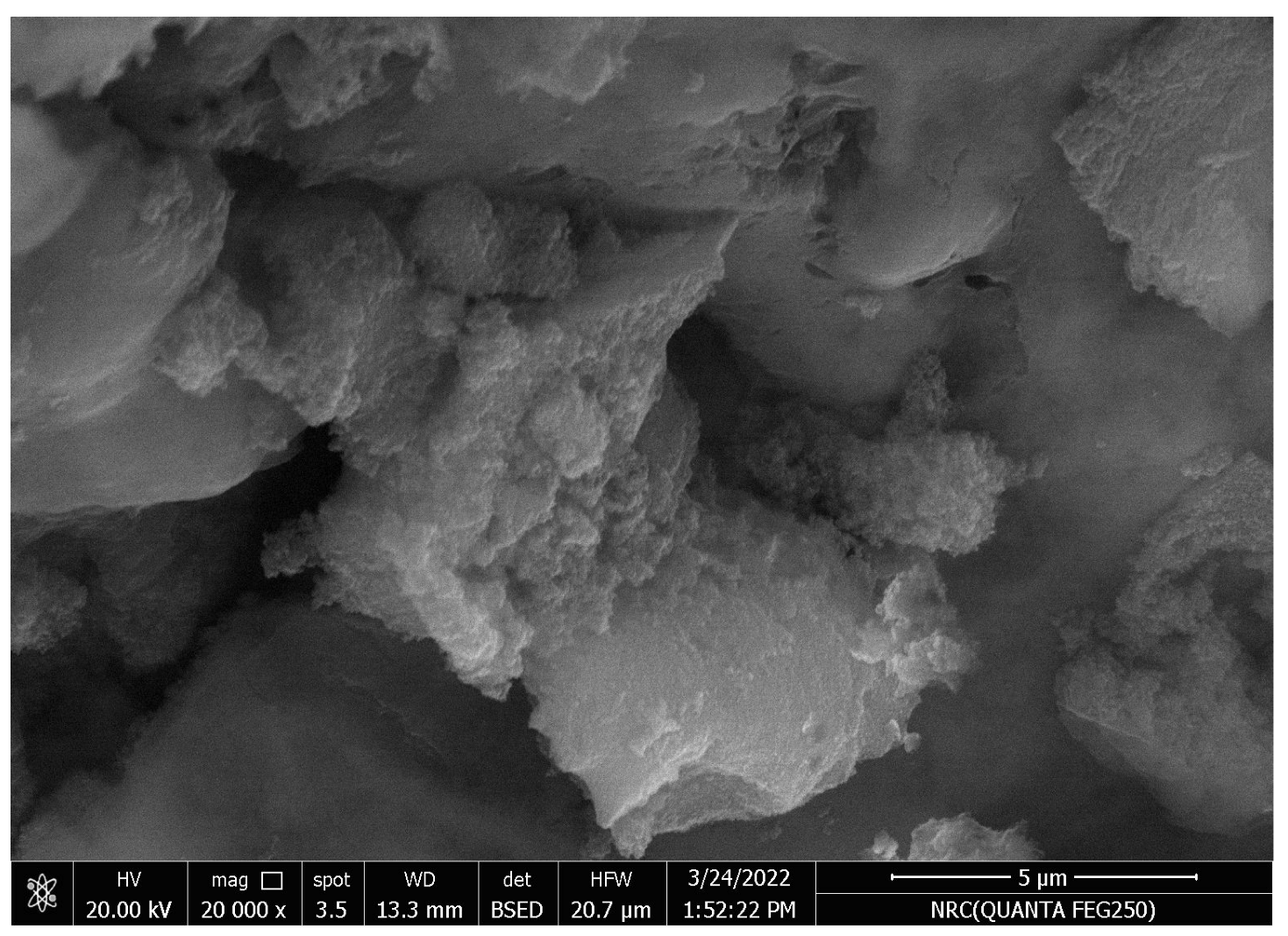
Figure 2.
The FTIR analysis of Punica granatum L. peels - based activated carbon (PgP-ACs).
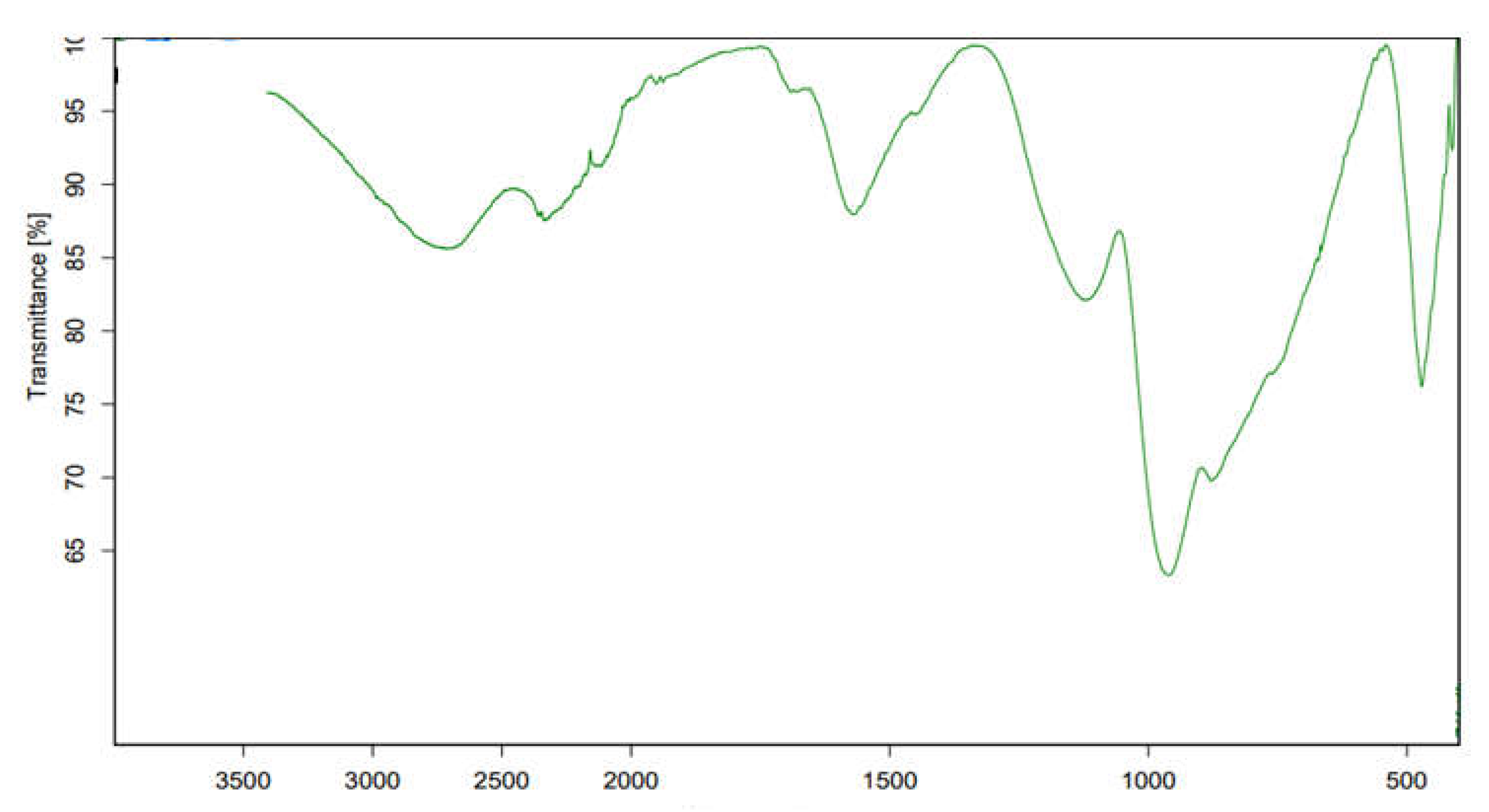
Figure 3.
A) Photomicrograph of a kidney section of control rats showing normal tubular brush borders and intact glomeruli and Bowman’s capsule; B) a kidney section of rats treated with chlorpyrifos alone showing focal glomerulosclerosis (red arrow) and tubal epithelial degeneration (yellow arrow); C) a kidney section of rats treated with Punica granatum L. peels - based activated carbon (PgP-ACs) alone showing nearly normal tubular brush borders and intact glomeruli and Bowman’s capsule; and D) a kidney section of rats treated with chlorpyrifos and Punica granatum L. peels - based activated carbon (PgP-ACs) showing dense perivascular lymphoplasmacytic cellular infiltration (yellow arrows) (Hematoxylin and Eosin stain, X400).
Figure 3.
A) Photomicrograph of a kidney section of control rats showing normal tubular brush borders and intact glomeruli and Bowman’s capsule; B) a kidney section of rats treated with chlorpyrifos alone showing focal glomerulosclerosis (red arrow) and tubal epithelial degeneration (yellow arrow); C) a kidney section of rats treated with Punica granatum L. peels - based activated carbon (PgP-ACs) alone showing nearly normal tubular brush borders and intact glomeruli and Bowman’s capsule; and D) a kidney section of rats treated with chlorpyrifos and Punica granatum L. peels - based activated carbon (PgP-ACs) showing dense perivascular lymphoplasmacytic cellular infiltration (yellow arrows) (Hematoxylin and Eosin stain, X400).

Figure 4.
A) Photomicrograph of a liver section of control rats showing normal hepatocyte architecture; B) a liver section of rats treated with chlorpyrifos alone showing focal infiltration of the hepatic lobule by mononuclear inflammatory cells (yellow arrows); C) a liver section of rats treated with Punica granatum L. peels - based activated carbon (PgP-ACs) alone showing hyperplastic and pigmented Kupffer cells (yellow arrows); and D) a liver section of rats treated with chlorpyrifos and Punica granatum L. peels - based activated carbon (PgP-ACs) showing marked hydropic degeneration of hepatocytes (yellow arrows) (Hematoxylin and Eosin stain, X400).
Figure 4.
A) Photomicrograph of a liver section of control rats showing normal hepatocyte architecture; B) a liver section of rats treated with chlorpyrifos alone showing focal infiltration of the hepatic lobule by mononuclear inflammatory cells (yellow arrows); C) a liver section of rats treated with Punica granatum L. peels - based activated carbon (PgP-ACs) alone showing hyperplastic and pigmented Kupffer cells (yellow arrows); and D) a liver section of rats treated with chlorpyrifos and Punica granatum L. peels - based activated carbon (PgP-ACs) showing marked hydropic degeneration of hepatocytes (yellow arrows) (Hematoxylin and Eosin stain, X400).
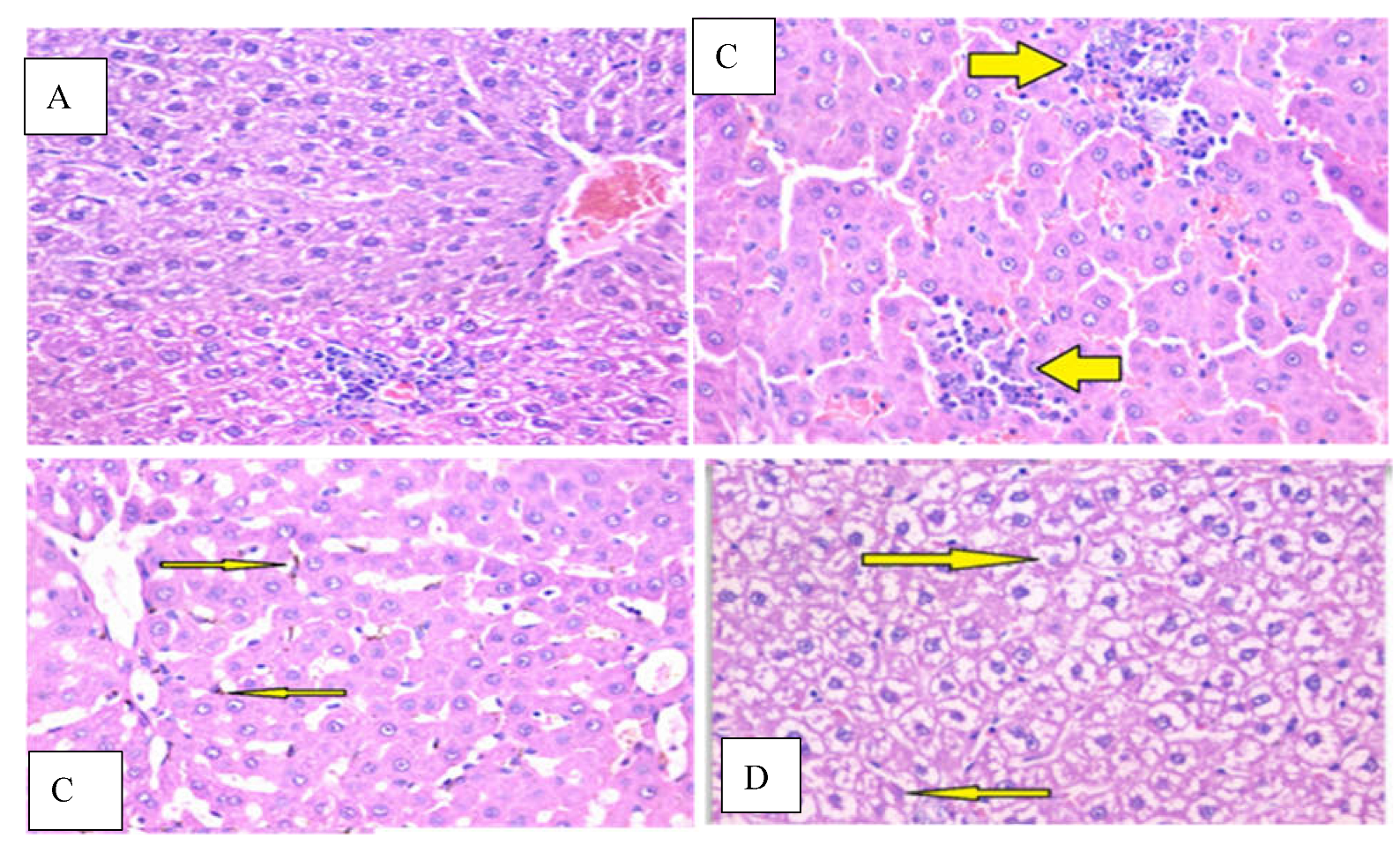

Table 1.
Effect of Punica granatum L. peels-based activated carbon (PgP-AC) on body weight gain and feed intake in rats treated with chlorpyrifos.
Table 1.
Effect of Punica granatum L. peels-based activated carbon (PgP-AC) on body weight gain and feed intake in rats treated with chlorpyrifos.
| Treatments | Initial(g) | End(g) | Body weight gain(g) | Feed intake(g) | Feed efficiency ratio |
|---|---|---|---|---|---|
| Control | 162.5 ± 10.12 | 211.0 ± 13.18 | 48.5 ± 3.06a | 1890 ± 111 | 0.0257a |
| Chlorpyrifos | 163.5 ± 11.21 | 189.3 ± 11.48 | 25.8 ± 2.14bc | 1902 ± 90 | 0.0136bc |
| PgP-ACs | 157.3 ± 9.40 | 187.4 ± 13.35 | 30.1 ± 1.52b | 1830 ± 121 | 0.0162b |
| Chlorpyrifos + PgP-ACs | 162.8 ± 10.00 | 185.6 ± 11.41 | 22.8 ± 1.41c | 1893 ± 98 | 0.0121c |
Results are mean ± SE (n=6); within each column, different letters are considered significant, P<0.05.
Table 2.
Effect of Punica granatum L. peels-based activated carbons (PgP-ACs) on liver function in rats treated with chlorpyrifos.
Table 2.
Effect of Punica granatum L. peels-based activated carbons (PgP-ACs) on liver function in rats treated with chlorpyrifos.
| Treatments | ALT (U/L) | AST (U/L) | ALP (U/L) | GGT (U/L) |
|---|---|---|---|---|
| Control | 137c ± 11.02 | 161b ± 12.22 | 158b ± 17.11 | 75a ± 5.11 |
| Chlorpyrifos | 167a ± 12.12 | 189a ± 16.15 | 187a ± 19.33 | 82a ± 5.50 |
| PgP-ACs | 142bc ± 10.31 | 164b ± 15.24 | 159b ± 20.13 | 79a ± 4.91 |
| Chlorpyrifos + PgP-ACs | 159b ± 13.14 | 167b ± 14.44 | 168ab ± 18.16 | 80a ± 5.12 |
Results are mean ± SE (n=6); ALT: alanine aminotransferase; AST: aspartate aminotransferase; ALP: Alkaline phosphatase; GGT: Gamma glutamyl transferase; Within each column, different letters are considered significant P<0.05.
Table 3.
Effect of Punica granatum L. peels-based activated carbons (PgP-ACs) on kidney function in rats treated with chlorpyrifos.
Table 3.
Effect of Punica granatum L. peels-based activated carbons (PgP-ACs) on kidney function in rats treated with chlorpyrifos.
| Treatments | Urea (mg/dl) | Creatinine (mg/dl) | Uric acid (mg/dl) |
|---|---|---|---|
| Control | 19.00b ± 1.21 | 0.51b ± 0.03 | 1.33b ± 0.10 |
| Chlorpyrifos | 27.67a ± 1.72 | 0.69a ± 0.04 | 2.16a ± 0.16 |
| PgP-ACs | 21.00b ± 2.00 | 0.50b ± 0.04 | 1.67b ± 0.13 |
| Chlorpyrifos + PgP-ACs | 22.13b ± 1.83 | 0.53b ± 0.03 | 1.87ab ± 0.15 |
Results are mean ± SE (n=6); Within each column, different letters are considered significant P<0.05.
Table 4.
Effect of Punica granatum L. peels-based activated carbon (PgP-ACs) on lipid profile in rats treated with chlorpyrifos.
Table 4.
Effect of Punica granatum L. peels-based activated carbon (PgP-ACs) on lipid profile in rats treated with chlorpyrifos.
| Treatments | Cholesterol (mg/dl) | Triglycerides (mg/dl) | HDL (mg/dl) | LDL (mg/dl) |
|---|---|---|---|---|
| Control | 81.67b ± 5.63 | 58.33c ± 3.27 | 22.00b ± 3.91 | 36.60a ± 1.23 |
| Chlorpyrifos | 107.33a ± 6.66 | 129.33a ± 7.81 | 28.33a ± 4.00 | 26.41b ± 2.13 |
| PgP-ACs | 84.33b ± 5.34 | 74.00c ± 4.16 | 23.40b ± 4.01 | 31.53a ± 1.86 |
| Chlorpyrifos + PgP-ACs | 86.67b ± 5.02 | 108.70b ± 6.09 | 25.00ab ± 3.96 | 28.67ab ± 2.01 |
Results are mean ± SE (n=6); Within each column, different letters are considered significant P<0.05.
Table 5.
Histopathological changes in the liver and kidney sections of rats.
| Treatments | Liver | Kidney | |||||
|---|---|---|---|---|---|---|---|
| Hepatic Degeneration | Apoptosis | Inflammation | Others | Glomeruli | Tubules | Other | |
| Control | ±N | - | - | - | ±N | ±N | - |
| Chlorpyrifos | + | + | ++ | - | Focal sclerosis+ | Focal degeneration+ | - |
| PgP-ACs | ±N | - | - | Kupffer cell hyperplasia+ | ±N | ±N | |
| Chlorpyrifos + PgP-ACs | ±N | - | Portal+ | - | ±N | ±N | - |
Scoring was done as follows: none (-), mild (+), moderate (++), and severe (+++).
Disclaimer/Publisher’s Note: The statements, opinions and data contained in all publications are solely those of the individual author(s) and contributor(s) and not of MDPI and/or the editor(s). MDPI and/or the editor(s) disclaim responsibility for any injury to people or property resulting from any ideas, methods, instructions or products referred to in the content. |
© 2025 by the authors. Licensee MDPI, Basel, Switzerland. This article is an open access article distributed under the terms and conditions of the Creative Commons Attribution (CC BY) license (http://creativecommons.org/licenses/by/4.0/).
Copyright: This open access article is published under a Creative Commons CC BY 4.0 license, which permit the free download, distribution, and reuse, provided that the author and preprint are cited in any reuse.


