

Submitted:
22 April 2025
Posted:
22 April 2025
You are already at the latest version
Abstract
Mining waste from both underground and open pit mines is typically placed in surface sites known as mine waste dumps. Over time, as large volumes of mining waste accumulate, these dumps become higher due to the limited surface area allocated for dumping. Ensuring the stability of mine waste dumps is a major concern for both mining operations and local governments due to safety risks to the dumps themselves and their surrounding environments. In some cases of mine waste dump, spontaneous combustion poses a significant challenge, affecting not only the environment but also the slope stability of mine waste dumps. This review synthesizes existing research on the mechanisms of spontaneous combustion, its thermal effects, and the implications for geomechanical stability in mine waste dumps. It also examines methods for monitoring and controlling these processes, identifies gaps in current research, and suggests directions for future studies. The review also reveal that combustion-induced temperature changes, material degradation, and gas generation significantly impact geotechnical properties of materials building dumps, contributing to slope failure. This review is expected to provide valuable insights to help mining authorities assess risks, minimize impacts, and implement preventive measures to mitigate unexpected spontaneous combustion-induced slope failures in mine waste dumps.
Keywords:
spontaneous combustion
; slope stability
; mine waste dumps
; monitoring
; mitigation strategy
1. Introduction
In Poland, mining waste, i.e., rock extracted along with coal, is stored in mining waste disposal facilities in the form of dumps, post-mining waste heaps, or settling ponds. Currently, the accumulation of extractive waste in Poland accounts for over 550 million Mg. A total of 153 such facilities have been identified across the country with a total area of 11 304 ha (Figure 1) [1]. It has pointed out the necessity to oversee the managers of closed mining waste disposal facilities. This is due to the fact that the extraction of waste and residual coal from dumps disrupts the stability of the facility. Combined with rainfall, this can lead to landslides and, as a consequence—due to air exposure—trigger a spontaneous combustion [1,2,3].
The situation is the same in other countries, eg. according to the Ukraine Mining Ministry, only in the area of closing coal mines within the boundaries of three Ukrainian coal basins, 341 spoil piles were inventoried, 105 of which had seats of fire [4]. In the coal basins of China, over 6 billion Mg of waste has been deposited in between 1500 and 1700 facilities with an area of over 15,000 ha [5,6,7,8]. Generally, mining waste is accumulated on the ground occupies large areas of land, causing many environmental and safety hazards, including vegetation damage, water and soil loss, air and groundwater pollution, spontaneous combustion and landslides of waste dumps.
The phenomenon of self-heating and spontaneous combustion is a result of a number of complex physical and chemical processes. Spontaneous combustion within mine waste dumps presents a multifaceted challenge, impacting environmental safety and structural stability. Spontaneous combustion, often triggered by the oxidation of coal under favourable conditions, can lead to significant thermal and mechanical changes within the dump material. These include temperature increases, material degradation, and gas generation, all of which can also cause geological disasters such as surface landslides and explosions.
Self-heating and spontaneous combustion is being observed in many coal fields and mine waste dumps worldwide such as: US, China, India, Australia, Poland, Czech Republic, South Africa [9,10,11,12,13,14,15,16,17,18,19,20,21,22,23,24,25]. It is well-known that the temperature of the environment and within the slope affects its stability, especially when there are intense thermal fluctuations that cause changes in the volume of soils and rocks, which can lead to thermal stresses and weakening of the slope. Additionally, an increase in temperature may cause changes in soil moisture, increase permeability, thereby reducing the shear strength of rocks and soils especially cohesion, which can contribute to landslides [26,27,28,29,30,31,32,33,34,35,36,37]. Other studies have shown how wildfires affected natural slopes and led to landslides [38,39,40].
In the case of coal mine waste dumps, the impact of temperature on the slope stability is certainly also as significant as other cases. On September 16, 2023, a landslide occurred on the slope in the area of the mine waste dump in the southern Poland, where the phenomenon of self-heating and spontaneous combustion of coal is constantly observed. Figure 2 shows the landslide surface. One of major landslide causes was is cracks/fractures induced by coal combustion, observed on the upper surface of the slope, that could have been initiate the development of slope damage and lead to a landslide. This is an evidence of the potential direct impact of coal spontaneous combustion on slope stability within mine waste dumps.
Despite the potential risks, the impact of coal combustion on the slope stability of mine waste dumps remains poorly understood. This review explores the impact of the self-heating and spontaneous combustion on slope stability, emphasizing the underlying mechanisms, thermal effects, material behaviour, and viable monitoring, prevention, and mitigation strategies for mine waste dumps. The review aims to provide a comprehensive analysis of current knowledge and identify areas where further research is needed. A better understanding of the self-heating and spontaneous combustion in mine waste dumps can assist mines assess risks and minimize impacts effectively.
2. Mechanisms of Spontaneous Combustion in Mine Waste Dumps
The spontaneous combustion process typically involves four distinct phases: (1) induction phase -heating and accumulation by oxidation (internal temperature increase), (2) slow spontaneous heating - internal temperature increase and maintain a fixed temperature, (3) acceleration of heating - drying of internal moisture and rapidly increasing temperature, (4) spontaneous combustion - high-temperature burning alters material properties and produces gaseous byproducts [19,41,42,43,44,45].
Spontaneous combustion occurs due to the self-heating of combustible materials (coal, sulfide and pyrite) contained in the wastes through low-temperature oxidation. This process is accompanied by an increased production of heat and increased temperatures (Figure 3).
Major factors influencing this process include:
- -
- Coal Rank: higher-rank coals (e.g., anthracite) have lower susceptibility to spontaneous combustion than low-rank coals (e.g., lignite). Coal is a porous material characterized by a complex structure with numerous active sites on its surface. These sites can continuously adsorb oxygen molecules from the surrounding air. During this process, coal undergoes low-temperature oxidation, which results in the gradual release of gaseous products and heat. Under certain conditions—such as restricted ventilation, high ambient temperatures, and sufficient coal mass—this heat can accumulate faster than it dissipates. As a result, the temperature of the coal gradually rises, potentially reaching the critical threshold at which spontaneous combustion occurs [47,48,49,50,51,52,53,54].
- -
- Particle Size: fine coal particles with increased surface area are more prone to oxidation. The particle size and porosity of coal significantly influence its specific surface area. A larger specific surface area enhances the contact between coal and oxygen, thereby increasing both the reaction rate and the efficiency of heat transfer. As the particle size decreases, the tendency for spontaneous heating increases—studies have shown that a reduction in particle size can raise this tendency by approximately 12–14% [14,52,55,56,57,58,59,60].
- -
- -
- Ambient conditions: high ambient temperatures and oxygen availability accelerate self-heating [19,73,74,75,76,77,78,79]. Additionally, external heat sources, such as mentioned wildfires, human activities such as removal/ reconstruction of the mine waste dump or wind flow, delivering air to the self-heating cells, can initiate combustion [21,80,81,82,83,84].
3. Thermal Effects on Geotechnical Properties
The environmental impacts of spontaneous combustion are well-documented and include air pollution, acid rain, and greenhouse gas emissions. However, the geotechnical impacts, particularly on mine waste dumps, have received less attention. The combustion process can alter the physical, chemical and mechanical properties of coal and its associated wastes, leading to changes in slope stability. The stability of any slope is heavily influenced by geotechnical conditions of the site including the physical and mechanical properties of the built-up materials and hydrological conditions. Coal combustion generates substantial heat, affecting slope stability through various mechanisms: thermal expansion, material degradation, and gas generation, that significantly alters the geotechnical properties of mine waste materials, which are critical for slope stability. Key impacts include:
Reduction in Shear Strength: In the middle of the slope, where combustion occur, the temperature can reach several hundred degrees Celsius [12,43,85,86,87]. Number of research have pointed out the impact of temperature of soils and rocks strength [88,89,90,91,92,93,94,95,96,97,98,99,100]. Temperature gradients within the dump generate thermal stresses, which can lead to material cracking. In clay-rich dump materials, these temperature variations can induce significant fractures, compromising structural integrity. Elevated temperatures accelerate the decomposition of thermally sensitive minerals, such as pyrite, leading to the release of acidic byproducts and further weakening the material. Additionally, thermal expansion contribute to material degradation, weakening the bonds between particles, reducing the shear strength of the waste material, including cohesion and friction angle. This reduction in shear strength is a primary factor contributing to slope instability, increasing the risk of failure in waste dumps and other natural/man-made earth structures.
Thermal Stress Accumulation: Combustion within the mine waste dump generates gases that accumulate over time, leading to an increase in pore pressure and a subsequent reduction in effective stress. As the pressure builds up, these gases eventually escape through the dump, creating pathways, often manifesting as surface fractures and/or cracks (Figure 4). This process induces volumetric expansion, which can weaken the structural integrity of the slope, potentially triggering progressive failure mechanisms and ultimately leading to a landslide. Additionally, the formation of an extensive fracture network further compromises slope stability by facilitating water infiltration, accelerating weathering, and reducing overall material cohesion.
An example of 2D slope stability analysis have showed that FoS values reduced with presence of a fracture. Fracture orientation and length has also showed the significant influence of slope stability (Table 1).
Many other studies have also pointed out the significant impact of discontinuities on slope stability in various regions worldwide [101,102,103,104,105,106,107,108,109,110,111,112,113,114].
Changes in Density and Compaction: The formation of voids within the mine waste dump after the combustion process is primarily due to the thermal degradation and oxidation of carbonaceous materials, leading to volume reduction and structural collapse. When self-heating or spontaneous combustion occurs within the dump, organic matter, sulfides and/or carbon, and other combustible materials undergo exothermic reactions, producing gases. As these gases escape, they create cavities within the dump. Additionally, the combustion process results in the thermal decomposition of minerals, altering their physical and mechanical properties. Clays and sulfates may dehydrate, while carbonates can decarbonate, further reducing material volume. This progressive loss of solid mass, combined with the weakening of interparticle bonds due to high temperatures, causes differential settlement and localized collapses, leading to the development of interconnected voids and subsurface cavities (Figure 5). Over time, these voids can expand and coalesce, potentially resulting in ground instability, surface subsidence, and increased permeability within the waste dump. The extent of void formation depends on factors such as the composition of the waste material, combustion intensity, temperature distribution, and the presence of moisture, which influences thermal conductivity and reaction kinetics [23,72,115,116,117,118].
Increased Porosity and Permeability: Thermal fractures increase dump permeability, altering water flow patterns and promoting localized saturation. This significantly influence the stability of structures. When the slope body experiences high temperatures, thermal expansion and differential stresses generate new fractures and widen existing ones, enhancing fluid flow pathways. Additionally, the decomposition of minerals and the loss of cementing agents further contribute to the development of secondary porosity. This increased permeability enhances vertical and lateral water movement, potentially concentrating moisture in specific zones rather than allowing uniform drainage. Localized saturation can weaken dump stability by reducing matric suction in unsaturated zones, leading to strength loss and increased susceptibility to slope failure. Additionally, the altered flow paths may accelerate the leaching of contaminants, affecting groundwater quality [87,119,120,121,122,123,124,125].
4. Monitoring and Mitigation Strategies Combating Spontaneous Combustion
4.1. Monitoring Techniques
Temperature monitoring both on the surface and within the dump is one of the most direct and accurate indicators of the degree of spontaneous combustion. While continuous gas monitoring reveals combustion intensity due to its readily recognizable distinctive smell of released gases. In last decades, number of research worldwide have been conducted in various spontaneous combustion detection and monitoring techniques for mine waste dumps, mainly including:
Field survey contains number of in situ attentions such as: characteristics of waste, ambient conditions around the dump surface, emission of gases commonly smelling of hydrocarbons, brown stains on the dump surface, sulfur mineralization. Low efficiency, expensive, time consuming, making it unsuitable for detecting and monitoring large areas [81,126,127,128,129].
The monitoring of spontaneous combustion in the mine waste dumps is usually carried out through borehole temperature and gas measurement at different depths [3,7,43,86,130,131,132,133,134,135,136]. However, temperature and gas measurement at the large area is expensive and inefficient, and in some cases it is impossible because lack of access in some places with high spontaneous combustion intensity due to numerous hazards (toxic gases, collapses and landslides after burning). Its reliability also often depends on the density of measuring points for the whole area under evaluation, leading to high costs and lengthy construction timelines.
Because of their high cost and time performance, the field survey and borehole temperature and gas measurement techniques are commonly used to validate the results obtained from others methods [131,136,137,138,139,140].
Temperature measurement has been used for monitoring spontaneous combustion of mine waste dumps by applying advanced technologies such as small-scale unmanned aerial vehicle (UAV), large-scale satellite remote sensing, infrared imaging remote sensing and multi-source data fusion monitoring [23,137,138,139,140,141,142,143,144,145,146,147,148,149,150,151,152,153,154]. These technolgies offers various advantages, including reduced direct contact with observed objects and eliminating the need to dispatch personnel to the fire area. Equipped with sensors, aircraft platforms can remotely detect the position, status, and other relevant data of target objects with high accuracy. However, these approaches usually require knowledge of the intensity and range of the fires. These methods are not suitable for detecting the potential spontaneous combustion process in its initial stages when the spontaneous combustion does not occurred yet on the surface and/or shallow subsurface of the dumps e.i. the combustion cells are located in deep body within the dumps
Another alternative approach is based on monitoring the vegetation changes, which were considered to be signals of underground temperature rise. It is well-known that the spontaneous combustion releases a constant heat, which creates a stress environment for vegetation growth. Under the influence of an abnormal surface/underground temperature, vegetation is likely to decrease [155,156,157,158,159]. Number of studies were carried out an investigation on a reclaimed coal waste dump by using a UAV equipped with an aboveground biomass (AGB) camera [144,160,161,162,163]. This approach also is not suitable for detecting the potential spontaneous combustion process in its initial stages and the cases where the combustion cells are located in deep body within the dumps. It also can be noted that the active-operating mine waste dumps are not cover by vegetation so such method only can be applied for the claimed mine waste dumps.
For frequent spontaneous combustion events in mine waste dumps worldwide, there is still a lack of an effective warning and monitoring method to assess the potential risk of spontaneous combustion. Although some progress has been made in developing ensemble or hybrid techniques that integrate multiple detection and monitoring approaches, these methods are still in their early stages. Combined techniques hold the potential to enhance robustness and accuracy by leveraging the strengths of individual methods while mitigating their weaknesses. However, substantial research and development efforts are still required to advance these combined systems and validate their performance under real-world conditions. In conclusion, while significant advancements have been made in the detection and monitoring of endogenous fires, several challenges remain. The site-specific nature of many techniques, the limitations of laboratory studies, and the early development of combined approaches all point to the need for further research to improve the accuracy, generalizability, and applicability of spontaneous combustion detection and monitoring methods across diverse environments. For example, integrating thermal infrared imaging with gas/temperature detection sensors could improve the reliability of monitoring systems in variable environmental conditions.
4.2. Mitigation Strategies
Any combustion can be controlled by removing any one of the following components: Fuel, Heat and Oxygen. In order to extinguish a fire, it is necessary to remove at least one of the three mentioned components.
According to the spontaneous combustion experiences in South Africa, the control measures can be divided in three groups: (1) control measures to reduce or eliminate oxygen from the fire process, including: sealing agents, dozing over, buffer blasting, cladding of the highwall; (2) control measure to reduce the temperature (heat) and/or the reaction rate such as: water, nitrogen, carbon dioxide injection; (3) removal of heated/burning sites for cooling [164,165,166,167].
In the history of coal mining in Poland, various methods were used for extinguishing burning dumps or preventing them from self-igniting [1,12,81,168,169]: intensive sprinkling with water, covering dumps with nonflammable material such as clays or tills, isolation of parts of the dump that are in fire by digging absorption trenches filled by a water–ash mixture, cooling of burning waste by its exploitation and the reconstruction of dumps, deep drilling into the dump to enable the filling of openings with water–ash pulp, cooling and quenching with neutral gases using pipes placed in the dump during its deposition, waste thickening with an incombustible material combined with dump dehydration protects the dump from self-ignition, and it can also protect groundwater from chemical compounds leached from the deposited waste, covering with polymeric compounds or antipyrogenic materials (sodium chloride, calcium chloride or manganese chloride), utilization of ash from power plants during dump formation, controlled afterburning of dumps.
For Australian sites, there are a number of control techniques that can be incorporated into the waste rock dump (WRD) design and mine planning to minimize the effects of spontaneous combustion and ultimately prevent it from occurring. These control measures are quite similar to the South African ones including: measures to reduce/ eliminate oxygen such as: sealing agents, compaction of the surface material (dozing over, truck haulage routes or compaction), buffer blasting, covering the area of concern with inert material (e.g. non-acid forming material, clay), application of a final cover layer with good water retention properties (e.g. fly ash-water slurry), subaqueous deposition. Some control measures used to reduce the temperature and lower the reaction rate include: water cannons; firefighting foam; injection of water; water spraying; nitrogen injection and carbon dioxide injection. Other control measures to eliminate the fire process may include: excavation of hot or burning material, controlling the morphology of potentially acid forming material cells (layering etc.), the use of low-angle slopes to minimize the effects of wind (i.e. reduce “chimney effect”), the use of artificial wind barriers, submersion in water (e.g. backfill in pit and flooding), and spreading the affected material into thin piles to allow to cool [14,64,133,170,171].
Techniques or approaches have been proposed and applied in the US, Indie and other countries, are: bulkheads and stoppings; inertization, nitrogen or carbon dioxide gas injection; dynamic pressure balancing, ventilation control; application of fire-fighting chemicals; application of a surface coating or sealant material to prevent oxidation; high-expansion foam; excavation; isolation; inundation with water; surface seals; remote sealing; noncombustible barriers; hydraulic backfilling or 'flushing'; pneumatic stowing; grouting [16,172,173,174,175,176,177,178,179,180].
Alternative approaches are focused on the development of new materials that can be effectively used to combat combustion, such as multi-phase foams, hydrogel mixtures, and foamed gels. These materials offer promising potential for fire suppression across various environments. For instance, multi-phase foam and hydrogel mixtures combine the thermal insulation properties of foams with the high water content and cooling capacity of hydrogels, resulting in enhanced fire resistance and heat absorption capabilities. Foamed gels, produced by incorporating gas bubbles into gel matrices, provide prolonged surface adherence and function as both a physical barrier and a heat sink. Another promising approach involves integrating foam into traditional grouting materials, thereby improving their fire-suppressive performance while maintaining structural integrity [181,182,183,184,185,186,187]. Although these materials demonstrate superior cooling and smothering capabilities compared to water or conventional combustion retardants—especially in high-temperature or oxygen-deficient environments—they also come with limitations. They are generally more expensive to produce and apply than traditional suppression agents. Additionally, they may raise environmental and health concerns if not properly managed, require specialized equipment or application methods, and may not provide long-term effectiveness due to potential evaporation, chemical degradation, or environmental exposure.
5. Discussion
This chapter is dedicated to a comprehensive evaluation of the current state of knowledge, development and the implementation designed to address spontaneous combustion hazard itself and its possible impact on slope stability. It provides an in-depth analysis of existing strategies, assessing their effectiveness in preventing and mitigating the risks associated with spontaneous combustion in mine waste dumps. The chapter also explores the challenges and limitations faced in the research and practical application. In addition to evaluating current approaches, key research gaps have been identified, particularly in the areas where innovative advancements are needed. To address these issues, future research directions are proposed. The goal is to refine existing methods and introduce more sustainable, cost-effective solutions for combating spontaneous combustion, ensuring enhanced safety and environmental protection in mine waste dump operations.
Integrated Modelling Research: Numerous studies have been conducted on spontaneous combustion in mine waste dumps, each addressing different aspects of this complex phenomenon. Some research has focused on the thermal behavior of the waste material, investigating oxidation processes, heat generation rates, and temperature distribution within the dump. Other studies have examined the environmental impacts, such as greenhouse gas emissions, air pollution, and the release of toxic substances. Additionally, research has been conducted on the physical and chemical properties of mine waste, including moisture content, particle size distribution, and coal/sulfide content, which influence the likelihood and progression of combustion. There is also a body of work exploring the mechanical behavior of waste dump slopes, particularly in terms of slope stability, settlement, and deformation. However, there remains a critical gap in the literature when it comes to studies that integrate thermal and mechanical aspects—that is, research that explicitly investigates how thermal processes (such as combustion and heat transfer) affect the mechanical response of mine waste dumps, including strength reduction, creep, and failure mechanisms. Most existing studies tend to treat thermal and mechanical phenomena in isolation, failing to capture the coupled interactions that are essential for understanding realistic behavior of mine waste structures subjected to elevated temperatures. To address this limitation, there is an urgent need for the development of integrated thermo-mechanical models that can simulate the complex interplay between heat generation, thermal expansion, material degradation, and mechanical deformation. These models should incorporate multi-physics processes, including: Heat generation and transfer due to oxidation of residual coal; Gas flow and pressure build-up within the pore structure; Thermal-induced softening and changes in shear strength; Time-dependent deformation (creep) under sustained thermal and mechanical loads; Failure prediction under varying boundary and environmental conditions. Such integrated modeling frameworks are essential tools for advancing our predictive capabilities. By combining laboratory testing, field monitoring, and numerical simulations, we can better understand how spontaneous combustion evolves and impacts dump stability over time. These models would not only support proactive risk assessment and early warning systems but also inform the design of more resilient waste dump structures and targeted mitigation strategies, such as thermal barriers, compaction methods, and improved dump geometry. A coupled thermo-mechanical modeling to bridge the gap between existing studies and real-world conditions is needed for accurate predictions. This integrated approach is crucial for managing the long-term safety and environmental risks associated with mine waste dumps prone to spontaneous combustion.
Long-Term Material Behavior: A number of research studies have been conducted to gain a better understanding of the mechanisms underlying spontaneous combustion. While the impact of spontaneous combustion on slope stability is critical, there remains a significant lack of geotechnical investigations at many affected sites. This gap in research may be attributed to the heterogeneous nature of materials comprising mine waste dumps, as well as the substantial costs and logistical challenges associated with conducting such studies. Moreover, there is currently no comprehensive research focusing on the post-combustion residual strength and creep behavior of materials within mine waste dumps. This is a crucial oversight, as these properties are essential for evaluating long-term slope stability and the risk of delayed failures following combustion events. It appears that mine waste dumps are often not given sufficient attention in terms of geotechnical assessment until spontaneous combustion or spontaneous combustion-induced consequence has already occurred. To address this issue proactively, it is imperative to conduct long-term experimental, research into the behavior of mine waste materials under elevated thermal conditions. Such studies should aim to characterize changes in mechanical properties, deformation behavior, and overall structural integrity over time, thereby enabling more effective prediction, prevention, and mitigation of spontaneous combustion hazards..
Sustainability: Number methods have been developed and applied worldwide over years. Effectiveness of these techniques are dependent on individual site situations. Fuel is removed when it is physically separated from the burning mass so in surface subjects such as spoil piles or mine waste dumps removal of carbonaceous or sulfide minerals is normally unrealistic. Removal of heat can be accomplished by injecting a heat-absorbing material; i.e., water, inert gas, foam, grout, etc, however it is usually impractical. Additionally, these materials can have side effects on environmentn surrounding dumps such as: air, surface/underground water, noise, vegetation, eco-system. Hence, most strategies for control and prevention of spontaneous combustion focus on removing oxygen, or rather, preventing its access the fuel. This is usually best accomplished by the applying cover layers of inert material which reduce the rate at which oxygen can penetrate the mi mine waste dump. The effectiveness of a cover is generally dependent on composition, particle size and bulk density, water content of the cover, air filled void space, heat transfer capacity; oxygen transfer, and cover thickness. However cover layer can makes slope instable due to adding mass on slope. Excavation of heated or burning material is one of the primary methods for controlling spontaneous combustion in mine waste dumps. The effectiveness of this approach depends on several factors, including the layout of the waste dump, the extent of the combustion problem, and site-specific conditions When implemented properly, this method results in the complete elimination of burning zones and facilitates the relatively rapid cooling of adjacent areas, typically within a few hours to several days. However, despite its effectiveness, excavation has several drawbacks. The process generates significant amounts of dust, which can have adverse environmental and health impacts, leading to complaints from nearby communities. Moreover, excavation alters the shape and size of the dump, necessitating design and operational modifications to maintain stability and ensure continued waste disposal efficiency. In the case of active dumping sites, excavation operations can also disrupt the continuity of waste disposal activities, requiring careful planning and coordination to minimize operational downtime. Additionally, handling and relocating burning or heated materials pose safety risks to workers and require appropriate protective measures. Given these challenges, excavation should be carefully planned in conjunction with other fire mitigation strategies, such as controlled compaction, surface sealing, and continuous monitoring of temperature and gas emissions, to ensure a comprehensive and sustainable approach to spontaneous combustion management. Practically, there is no single control that has been proven to be completely reliable or successful. Effective control of spontaneous combustion is usually achieved by using a combination of techniques. Hence, developing eco-friendly mitigation techniques is critical for long-term management of spontaneous combustion- mine waste dumps.
Climate Change: Self-heating in mine waste dumps is strongly influenced by ambient conditions such as temperature, wind, rainfall (including snowfall), and atmospheric pressure. These environmental factors play an important role in the onset of spontaneous combustion. The increasing frequency and intensity of extreme weather events due to climate change can exacerbate the risk of spontaneous combustion in mine waste dumps. Rising temperatures, prolonged dry periods, intense rainfall, and unpredictable weather events can all alter the moisture content, air circulation, and temperature gradients within the dump. This can accelerate self-heating processes, leading to an increased risk of combustion and further impacting the stability of the dump slope. In the context of climate change, these effects are likely to become more pronounced, necessitating adaptive management strategies for the safe handling and monitoring of mine waste dumps. Currently, the effects of extreme weather events due to climate change on combustion remain understudied.
Alternative approach on mine waste dump management: Utilize energy from the combustion process as a continuous geothermal heat sources. The combustion process releases greenhouse gases, contributing to air pollution, acid rain, and climate change. Additionally, it produces particulate matter and toxic heavy metals, which can degrade air quality and pose health risks. From a geotechnical perspective, spontaneous combustion within mine waste dumps can lead to thermal fractures, increased permeability, ground subsidence, and structural instability. The heat generated alters the physical and chemical properties of surrounding materials, potentially weakening the dump structure and influencing water flow patterns. Despite a number of negative impacts, spontaneous combustion is a significant source of energy. Controlled combustion can remain an essential energy source for district heating systems or industrial applications, where its steady heat output is harnessed for efficient thermal energy production. Similar concepts have been explored in municipal solid waste landfills to optimize energy recovery [188,189,190,191,192,193,194,195,196,197,198,199]. Moreover, although various technologies have been tested and implemented to mitigate spontaneous combustion in mine waste dumps, long-term success remains elusive. Frequent spontaneous combustion events continue to be observed in mine waste dumps worldwide, highlighting the persistent challenge of controlling these events. Given the high cost and uncertain effectiveness of traditional hazard mitigation strategies, a shift in perspective may be necessary. Instead of solely focusing on extinguishing and eliminating spontaneous combustion-induced hazards, a more pragmatic approach could involve hazard awareness, risk control, and strategic utilization of the generated heat. Maximizing the energy potential of controlled combustion could provide tangible benefits to surrounding communities, turning an environmental and safety challenge into a potential energy resource. Figure 6 presents a concept of utilize energy from the combustion process.
6. Conclusions
Due to the fact that mining plays a crucial role in the economy and national security of many regions worldwide, the quantity and size of mine waste dumps are expected to increase over time. As these dumps grow in volume and dimensions, the likelihood of self-heating and spontaneous combustion events also rises—particularly in mining areas. Spontaneous combustion alters the thermal conditions within the waste material, which directly influences the geomechanical behavior of the dump materials. These thermally induced geomechanical changes can, in turn, impact the overall stability of the waste dump slopes. In other words, spontaneous combustion within mine waste dumps introduces complex challenges to slope stability, posing significant risks to both environmental safety and operational sustainability.
Due to the variability of geotechnical properties, the spread of combustion within the mine waste dump, and the ongoing process of waste deposition, should be subject to continuous detailed monitoring. Such a monitoring should cover: Changes in dump slope geometry; Degree of compaction of individual layers forming the dump body; Slope displacements resulting from geometric changes during its dumping operations; Type and grain size of freshly deposited mine waste; Ongoing slope stability analyses and calculations for each phase of slope construction; Thermal imaging surveys and in-depth thermal state investigations during the dumping process. The primary objective of this monitoring is early warning and prevention of potential spontaneous combustion and its possible consequences. This approach is also essential for the selection and assessment of fire prevention methods, both during the construction phase of the reclamation body and the post-construction phase, ensuring long-term safety and performance of the dump structure
A number of practical measures are recommended, such as conducting stability analyses for individual slopes of mine waste dump, and continuous monitoring (e.g., geodetic and photogrammetric measurements) aimed at tracking slope displacements over time. In addition, geophysical investigations should be carried out to detect potential voids within the dump body. The most commonly used geophysical methods include: ground penetrating radar, engineering seismics, electrical resistivity tomography, gravimetric methods, and electromagnetic methods. These investigations are a crucial complement to geotechnical studies, especially in terms of accurately identifying the structure and geomechanical condition of the dump materials. Furthermore, it is also recommended to monitor the compaction of freshly deposited mining waste and, if necessary, to re-compact or seal the surface layers of the dump body to achieve the required compaction indicators for each material (soil) layer.
Preventive measures to mitigate spontaneous combustion at mine waste dumps have traditionally been costly and time/labor-consuming. Until now, they have not been fully effective. Therefore, an alternative approach is suggested: controlling and utilizing spontaneous combustion as a geothermal heat source. Future work should focus on research and development of such a system, as well as its implementation
Future research should focus on long-term monitoring, advanced analytical techniques, numerical modelling, innovative mitigation strategies and sustainable mining practices to enhance in management of the spontaneous combustion itself and the possible its impact on slope stability of mine waste dumps
Future research on the impact of climate change on self-heating and spontaneous combustion in mine waste dumps can focus on several key areas to improve understanding and mitigation strategies: investigate how changes in extreme weather events (e.g., heatwaves, intense rainfall, and droughts) influence self-heating and the onset of spontaneous combustion in mine waste dumps; develop advanced predictive models that incorporate climate change projections to assess the future risks of spontaneous combustion in waste dumps; enhance real-time monitoring techniques to detect early signs of spontaneous combustion and self-heating in the context of changing climate conditions; investigate adaptive management strategies for mine waste dumps that take into account future climate scenarios.
Funding
This research received no external funding.
Institutional Review Board Statement
Not applicable.
Informed Consent Statement
Not applicable.
Data Availability Statement
Data is contained within the article. Further inquiries can be directed to the author.
Acknowledgments
Not applicable.
Conflicts of Interest
The authors declare no conflicts of interest.
References
- NIK - Najwyższa Izba Kontroli (Supreme Audit Office). Securing and managing post-mining waste dumps (in Polish), 2019. Available online: https://www.nik.gov.pl/kontrole/P/18/067/.
- GUS - Główny Urząd Statystyczny (Central Statistical Office). Environmental Protection; Statistical Information and Studies. Statistical Publishing House: Warsaw, Poland, 2012.
- Wasilewski, S. Monitoring the thermal and gaseous activity of coal waste dumps. Environmental Earth Sciences 2020, 79, 474. [Google Scholar] [CrossRef]
- Peck, P. Risk Assessment Considerations in the Donetsk Basin. Mine Closure and Spoil Dumps. The Environment & Security Initiative (ENVSEC): Arendal, Norway, 2009.
- Querol, X.; Zhuang, X.; Font, O.; Izquierdo, M.; Alastuey, A.; Castro, I.; van Drooge, B.L.; Moreno, T.; Grimalt, J.O.; Elvira, J.; Cabañas, M.; Bartroli, R.; Hower, J.C.; Ayora, C.; Plana, F.; López-Soler, A. Influence of soil cover on reducing the environmental impact of spontaneous coal combustion in coal waste gobs: A review and new experimental data. Int. J. Coal Geol. 2011, 11, 2–22. [Google Scholar] [CrossRef]
- Pan, R.K.; Yu, M.G.; Lu, L.X. Experimental study on explosive mechanism of spontaneous combustion gangue dump. J. Coal Sci. Eng. 2009, 4, 394–398. [Google Scholar] [CrossRef]
- Zhai, X.; Wu, S.; Wang, K.; Drebenstedt, C.; Zhao, J. Environment influences and extinguish technology of spontaneous combustion of coal gangue heap of Baijigou Coal Mine in China. Energy Procedia 2017, 136, 66–72. [Google Scholar] [CrossRef]
- Song, W.; Zhang, J.; Li, M.; Yan, H.; Zhou, N.; Yao, Y.; Guo, Y. Underground Disposal of Coal Gangue Backfill in China. Appl. Sci. 2022, 12, 12060. [Google Scholar] [CrossRef]
- Dokoupilová, P.; Sracek, O.; Losos, Z. Geochemical behaviour and mineralogical transformations during spontaneous combustion of a coal waste pile in Oslavany, Czech Republic. Mineralogical Magazine 2007, 71(4), 443–460. [Google Scholar] [CrossRef]
- Zhao, Y.; Zhang, J.; Chou, C.L.; Li, Y.; Wang, Z.; Ge, Y.; Zheng, C. Trace element emissions from spontaneous combustion of gob piles in coal mines, Shanxi, China, International Journal of Coal Geology 2008, 73, 1, 52-62. [CrossRef]
- Žáček V.; Skála, R. Chapter 5 - Mineralogy of Burning-Coal Waste Piles in Collieries of the Czech Republic. Coal and Peat Fires: A Global Perspective, 2015, pp. 109-159, Edited by Glenn B. Stracher, Anupma Prakash, Ellina V. Sokol. [CrossRef]
- Ciesielczuk, J. Chapter 16 - Coal Mining and Combustion in the Coal Waste Dumps of Poland. Coal and Peat Fires: A Global Perspective, 2015, pp. 463-473, Editor(s): Glenn B. Stracher, Anupma Prakash, Ellina V. Sokol. [CrossRef]
- Zhang, Y.Y.; Nakano, J.; Liu, L.; Wang, X.D. Trace element partitioning behavior of coal gangue-fired CFB plant: Experimental and equilibrium calculation. Environ. Sci. Pollut. Res. 2015, 22, 15469–15478. [Google Scholar] [CrossRef]
- Day, S.; Bainbridge, N.; Carras, J.; Lilley, W.; Roberts, C.; Saghafi, A.; Williams, D. Chapter 1 - Spontaneous Combustion in Open-Cut Coal Mines: Australian Experience and Research. Coal and Peat Fires: A Global Perspective, 2015, pp. 1-36, Editor(s): Glenn B. Stracher, Anupma Prakash, Ellina V. Sokol. [CrossRef]
- Sýkorová, I.; Kříbek, B.; Havelcová, M.; Machovič, V.; Špaldoňová, A.; Lapčák, L.; Knésl, I.; Blažek, J. Radiation- and self-ignition induced alterations of Permian uraniferous coal from the abandoned Novátor mine waste dump (Czech Republic). International Journal of Coal Geology 2016, 1, 162–178. [Google Scholar] [CrossRef]
- Kong, B.; Li, Z.; Yang, Y. liu Z.; Yan D. A review on the mechanism, risk evaluation, and prevention of coal spontaneous combustion in China. Environ Sci Pollut Res 2017, 24, 23453–23470. [CrossRef]
- Kříbek, B.; Sýkorová, I.; Veselovský, F.; Laufek, F.; Malec, J.; Knésl, I.; Majer, V. Trace element geochemistry of self-burning and weathering of a mineralized coal waste dump: The Novátor mine, Czech Republic. International Journal of Coal Geology 2017, 173, 158–175. [Google Scholar] [CrossRef]
- Onifade, M.; Genc, B. A review of spontaneous combustion studies – South African context. International Journal of Mining, Reclamation and Environment 2018, 33(8), 527–547. [CrossRef]
- Onifade, M.; Genc, B. A review of research on spontaneous combustion of coal. International Journal of Mining Science and Technology 2020, 3, 303–311. [Google Scholar] [CrossRef]
- Nádudvari, Á.; Fabiańska, M.J.; Misz-Kennan, M.; Ciesielczuk, J.; Kowalski, A. Investigation of organic material self-heating in oxygen-depleted condition within a coal-waste dump in Upper Silesia Coal Basin, Poland. Environ Sci Pollut Res 2020, 27, 8285–8307. [Google Scholar] [CrossRef] [PubMed]
- Smoliński, A.; Dombek, V.; Pertile, E.; Drobek, L.; Gogola, K.; Żechowska, S.; Magdziarczyk, M. An analysis of self-ignition of mine waste dumps in terms of environmental protection in industrial areas in Poland. Sci Rep 2021, 11, 8851. [Google Scholar] [CrossRef] [PubMed]
- Nádudvari, Á.; Abramowicz, A.; Fabiańska, M.; Misz-Kennan, M.; Ciesielczuk, J. Classification of fires in coal waste dumps based on Landsat, Aster thermal bands and thermal camera in Polish and Ukrainian mining regions. Int J Coal Sci Technol 2021, 8, 441–456. [Google Scholar] [CrossRef]
- Abramowicz, A.; Rahmonov, O.; Chybiorz, R. Environmental Management and Landscape Transformation on Self-Heating Coal-Waste Dumps in the Upper Silesian Coal Basin. Land 2021, 10, 23. [Google Scholar] [CrossRef]
- Zhao, N.; Zhang, Y.; Zhao, X.; Yang, N.; Wang, Z.; Guo, Z.; Tong, J.; Zhang, Y.; Liu, Z. Temperature Distribution Regularity and Dynamic Evolution of Spontaneous Combustion Coal Gangue Dump: Case Study of Yinying Coal Mine in Shanxi, China. Sustainability 2023, 15, 6362. [Google Scholar] [CrossRef]
- Chand, K.; Koner, R. Mine Waste Dump Stability Monitoring Using the Combination of Drone Technology and 3D Numerical Modelling. In: Agnihotri, A.K., Reddy, K.R., Bansal, A. (eds) Sustainable Infrastructures. EGRWSE 2023. Lecture Notes in Civil Engineering, Springer, Singapore, 2025, vol. 355. [CrossRef]
- Liu, C.; Shi, B.; Shao, Y.; Tang, C. Experimental and numerical investigation of the effect of the urban heat island on slope stability. Bull Eng Geol Environ 2013, 72, 303–310. [Google Scholar] [CrossRef]
- Liu, G.; Tong, F.; Tian, B.; Tian, W. Influence of atmospheric temperature on shallow slope stability. Environ Earth Sci 2019, 78, 632. [Google Scholar] [CrossRef]
- Rodríguez, S.; Puig-Polo, C.; Lloret, A.; Vaunat, J.; Hürlimann, M. Effect of climate change on slope stability: a numerical analysis using predictions of the Catalan Pyrenees. A: International Symposium on Landslides. "International Society for Soil Mechanics and Geotechnical Engineering Online Library: 13th International Symposium on Landslides ( XIII ISL)". International Society for Soil Mechanics and Geotechnical Engineering (ISSMGE), 2021, pp. 1-8.
- Thota, S.K.; Vahedifard, F. Stability analysis of unsaturated slopes under elevated temperatures, Engineering Geology 2021, 293, 106317. [CrossRef]
- Bai, G. X. Study on Thermodynamic Characteristics and Heat Transfer Method of Uncontrolled Fire in Coal Mine Gangue Mountain Spontaneous Combustion Based on System Dynamics. Comput. Intell. Neurosci. 2022, 5953322. [Google Scholar] [CrossRef]
- Bracko, T.; Zlender, B.; Jelusic, P. Implementation of Climate Change Effects on Slope Stability Analysis. Appl. Sci. 2022, 12, 8171. [Google Scholar] [CrossRef]
- Wang, S.; Sun, Q.; Li, D.; Wang, N. Response of thermal conductivity of loess after high temperature in northern Shaanxi burnt rock area, China. Environ Sci Pollut Res 2023, 30, 33475–33484. [Google Scholar] [CrossRef]
- Bakun-Mazor, D. Rock slope stability under temperature fluctuations. In M. Hassan (Ed.), Avantgarde reliability implications in civil engineering. Intech Open 2023. [CrossRef]
- Yang, S.R.; Chang, R.E.; Yang, Y.S.; Yeh, H.F. Environmental Temperature Effect on Hydraulic Behavior and Stability of Shallow Slopes. Environments 2023, 10, 134. [Google Scholar] [CrossRef]
- Loche, M.; Scaringi, G. Temperature and shear-rate effects in two pure clays: Possible implications for clay landslides. Results in Engineering 2023, 20, 101647. [Google Scholar] [CrossRef]
- Psarropoulos, P.N.; Makrakis, N.; Tsompanakis, Y. Climate Change Impact on the Stability of Soil Slopes from a Hydrological and Geotechnical Perspective. GeoHazards 2024, 5, 1190–1206. [Google Scholar] [CrossRef]
- Loche, M.; Scaringi, G. Assessing the influence of temperature on slope stability in a temperate climate: A nationwide spatial probability analysis in Italy. Environmental Modelling & Software 2025, 183, 106217. [CrossRef]
- Abbate, A.; Longoni, L.; Ivanov, V.I.; Papini, M. Wildfire Impacts on Slope Stability Triggering in Mountain Areas. Geosciences 2019, 9, 417. [Google Scholar] [CrossRef]
- Araújo Santos, L.M.; Correia, A.J.P.M.; Coelho, P.A.L.F. Post-wildfire slope stability effects and mitigation: a case study from hilly terrains with unmanaged forest. SN Appl. Sci. 2020, 2, 1883. [Google Scholar] [CrossRef]
- Li, Y.; Wakai, A.; Costa, S. Bushfire effects on soil properties and post-fire slope stability: the case of the 2015 Wye River-Jamieson Track bushfire. Nat. Hazards Earth Syst. Sci. Discuss. 2024 [preprint]. [CrossRef]
- Juha, S.; Pertti, A.; Heikkilä, A.; Risto, T.; Iris, V.; Jyrki, I.; Mikael, R.; Kalevi, A. Risk and mitigation of self-heating and spontaneous combustion in underground coal storage. J Loss Prev Process Ind. 2012, 25, 617–622. [Google Scholar] [CrossRef]
- Xiao, Y.; Ren, S.; Deng, J.; Shu, C. Comparative analysis of thermokinetic behavior and gaseous products between first and second coal spontaneous combustion. Fuel 2018, 227, 325–333. [Google Scholar] [CrossRef]
- Różański, Z. Fire hazard in coal waste dumps – selected aspects of the environmental impact IOPConference Series: Earth and Environmental Science 2018, 174(1), 012013. [CrossRef]
- Moshood, O.; Bekir, G.; Abisola, R.; Andrew, M.; Thapelo, N. Influence of antioxidants on spontaneous combustion and coal properties. Process Safety Environ Protect. 2021, 148, 1019–1032. [Google Scholar] [CrossRef]
- Li, Z.; Zhang, M.; Yang, Z.; Yu, J.; Liu, Y.; Wang, H. Division of coal spontaneous combustion stages and selection of indicator gases. PLoS One 2022, 17(4), e0267479. [Google Scholar] [CrossRef]
- Kuna-Gwoździewicz, P. Emission of Polycyclic Aromatic Hydrocarbons from the Exhalation Zones of Thermally Active Mine Waste Dumps. Journal of Sustainable Mining 2013, 1, 7–12. [Google Scholar] [CrossRef]
- Jo, W.; Choi, H.; Kim, S.; Yoo, J.; Chun, D.; Rhim, J.; Lim, J.; Lee, S. A comparison of spontaneous combustion susceptibility of coal according to its rank. Korean J. Chem. Eng. 2013, 30, 1034–1038. [Google Scholar] [CrossRef]
- Mohalik, N.K.; Lester, E.; Lowndes, I.S. Review of experimental methods to determine spontaneous combustion susceptibility of coal—Indian context. Int. J. Min. Reclam. Environ. 2017, 31, 301–332. [Google Scholar] [CrossRef]
- Saffari, A.; Sereshki, F.; Ataei, M. Presenting an engineering classification system for coal spontaneous combustion potential. Int. J. Coal Sci. Technol. 2017, 4, 110–128. [Google Scholar] [CrossRef]
- Basu, S.; Pramanik, S.; Dey, S.; Panigrahi, G.; Jana, DK. Fire monitoring in coal mines using wireless underground sensor network and interval type-2 fuzzy logic controller. Int J Coal Sci Technol 2019, 6(2), 274–285. [Google Scholar] [CrossRef]
- Ghosh, A. K.; Choudhury, D. Spontaneous Combustion in Relation to Drying of Low Rank Coal. International Journal of Coal Preparation and Utilization 2020, 42(5), 1435–1448. [Google Scholar] [CrossRef]
- Nádudvari, A.; Kozielska, B.; Abramowicz, A.; Fabiańska, M.; Ciesielczuk, J.; Cabała, J.; Krzykawski, T. Heavy metal- and organic-matter pollution due to self-heating coal-waste dumps in the Upper Silesian Coal Basin (Poland). Journal of Hazardous Materials 2021, 412, 125244. [Google Scholar] [CrossRef]
- Chen, X.; Shi, X.; Zhang, Y.; Zhang, Y.; Ma, Q. Numerical simulation study on coal spontaneous combustion: Effect of porosity distribution. Combust. Sci. Technol. 2023, 195, 472–493. [Google Scholar] [CrossRef]
- Nádudvari, A.; Krzykawski, T.; Jabłońska, M.; Fabiańska, M.; Skrzyńska, K.; Abramowicz, A.; Książek, M.; Ciesielczuk, J. Organic minerals in a self-heating coal-waste dump in Upper Silesia, Poland: Structure, formation pathways and environmental issues. International Journal of Coal Geology 2024, 281, 104403. [Google Scholar] [CrossRef]
- Gogola, K.; Rogala, T.; Magdziarczyk, M.; Smoliński, A. The Mechanisms of Endogenous Fires Occurring in Extractive Waste Dumping Facilities. Sustainability 2020, 12, 2856. [Google Scholar] [CrossRef]
- Jia, X.; Wu, J.; Lian, C. Jianjun Wang, Jilai Rao, Renjun Feng, Yong Chen. Investigating the effect of coal particle size on spontaneous combustion and oxidation characteristics of coal. Environ Sci Pollut Res 2022, 29, 16113–16122. [Google Scholar] [CrossRef]
- Yan, H.; Nie, B.; Kong, F.; Liu, Y.; Liu, P.; Wang, Y.; Chen, Z.; Yin, F.; Gong, J.; Lin, S.; Wang, X.; Hou, Y. Experimental investigation of coal particle size on the kinetic properties of coal oxidation and spontaneous combustion limit parameters, Energy 2023, 270, 126890. [CrossRef]
- Zhang, Y.; Luo, Y.; Amini, S.H. Systematic investigation on the effect of particle size on low-rank coal spontaneous combustion under various extrinsic conditions. Fuel 2023, 2, 126844. [Google Scholar] [CrossRef]
- Mishra, D.; Mishra, D.P.; Mohalik, N.K.; Ray, S.K.; Pandey, J.K. Effect of depth and particle size on spontaneous combustion of coal in deep underground mines of Jharia coalfield. Journal of Sustainable Mining 2025, 24, 1. [Google Scholar] [CrossRef]
- Wei, S.; Wei, Y.; Li, Z. Influence of Different Particle Sizes on Spontaneous Combustion Characteristics of Coal. Solid Fuel Chem. 2025, 59, 48–52. [Google Scholar] [CrossRef]
- Kadioğlu, Y.; Varamaz, M. The effect of moisture content and air-drying on spontaneous combustion characteristics of two Turkish lignitesa. Fuel 2003, 13, 1685–1693. [Google Scholar] [CrossRef]
- Beamish, B.B.; Hamilton, G.R. Effect of moisture content on the R70 self-heating rate of Callide coal. International Journal of Coal Geology 2005, 64, 1–2, 133-138. [CrossRef]
- Choi, H.; Thiruppathiraja, C.; Kim, S.; Rhim, Y.; Lim, J.; Lee, S. Moisture readsorption and low temperature oxidation characteristics of upgraded low rank coal. Fuel Processing Technology 2011, 10, 2005–2010. [Google Scholar] [CrossRef]
- Cliff, D.; Brady, D.; Watkinson, M. Developments in the management of spontaneous combustion in Australian underground coal mines. Paper presented at: Underground coal mines, 14 th Coal Operators’ Conference. Wollongong, NSW, Australia, 2014, Australian Institute of Mining and Metallurgy and Mine Managers’ Association of Australia; pp. 330–338.
- Arisoy, A.; Beamish, B. Mutual effects of pyrite and moisture on coal self-heating rates and reaction rate data for pyrite oxidation. Fuel 2015, 139, 107–114. [Google Scholar] [CrossRef]
- Song, S.; Qin, B.; Xin, H.; Qin, X.; Chen, K. Exploring effect of waterimmersion on the structure and low-temperature oxidation ofcoal: a case study of Shendong long flame coal, China. Fuel 2018, 234, 732–737. [Google Scholar] [CrossRef]
- Saffari, A.; Sereshki, F.; Ataei, M. The simultaneous effect of moisture and pyrite oncoal spontaneous combustion using CPT and R70 test methods. Rudarsko-Geološko-Naftni Zbornik 2019, 34(3), 1–12.
- Qu, Z.; Sun, F.; Gao, J.; Pei, T.; Qie, Z.; Wang, L.; Pi, X.; Zhao, G.; Wu, S. A new insight into the role of coal adsorbed water in low-temperature oxidation: Enhanced·OH radical generation. Combustion and Flame 2019, 208, 27–36. [Google Scholar] [CrossRef]
- Wang, C.; Lv, C.; Bai, Z.; Deng, J.; Kang, F.; Xiao, Y.; Shu, C.M. Synergistic acceleration effect of coal spontaneous combustion caused by moisture and associated pyrite. Fuel 2021, 304, 121458. [Google Scholar] [CrossRef]
- Xi, Z.; Xi, K.; Lu, L.; Li, X. Investigation of the influence of moisture during coal self-heating. Fuel 2022, A, 124581. [Google Scholar] [CrossRef]
- Xi, Z.; Li, X.; Xi, K. Study on the reactivity of oxygen-containing functional groups in coal with and without adsorbed water in low-temperature oxidation. Fuel 2021, 304, 121454. [Google Scholar] [CrossRef]
- Zhang, Y.; Zhai, F.; Yao, D.; Deng, J.; Shu, P.; Duan, Z. Study on the Thermal Effects and Characteristics of Free Radical Evolution in Coal Oxidation at Different Moisture Content. Fire 2024, 7, 299. [Google Scholar] [CrossRef]
- Deng, J.; Ma, X.; Zhang, Y. Effects of pyrite on the spontaneous combustion of coal. Int. J. Coal Sci. Technol. 2015, 2, 306–311. [Google Scholar] [CrossRef]
- Wang, Y.; Zhang, X.; Zhang, H.; Sasaki, K. Effects of temperature gradient and particle size on self-ignition temperature of low-rank coal excavated from inner Mongolia, ChinaR. Soc. Open Sci. 2019, 6190374. [Google Scholar] [CrossRef]
- Shi, X.; Zhang, Y.; Chen, X.; Zhang, Y. Effects of thermal boundary conditions on spontaneous combustion of coal under temperature-programmed conditions. Fuel 2021, 295, 120591. [Google Scholar] [CrossRef]
- Wang, C.; Chen, L.; Bai, Z.; Deng, J.; Liu, L.; Xiao, Y. Study on the dynamic evolution law of spontaneous coal combustion in high-temperature regions. Fuel 2022, 314, 123036. [Google Scholar] [CrossRef]
- Zhang, X.; Liang, H.; Huang, G.; Lu, B.; Yu, C.; Zou, J. Experimental study on the effect of room temperature pre-oxidized time on spontaneous combustion characteristics of coal. Sci Rep 2023, 13, 22035. [Google Scholar] [CrossRef]
- Lei, C.; Shi, X.; Jiang, L.; Deng, C.; Nian, J.; Gao, Y. Study on the Effect of External Air Supply and Temperature Control on Coal Spontaneous Combustion Characteristics. Sustainability 2023, 15, 8286. [Google Scholar] [CrossRef]
- Liu, H.; Li, Z.; Yang, Y.; Miao, G.; Li, P.; Wang, G. Investigation of the effect of different distilled water, rainwater and seawater mass ratios on coal spontaneous combustion characteristics. Science of The Total Environment 2023, 900, 165878. [Google Scholar] [CrossRef]
- Moghtaderi, B.; Dlugogorski, B.Z.; Kennedy, E.M. Effects of Wind Flow on Self-Heating Characteristics of Coal Stockpiles. Process Safety and Environmental Protection 2000, 6, 445–453. [Google Scholar] [CrossRef]
- Misz-Kennan, M.; Tabor, A. Chapter 15 - The Thermal History of Select Coal-Waste Dumps in the Upper Silesian Coal Basin, Poland. in: Coal and Peat Fires: A Global Perspective. Editor(s): Glenn B. Stracher, Anupma Prakash, Ellina V. Sokol Elsevier, 2015, pp. 431-462. [CrossRef]
- Jendruś, R. Chemical and physical aspects of fires on coal waste dumps. Zeszyty Naukowe Wyższej Szkoły Technicznej w Katowicach 2016, 8, 131–149. [Google Scholar]
- Batugin, A.S.; Kobylkin, A.S.; Musina, V.R. Effect of geodynamic setting on spontaneous combustion of coal waste dumps. Eurasian Mining 2019, 2, 64–69. [Google Scholar] [CrossRef]
- Wojtacha-Rychter, K.; Smolinski, A. Coal oxidation with air stream of varying oxygen content and flow rate—Fire gas emission profile. Fire Saf. J. 2020, 116, 103182. [Google Scholar] [CrossRef]
- Landers, M.; Usher, B. Management of spontaneous combustion for metalliferous mines. In Proceedings: 10th International Conference on Acid Rock Drainage andIMWA 2015 (Chapter 2). 28 April – 1 May 2015. Santiago, Chile.
- Jiang, X.; Yang, S.; Zhou, B.; Cai, J. Study on spontaneous combustion characteristics of waste coal gangue hill. Combustion Science and Technology 2021, 1–15. [Google Scholar] [CrossRef]
- Li, A.; Chen, C.; Chen, J.; Lei, P.; Zhang, Y. Experimental investigation of temperature distribution and spontaneous combustion tendency of coal gangue stockpiles in storage. Environmental Science and Pollution Research 2021, 28, 1–12. [Google Scholar] [CrossRef]
- Brotóns, V.; Tomás, R.; Ivorra, S.; Alarcón, J.C. Temperature influence on the physical and mechanical properties of a porous rock: San Julian's calcarenite. Engineering Geology 2013, 167, 117–127. [Google Scholar] [CrossRef]
- Zhang, L. Engineering Properties of Rocks, Second Edition, Butterworth-Heinemann, 2016. [CrossRef]
- Ashrafi, J.; Faramarzi, L.; Darbor, M.; Sharifzadeh, M.; Ferdosi, B. The effects of temperature on mechanical properties of rocks. International Journal of Mining and Geo-Engineering 2020, 54(2), 147-152. [CrossRef]
- Zhang, Y.; Wan, Z.; McLennan, J.; Gu, B.; Ta, X. Influence of temperature on physical and mechanical properties of a sedimentary rock: Coal measure mudstone. Thermal Science 2021, 25(1), 159–169. [Google Scholar] [CrossRef]
- Saksala, T. Numerical Modeling of Temperature Effect on Tensile Strength of Granitic Rock. Appl. Sci. 2021, 11, 4407. [Google Scholar] [CrossRef]
- Martínez-Ibáñez, V.; Garrido, M.E.; Hidalgo Signes, C.; Basco, A.; Miranda, T.; Tomás, R. Thermal Effects on the Drilling Performance of a Limestone: Relationships with Physical and Mechanical Properties. Appl. Sci. 2021, 11, 3286. [Google Scholar] [CrossRef]
- Ito, W.H.; Scussiato, T.; Vagnon, F.; Ferrero, A.M.; Migliazza, M.R.; Ramis, J.; de Queiroz, P.I.B. On the Thermal Stresses Due to Weathering in Natural Stones. Appl. Sci. 2021, 11, 1188. [Google Scholar] [CrossRef]
- Sarro, R.; Pérez-Rey, I.; Tomás, R.; Alejano, L.R.; Hernández-Gutiérrez, L.E.; Mateos, R.M. Effects of Wildfire on Rockfall Occurrence: A Review through Actual Cases in Spain. Appl. Sci. 2021, 11, 2545. [Google Scholar] [CrossRef]
- Zhang, Y.; Zhao, D.; Zheng, Q.; Huang, Y.; Jiang, F.; Wang, M.K.; Lin, J.; Huang, Y. Evaluating the effects of temperature on soil hydraulic and mechanical properties in the collapsing gully areas of south China. CATENA 2022, 218, 106549. [Google Scholar] [CrossRef]
- Dong, L.; Zhang, Y.; Wang, L.; Wang, L.; Zhang, S. Temperature dependence of mechanical properties and damage evolution of hot dry rocks under rapid cooling. Journal of Rock Mechanics and Geotechnical Engineering 2024, 2, 645–660. [Google Scholar] [CrossRef]
- Luo, J.; Hu, C.; Zhang, Z.; Lei, B.; Luo, J.; Zhang, A.; Hao, G. Effect of Temperature Gradient on Compressive Strength and Strain Characteristics of Coarse-Grained Frozen Soil. Geofluids 2024, 1. [Google Scholar] [CrossRef]
- Zheng, Y.; Zhang, L.; Wu, P.; Guo, X.; Li, M.; Zhu, F. Physical and Mechanical Properties and Damage Mechanism of Sandstone at High Temperatures. Appl. Sci. 2024, 14, 444. [Google Scholar] [CrossRef]
- Jin, J.; Liu, J.; Chen, W.; Li, G.; Cheng, W.; Zhang, X.; Luo, Y. The impact of high temperature on mechanical properties and behaviors of sandstone. Front. Earth Sci. 2024, 12, 1322495. [Google Scholar] [CrossRef]
- Mukhlisin, M.; Khiyon, K.N. The Effects of Cracking on Slope Stability. Jour. Geol. Soc. India 2018, 91(6), 704–710. [Google Scholar] [CrossRef]
- Chen, X.; Jing, X.; Li, X.; Chen, J.; Ma, Q.; Liu, X. Slope Crack Propagation Law and Numerical Simulation of Expansive Soil under Wetting–Drying Cycles. Sustainability 2023, 15, 5655. [Google Scholar] [CrossRef]
- Xie, C.; Shen, Q.; Wu, Z.; Zhao, Y.; Mei, G. IOP Conf. Ser.: Earth Environ. Sci. 2018, 189, 022014. [Google Scholar] [CrossRef]
- Amalia, D.; Mochtar, I.B.; Mochtar, N.E. Application of a New Concept of Cracked Soils in Slope Stability Analysis with Heavy Rain and the Pattern of Cracks as the Governing Factors. In Lecture Notes in Civil Engineering. (Lecture Notes in Civil Engineering). Springer. 2020, 53, 601–619. [Google Scholar] [CrossRef]
- Acharya, B.; Sarkar, K.; Singh, A.K.; Chawla, S. Preliminary slope stability analysis and discontinuities driven susceptibility zonation along a crucial highway corridor in higher Himalaya, India. J. Mt. Sci. 2020, 17, 801–823. [Google Scholar] [CrossRef]
- Azarafza, M.; Akgün, H.; Ghazifard, A.; Asghari-Kaljahi, E.; Rahnamarad, J.; Derakhshani, R. Discontinuous rock slope stability analysis by limit equilibrium approaches – a review. International Journal of Digital Earth 2021, 14(12), 1918–1941. [Google Scholar] [CrossRef]
- He, Y.; Yu, J.; Yuan, R.; Wang, W.; Nikitas, N. Stability and failure mechanisms in three-dimensional cracked slope: Static and dynamic analysis. Computers and Geotechnics 2022, 144, 104626. [Google Scholar] [CrossRef]
- Hosseini, M.; Beiranvand, P.; Mohammadiasl, M.; Hassanvand, A. Influence of surface cracks on the stability of cracked soil slope. International Journal for Computational Civil and Structural Engineering 2022, 18(4), 82–90. [Google Scholar] [CrossRef]
- Lu, Y.; Chen, X.; Wang, L. Research on Fracture Mechanism and Stability of Slope with Tensile Cracks. Appl. Sci. 2022, 12, 12687. [Google Scholar] [CrossRef]
- Ray, A.; Rai, R.; Singh, T.N. The Effect of Discontinuity Orientation and Thickness of the Weathered Layer on the Stability of Lesser Himalayan Rock Slope. J Geol Soc India 2022, 98, 260–270. [Google Scholar] [CrossRef]
- Sun, L.; Grasselli, G.; Liu, Q.; Tang, X.; Abdelaziz, A. The role of discontinuities in rock slope stability: Insights from a combined finite-discrete element simulation. Computers and Geotechnics 2022, 147, 104788. [Google Scholar] [CrossRef]
- Al-E’Bayat, M.; Guner, D.; Sherizadeh, T.; Asadizadeh, M. Numerical Investigation for the Effect of Joint Persistence on Rock Slope Stability Using a Lattice Spring-Based Synthetic Rock Mass Model. Sustainability 2024, 16, 894. [Google Scholar] [CrossRef]
- Li, M.; Xiu, Z.; Han, J.; Meng, F.; Wang, F.; Ji, H. Characterization and Stability Analysis of Rock Mass Discontinuities in Layered Slopes: A Case Study from Fushun West Open-Pit Mine. Appl. Sci. 2024, 14, 11330. [Google Scholar] [CrossRef]
- Junaid, M.; Abdullah, R.A.; Ullah, A.; Sa’ari, R.; Mahmood, S.; Rehman, H.; Rehman, S.; Sari, M. Discontinuity characterization for slope stability assessment using combined aerial photogrammetry, and geophysics approach. Nat Hazards 2025, 121, 3581–3600. [Google Scholar] [CrossRef]
- Zhang, M.; Li, Z.; Chen, Z.; Gao, L.; Qi, Y.; Hu, H. Exploring Spontaneous Combustion Characteristics and Structural Disparities of Coal Induced by Igneous Rock Erosion. Fire 2024, 7, 159. [Google Scholar] [CrossRef]
- Agbeshie, A.A.; Abugre, S.; Atta-Darkwa, T.; Awuah, R. A review of the effects of forest fire on soil properties. J. For. Res. 2022, 33, 1419–1441. [Google Scholar] [CrossRef]
- Han, G.; Dong, Z.; Zhao, L.; Zhang, Q. Experimental Study on Spontaneous Combustion Characteristics of Large Coal Particles after Soaking. ACS Omega 2022, 15, 13102–13111. [Google Scholar] [CrossRef] [PubMed]
- Dudzińska, A. The Effect of Pore Volume of Hard Coals on Their Susceptibility to Spontaneous Combustion. Journal of Chemistry 2014. [Google Scholar] [CrossRef]
- Teng, T.; Wang, J.G.; Gao, F.; Ju, Y.; Jiang, C. A thermally sensitive permeability model for coal-gas interactions including thermal fracturing and volatilization. J. Nat. Gas Sci. Eng. 2016, 32, 319–333. [Google Scholar] [CrossRef]
- Lin, Y.; Qin, Y.; Ma, D.; Zhao, J. Experimental research on dynamic variation of permeability and porosity of low-rank inert-richcoal under stresses. ACS Omega 2020, 5, 28124–28135. [Google Scholar] [CrossRef]
- Yu, Z.; Xueqing, Z.; Wen, Y.; Haihui, X.; Sherong, H.; Yu, S. Pore structure and its impact on susceptibility to coal spontaneous combustion based on multiscale and multifractal analysis. Sci Rep 2020, 10, 7125. [Google Scholar] [CrossRef]
- Liu, Y.; Qi, M.H.; Shi, S.; Zhang, T. Influence of Thermal Cracking Permeability Enhancement in Spontaneously Combustible Coalbed Methane Reservoirs on the Characteristics of Coal Spontaneous Combustion. Combustion Science and Technology 2021, 195(2), 169–183. [Google Scholar] [CrossRef]
- Sun, L.; Zhang, C.; Wang, G.; Huang, Q.; Shi, Q. Research on the evolution of pore and fracture structures during spontaneous combustion of coal based on CT 3D reconstruction. Energy 2022, 260, 125033. [Google Scholar] [CrossRef]
- Du, B.; Liang, Y.; Tian, F.; Guo, B. Analytical Prediction of Coal Spontaneous Combustion Tendency: Pore Structure and Air Permeability. Sustainability 2023, 15, 4332. [Google Scholar] [CrossRef]
- Li, J.; Xu, H.; Wu, G. Study on the Effect of Pore Evolution on the Coal Spontaneous Combustion Characteristics in Goaf. Fire 2024, 7, 164. [Google Scholar] [CrossRef]
- Pandey, J.; Kumar, D.; Mishra, R.; Mohalik, N.; Khalkho, A.; Singh, V. Application of thermography technique for assessment and monitoring of coal mine fire: A special reference to Jharia coal field, Jharkhand, India. International Journal of Advanced Remote Sensing and GIS 2013, 1, 138–147. [Google Scholar]
- Guo, J.; Wen, H.; Zheng, X.; Liu, Y.; Cheng, X. A method for evaluating the spontaneous combustion of coal by monitoring various gases. Process Safety and Environmental Protection 2019, 2019, 223–231. [Google Scholar] [CrossRef]
- Shao, Z.; Wang, D.; Cao, K.; Si, W.; Li, Y.; Liu, J. Treatment of smouldering coal refuse piles: an application in China. Environmental Technology 2019, 41(23), 3105–3118. [Google Scholar] [CrossRef]
- Lewińska-Preis, L.; Szram, E.; Fabiańska, M.J.; Nádudvari, A.; Misz-Kennan, M.; Abramowicz, A.; Kruszewski, Ł.; Kita, A. Selected ions and major and trace elements as contaminants in coal-waste dump water from the Lower and Upper Silesian Coal Basins (Poland). Int J Coal Sci Technol 2021, 8, 790–814. [Google Scholar] [CrossRef]
- Wasilewski, S.; Skotniczny, P. Mining waste dumps—modern monitoring of thermal and gas activities. Min Resour Manag Gospodarka Surowcami Mineralnymi 2015, 31(1):155–182. [CrossRef]
- Jendruś, R. Environmental Protection in Industrial Areas and Applying Thermal Analysis to Coal Dumps. Polish Journal of Environmental Studies 2017, 26(1), 137-146. [CrossRef]
- Abramowicz, A.; Chybiorz, R. Fire detection based on a series of thermal images and point measurements: the case study of coal-waste dumps. Int Arch Photogram Rem Sens Spatial Inf Sci XLII-1/W2,9–12, 2019. [CrossRef]
- Garvie, A.; Donaldson, K.; Williams, B.; Chapman, J. A demonstration of the cessation of spontaneous combustion in a coal overburden spoil pile', in AB Fourie & M Tibbett (eds), Mine Closure 2019: Proceedings of the 13th International Conference on Mine Closure, Australian Centre for Geomechanics, Perth, 2019, pp. [CrossRef]
- Wang, H.; Fang, X.; Du, F.; Tan, B.; Zhang, L.; Li, Y.; Xu, C. Three-dimensional distribution and oxidation degree analysis of coal gangue dump fire area: A case study. Science of the Total Environment 2021, 772, 145606. [Google Scholar] [CrossRef]
- Nádudvari, Á.; Abramowicz, A.; Ciesielczuk, J.; Cabała, J.; Misz-Kennan, M.; Fabiańska, M. Self-Heating Coal Waste Fire Monitoring and Related Environmental Problems: Case Studies from Poland and Ukraine. J. Environ. Geogr. 2021, 14, 26–38. [Google Scholar] [CrossRef]
- Liu, Y.; Qi, X.; Luo, D.; Zhang, Y.; Qin, J. Detection of Spontaneous Combustion Areas of Coal Gangue Dumps and Comprehensive Governance Technologies: A Case Study. ACS Omega 2023, 8, 50. [Google Scholar] [CrossRef]
- Chatterjee, R. Coal fire mapping from satellite thermal IR data—A case example in Jharia Coalfield, Jharkhand, India. ISPRS J. Photogrammetry Remote Sens. 2006, 2, 113–128. [Google Scholar] [CrossRef]
- Hu, Z.; Xia, Q. An integrated methodology for monitoring spontaneous combustion of coal waste dumps based on surface temperature detection. Appl. Therm. Eng. 2017, 122, 27–38. [Google Scholar] [CrossRef]
- Gao, Y.; Hao, M.; Wang, Y.; Dang, L.; Guo, Y. Multi-Scale Coal Fire Detection Based on an Improved Active Contour Model from Landsat-8 Satellite and UAV Images. ISPRS Int. J. Geo-Inf. 2021, 10, 449. [CrossRef]
- Yu, B.; She, J.; Liu, G.; Ma, D.; Zhang, R.; Zhou, Z.; Zhang, B. Coal fire identification and state assessment by integrating multitemporal thermal infrared and InSAR remote sensing data: A case study of Midong District, Urumqi, China, ISPRS Journal of Photogrammetry and Remote Sensing 2022, 190, 144-164. [CrossRef]
- Carpentier, O.; Defer, D.; Antczak, E.; Duthoit, B. Infraredthermography applied to spontaneous combustionmonitoring of coal tips. At Conference: 7th International Conference of Quantitative Infrared ThermographyAt: Rhode, St Génèse, Belgium 2004. [CrossRef]
- Nádudvari, Á. Thermal mapping of self-heating zones on coal waste dumps in Upper Silesia (Poland)—A case study. International Journal of Coal Geology 2014, 128, 47–54. [Google Scholar] [CrossRef]
- Li, F.; Cui, X.; Sun, G.; Qian, A.; Wang, Q.; Liu, W. Approach of detecting coal fires by unmanned aerial vehicle thermal infrared remote sensing technology. Saf. Coal Mines 2017, 12, 97–100. [Google Scholar]
- Ren, H.; Zhao, Y.; Xiao, W.; Hu, Z. A review of UAV monitoring in mining areas: Current status and future perspectives. Int. J. Coal Sci. Technol. 2019, 6, 320–333. [Google Scholar] [CrossRef]
- Wu, Y.; Yu, X.; Hu, S.; Shao, H.; Liao, Q.; Fan, Y. Experimental study of the effects of stacking modes on the spontaneous combustion of coal gangue. Process Safety and Environmental Protection 2019, 123, 39–47. [Google Scholar] [CrossRef]
- He, X.; Yang, X.; Luo, Z.; Guan, T. Application of unmanned aerial vehicle (UAV) thermal infrared remote sensing to identify coal fires in the Huojitu coal mine in Shenmu City, China. Sci. Rep. 2020, 1, 13895. [Google Scholar] [CrossRef]
- Teodoro, A.C.; Fernandes, J.; Santos, P.; Duarte, L.; Gonçalves, J.A.; Flores, D. Monitoring of soil movement in a self-burning coal waste pile with UAV imagery. Earth Resources and Environmental Remote Sensing/GIS Applications XI, International Society for Optics and Photonics 2020, 11534, p. 115340. [CrossRef]
- Shao, Z.; Li, Y.; Deng, R.; Wang, D.; Zhong, X. Three-dimensional-imaging thermal surfaces of coal fires based on UAV thermal infrared data. International Journal of Remote Sensing 2021, 42(2), 672–692. [Google Scholar] [CrossRef]
- Yuan, G.; Wang, Y.; Zhao, F.; Wang, T.; Zhang, L.; Hao, M.; Yan, S.; Dang, L.; Peng, B. Accuracy assessment and scale effect investigation of UAV thermography for underground coal fire surface temperature monitoring. International Journal of Applied Earth Observation and Geoinformation 2021, 102, 102426. [Google Scholar] [CrossRef]
- Shao, Z.; Li, Y.; Deng, R.; Wang, D.; Zhong, X. Three-dimensional-imaging thermal surfaces of coal fires based on UAV thermal infrared data. Int. J. Remote Sens. 2021, 2, 672–692. [Google Scholar] [CrossRef]
- Xiao, W.; Ren, H.; Zhao, Y.; Wang, Q,; Hu, Z. Monitoring and early warning the spontaneous combustion of coal waste dumps supported by unmanned aerial vehicle remote sensing. Coal Science and Technology 2023,51, 2, 412−421. [CrossRef]
- Anghelescu, L.; Diaconu, B.M. Advances in Detection and Monitoring of Coal Spontaneous Combustion: Techniques, Challenges, and Future Directions. Fire 2024, 7, 354. [Google Scholar] [CrossRef]
- Shao, Z.; Yang, T.; Deng, R.; Shao, H. Monitoring Burning Coal Gangue Dump Based on the 3-D Thermal Infrared Model," in IEEE Journal of Selected Topics in Applied Earth Observations and Remote Sensing 2024, 17, 8979-8995. [CrossRef]
- Meng, Q.; Ma, G.; Li, L.; Li, J. An Optimized Detection Approach to Subsurface Coalfield Spontaneous Combustion Areas Using Airborne Magnetic Data. Remote Sens. 2025, 17, 1185. [Google Scholar] [CrossRef]
- Lesjak, J.; Calderini, D.F. Increased night temperature negatively affects grain yield, biomass and grain number in Chilean quinoa. Frontiers in Plant Science 2017, 8, 352. [Google Scholar] [CrossRef] [PubMed]
- George, R.; Gullström, M.; Mangora, M.M.; Mtolera, M.S.P.; Björk, M. High midday temperature stress has stronger effects on biomass than on photosynthesis: A mesocosm experiment on four tropical seagrass species. Ecology and Evolution 2018, 8(9), 4508–4517. [Google Scholar] [CrossRef] [PubMed]
- Bao, N.; Li, W.; Gu, X.; Liu, Y. Biomass estimation for semiarid vegetation and mine rehabilitation using worldview-3 and sentinel-1 SAR imagery. Remote Sensing 2019, 11(23), 2855. [Google Scholar] [CrossRef]
- Lin, K.H.; Jhou, Y.J.; Wu, C.W.; Chang, Y.S. Growth, physiological, and antioxidant characteristics in green and red Perilla frutescens varieties as affected by temperature-and water-stressed conditions. Scientia Horticulturae 2020, 274, 109682. [Google Scholar] [CrossRef]
- Abramowicz, A.K.; Rahmonov, O.; Fabiańska, M.J.; Nádudvari, Á.; Chybiorz, R.; Michalak, M. Changes in soil chemical composition caused by self-heating of a coal-waste dump. Land Degrad. Dev. 2021, 32, 4340–4349. [Google Scholar] [CrossRef]
- Ren, H.; Zhao, Y.; Xiao, W.; Zhang, J.; Chen, C.; Ding, B.; Yang, X. Vegetation growth status as an early warning indicator for the spontaneous combustion disaster of coal waste dump after reclamation: An unmanned aerial vehicle remote sensing approach. J. Environ. Manag. 2022, 317, 115502. [Google Scholar] [CrossRef]
- Ren, H.; Zhao, Y.; Xiao, W.; Yang, X.; Ding, B.; Chen, C. Monitoring potential spontaneous combustion in a coal waste dump after reclamation through UAV RGB imagery-based on alfalfa aboveground biomass (AGB). Land Degrad. Dev. 2022, 33, 2728–2742. [Google Scholar] [CrossRef]
- Wang, Q.; Zhao, Y.; Xiao, W.; Lin, Z.; Ren, H. Assessing Potential Spontaneous Combustion of Coal Gangue Dumps after Reclamation by Simulating Alfalfa Heat Stress Based on the Spectral Features of Chlorophyll Fluorescence Parameters. Remote Sens. 2022, 14, 5974. [Google Scholar] [CrossRef]
- Ren, H.; Zhao, Y.; Xiao, W.; Zhang, L. Unmanned Aerial Vehicle (UAV)-Based Vegetation Restoration Monitoring in Coal Waste Dumps after Reclamation. Remote Sens. 2024, 16, 881. [Google Scholar] [CrossRef]
- Eroglu, N.; Moolman, C. Develop methods to prevent and control spontaneous combustion associated with mining and subsidence. Coaltech, 2003.
- Smith, M.A.; Glasser, D. Spontaneous combustion of carbonaceous stockpiles. Part 2. Factors affecting the rate of the low-temperature oxidation reaction. Fuel 2005, 84, 1161-1170. [CrossRef]
- Pone, J.D.N.; Hein, K.A.A.; Stracher, G.B.; Annegarn, H.J.; Finkelman, R.B.; Blake, D.R.; McCormack, J.K.; Schroder, P. The spontaneous combustion of coal and its by-products in the Witbank and Sasolburg coalfields of South Africa. International Journal of Coal Geology 2007, 72, 124–140. [Google Scholar] [CrossRef]
- Phillips, H.; Uludag, S.; Chabedi, K. Prevention and Control of Spontaneous Combustion, Best Practice Guidelines for Surface Coal Mines in South Africa. CoalTech Research Association, 2011.
- Misz-Kennan, M.; Gardocki, M.; Tabor, A. Chapter 13 - Fire Prevention in Coal Waste Dumps: Exemplified by the Rymer Cones, Upper Silesian Coal Basin, Poland. in: Coal and Peat Fires: A Global Perspective. Editor(s): Glenn B. Stracher, Anupma Prakash, Ellina V. Sokol Elsevier, 2015, pp. 349-385. [CrossRef]
- Gałaś, A.; Abramowicz, A.; Kot-Niewiadomska, A.; Misz-Kennan, M.; Gałaś, S. Sozology instead of ecology, other direction for ecosystem services and environmental protection-on the example of the Silesian–Kraków region, Southern Poland. GeoJournal 2024, 89, 180. [Google Scholar] [CrossRef]
- Carras, J.N.; Day, S.J.; Saghafi, A.; Williams, D.J. Greenhouse gas emissions from low-temperature oxidation and spontaneous combustion at open-cut coal mines in Australia. International Journal of Coal Geology 2009, 78, 161–168. [Google Scholar] [CrossRef]
- Day, S.J.; Carras, J.N.; Fry, R.; Williams, D.J. Greenhouse gas emissions from Australian open-cut coal mines: contribution from spontaneous combustion and low-temperature oxidation. Environ Monit Assess 2010, 166, 529–541. [Google Scholar] [CrossRef]
- Ide, S.T. Anatomy of Subsurface Coal Fires: A Case Study of a Coal Fire on the Southern Ute Indian Reservation. PhD dissertation. Stanford University, US, 2011, pp. 190.
- Kim, AG. United States Bureau of Mines: study and control of fires in abandoned mines and waste banks. In Coal and Peat Fires: A Global Perspective. Coal - Geology and Combustion, eds. Stracher GB, Prakash A, Sokol EV. Vol 1. Oxford, UK: Elsevier, 2011, pp. 267−305. [CrossRef]
- Kuenzer, C.; Zhang, J.; Sun, Y.;, Jia, Y.; Dech, S. Coal fires revisited: the Wuda Coal Field in the aftermath of extensive coal fire research and accelerating extinguishing activities. International Journal of Coal Geology 2012, 102, 75−86. [CrossRef]
- Singh, RVK. Spontaneous heating and fire in coal mines. Procedia Engineering 2013, 62, 78−90. [CrossRef]
- Sloss, L.L. Assessing and Managing Spontaneous Combustion of Coal. London, UK: IEA Clean Coal Centre. 2015.
- Calizaya, F.; Nelson, M.G.; Bateman, C.; Jha, A. Pressure Balancing Techniques to Control Spontaneous Combustion. 2016 SME Annual Conference and Expo: the future for Mining in a Data-Driven World, Phoenix, Arizona, USA. Englewood, Colorado, USA: Society for Mining, Metallurgy and Exploration Inc. 2016, pp. 261−64.
- Ozdogan, M.V.; Turan, G.; Karakus, D,.; Onur, A.H.; Konak G.; Yalcin, E. Prevention of spontaneous combustion in coal drifts using a lining material: a case study of the Tuncbilek Omerler underground mine, Turkey. Journal of the Southern African Institute of Mining and Metallurgy 2018, 188(2), 149−56. [CrossRef]
- Versilov, S.O.; Vil'bitskaya N.A.; Kurdashov V.M. Increase of Efficiency of Extinguishing of Rock Dumps on the Surface of Coal Mines. IOP Conf. Ser.: Earth Environ. Sci. 2019, 272, 022236. [CrossRef]
- Hallman, DS. A review of coal mine fire extinguishment methods. Emergency Management Science and Technology 2024, 4, e005. [Google Scholar] [CrossRef]
- Zhou, F.; Ren, W.; Wang, D.; Song, T.; Li, X.; Zhang, Y. Application of three-phase foam to fight an extraordinarily serious coal mine fire. International Journal of Coal Geology. [CrossRef]
- Shao, Z.; Wang, D.; Wang, Y.; Zhong, X.; Tang, X.; Hu, X. Controlling coal fires using the three-phase foam and water mist techniques in the Anjialing Open Pit Mine, China. Natural Hazards 2015, 75(2), 1833−1852. [CrossRef]
- Vinogradov, A.V.; Kuprin, D.S.; Abduragimov, I.M.; Kuprin, G.N.; Serebriyakov, E., Vinogradov, V.V. Silica foams for fire prevention and firefighting. ACS Applied Materials & Interfaces 2016, 8(1), 294−301. [CrossRef]
- Rabajczyk, A.; Zielecka, M.; Gniazdowska, J. Application of nanotechnology in extinguishing agents. Materials 2022, 15, 8876. [Google Scholar] [CrossRef]
- Hallman, D.S. Foamed Backfilling for Combatting Mine Fires. Environmental Geotechnics 2022, 9(5), 310−317. [CrossRef]
- Xu, Y.; Qin, B.; Shi, Q.; Hao, M.; Shao, X.; Jiang, Z.; Ma, Z. Study on the adsorption of cement particles on surfactant and its effect on the characteristics of inorganic curing foam for prevention of coal spontaneous combustion in a goaf. Fuel 2023, 333(2), 126407. [Google Scholar] [CrossRef]
- Liu, Y.; Wen, H.; Chen, C.; Guo, J.; Jin, Y.; Zheng, X.; Cheng, X.; Li, D. Research Status and Development Trend of Coal Spontaneous Combustion Fire and Prevention Technology in China: A Review. ACS Omega 2024, 20, 1727–1750. [Google Scholar] [CrossRef]
- Coccia, C.J.R.; Gupta, R.; Morris, J.; McCartney, J.S. Municipal solid waste landfills as geothermal heat sources. Renewable and Sustainable Energy Reviews 2013, 19, 463–474. [Google Scholar] [CrossRef]
- Emmi, G.; Zarrella, A.; Zuanetti, A.; De Carli, M. Use of Municipal Solid Waste Landfill as Heat Source of Heat Pump. Energy Procedia 2016, 101, 352–359. [Google Scholar] [CrossRef]
- Hao, Z.; Sun, M.; Ducoste, J.J.; Benson, C.H.; Luettich, S.; Castaldi, M.J.; Barlaz, M.A. Heat Generation and Accumulation in Municipal Solid Waste Landfills. Environmental Science & Technology 2017, 51, 21, 12434-12442. [CrossRef]
- Utami, A.; Aji, N.; Fadyah, A.; Ghifari, A.; Anam, M.B.; Ramadhani, S.; Rasyid, F.H.; Maulana, R.R. Geothermal energy solid waste management: Source, type of waste, and the management. 2nd INTERNATIONAL CONFERENCE ON EARTH SCIENCE, MINERAL, AND ENERGY 2019, 2245, 1, Yogyakarta, Indonesia. [CrossRef]
- DOE, EERE. Waste-to-Energy from Municipal Solid Wastes, 2019. Available online: energy.gov/eere/bioenergy /articles/waste-energy-municipal-solid-wastes-report.
- Manjunatha, G.S.; Chavan, D.; Lakshmikanthan, P.; Swamy, R.; Kumar, S. Estimation of heat generation and consequent temperature rise from nutrients like carbohydrates, proteins and fats in municipal solid waste landfills in India. Science of The Total Environment 2020, 707, 135610. [Google Scholar] [CrossRef] [PubMed]
- Mukherjee, C.; Denney, J.; Mbonimpa, E.G.; Slagley, J.; Bhowmik, R. A review on municipal solid waste-to-energy trends in the USA. Renewable and Sustainable Energy Reviews 2020, 119, 109512. [Google Scholar] [CrossRef]
- Hanson, J.L.; Onnen, M.T.; Yeşiller, N.; Kopp, K.B. Heat energy potential of municipal solid waste landfills: Review of heat generation and assessment of vertical extraction systems. Renewable and Sustainable Energy Reviews 2022, 167, 112835. [Google Scholar] [CrossRef]
- Tansel, B. Thermal properties of municipal solid waste components and their relative significance for heat retention, conduction, and thermal diffusion in landfills. Journal of Environmental Management 2023, B, 116651. [Google Scholar] [CrossRef]
- Dadario, N.; Gabriel Filho, L.R.A.; Cremasco, C.P.; Santos, F.A.d.; Rizk, M.C.; Mollo Neto, M. Waste-to-Energy Recovery from Municipal Solid Waste: Global Scenario and Prospects of Mass Burning Technology in Brazil. Sustainability 2023, 15, 5397. [Google Scholar] [CrossRef]
- Kasiński, S.; Dębowski, M. Municipal Solid Waste as a Renewable Energy Source: Advances in Thermochemical Conversion Technologies and Environmental Impacts. Energies 2024, 17, 4704. [Google Scholar] [CrossRef]
- Jayawardane, V.; Anggraini, V.; Tran, MV.; Mirzababaei, M; Syamsir, A. Heat mitigation in basal compacted clay liners in municipal solid waste landfills. Environ Sci Pollut Res 2024, 31, 63262–63286. [Google Scholar] [CrossRef]
Figure 1.
Location of mine waste dumps in Poland [1].
Figure 1.
Location of mine waste dumps in Poland [1].
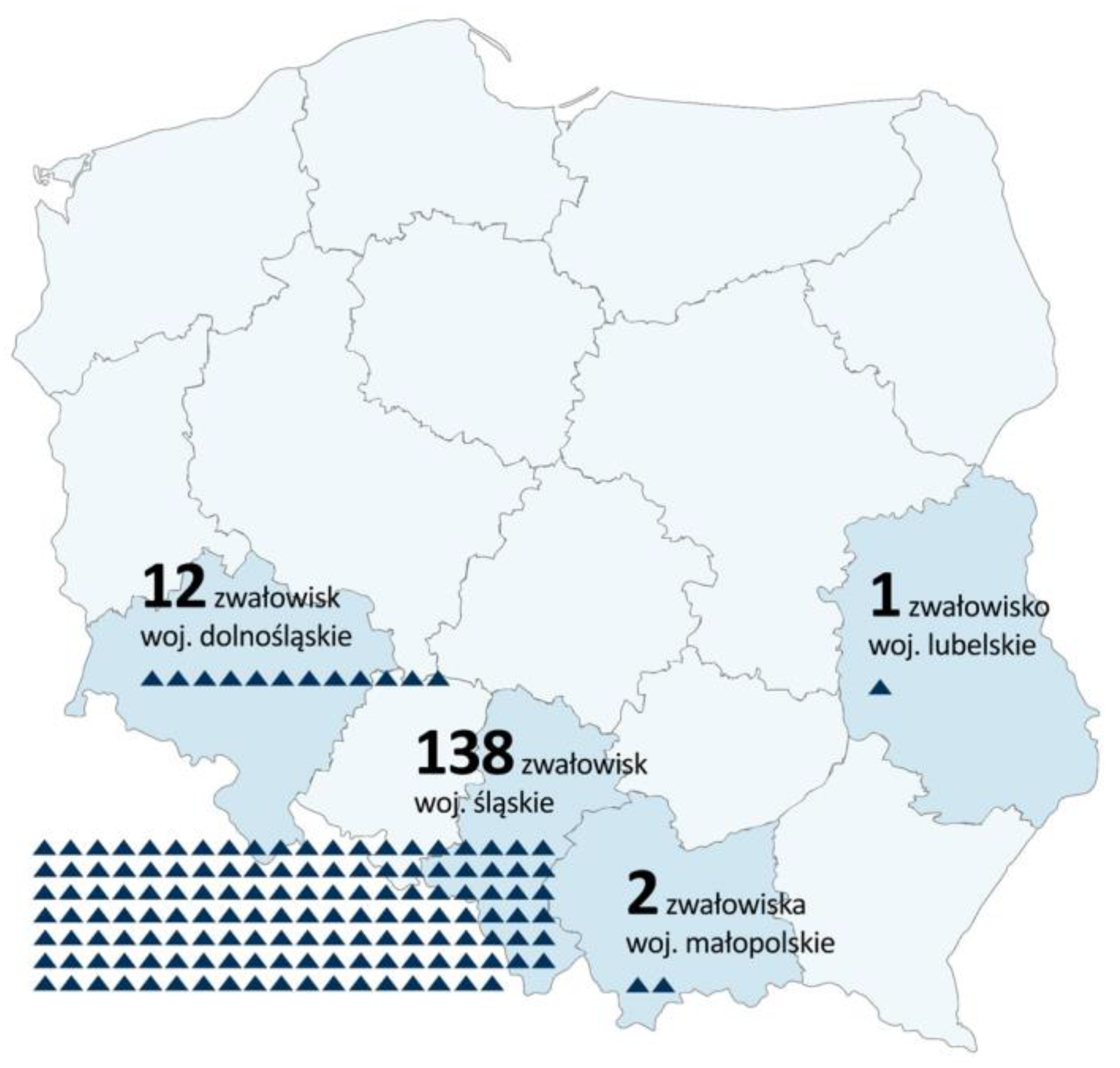
Figure 2.
Slop failure at a coal mine waste dump in southern Poland: a) view from the slope toe; b) view from the slope crest.
Figure 2.
Slop failure at a coal mine waste dump in southern Poland: a) view from the slope toe; b) view from the slope crest.
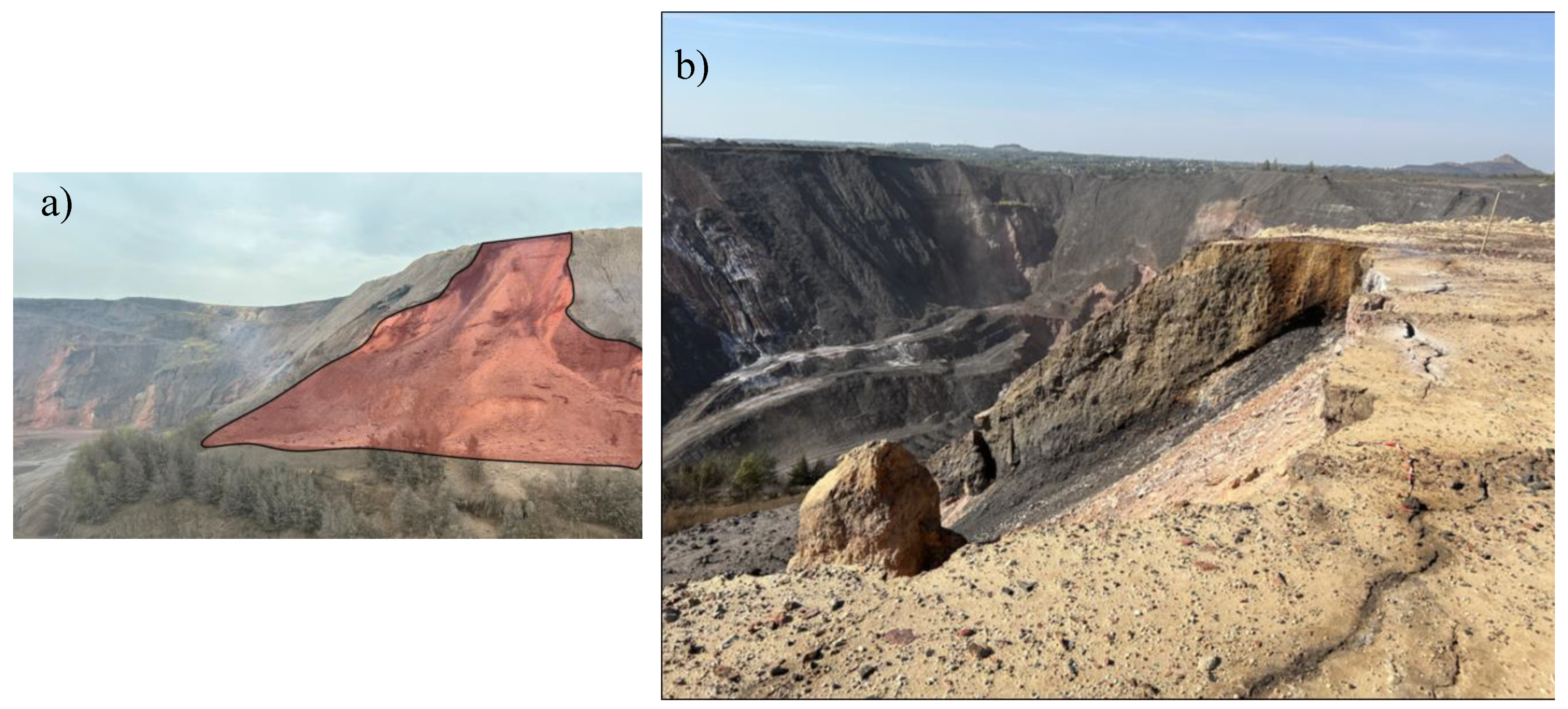
Figure 3.
Schematics of spontaneous combustion within the mine waste dump [46].
Figure 3.
Schematics of spontaneous combustion within the mine waste dump [46].
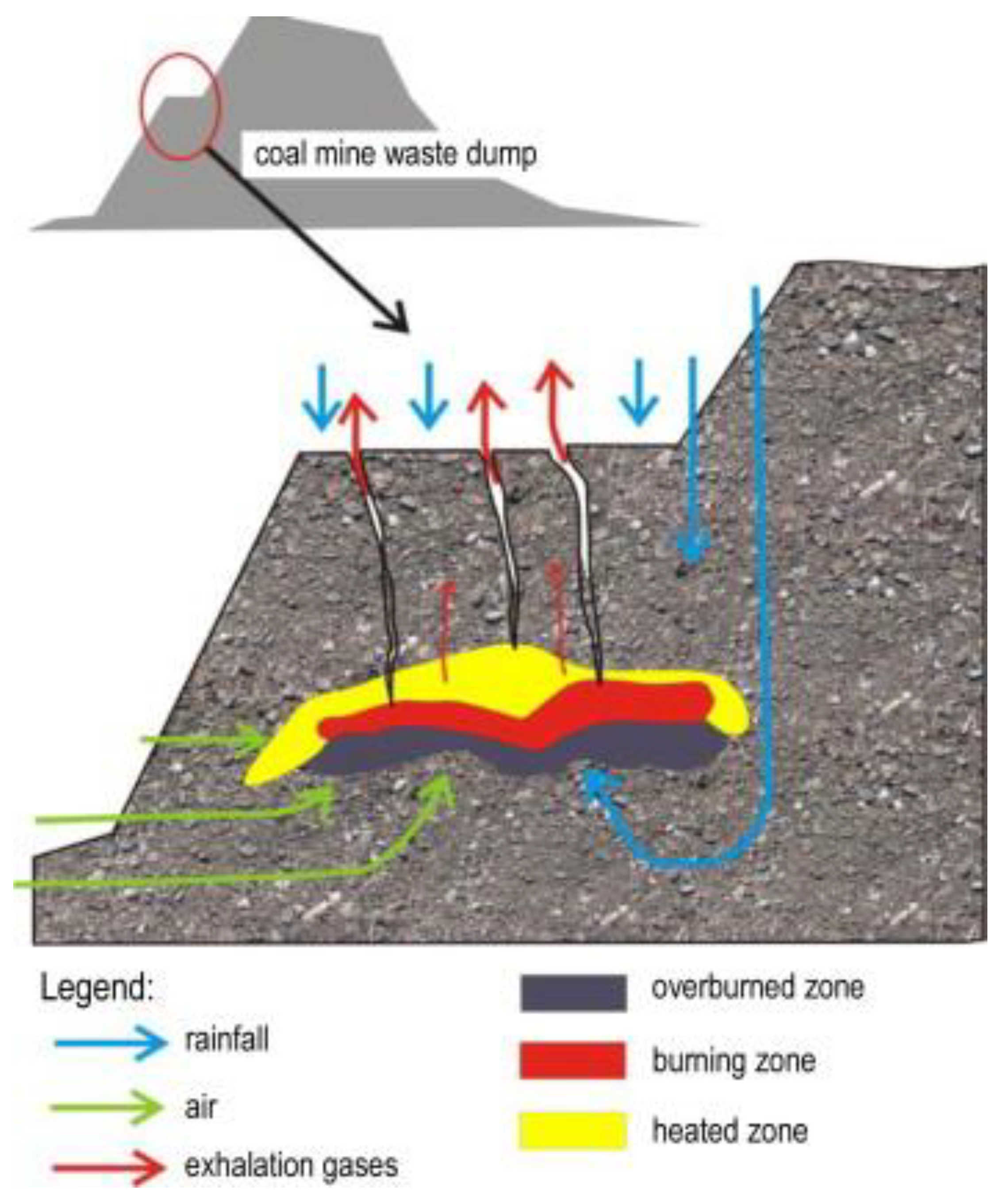
Figure 4.
Occurrence of cracks/fractures on the slope surface caused by coal combustion within the dump body.
Figure 4.
Occurrence of cracks/fractures on the slope surface caused by coal combustion within the dump body.
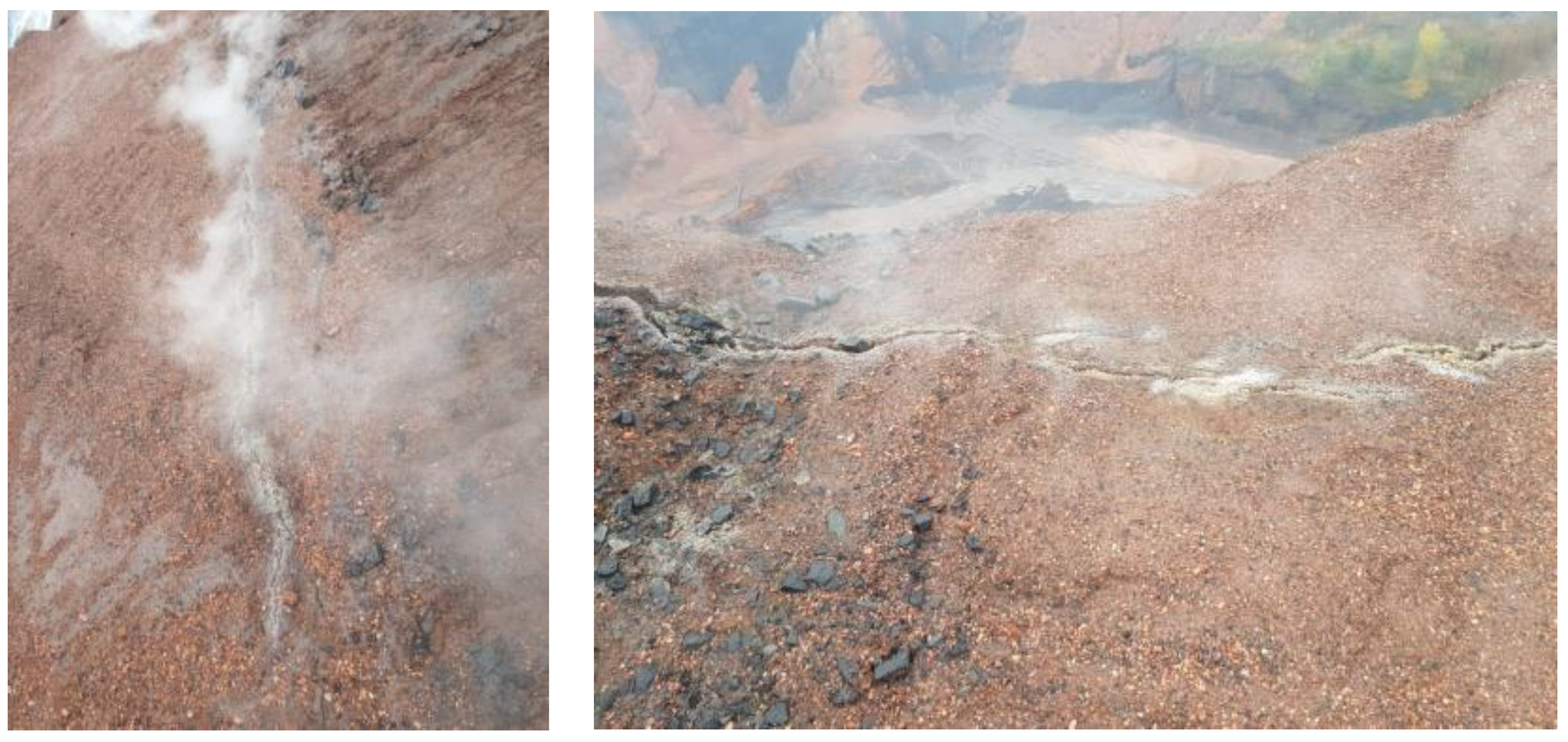
Figure 5.
A cavity formed within a mine waste dump.
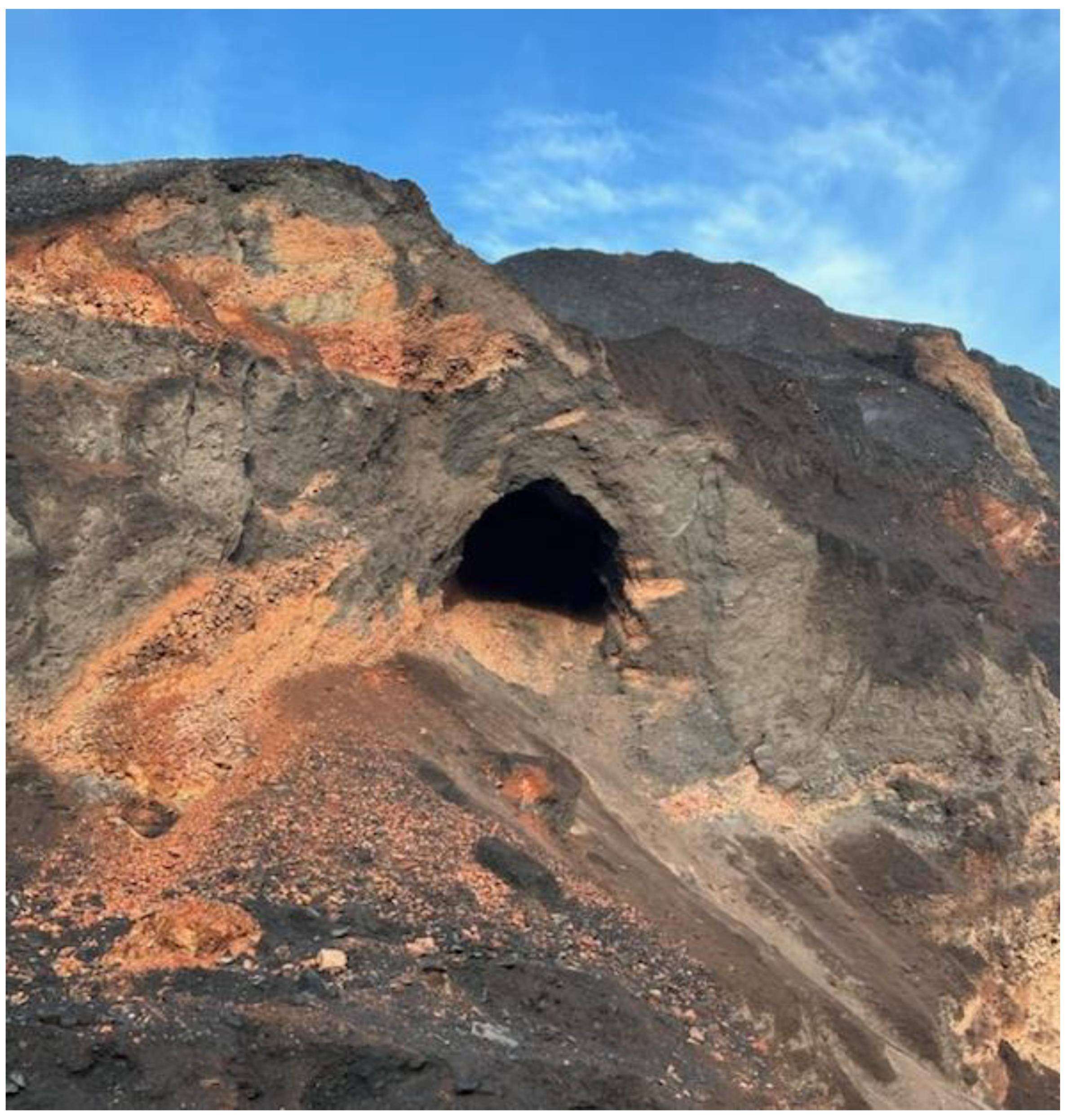
Figure 6.
A simplified concept of city/local heating system configuration in a mine waste dump.
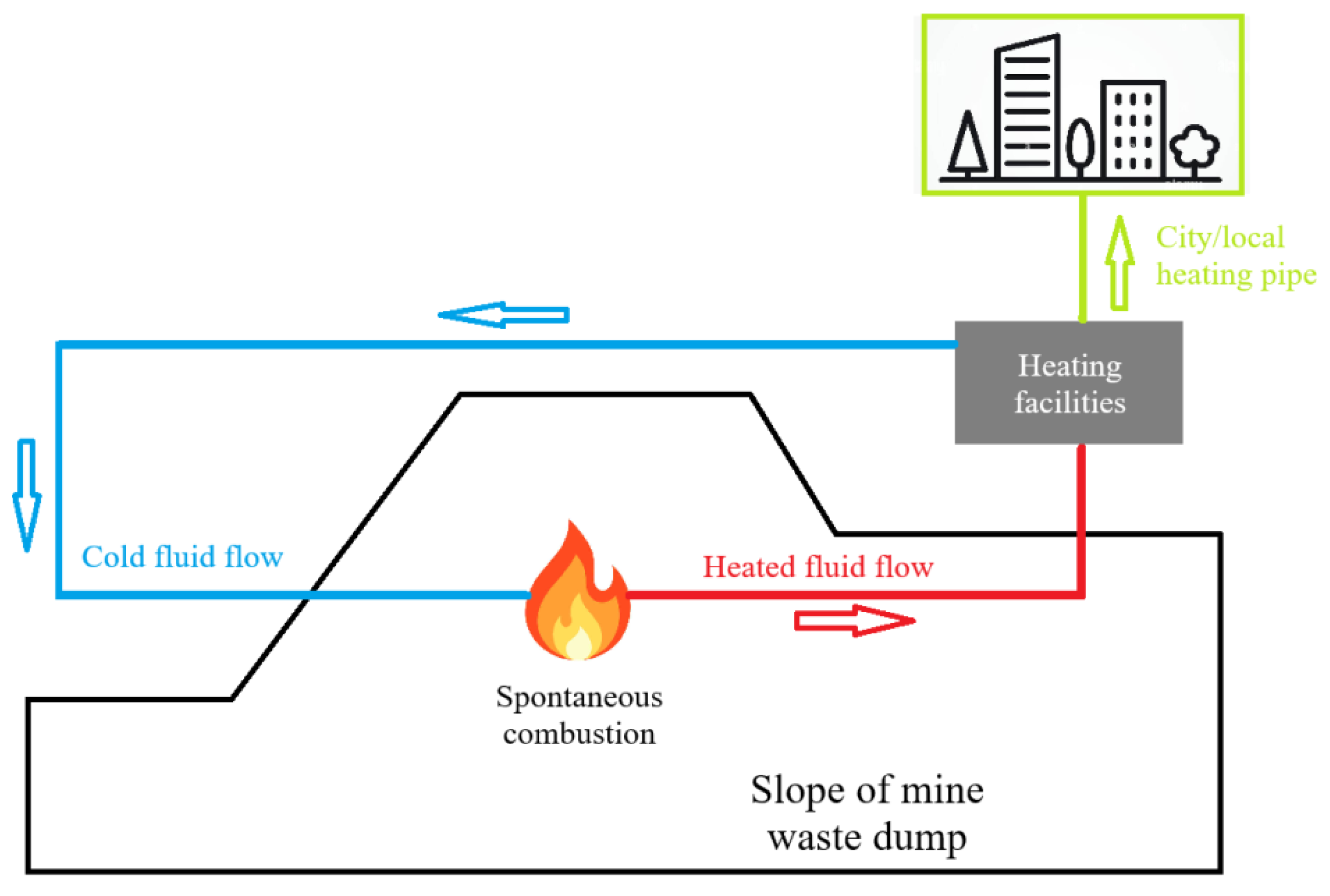

Table 1.
Results of a simple slope stability analysis.
| FoS | Slope angle, ° | |||
| 23 | 26.6 | 31 | ||
| Crack orientation and length | No cracks/fractures | 1.45 | 1.19 | 1.0 |
| 6 m long, the dip angle close to the slope surface | 1.18 | 1.04 | 0.98 | |
| 12 m long, the dip angle close to the slope surface | 1.03 | 0.86 | 0.83 | |
| 6 m, dip angle of 90° (vertical) | 1.33 | 1.09 | 1.0 | |
| 12 m, dip angle of 90° (vertical) | 1.27 | 1.05 | 0.89 | |
Disclaimer/Publisher’s Note: The statements, opinions and data contained in all publications are solely those of the individual author(s) and contributor(s) and not of MDPI and/or the editor(s). MDPI and/or the editor(s) disclaim responsibility for any injury to people or property resulting from any ideas, methods, instructions or products referred to in the content. |
© 2025 by the authors. Licensee MDPI, Basel, Switzerland. This article is an open access article distributed under the terms and conditions of the Creative Commons Attribution (CC BY) license (http://creativecommons.org/licenses/by/4.0/).
Copyright: This open access article is published under a Creative Commons CC BY 4.0 license, which permit the free download, distribution, and reuse, provided that the author and preprint are cited in any reuse.


