

Submitted:
25 April 2025
Posted:
27 April 2025
You are already at the latest version
Abstract
The introduction of new ornamental species and cultivars has been one of the hallmarks of innovation in global floriculture. Brunfelsia uniflora is a subshrub species native to Brazil, with white, lilac, and blue flowers on the same plant, in addition to a characteristic perfume. As it is still a wild species, technologies such as large-scale clonal propagation of superior genotypes are still scarce to supply the flower market. In this way, a successful protocol for the micropropagation of B. uniflora was developed using nodal segments and shoot tips as initial explants. In the multiplication phase, the use of 6-Benzylaminopurine resulted in the highest multiplication rates (10.3-10.9 shoots/explant) and the number of leaves in the shoots. The in vitro shoot rooting was superior using MS medium containing reductions of the macronutrients and added with IBA, totaling until 91.7% rooted shoots. The greatest difficulty in micropropagation of this species was related to the high percentage of shoots containing calli; the highest percentage of calli was found with the addition of auxins at the high concentrations (1.0 and 1.5 mg L-1). The even so, shoots and plantlets were acclimatized, demonstrating the success of this technique for the production of plantlets of B. uniflora.
Keywords:
Brunfelsia uniflora
; wild species
; ornamental plant
; in vitro culture
; micropropagation
; phytoregulators
1. Introduction
Brunfelsia uniflora (Pohl) D. Don, better known by the name ‘manacá-de-cheiro’, is a Brazilian native species from Solanaceae family occurring throughout South America [1]. It is a shrub composed of simple and alternate leaves [2] and has great potential as a potted flower and for use as a shrub in landscaping, especially for its flowers with colors that alternate between white and lilac, and because these have a sweet aroma, characteristic of this species.
There is little information regarding its propagation. In observations carried out by the authors in the commercial production of ‘manacá-de-cheiro’ pots, sexual propagation is limited by the small number of seeds obtained per plant throughout cultivation. The limitations to the sexual propagation of species such as ‘manacá-de-cheiro’ include the high genetic variability that makes standardization of production difficult, the difficulty of producing plantlets on a commercial scale, due to the condition of recalcitrant or even dormant seeds; irregular production, low seed availability and difficulty in defining the ideal seed harvesting time [3,4]. Therefore, micropropagation of the species can be advantageous to increase and accelerate the production of high-quality plantlets, based on superior genetic material for use as ornamentals, since the lack of quantity and quality of plantlets discourages their use in flower market.
Thus, given the growing demand in the ornamental plant market there is a interest in species that are still little explored, but which have striking ornamental characteristics [7], as is the case of B. uniflora. However, for the commercial exploitation of species like this, a necessary step is the regular and large-scale production of clonal plantlets with high genetic and phytosanitary quality, which can be achieved by developing micropropagation protocols. For manacá-de-cheiro, only in vitro organogenesis is reported, using the regeneration of Brunfelsia calycina plants from leaf segments [5] and the encapsulation of Brunfelsia pauciflora as a protocol for conserving the species [6].
Liberman et al. [5] used different types of explants and combinations of plant growth regulator in B. calycina, but reported that only leaf explants resulted in organogenesis and shoot regeneration and that the best culture media for shoot organogenesis was obtained using 6-Benzyladenine (BA or BAP) at 4.44-8.88 µM and Indole-3-acetic acid (IAA) at 2.5 µM. The use of BAP (2.0 mg L-1) combined with IBA (0.4-0.8 mg L-1) was also resulted in highest shoot proliferation in B. pauciflora [6], showing that BAP is an important cytokinin aiming to induce organogenesis and shoot multiplication in Brunfelsia species. Organogenesis is indeed an important in vitro technique, especially when tissues with preformed meristems, such as shoot tips and nodal segments are not an option. However, organogenesis is more dependent on endogenous factors such as genotype and explant age and also exogenous factors, making its application difficult on a large scale for the propagation of multiple-elite genotypes [7, 8].
Therefore, the development of shoot tips or nodal segments in Brunfelsia could be more interesting from the point of view of clonal plantlets production by micropropagation. Thus, the objective of this study was to develop a protocol to serve as a basis for in vitro micropropagation—establishment, multiplication, rooting, and acclimatization—of B. uniflora, using explants of a genotype previously selected from the production sector, with a high ornamental potential for use as a potted flower or even in landscaping.
2. Materials and Methods
Plant material
The plant material came from two adult Brunfelsia uniflora plants (Figure 1) propagated by stem cuttings and obtained from a mother plant previously selected from a commercial pot producer in the region of Holambra, state of São Paulo, Brazil. The main characteristics of interest are the compact, shrub size (until 3-m height), and the large number of flowers with colors varying from white to lilac and blue in the same individual.
In vitro establishment
To initiate in vitro cultivation, only the apical regions of young, herbaceous shoots, approximately three centimeters long, were used. These were initially washed under running water, followed by asepsis with 70% alcohol for 30 seconds, and immersion in a 2.0-2.5% sodium hypochlorite solution for 20 minutes. Then, three consecutive washes were carried out with previously autoclaved deionized water.
Young shoots were divided into two types of explants, the shoot apex with a length of 0.2-0.3 cm, containing two to three leaf primordia, and the nodal segments of the subapical region, with approximately 0.5 cm in length, containing at least one axillary bud. These were inoculated in 30-mL Wood Plant Medium (WPM) [9] containing 1 mg L-1 6-benzylaminopurine (BAP); 20 g L-1 sucrose, and 6.4 g L-1 agar Synth®, with the pH adjusted to 5.7 before adding the agar (Agargel®, João Pessoa, Brazil) were added to 265-mL glass bottle. After inoculation into the culture medium, the explants were kept in a growth room, in the dark, at 25 ± 2 ºC for seven days. They were then transferred to a growth room, at 25 ±2°C, 16-hour photoperiod, and light of 25-30 µmol cm-2 s-1 provided by cold white fluorescent lamps for 60 days. Shoots were sub-cultured for four times within a period of 30-d each in the same culture medium, but containing 0.5 mg L-1 BAP, until a sufficient number of plants were obtained for the experiments. In all subcultures, the shoots were cut and individualized for the next subculture cycle.
Effects of culture media and plant growth regulators on shoot proliferation
The objective of this experiment was to evaluate the effect of different concentrations of 6-Benzylaminopurine (BAP) for shoot proliferation, on the in vitro development of B. uniflora. Add to BAP, the most used cytokinin in tissue culture, including for Brunfelsia species [5, 6], we also tested the use of Thidiazuron (TDZ), a diphenylurea that can act as cytokinin-analog, and was conventionally used in lower concentrations aiming to improve shoot proliferation in some cultures [10]. The culture media used in the multiplication experiment were Murashige & Skoog [11] with half the concentrations of macronutrients (MS ½) and WPM medium [9] (Duchefa Co., Netherlands), both containing 20 g L-1 sucrose and 6.4 g L-1 agar. The pH of the media was adjusted to 5.75 ± 0.05 before adding the agar and then autoclaved at 121°C for 20 minutes. In addition to the culture media, different concentrations of BAP at 0.0, 1.0, 2.0, and 3.0 mg L-1 or TDZ, 0.25, and 0.5 mg L-1 were used as treatments. For each treatment, twelve test tubes (replications) containing a nodal segment 0.5 ± 0.1 cm long and at least one axillary bud was used. The cultivation conditions were similar to those described in the in vitro establishment, however, cultivated in light throughout the cultivation period of 42-days. The experiment was conducted in a 2 x 6 factorial, with two saline formulations and six treatments with plant growth regulators.
Effects of culture medium and phytoregulators in the rooting phase and plantlets acclimatization
Rooting experiments were conducted with different concentrations of the auxins Indole-Butyric Acid (IBA) and Naphthaleneacetic Acid (NAA) to evaluate the rooting of shoots under in vitro conditions. The shoots used in this experiment were derived exclusively from the WPM medium containing 0.5 mg L-1 BAP. Similar to the multiplication phase, two culture media were also used for rooting, WPM and MS (½). The treatments consisted of types and concentrations of IBA and NAA auxins, applied to the culture media at concentrations of 0.0; 0.5; 1.0, and 1.5 mg L-1. The cultivation conditions at this time were similar to those described in the multiplication period and the cultivation period was of 42-days. The experiment was conducted in a 2 x 7 factorial (rooting phase), with two saline formulations of culture media and two types of auxins at three concentrations and one without auxins.
A total of 12 plantlets or shoots per treatment were acclimatized 42 days after in vitro cultivation in treatments with different saline formulations, types, and concentrations of auxins. The plantlets were acclimatized in plastic trays of 50 cells containing Carolina Soil® as substrate, which is composed of peat, charcoalized rice husk, and fine vermiculite. The plantlets, after being planted in the substrate, were transferred to a greenhouse protected on the upper side with light-diffusing plastic and aluminum shade cloth (65% shading), and sides protected with black shade cloth (50% shade). Irrigation was carried out by microsprinkler, applying a depth of approximately 7 mm/day, and fertilization was made with ultra-soluble fertilizer PlantProd® 20-20-20 once a week at a concentration of 1 g L-1 fertilizer. Chlorophyll contents (A, B and Total) were also determined in mature leaves from 120 days of acclimatized plantlets, using CFL1001 Clorofilog (Falker®, Porto Alegre, Brazil).
Experiment to improve in vitro rooting performance
This experiment aimed to solve the problems observed in vitro in the first rooting experiment, which resulted in shoots with a high number of undesirable calli. Our hypothesis for the excessive development of calli is that the reduction in the concentration of auxins and nitrogen in the culture medium, consortiated with addition of activated charcoal (1.0 g L-1) leads to shoots with less callus formation and a higher rooting rate. To this end, the culture medium was based on the MS ½ medium (control), and the treatments consisted of reducing the amount of KNO3 (950 to 715 mg L-1) and NH4NO3 (850 to 620 mg L-1) reagents in this medium. Another treatment was also carried out by adding activated charcoal (1.0 g L-1) or not to the medium. IBA was also used at a lower concentration than in the initial experiment, at 0.1 mg L-1 of IBA in all treatments. The experiment was conducted with two factors (activated charcoal x N and K reagents) in completely randomized blocks. All other procedures as well as cultivation conditions were similar to those described in the first rooting experiment.
Experimental design and statistical analysis
In both multiplication and rooting experiments, 12 replications per treatment were used, with each replication consisting of a test tube containing 15-mL culture medium and one nodal segment each.
The plant height (cm), number of leaves per clump and the shoot multiplication rate were obtained at the end of the multiplication experiment and were subjected to analysis of variance (ANOVA) and then, the treatments were compared using the Skott-Knott mean test at 5% probability. For the analyses, the software R 3.5.1 [12] was used.
To evaluate rooting, the following characteristics were analyzed: plant height (cm), number of leaves, and number of roots per inoculated plant in the different treatments. The percentage of survival in acclimatization after 120 days of growing plantlets in the substrate was also estimated to evaluate the efficiency of in vitro rooting in the acclimatization of micropropagated plantlets.
In the in vitro rooting experiment, additional analyses were carried out for the mass and diameter of calli from the bases of the nodal segments. The results were subjected to tests of normality and homogeneity of variances, and the data on the callus mass and diameter were transformed to √(X+1) to meet the assumptions of the analysis of variance.
3. Results
3.1. In Vitro Establishment
No contamination of microbial origin was visually observed in the explants. A successful in vitro establishment of manacá-de-cheiro was attained, demonstrating the development of shoot apices and nodal segments, resulting in the formation of new leaves and stems from the in vitro inoculated explants (Figure 2). Therefore, 40% of the explants in which there was no development died due to physiological damage caused by asepsis and/or excessive handling of the explants. Using nodal segments as initial explant, multiplication rates in the first and second subcultures were 2.0 and 10.3 shoots/explant, while the shoot apices resulted in multiplication rates of 2.7 and 10.9 shoots/explant.
3.2. Effects of Culture Medium and Plant Growth Regulators on Shoot Proliferation Phase
Plant growth regulators caused a significant effect (p<0.01) on plant height and the number of leaves in in vitro shoots. In the multiplication phase, there was no effect of the WPM and MS ½ saline formulations on the analyzed variables. Plant height was reduced (2.14-2.30 cm) by adding BAP or TDZ to the culture medium, differing from the control, without the addition of phytoregulators (3.23 cm) (Table 1).
On the other hand, and mainly in the presence of BAP (1.0-3.0 mg L-1), a considerable increase in the number of leaves per inoculated explant was observed, greater than 4x that obtained in the control (Table 1). This significant increase in the number of leaves was a consequence of the development of multiple shoots in the explants (Table 1; Figure 3 B1-B3). However, the addition of BAP at high concentrations (>1.0 mg L-1) or TDZ in any of the concentrations resulted in vitrification or hyperhydricity in the shoots, reducing the quality of the shoots obtained in Brunfelsia (Figure 3 T1 and T2). Interestingly, since in the control, with no PGRs addition, shoots also formed callus in their bases (Figure 3 Co).
Another important observation of our study was that the transfer of new shoots to a new culture medium must be carried out between 28 and 30 days after inoculation in the medium aiming to avoid leaf senescence.
3.3. Effects of Culture Medium and Phytoregulators in the Rooting Phase and Acclimatization
There was an effect of the interaction between the culture medium and auxins on plant height, number of leaves, mass of calli (Table 2), roots and percentage of rooting (Table 3). In all treatments and the control without auxins, adventitious rooting of shoots from the multiplication phase (WPM + 0.5 mg L-1 BAP) was observed in different frequencies (Table 3). Nonetheless, none of the treatments tested achieved 100% rooting of the shoots. In general, the lowest rooting percentage (16.7-25.0%) were observed in the control using both media and, in the treatment, MS½ containing NAA at 1.0 mg L-1. Interestingly, the IBA resulted in higher number of roots than NAA using MS½ culture media, while NAA showed better response than IBA using WPM culture media, showing interaction between the auxins and the formulation of the culture media. Although the use of MS ½ containing 0.5 mg L-1 of IBA not differs from other concentrations for rooting (Table 3), the best whole development was observed in this treatment (Figure 4H) and in WPM without auxins (Table 2, Figure 4A), leading to higher plant height and number of leaves per shoots (Table 2).
The formation and excessive growth of calli in the basal region of the explants was the most important physiological anomaly in the micropropagation of Brunfelsia uniflora (Table 2 and Table 3, Figure 4). The lower masses of calli were reported using the MS ½ culture media in the absence of auxins, using IBA at lowest doses or ANA at 0.5 or 1.5 mg L-1 (Table 3). The use of MS ½ also reduced the diameter of callus observed (Table 3)
The result of survival in acclimatization showed that highest shoots/plantlets survival rates (69-81%) were obtained in WPM or MS ½ culture media, without auxins or with the addition of 0.5 mg L-1 IBA. In general, the increase in auxin concentration in the culture media resulted in a decrease in the percentage of plantlets survival during acclimatization, possibly associated with greater callus development in nodal segments. The number of leaves per plantlets and the chlorophyll contents in 120-days age of acclimatized plantlets have smooth differences among the auxins used under in vitro rooting phase (Table 4). There was observed, the best results for the number of leaves/plantlets and chlorophylls contents (A, B and A+B) increased and the rate between Chl A/B reduced using 0.5 mg L-1 of IBA. However, best survival in acclimatization occurred without auxins.
Furthermore, the reduction in the concentration of NH4NO3 (850 to 620 mg L-1) and KNO3 (950 to 715 mg L-1) and the auxin IBA from 0.5 to 0.1 mg L-1 resulted in shoots with a good percentage (71.4%) and high rooting quality, without excessive callus formation at the base of the explants (Figure 5). The presence of activated charcoal in the culture medium did not result in an improvement in rooting performance, with an average of 47.6% of shoots rooted with activated charcoal in the culture media, and 61.9% without the addition of activated charcoal (data not shown).
4. Discussion
4.1. In Vitro Establishment
Shoot apices used as explants showed smooth higher proliferation rate than nodal segments in in vitro Brunfelsia. Similar results with higher number of shoots from shoot apices compared to nodal segments were also observed in in vitro cultivation of Cordia verbenaceae [13] and Calendula officinalis [14]. However, nodal segments can serve as alternative explants, especially when the number of shoot apices is low in some species [15,16].
4.2. Effects of Culture Medium and Plant Growth Regulators on Shoot Proliferation Phase
The addition of BAP to the culture media resulted in highest number of shoots and leaves in multiplication stages, but drastically reduced the size of shoots. Similar results were reported for in vitro cultivation of Valeriana jatamansi, in which the BAP at concentrations of up to 2.0 mg L-1 resulted in shoots with a higher number of leaves but with a significant reduction in the size of shoots and leaves, specially at the highest concentration of BAP tested (3.0 mg L-1) [17].
Liberman et al. [5] also obtained leaf organogenesis with the production of new buds and adventitious shoots in Brunfelsia calycina using MS medium supplemented with Indole-3-acetic acid (IAA) at 2.85 µM in combination with 4.54 µM TDZ or 4.44 µM BAP. The combination of IAA and BAP at 2.85 µM and 4.44 µM, respectively, promoted the best response to the development of shoots, compared to the use of TDZ. Our results also showed that TDZ, even at low concentrations, resulted in poor development of in vitro shoots of Brunfelsia uniflora, with increases in physiological abnormalities, such as vitrification and excessive callus formation. TDZ is considered a potent in vitro plant growth regulator for the development in different plant species of agronomic importance [18, 19]. However, the number of in vitro anomalies associated with TDZ has been one of the biggest challenges in using it safely aiming at cloning by micropropagation [20]. Vitrification and callus formation were the main disorders observed, which generally cause loss of propagation efficiency and difficulties in acclimatizing plants with these symptoms [21].
4.3. Effects of Culture Medium and Auxins in the Rooting Phase and Acclimatization
In vitro rooting is controlled by several environmental and culture medium factors, such as light, the addition of activated charcoal, and variations in the concentration of phytorregulatores, sucrose and salts in the culture medium [22]. However, in vitro rooting of woody plants is a challenge surrounded by limitations and specific variations between cultivars [23].
Increasing IBA or NAA concentrations in both saline formulations resulted in a reduction in plant height and number of leaves and increased the rooting, but also the callus formation in shoots of B. uniflora. Ancasi-Espejo et al. [24] showed similar responses in Brazil nut (Bertholletia excelsa Bonpl., Lecythidaceae), and concluded that doses of 0.5 and 1.0 mg L-1 of IBA promoted root development in in vitro conditions. For azalea, the optimal IBA dosage for in vitro rooting was 2 mg L-1 [25]. In stinking juniper (Juniperus foetidissima), the dose of 0.5 mg L-1 IBA resulted in a rooting rate of 88.9% [26]. In contrast, Kaviani et al. [27] obtained better results using IAA (1.0 mg·L-1) in standard MS medium instead of using IBA for in vitro rooting of Pyrodwarf® rootstock for pear trees. Although IAA was not used in this experiment, it could be an interesting alternative for the in vitro cultivation of Brunfelsia considering the symptoms of callogenesis and decreased quality of plantlets produced in response to the presence of IBA and NAA. Interestingly, in the WPM medium, a greater average callus diameter was reported in B. uniflora, compared to MS ½, suggesting that the first saline formulation would be more conducive to callus formation. According to Bhojwani et al. [28], the greater proliferation and diameter of calli are mainly linked to the nitrogen supplied by the culture medium. Reductions of N salts such as KNO3 and NH4NO3 in the culture media resulted in better performance of rooting of Prunus rootstocks [29].
Excessive callus formation in micropropagation can represent a physiological disorder, which was observed in our study with B. uniflora especially in the rooting phase, and enhanced with the addition of high concentrations of synthetic auxins to the culture medium. Similar results were reported for peach in vitro rooting, in that the uses of higher concentrations of auxins reduced the rooting percentage and increased the callus formation at the bases of shoots [30]. This phenomenon may have been the result of the greater sensitivity of in vitro shoots of B. uniflora to auxins or the greater accumulation of ethylene in closed containers with little gas exchange, conditions typical of in vitro cultivation and used in this study. Similar reports were obtained in Habanero pepper plants grown in vitro in non-ventilated containers, where the presence of ethylene, even at very low concentrations, produced negative results in the development of plantlets, including the emergence of calli, as well as symptoms of vitrification. [31], similar to those observed here for manacá-de-cheiro (Figure 2 and Figure 4).
The increase in the frequency and intensity of callogenesis of explants in the rooting phase further reinforces this hypothesis, as it is known that synthetic auxins at higher concentrations, similar to those added to the culture medium, can increase ethylene biosynthesis in plants [32].
The survival in acclimatization was decreased with the increase of auxins in in vitro rooting culture media. This decrease in survival may have been specifically associated with excessive callus formation (Figure 4), resulting in early leaf senescence under in vitro conditions. The absence of roots in shoots as even in the control treatment (without auxins) in which the percentage of rooted plants was low (16.7-25%) (Table 3), there was good survival during acclimatization (81.3%) (Table 4), demonstrating that greater plantlet or shoot mortality is not related to the absence of roots under in vitro conditions, but rather to physiological anomalies, such as excessive calli, observed in the shoots during the in vitro rooting phase. The chlorophyll contents in vitro and its range during acclimatization can be used to measure the success of acclimatization [33, 34]
The maintaining of B. uniflora shoots for longer periods (>35-40 days) in the same vessel resulted in the loss of plantlets vigor and the emergence of symptoms such as leaf senescence and decreased multiplication rate due to tissue death (data not shown). These symptoms can also be attributed to the presence of ethylene in the in vitro environment, and are similar to observed in in vitro rose shoots [35].
The reduction in the concentration of NH4NO3 (850 to 620 mg L-1) and KNO3 (950 to 715 mg L-1) and the auxin IBA from 0.5 to 0.1 mg L-1 resulted in plantlets without excessive callus formation at the base of the explants and improvement of adventitious rooting under in vitro conditions (Figure 5), confirming our hypothesis about the problems observed in the first rooting experiment (Figure 4). Woodward et al. [36] demonstrated that the lowest doses of Nitrogen (7.5 mM) compared with 15, 30 and 60 mM of N used, resulted in best percentage of rooting and number of roots per shoot in Eucalyptus marginata. These results in actual study demonstrating the need for systematic studies aiming to overcome challenges and to improve the micropropagation protocols for wild woody species.
5. Conclusions
In the present study, we developed a protocol for the micropropagation of Brunfelsia uniflora, a shrubby plant with great ornamental potential. Both MS ½ and WPM media can be used for in vitro multiplication, and BAP at a concentration of up to 2.0 mg L-1 is beneficial. The biggest challenge for Brunfelsia micropropagation was the rooting phase, in which there was an excessive development of calli instead of roots. The reduction of NH4NO3, KNO3, and IBA added to the medium resulted in good rooting without the physiological anomalies previously observed, and can be used to increase in vitro rooting performance and to improve in vitro plantlet formation aiming it acclimatization.
Author Contributions
The following statements should be used “Conceptualization, AVCB and JCC; methodology, AVCB and JCC; validation, JCC and MPL; formal analysis, AVCB and MPL; investigation, AVCB; resources, JCC; data curation, AVCB and MPL; writing—original draft preparation, AVCVB and JCC; writing—review and editing, JCC and MPL; supervision, JCC; project administration, AVCB and JCC; funding acquisition, AVCB and JCC. All authors have read and agreed to the published version of the manuscript.”
Funding
This research was funded by Fundação de Amparo à Pesquisa do Estado de São Paulo (FAPESP) grant number 2018/02595-5, Conselho Nacional de Desenvolvimento Científico e Tecnológico (CNPQ) grant number 311083/2018-8. This study was financed in part by the Coordenação de Aperfeiçoamento de Pessoal de Nível Superior – Brasil (CAPES) – Finance Code 001.
Data Availability Statement
Research data can be disposable by external request.
Conflicts of Interest
The authors declare no conflicts of interest
References
- REFLORA. Available online: https://reflora.jbrj.gov.br/reflora/herbarioVirtual/ConsultaPublicoHVUC/ConsultaPublicoHVUC.do (accessed on 25 Oct 2017).
- Griffiths, M. (1994). Index of Garden Plants. Portland: Timber Press.
- Dias, P. C.; Oliveira, L. S.; Xavier, A.; Wendling, I. Estaquia e miniestaquia de espécies florestais lenhosas do Brasil. Pesq. Flor. Brasil., 2012, 32, 453–462. [Google Scholar] [CrossRef]
- Simão, E.; Nakamura, A. T.; Takaki, M. Época de colheita e capacidade germinativa de sementes de Tibouchina mutabilis (Vell.) Cogn. (Melastomataceae). Biota Neotrop., 2007, 7, 67–73. [Google Scholar] [CrossRef]
- Liberman, R.; Shahar, L.; Nissim-Levi, A.; Evenor, D.; Reuveni, M.; Oren-Shamir, M. Shoot regeneration from leaf explants of Brunfelsia calycina. PCTOC 2010, 100, 345–348. [Google Scholar]
- Tarek, A. A.; Shaaban, S. A.; Taha, L. S.; Hashish, K. I.; Gabr, A. M.; Ali, A. I. Encapsulation of Brunfelsia pauciflora microprogated shoots as a suitable conservation protocol. J. Pharm. Negat. Results, 2022, p. 1864-1878.
- Verma, V.; Zinta, G.; Kanwar, K. Optimization of efficient direct organogenesis protocol for Punica granatum L. cv. Kandhari Kabuli from mature leaf explants. In Vitro Cell. Dev. Biol.-Plant 2021, 57, 48–59. [Google Scholar]
- Khaliluev, M.R.; Bogoutdinova, L.R.; Baranova, G.B.; Baranova, E.N.; Kharchenko, P.N.; Dolgov, S.V. Influence of genotype, explant type, and component of culture medium on in vitro callus induction and shoot organogenesis of tomato (Solanum lycopersicum L.). Biol Bull Russ Acad Sci 2014, 41, 512–521. [Google Scholar]
- Lloyd, G.; McCown, B. Commercially feasible micropropagation of mountain laurel, Kalmia latifolia, by use of shoot tip culture. Plant Prop. Soc., 1981, 30, 421–427. [Google Scholar]
- Pai, S.R.; Desai, N.S.. Effect of TDZ on Various Plant Cultures. In: Ahmad, N.; Faisal, M. (eds) Thidiazuron: From Urea Derivative to Plant Growth Regulator. Springer, Singapore, 2018, pp. 439-454.
- Murashige, T.; Skoog, F. A Revised Medium for Rapid Growth and Bioassays with Tobacco Tissue Cultures. Physiol. Plant. 1962, 15, 473–497. [Google Scholar] [CrossRef]
- RSTUDIO TEAM. Avaible online: http://www.rstudio.com/ (accessed on 12 Set 2018).
- Lameira, O.A.; Pinto, J.E. B. P. In vitro propagation of Cordia verbenaceae L. (Boraginaceae). Rev. Bras. Plantas Med., 2006, 8, 102–104. [Google Scholar]
- Victório, C. P.; Lage, C. L. S.; Sato, A. Tissue culture techniques in the proliferation of shoots and roots of Calendula officinalis. Rev. Ciência Agron., 2012, 43, 539–545. [Google Scholar] [CrossRef]
- Sulava, S.; Andia, S.; Bhol, R.; Jena, A.; Jena, S.; Bidyadhar, B. In vitro micropropagation of Asparagus racemosus by using of nodal explants. J Cell Tissue Res, 2020, 20, p. 6883-6888.
- Jadid, N.; Anggraeni, S.; Ramadani, M. R. N.; Arieny, M.; Mas’ ud, F. In vitro propagation of Indonesian stevia (Stevia rebaudiana) genotype using axenic nodal segments. BMC Res Notes, 2024, 17, n. 1, p. 45.
- Nazir, U.; Gul, Z.; Shah, G.; Khan, N. Interaction Effect of Auxin and Cytokinin on in Vitro Shoot Regeneration and Rooting of Endangered Medicinal Plant Valeriana jatamansi Jones through Tissue Culture. Am. J. Plant Sci., 2022, 13, 223–240. [Google Scholar]
- Akram, M. S.; Alvi, A. K.; Iqbal, J. Enhanced in vitro regeneration in sugarcane (Saccharum officinarum L.) by use of alternate high-low picloram doses and thidiazuron supplementation. Cytol. Genet., 2021, 55, 566–575. [Google Scholar]
- Schuchovski, C.; Sant’Anna-Santos, B.; Marra, R., Biasi, L. Morphological and anatomical insights into de novo shoot organogenesis of in vitro ‘Delite rabbiteye’ blueberries. Heliyon, 2020, v. 6, n. 11, p. e05468.
- Pereira, F.; Dal Vesco, L. L.; Fermino Junior, P. C. P. Efeito do thidiazuron (TDZ) na propagação in vitro de goiabeira-serrana (Acca sellowiana (O. Berg.) Burret). Sci. Nat., 2020, 2, 1–13. [Google Scholar]
- Jan, T.; Gul, S.; Khan, A.; Pervez, S.; Noor, A.; Amin, H.; Bibi, S.; Nawaz, M. A.; Rahim, A.; Ahmad, M. S.; Azam, H.; Ullah, H. Range of factors in the reduction of hyperhydricity associated with in vitro shoots of Salvia santolinifolia Bioss. Braz. J. Biol., 2021, 83, e246904. [Google Scholar] [CrossRef]
- Cruz, J. G.; Pasa, M. da S.; Dias, C. S.; Loy, F.; Copatti, A. S.; Sommer, L. R.; Deuner, S.; Mello-Farias, P. C. de. Light quality on in vitro multiplication and rooting of ’Woodard’ blueberry. Res. Soc. and Dev. 2021, 10, 1–12. [Google Scholar]
- Hesami, M.; Yoosefzadeh-Najafabadi, M.; Jones, A. M. P. Challenges and opportunities in in vitro rooting of recalcitrant plant species. Front. Plant Sci., 2023, 14, n 1210346. [Google Scholar]
- Ancasi-Espejo, R. G.; Vivado, J. A. A.; & Guzmán, I. M.; Guzmán, I. M. Concentraciones de acido indolbutirico para la formacion de raices en condiciones in vitro de castaña (Bertholletia excelsa bonpl., Lecythidaceae). UNESUM-Cienc. Rev. Cient. Mult. 2023, 7, 17–22. [Google Scholar]
- Elmongy, M. S.; Cao, Y.; Zhou, H.; Xia, Y. Root development enhanced by using indole-3-butyric acid and naphthalene acetic acid and associated biochemical changes of in vitro azalea microshoots. J. Plant Growth Regul., 2018, 37, 813–825. [Google Scholar] [CrossRef]
- Qarachoboogh, A. F.; Alijanpour, A.; Hosseini, B.; Shafiei, A. B. Efficient and reliable propagation and rooting of foetid juniper (Juniperus foetidissima Willd.), as an endangered plant under in vitro condition. In Vitro Cell.Dev.Biol.-Plant, 2022, 58, 399–406. [Google Scholar]
- Kaviani, B.; Barandan, A.; Tymoszuk, A.; Kulus, D. Optimization of In Vitro Propagation of Pear (Pyrus communis L.) ‘Pyrodwarf®(S)’ Rootstock. Agronomy, 2023, 13, n. 1, p. 268.
- Bhojwani, S.S. Dantu, P.K. Tissue and cell culture. In Plant tissue culture. In Plant tissue culture: an introductory text, 1st ed.; Bhojwani, S.S., Dantu, P. K., Eds. 1; Springer: India, 2013; pp. 39–50. [Google Scholar]
- Arab, M.M.; Yadollahi, A.; Eftekhari, M.; Akbari, M.; Khorami, S.S. Modeling and Optimizing a New Culture Medium for In Vitro Rooting of G×N15 Prunus Rootstock using Artificial Neural Network-Genetic Algorithm. Sci. Rep. 2018, v.8, 9977. [Google Scholar]
- Park, S.H; Elhiti, M.; Wang, H.; Xu, A.; Brown, D.; Wang, A. Adventitious root formation of in vitro peach shoots is regulated by auxin and ethylene. Sci. Hort., 2017, v.226, p.250-260.
- Santana-Buzzy, N.; Canto-Flick, A.; Iglesias-Andreu, L. G.; Montalvo-Peniche, M.C.; López-Puc, G.; Barahona-Pérez, F. Improvement of in vitro culturing of habanero pepper by inhibition of ethylene effects. Hort. Science, 2006, 41, 405–409. [Google Scholar] [CrossRef]
- Yue, P.; Lu, Q.; Liu, Z. , Lv, T.; Li, X.; Bu, H.; Liu, W.; Xu, Y.; Yuan, H.; Wang, A. Auxin-activated MdARF5 induces the expression of ethylene biosynthetic genes to initiate apple fruit ripening. New Phytol., 2020, 226, 1781–1795. [Google Scholar] [CrossRef] [PubMed]
- Chandra, S.; Bandopadhyay, R.; Kumar, V.; Chandra, R. Acclimatization of tissue cultured plantlets: from laboratory to land. Biotechnol Lett 2010, 32, 1199–1205. [Google Scholar] [CrossRef] [PubMed]
- Mohammed, M.; Munir, M.; Ghazzawy, H.S. Design and Evaluation of a Smart Ex Vitro Acclimatization System for Tissue Culture Plantlets. Agronomy 2023, 13, 78. [Google Scholar] [CrossRef]
- Matos, A.V.C.D.S.D.; Oliveira, B. S. D.; Oliveira, M. E. B. S. D.; Cardoso, J. C. AgNO3 improved micropropagation and stimulate in vitro flowering of rose (Rosa x hybrida) cv. Sena. Ornamental Horticulture, 2020, 27, 33–40. [Google Scholar] [CrossRef]
- Woodward, A.J.; Bennett, I.J.; Pusswonge, S. The effect of nitrogen source and concentration, medium pH and buffering on in vitro shoot growth and rooting in Eucalyptus marginata. Sci. Hort., 2006, 110, 208–213. [Google Scholar] [CrossRef]
Figure 1.
Selected genotype of flowering Brunfelsia uniflora used as a source of explants for micropropagation.
Figure 1.
Selected genotype of flowering Brunfelsia uniflora used as a source of explants for micropropagation.
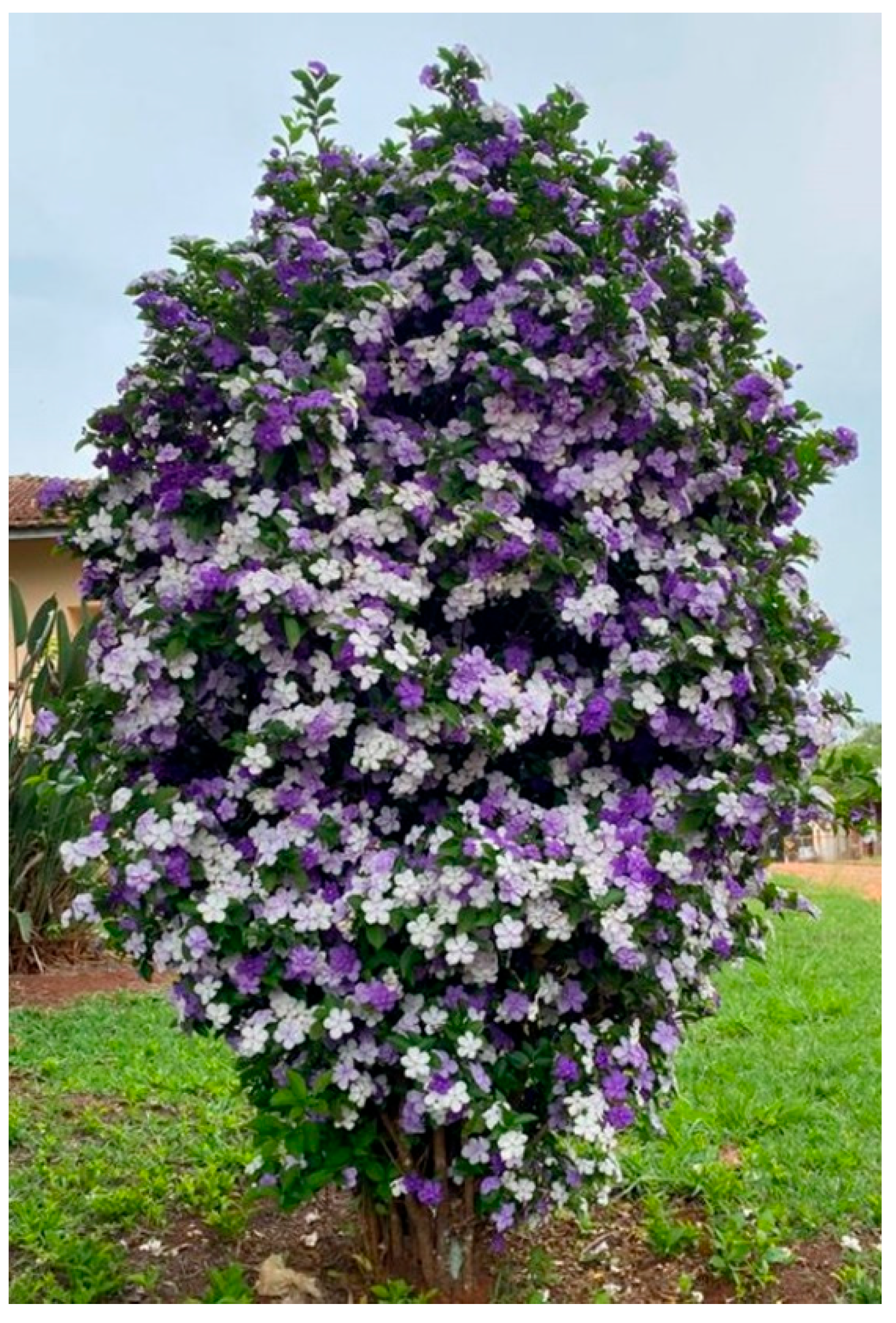
Figure 2.
In vitro development of shoot apices (A|C) and nodal segments (B) of manaca-de-cheiro (Brunfelsia uniflora) after 30 days of cultivation and shoot proliferation after 90 days of cultivation in WPM medium containing 1.0 mg L-1 of BAP (D).
Figure 2.
In vitro development of shoot apices (A|C) and nodal segments (B) of manaca-de-cheiro (Brunfelsia uniflora) after 30 days of cultivation and shoot proliferation after 90 days of cultivation in WPM medium containing 1.0 mg L-1 of BAP (D).
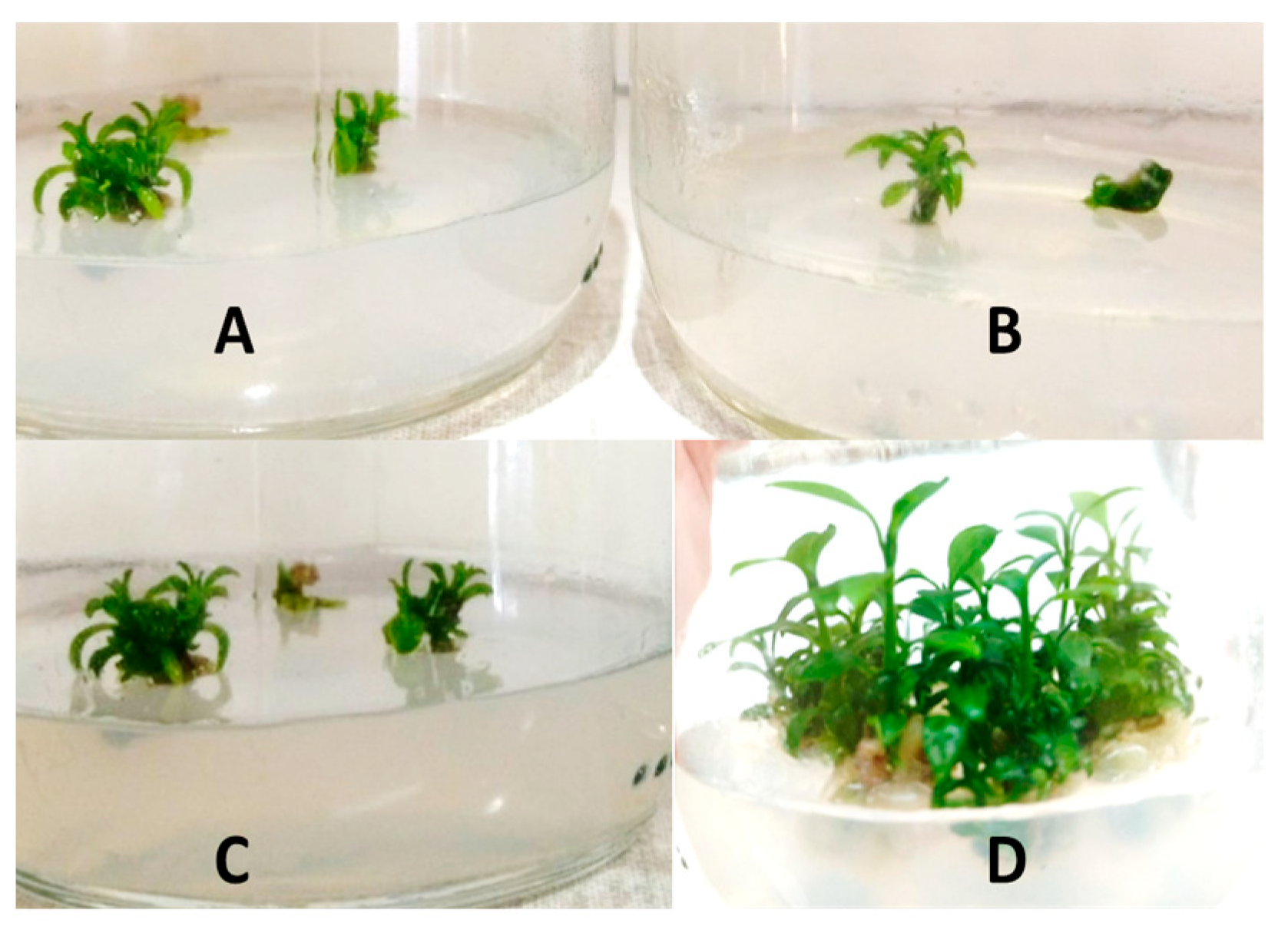
Figure 3.
Shoot development and proliferation of Brunfelsia uniflora in WPM culture medium containing different concentrations of BAP (B1, 2 and 3 = 1.0, 2.0 and 3.0 mg L-1) and TDZ (T1, 0.25 mg L-1 and T2, 0.5 mg L-1).
Figure 3.
Shoot development and proliferation of Brunfelsia uniflora in WPM culture medium containing different concentrations of BAP (B1, 2 and 3 = 1.0, 2.0 and 3.0 mg L-1) and TDZ (T1, 0.25 mg L-1 and T2, 0.5 mg L-1).
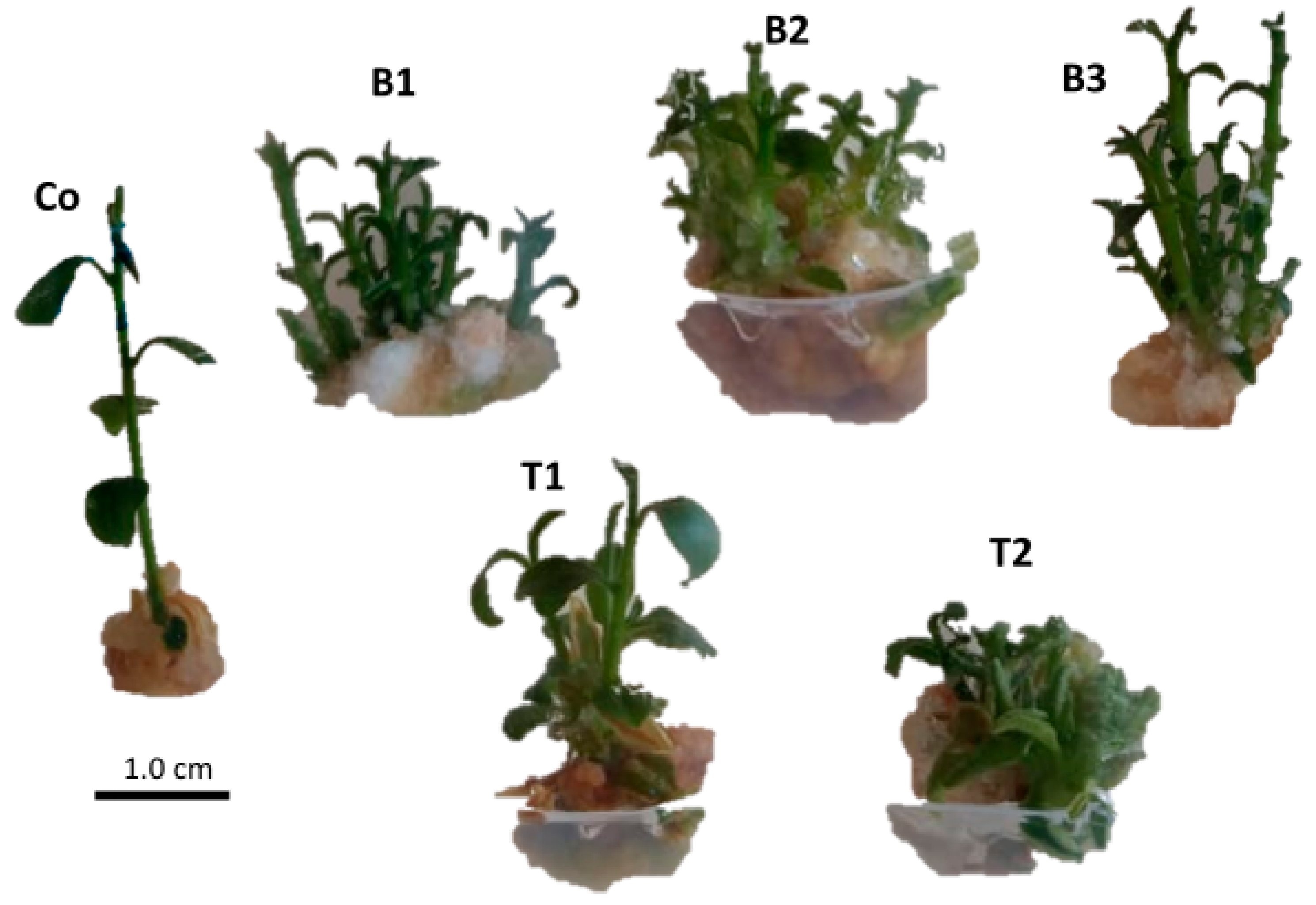
Figure 4.
Development of shoot/calli/roots among treatments with culture media and auxins Indole-3-butyric acid (IBA) and 1-naphthaleneacetic acid (NAA): A) WPM Control without auxins; WPM containing IBA at 0.5 mg.L-1 (B), 1.0 mg.L-1 (C) and 1.5 mg.L-1 (D); WPM containing NAA at 0.5 mg.L-1 (E), 1.0 mg.L-1 (F) and 1.5 mg.L-1 (G); MS½ Control without auxins (H); MS½ containing AIB at 0.5 mg.L-1 (I), 1.0 mg.L-1 (J) and 1.5 mg.L-1 (K); MS½ containing NAA at 0.5 mg.L-1 (L), 1.0 mg.L-1 (M), and 1.5 mg.L-1 (N).
Figure 4.
Development of shoot/calli/roots among treatments with culture media and auxins Indole-3-butyric acid (IBA) and 1-naphthaleneacetic acid (NAA): A) WPM Control without auxins; WPM containing IBA at 0.5 mg.L-1 (B), 1.0 mg.L-1 (C) and 1.5 mg.L-1 (D); WPM containing NAA at 0.5 mg.L-1 (E), 1.0 mg.L-1 (F) and 1.5 mg.L-1 (G); MS½ Control without auxins (H); MS½ containing AIB at 0.5 mg.L-1 (I), 1.0 mg.L-1 (J) and 1.5 mg.L-1 (K); MS½ containing NAA at 0.5 mg.L-1 (L), 1.0 mg.L-1 (M), and 1.5 mg.L-1 (N).
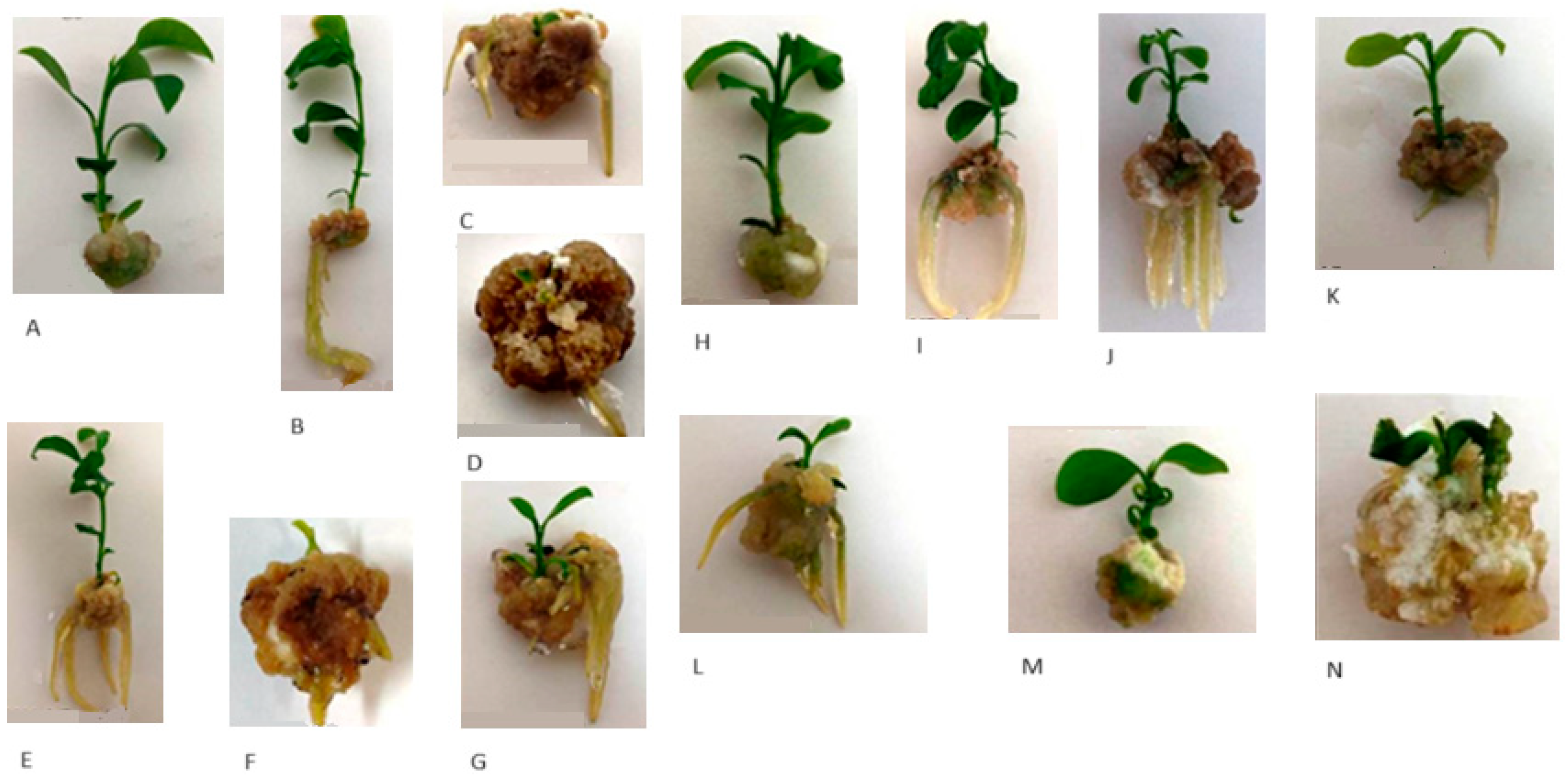
Figure 5.
Rooting and improve of quality of shoots in modified MS culture medium by the reduction of NH4NO3 and KNO3 salts concentration and reduction of IBA concentration from 0.5 to 0.1 mg L-1.
Figure 5.
Rooting and improve of quality of shoots in modified MS culture medium by the reduction of NH4NO3 and KNO3 salts concentration and reduction of IBA concentration from 0.5 to 0.1 mg L-1.
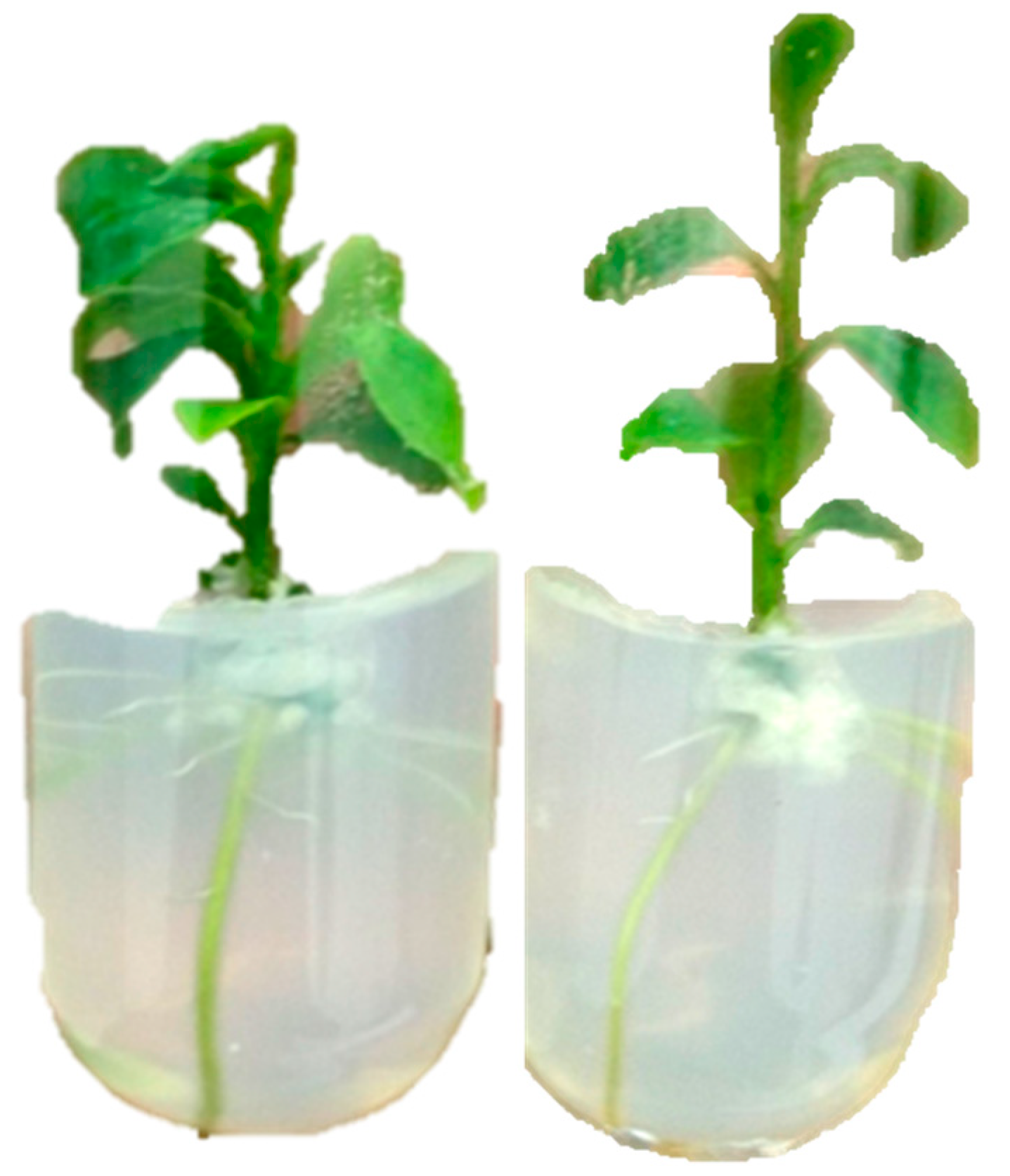

Table 1.
Shoot plant growth and multiplication rate of shoots in proliferation phase of micropropagation of B. uniflora.
Table 1.
Shoot plant growth and multiplication rate of shoots in proliferation phase of micropropagation of B. uniflora.
| PGRs (mg L-1) |
Plant height (cm) | Number of leaves per clump | Shoot multiplication rate |
|
|---|---|---|---|---|
| BAP | 1.0 | 2.3±0.6 b | 41.6±13.9 a | 7.6±3.5 a |
| 2.0 | 2.1±0.4 b | 38.9±15.3 a | 8.0±2.9 a | |
| 3.0 | 2.3±0.5 b | 40.0±14.3 a | 6.9±2.5 a | |
| TDZ | 0.25 | 2.2±0.7 b | 22.4±8.5 c | 2.6±0.7 b |
| 0.50 | 2.2±0.6 b | 28.7±10.2 b | 2.6±0.7 b | |
| Control | 3.2±0.8 a | 9.6±3.4 d | 1.2±0.4 b | |
| F (PGRs) | 11.10** | 30.79** | 48.41*** | |
| F (culture media) | 0.10NS | 0.37NS | 3.01NS | |
| F (PGR x culture media) | 0.78NS | 0.52NS | 2.10NS | |
| Coefficient of variation (%) | 26.32 | 20.71 | 72.24 | |
Means ± standard deviation (SD) followed by the same letter, in the column, do not differ from each other by the Scott-Knott test, at 1% significance (**). Ns, no significant. PGRs, Plant Growth Regulators.
Table 2.
Plant height, number of leaves per clump, and callus mass in the rooting phase of micropropagation of B. uniflora.
Table 2.
Plant height, number of leaves per clump, and callus mass in the rooting phase of micropropagation of B. uniflora.
| Auxins (mg L-1) | Plant height (cm) | Number of leaves per shoot | Mass of calli (g) | ||||
|---|---|---|---|---|---|---|---|
| MS ½ | WPM | MS ½ | WPM | MS ½ | WPM | ||
| IBA | 0.5 | 3.1±1.0 aA | 3.7±0.9 aA | 11.6±2.6 aA | 8.6±1.4 bB | 1.1±0.8 aB | 1.7±0.4 aA |
| 1.0 | 2.2±0.9 bA | 2.1±0.7 bA | 8.4±4.0 bA | 6.4±2.8 cA | 1.5±0.8 aA | 1.7±0.8 aA | |
| 1.5 | 2.0±0.6 bA | 2.1±0.3 bA | 8.4±3.2 bA | 6.4±2.1 cA | 1.6±0.9 aA | 2.1±0.6 aA | |
| NAA | 0.5 | 1.5±0.5 cB | 2.2±1.1 bA | 5.8±2.3 cA | 7.8±2.7 bA | 0.8±0.8 bB | 1.9±1.3 aA |
| 1.0 | 1.4±0.4 cA | 1.5±0.3 cA | 5.5±2.5 cA | 5.7±1.7 cA | 0.6±0.7 bA | 1.9±0.9 aA | |
| 1.5 | 1.3±0.4 cA | 1.7±0.4 cA | 6.8±3.4 cA | 6.4±2.9 cA | 0.8±0.7 bB | 2.0±0.6 aA | |
| Control | 2.3±1,0 bB | 3.4±0.7 aA | 9.1±2.3 bB | 12.7±6.2 aA | 0.3±0.2 bB | 1.0±0.2 bA | |
| F (PGRs) | 24.56** | 10.24** | 10.10** | ||||
| F (culture media) | 12.42** | 0.30 NS | 31.68** | ||||
| F (PGR x culture media) | 2.18* | 3.28** | 2.21* | ||||
| CV (%) | 32.25 | 17.62 | 16.76 | ||||
Means followed by the same letter, lowercase letters in the column and uppercase letters in line, do not differ from each other by the Scott-Knott test, at 5% (*) or 1% (*) of significance. NS, Not significant.
Table 3.
Rooting percentage, number of roots and callus diameter in the rooting phase of micropropagation of B. uniflora.
Table 3.
Rooting percentage, number of roots and callus diameter in the rooting phase of micropropagation of B. uniflora.
| Auxins (mg L-1) | Rooting percentage | Number of roots | Callus Φ (cm) | ||||
|---|---|---|---|---|---|---|---|
| MS ½ | WPM | MS ½ | WPM | MS ½ (1.02 B) | WPM (1.32 A) | ||
| IBA | 0.5 | 91.7±28.86 aA | 58.3±51.49 aA | 5.9±2.68 aA | 2.0±2 aB | 1.26±0.36 b | |
| 1.0 | 66.7±49.11 aA | 50.0±52.22 aA | 3.1±2.15 aA | 1.3±1.48 aB | 1.40±0.46 a | ||
| 1.5 | 83.3±38.92 aA | 58.3±51.49 aA | 2.6±1.78 aA | 1.2±1.19 aB | 1.52±0,50 a | ||
| NAA | 0.5 | 66.6±49.23 aA | 83.0±38.92 aA | 2.0±1.71 bA | 3.7±2.31 bB | 1.12±0.54 b | |
| 1.0 | 16.7±38.88 bB | 58.3±45.23 aA | 0.8±1.53 bA | 2.6±2.74 bB | 0.93±0.46 c | ||
| 1.5 | 33.3±49.23 bA | 66.6±49.23 aA | 0.6±0.99 bA | 1.3±1.14 bB | 1.25±0,49 b | ||
| Control | 16.7±38.92 bB | 25.0±45.22 bB | 0.25±0.62 cA | 0.5±1.80 cB | 0.72±0,41 c | ||
| F (PGRs) | 4.89*** | 15.37 ** | 9,44** | ||||
| F (Culture Media) | 0.25 | 2.17 | 20,53** | ||||
| F (PGRs x Culture Media) | 2.44* | 20.39** | 1,93ns | ||||
| CV (%) | 86.86 | 114.42 | 10.46 | ||||
Means followed by the same letter, lowercase letters in the column and uppercase letters in line, do not differ from each other by the Scott-Knott test, at 5% (*) or 1% (*) of significance. NS, Not significant. IBA, Indole-3-butyric acid and NAA, Naphthaleneacetic acid.
Table 4.
Survival, number of leaves and chlorophyll content index of acclimatized plantlets of B. uniflora.
Table 4.
Survival, number of leaves and chlorophyll content index of acclimatized plantlets of B. uniflora.
| Auxins | Survival in | Number of leaves | Chlorophylls content index | |||
|---|---|---|---|---|---|---|
| (mg/L) | Acclimatization (%) | /plantlet | Chl A | Chl B | Chl A+B | Chl A/B |
| 0.0 | 81.3 | 5.0±1.4 | 28.6±0.6 | 5.7±0.2 | 34.2±0.8 | 5.0±0.4 |
| 0.5 | 68.8 | 7.0±1.7 | 31.5±3.8 | 7.0±1.7 | 38.5±5.3 | 4.5±0.1 |
| 1.0 | 31.3 | 4.5±1.4 | 28.4±0.5 | 5.6±0.2 | 34.0±0.6 | 5.1±0.3 |
| 1.5 | 31.3 | 5.5±1.4 | 25.6±5.9 | 4.7±1.8 | 30.3±7.8 | 5.4±0.7 |
The values represent the mean ± standard deviation (SD). The results presented correspond to the mean of IBA/ANA treatments in it respective concentration.
Disclaimer/Publisher’s Note: The statements, opinions and data contained in all publications are solely those of the individual author(s) and contributor(s) and not of MDPI and/or the editor(s). MDPI and/or the editor(s) disclaim responsibility for any injury to people or property resulting from any ideas, methods, instructions or products referred to in the content. |
© 2025 by the authors. Licensee MDPI, Basel, Switzerland. This article is an open access article distributed under the terms and conditions of the Creative Commons Attribution (CC BY) license (http://creativecommons.org/licenses/by/4.0/).
Copyright: This open access article is published under a Creative Commons CC BY 4.0 license, which permit the free download, distribution, and reuse, provided that the author and preprint are cited in any reuse.


