Preprint
Review

This version is not peer-reviewed.

Evolving Health Policies and Pricing Dynamics in U.S. Multiple Sclerosis Therapies: A Longitudinal Analysis with Policy Implications

Submitted:

10 April 2026

Posted:

13 April 2026

You are already at the latest version

Abstract

Background and Objectives: Multiple sclerosis (MS) is a chronic autoimmune neuroinflammatory condition associated with significant disability. Given the increasing number of patients with MS, the growing number of available disease-modifying therapies (DMTs), and the substantial economic burden associated with MS, it is critically important to determine which treatment options are the most cost-effective. The economic burden of MS is considerable, and high-cost DMTs, whose prices continue to rise, represent the primary driver of health expenditures related to MS. The primary aim of this narrative review is to provide a brief review of the economic issues related to MS DMTs, including pricing trends, economic burden, and their impact on patient care, and to propose potential policy solutions. Materials and Methods: The aim of the study was to compare the cost effectiveness of The annual costs of DMTs from 1993 to 2023 in USA. An examination of DMT pricing trends suggests that pricing has been influenced in part by within-class competition and the availability of generic DMT options. Results: Over the past decade, the prices of DMTs have increased by more than 50%. Currently, the annual cost of many DMTs used in the treatment of MS has exceeded $100,000, and their economic value is widely debated. The high cost of DMTs and difficulties in timely access to medications can lead to psychological stress among many patients. Studies on cost-effectiveness indicate that the clinical benefits provided by DMTs do not fully justify their high costs, which further exacerbates issues related to economic accessibility. Conclusions: Collaborative neuropsychiatric care models, in which neurologists and mental health professionals work in coordination, may improve symptom recognition, optimize adherence to DMTs, and enhance overall functioning. Given that treatment non-adherence and reduced quality of life negatively affect cost-effectiveness outcomes, early psychiatric intervention may indirectly improve the economic value profile of high-cost DMTs.

Keywords: 
;  ;  ;  

1. Introduction

Multiple sclerosis (MS) can be defined as a chronic autoimmune or inflammatory condition that affects the central nervous system, leading to myelin loss and neurodegeneration and significantly compromising patients’ quality of life and functional capacity. Because the disease has an autoimmune nature, it is considered non-preventable, and both genetic and environmental factors are reported to play a role in the development of MS. The disease has four clinical forms: Clinically Isolated Syndrome (CIS), Relapsing-Remitting MS (RRMS), Secondary Progressive MS (SPMS), and Primary Progressive MS (PPMS) [1]. The relapsing-remitting form (RRMS) represents an early-stage clinical presentation and accounts for nearly 90% of cases; therefore, monitoring MS through this form represents an important epidemiological indicator for developing disease-related strategies, policies, and budget planning [2]. Although MS is rarely a direct cause of death, its destructive effects on normal bodily functions can lead to significant disruptions in daily life and life roles, including employment, physical independence, mobility, social interaction, and participation in leisure activities.
Psychiatric comorbidities, particularly major depressive disorder, anxiety disorders, cognitive impairment, and adjustment disorders, are highly prevalent in MS patients and significantly influence both direct and indirect costs of care. Depression alone affects up to 40–50% of individuals with MS during their lifetime and is associated with reduced treatment adherence, increased relapse perception, and poorer quality of life [16]. Although MS is predominantly diagnosed in young adults, approximately 3–5% of cases have pediatric onset. Pediatric MS is associated with higher relapse rates and significant cognitive and psychiatric sequelae, including attention deficits and mood disorders, which may result in long-term educational and occupational impairment.
It is estimated that nearly 1 million people in the United States and approximately 3 million people worldwide are living with multiple sclerosis (MS). Although there is no single specific diagnostic test for MS, magnetic resonance imaging (MRI), cerebrospinal fluid analysis, and evoked potential tests (visual, auditory, and somatosensory) are used for diagnosis.
In the United States, the total annual cost of MS was estimated at $85.4 billion in 2022 [3]. Of this amount, $63.3 billion consisted of direct medical costs, including disease-modifying therapies, other medications, office and hospital visits, and medical equipment; $21 billion consisted of indirect costs, including missed work and early retirement; and $1.1 billion consisted of non-medical costs, including caregiving and home and vehicle modifications [4].
According to a study conducted in the United States, the average additional annual medical cost per patient with MS is approximately $65,000, with disease-modifying therapies (DMTs) accounting for more than 50% of this amount, representing the largest cost component. Another finding of the study indicated that the annual cost per patient using DMTs ranges between $60,000 and $100,000 [5], while indirect, caregiving, and non-medical costs are approximately $25,000 per patient [3]. These costs, combined with the fact that approximately 30% of working-age individuals with MS depend on Social Security Disability Insurance (SSDI), create a significant economic burden in the United States [7]. The cost components of the societal economic burden of MS are presented in Figure 1 [8].
The increase in pharmaceutical expenditures for MS over the past 20 years has been driven primarily by rising prices of disease-modifying therapies (DMTs). Despite the growing number of available MS DMTs, the prices of most of these therapies increased by more than 10% annually between 2001 and 2020 [5]. In addition, numerous cost-effectiveness analyses have demonstrated that the high costs of branded DMTs are not consistently justified by the health improvements they provide to patients [10,11].
MS is most commonly diagnosed around the age of 30 and is a leading progressive neurological disorder among young working-age adults. Across the United States, approximately 30% of working-age individuals with MS rely on Social Security Disability Insurance (SSDI) [12]. The primary goal of treatment across different MS disease forms is to prevent or delay long-term disability. Although MS has several clinical forms, various pharmacological treatment options are available particularly for relapsing-remitting MS (RRMS). Disease-modifying therapies (DMTs) can reduce relapse rates, slow or delay the progression of permanent disability, and delay disease progression; however, these treatments are also associated with increased treatment costs [13,14]
Although there is no definitive cure for MS, several treatment options are available to modify the course of the disease and control disease activity, including therapies such as Aubagio, Avonex, Betaseron, Extavia, oral medications such as dimethyl fumarate (DMF), teriflunomide, and fingolimod, as well as monoclonal antibody therapies such as natalizumab and alemtuzumab [15].
Most individuals with MS are diagnosed between the ages of 20 and 40, and the disease is nearly three times more prevalent in women than in men [16]. Although there is no definitive cure for MS, various treatment options are available that can modify the course of the disease. Employees with MS incur approximately four times higher indirect costs, including missed work and early retirement, compared with employees without MS [17]. This accounts for more than one-third of the total economic burden associated with MS. Among direct medical costs, which account for more than 50% of total MS-related costs, prescription medications represent the largest component [18]. The cost of disease-modifying therapies (DMTs) has increased nearly tenfold over the past 25 years, with particularly significant increases observed over the last 15 years, and in recent years the annual acquisition cost of DMTs has exceeded $100,000 [19]. The high cost of DMTs creates negative consequences for both patients and the national economy, including deductible burdens, cost-sharing requirements, and insurance-related barriers. The primary objective of this study is to examine the financial burden of DMTs on the healthcare financing system and to identify current economic challenges. In particular, this study reviews current pricing trends, reimbursement structures, pharmaceutical market dynamics, recent cost trends, the Inflation Reduction Act (IRA), Medicare Part D reforms, and the Medicare Prescription Payment Plan (MPPP).

1.1. Pricing Strategy in the US Healthcare System

One of the primary factors contributing to the high level of direct medical costs in MS is the growth in expenditures associated with disease-modifying therapies (DMTs) and pharmaceutical price inflation. Considering that medications account for more than 50% of direct medical costs, several factors can be identified as drivers of rising drug prices, including a lack of pricing transparency, regulatory structures that may encourage market exclusivity, uncertainty regarding clinical value, and broader market uncertainties [20]. In particular, the lack of broad-based pricing evaluation, limited competition in procurement, and insufficient transparency in price formation processes can adversely affect drug pricing dynamics [21].
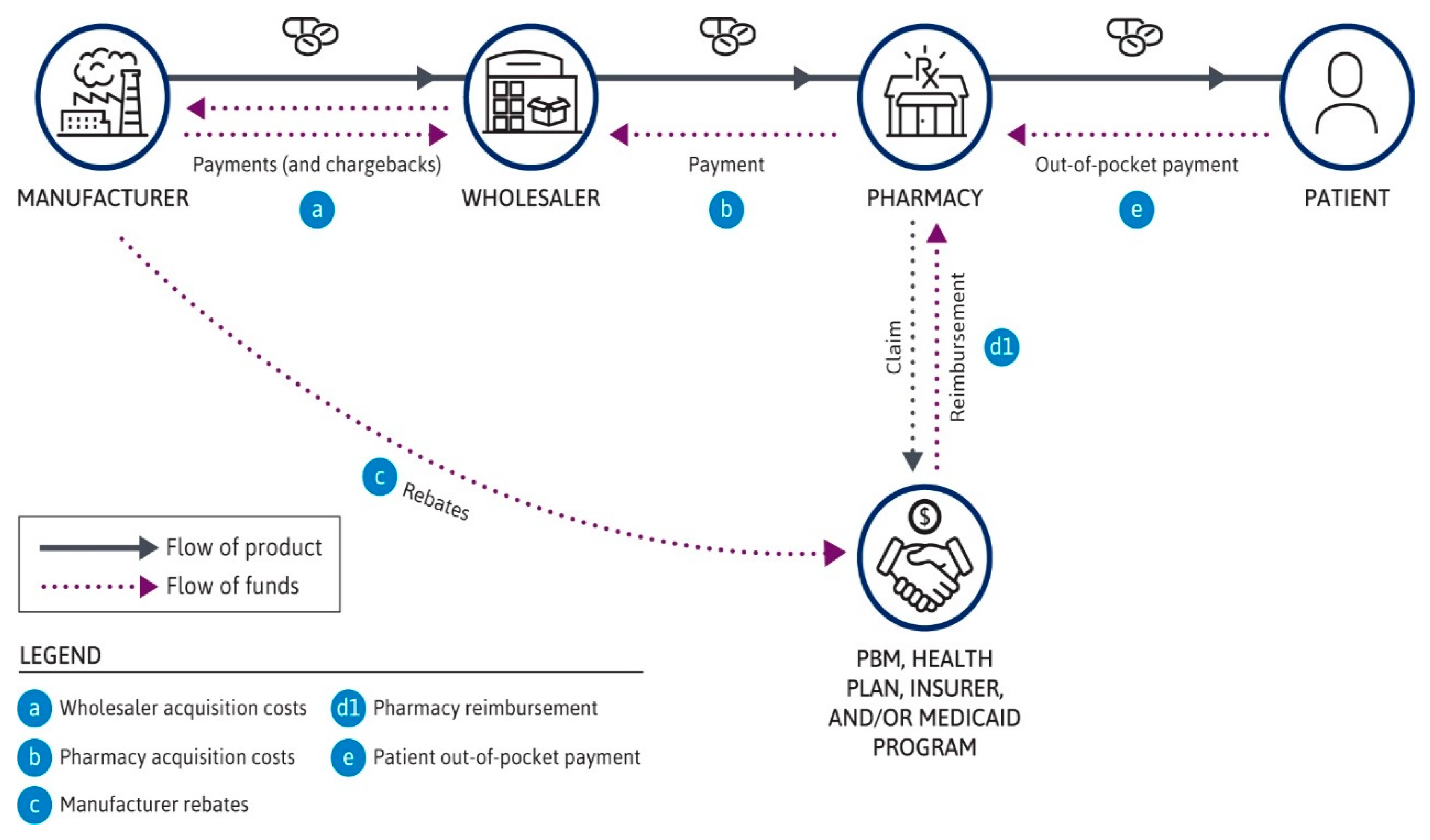
Figure 2 illustrates the complexity of the pharmaceutical distribution system in the United States [22]. In this system, drugs are purchased by wholesalers, who then sell and distribute them to pharmacies. In the United States, nearly 80% to 90% of total drug distribution is controlled by three major distributors [23]. Pharmacy Benefit Managers (PBMs) play a central role in the system by determining which drugs are covered and by negotiating rebates from manufacturers. Drug prices are set by manufacturers, and the government does not directly set prices. However, payments for treated patients, whether in outpatient or inpatient settings, are based on publicly available reference list prices, while the final net price of drugs is determined through complex contractual agreements among payers, distributors, pharmacies, and other stakeholders.
The most commonly used pricing benchmark for pharmaceuticals is the Wholesale Acquisition Cost (WAC), which is determined by the manufacturer and can be considered the list price. At this stage, various rebates and discounts are applied throughout the distribution channel. These rebates and discounts vary between public payers, including Medicaid, Medicare, and the Department of Veterans Affairs (VA), and private payers, resulting in price differences and deviations across payers. Medicaid, which is jointly funded by federal and state governments, is legally required to receive the lowest price available to most purchasers under the Medicaid Best Price rule. The Medicaid Best Price rule is the primary mechanism that ensures manufacturers provide Medicaid with the lowest net price offered to any purchaser in the United States. This price is achieved through a mandatory rebate calculated based on the Average Manufacturer Price (AMP). For branded drugs, the Medicaid rebate is set at 23.1% of the AMP or the difference between the AMP and the Best Price, whichever is greater. Manufacturers are required to provide rebates of at least 23.1% of the AMP for branded drugs and 13% for generic drugs [48]. As a result, Medicaid typically purchases drugs at a price at least 23.1% below the AMP, or at the lowest available market price if a lower price exists. The Best Price rule does not apply to generic drugs; instead, only the 13% rebate requirement applies.
Manufacturers of branded drugs are often reluctant to offer large discounts in the private market because discounts offered to private purchasers also lower the Medicaid Best Price, which reduces manufacturer revenue. This situation contributes to increases in list prices and to the lack of transparency surrounding PBM rebates. When comparing Medicaid and Medicare Part D, it is important to note that Medicare Part D does not include the same government negotiation authority, mandatory rebates, Best Price rule, or AMP-based rebate structure that exist in Medicaid. While Medicaid requires manufacturers to provide mandatory rebates, drug prices under Medicare Part D are negotiated by private plans and PBMs. In Medicaid, rebate rates are fixed at 23.1% of AMP or Best Price for branded drugs and 13% of AMP for generic drugs, whereas in Medicare Part D rebate levels are determined through negotiation. Patient cost-sharing also differs between the two programs. Copayments are typically very low or nonexistent in Medicaid, whereas Medicare Part D often requires moderate to high copayments. Coinsurance is generally not used in Medicaid but is commonly used in Medicare Part D. Out-of-pocket maximum limits are generally low in Medicaid but higher in Medicare Part D. PBMs are used in both systems but play a more central role in Medicare Part D. In addition, rebate transparency and the extent to which rebates are passed on to patients are higher in Medicaid, whereas in Medicare Part D rebate transparency is lower and rebates are generally not passed directly to patients.
From a political and structural perspective, Medicaid is characterized by high federal oversight, moderate private sector influence, and relatively low pressure for pharmaceutical innovation, whereas Medicare Part D is characterized by limited federal control, very high private sector influence, and stronger incentives for pharmaceutical innovation.

2. Materials and Methods

2.1. Pricing Policies for Medications Used in DMT Treatment

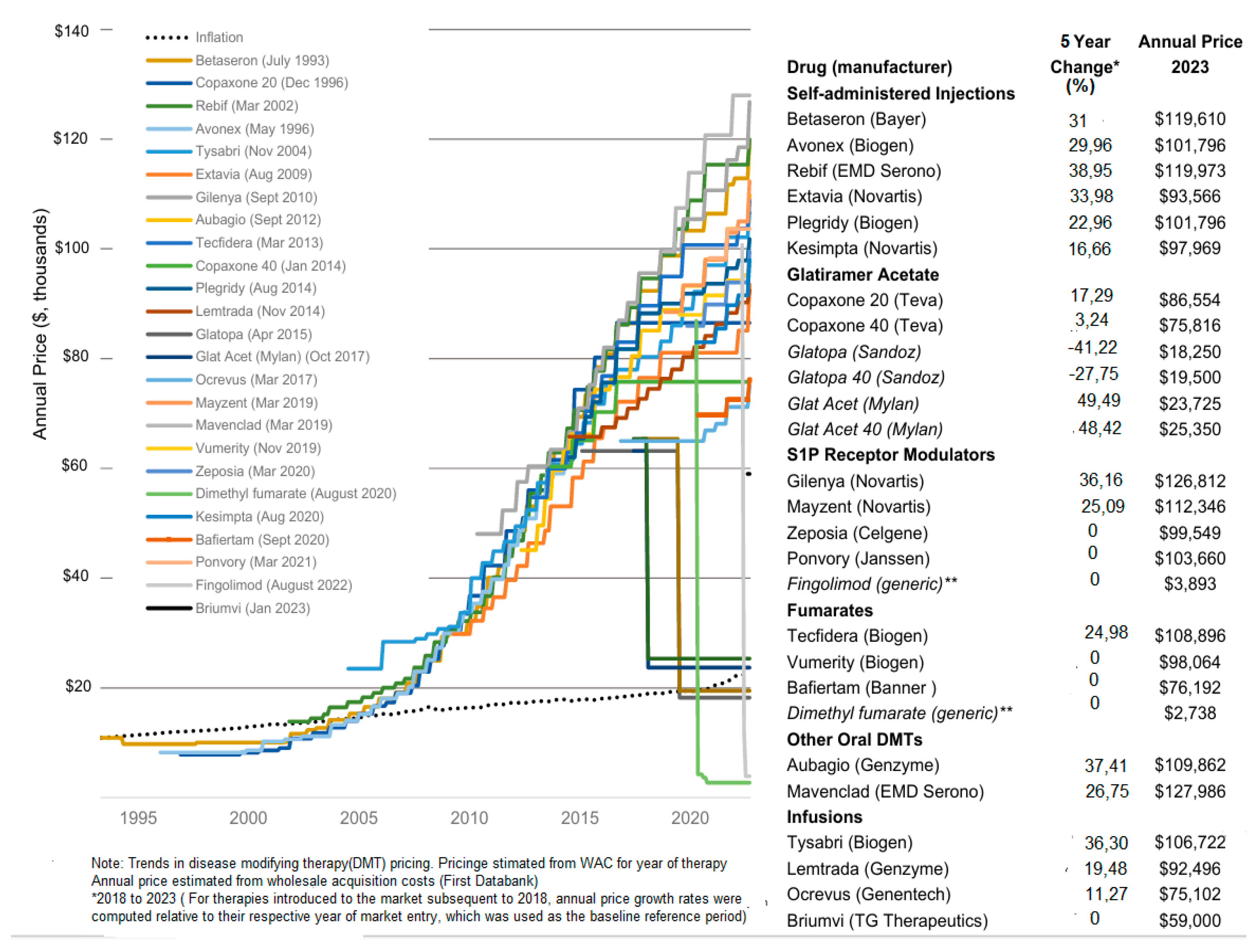
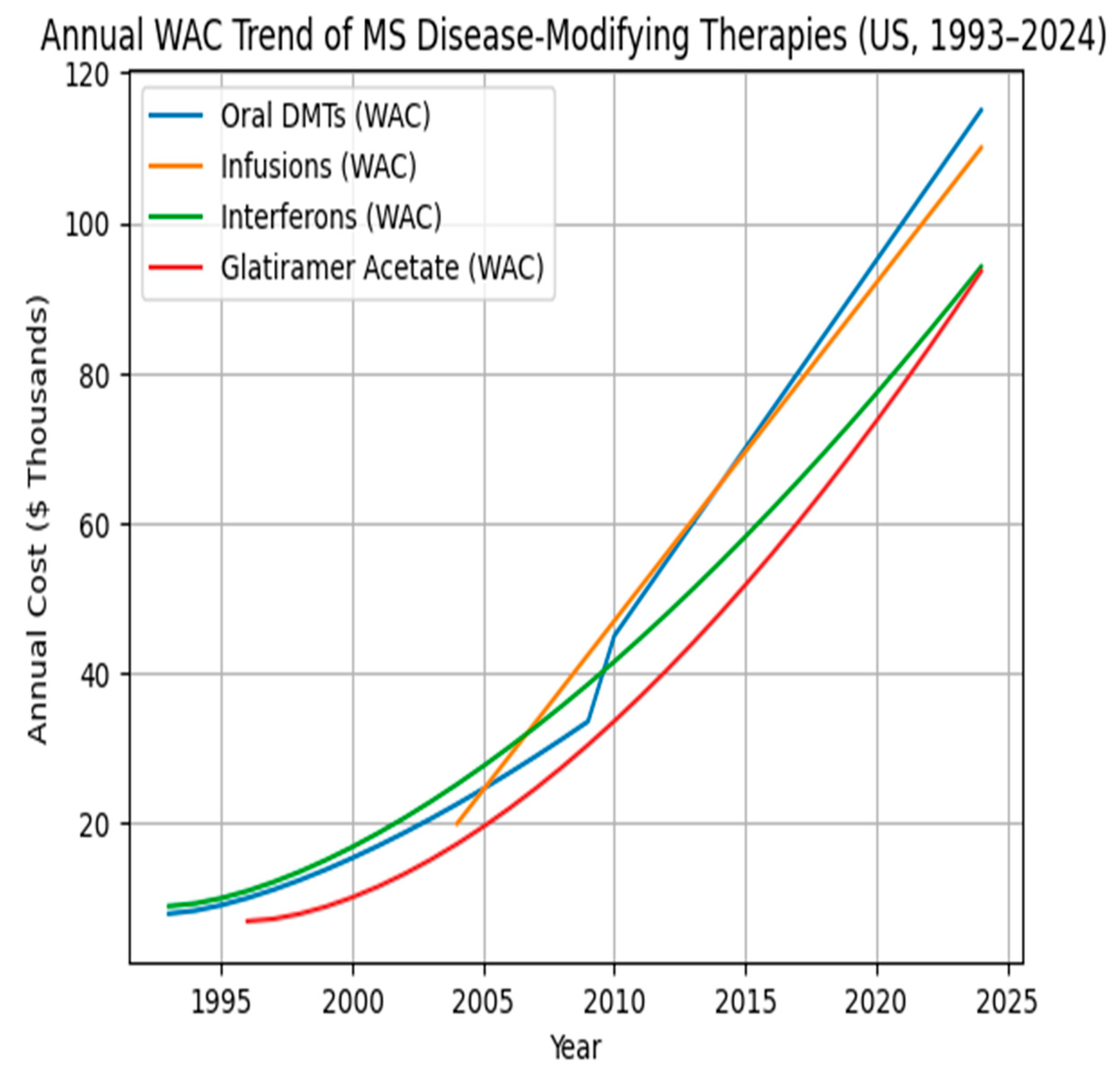
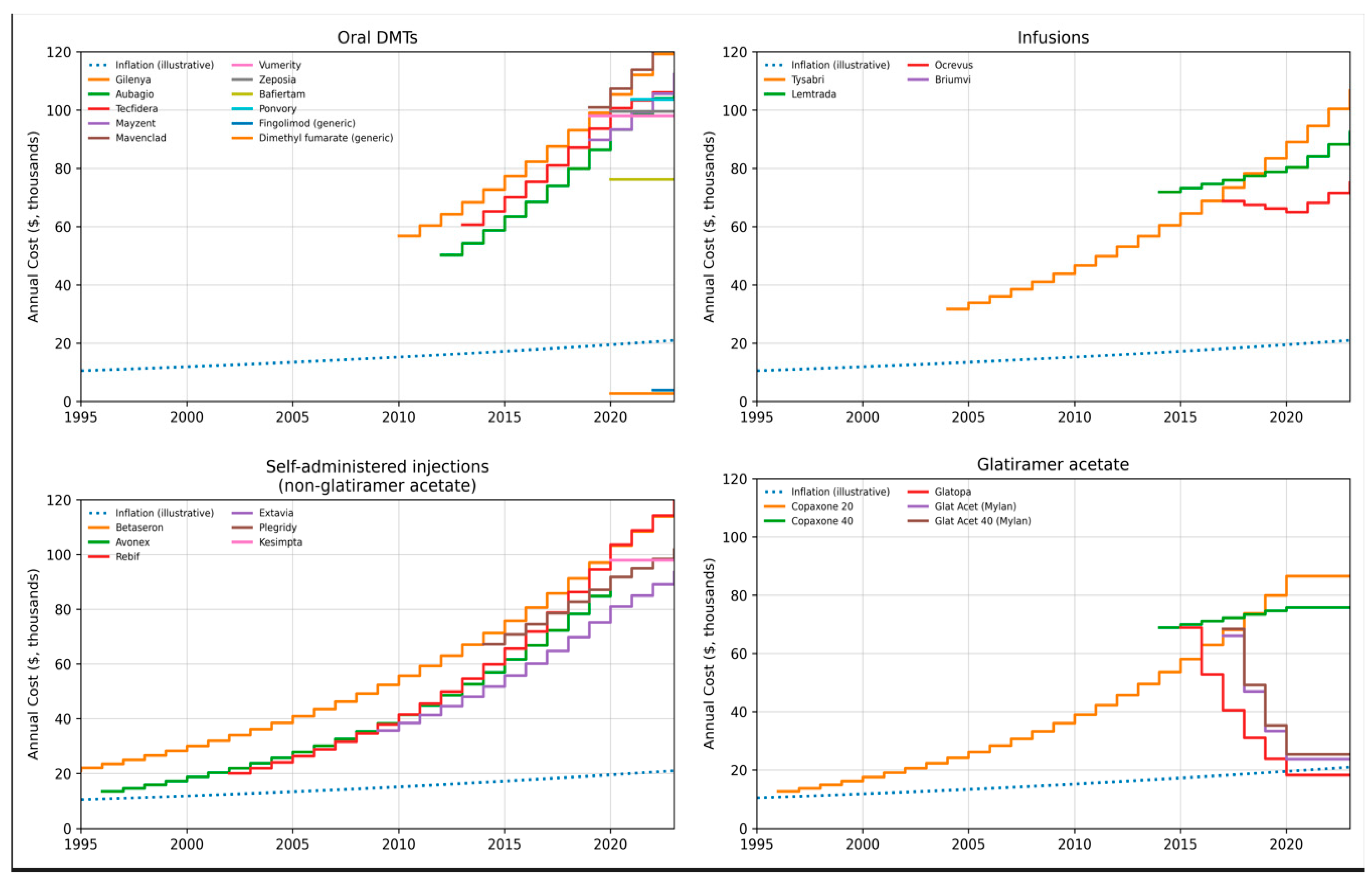
Figure 3 presents the trend in the annual costs of disease-modifying therapies (DMTs) from 1993 to 2023. Figure 4 and Figure 5 show annual Wholesale Acquisition Cost (WAC) price trends by DMT class for multiple sclerosis (MS). An examination of DMT pricing trends suggests that pricing has been influenced in part by within-class competition and the availability of generic DMT options [24]. However, when overall pricing trends in the healthcare sector are examined, the prices of branded drugs have continued to increase despite the introduction of generic drugs, such as glatiramer acetate (Glatopa™), and the entry of additional DMTs into the market. Although a generic version of glatiramer acetate was approved in 2015, its financial impact remained limited due to slow market adoption and the increasing use of higher-efficacy monoclonal antibody (MAb) therapies and oral DMTs [25,26]. Table 2 presents the manufacturer-determined Wholesale Acquisition Cost (WAC), or list price, on an annual basis, and includes analyses of estimated net costs for specific payers and median annual price changes [27,28]. Prior to 2002, before the market entry of IFN-β1a subcutaneous injection Rebif™, the annual price increase trend for existing DMT treatment platforms was approximately 2.5% to 3%. Following the introduction of the first oral DMT, fingolimod (Gilenya™) in 2010, the annual cost increase rates of earlier therapies introduced before 2002, including IFN-β1b (Betaseron™, 1993), IFN-β1a intramuscular (Avonex™, 1996), and glatiramer acetate (Copaxone™, 1996), rose to rates exceeding 15% to 18% annually. In addition, estimated costs for Medicaid programs and the Department of Veterans Affairs (VA) were calculated, and because the VA is able to purchase drugs directly from manufacturers, it typically acquires medications at prices approximately 20% to 50% lower than the list price.
Since 2020, the market entry of generic versions of several oral disease-modifying therapies (DMTs), including dimethyl fumarate in 2020, fingolimod in 2022, and teriflunomide in 2023, along with the approval of new branded oral DMTs with similar therapeutic profiles, such as sphingosine-1-phosphate receptor modulators and additional fumarates introduced since 2019, may have contributed to increased price competition within this DMT subcategory [19].
Since 2015, glatiramer acetate (Glatopa™, 2015) and, since 2017, ocrelizumab (Ocrevus™, 2017) entered the market with relatively lower pricing strategies on both a monthly and annual basis. An examination of Ocrevus™ pricing trends shows that its annual cost, which was approximately $65,000 in 2017, increased to around $85,000 by 2024, representing an average increase of approximately 30%. Although it initially offered a price advantage compared with many other therapies, lower-priced DMT options have since become available. Because the Wholesale Acquisition Cost (WAC) values presented in the table represent gross amounts determined by manufacturers, it is important to evaluate net costs after Medicaid rebates are applied. Over time, net rebate amounts have increased in parallel with rising list prices. In the United States, Table 1 presents Medicare Part D expenditures for DMTs between 2012 and 2020. Total spending on DMTs was $1,921,682,585.89 in 2012, $4,733,544,470.56 in 2019, and $4,523,238,146.99 in 2020. The increase in total expenditures was driven by rising prices in the DMT market and expanded coverage. However, when evaluated on a per-patient basis, the number of patients decreased from 56,361 in 2012 to 35,253 in 2020. During the same period, per-patient costs increased from $34,095 in 2012 to $57,616 in 2023, representing an increase of 69% [49].
Table 1. DMT use and expenditure under Medicare Part D between 2012-2020.
Calendar Year 2012
Brand Name Generic Name Total
Spending
Total
Claims
Total
Patients
Average Spending Per Dosage Unit (Weighted) Average Spending Per Claim Average Spending Per
Beneficiary
Aubagio Teriflunomide $1.241.236,92 312 233 $127,02 $3.978,32 $5.327,20
Avonex Interferon Beta-1a $390.201.432,00 98.657 11.901 $1.108,80 $3.955,13 $32.787,28
Avonex Interferon Beta-1a/Albumin $36.195.551,33 9.256 1.326 $921,94 $3.910,50 $27.296,80
Betaseron Interferon Beta-1b $174.898.129,99 44.045 5.432 $268,65 $3.970,90 $32.197,74
Copaxone Glatiramer Acetate $911.468.903,08 208.429 25.119 $4.150,19 $4.373,04 $36.286,03
Extavia Interferon Beta-1b $16.024.880,90 5.278 728 $216,40 $3.036,17 $22.012,20
Gilenya Fingolimod HCl $144.758.245,70 29.217 4.019 $155,03 $4.954,59 $36.018,47
Glatopa Glatiramer Acetate
Plegridy PEGinterferon Beta-1a
Rebif Interferon Beta-1a/Albumin $246.894.205,97 66.968 7.603 $608,46 $3.686,75 $32.473,26
Rebif Rebidose Interferon Beta-1a/Albumin
Tecfidera Dimethyl Fumarate
Tysabri Natalizumab
Total $1.921.682.585,89 462.162 56.361
Calendar Year 2020
Brand Name Generic Name Total
Spending
Total
Claims
Total
Patients
Average Spending Per Dosage Unit
(Weighted)
Average Spending Per Claim Average Spending Per Beneficiary
Aubagio Teriflunomide $778.201.329,31 78.610 10.386 $265,08 $9.899,52 $74.927,92
Avonex Interferon Beta-1a $250.136.077,86 29.622 3.505 $7.234,07 $8.444,27 $71.365,50
Avonex Pen Interferon Beta-1a $305.121.803,72 36.455 4.262 $7.233,97 $8.369,82 $71.591,23
Betaseron Interferon Beta-1b $163.581.520,93 18.758 2.113 $584,81 $8.720,63 $77.416,72
Copaxone Glatiramer Acetate $713.588.637,07 107.923 12.092 $439,83 $6.612,02 $59.013,28
Extavia Interferon Beta-1b $12.471.387,29 2.080 300 $382,92 $5.995,86 $41.571,29
Gilenya Fingolimod HCl $449.518.264,33 46.257 5.128 $297,08 $9.717,84 $87.659,57
Glatiramer Acetate Glatiramer Acetate $212.422.737,82 54.545 7.519 $287,79 $3.894,45 $28.251,46
Glatopa Glatiramer Acetate $88.246.254,82 25.645 3.825 $194,12 $3.441,07 $23.070,92
Lemtrada Alemtuzumab $1.450.990,94 19 17 $20.494,22 $76.367,94 $85.352,41
Plegridy Pen PEGinterferon Beta-1a $56.678.580,61 6.639 827 $7.163,65 $8.537,22 $68.535,16
Plegridy* PEGinterferon Beta-1a $9.407.504,88 1.094 154 $7.162,49 $8.599,18 $61.087,69
Rebif Interferon Beta-1a/Albumin $232.708.460,75 25.470 2.795 $1.415,55 $9.136,57 $83.258,84
Rebif Rebidose Interferon Beta-1a/Albumin $153.166.653,12 16.341 1.950 $1.423,93 $9.373,15 $78.547,00
Tecfidera Dimethyl Fumarate $1.054.984.601,40 108.629 14.663 $142,02 $9.711,81 $71.948,76
Tysabri Natalizumab $41.553.342,14 5.732 749 $475,77 $7.249,36 $55.478,43
Total $4.523.238.146,99 563.819 70.285
Table 2. Annual Wholesale Acquisition Cost (WAC) of Disease-Modifying Therapies (DMTs) for Multiple Sclerosis in the United States, 2012–2020.
Annual ıncreases (%) 2023 Estimate Annual Cost 2023 cost net standard medicaid rebate
DMT Launch Year Annual WAC at
Introduction $
1998-2001 2002-2009 2010-2016 2018-2023
IFN-β1b; Betaseron™ (1993) 1993 10.988 0 16 15,2 31 119.610 91.980
IFN-β1a IM; Avonex™ (1996) 1996 8.301 2,5 18 16,1 29,96 101.796 78.281
Glatiramer acetate;Copaxone™* (1996) 1996 7.856 2,6 19 14,9 17,29 86.554 66.560
IFN-β1a Subcutaneous İnjection; Rebif™ (2002) 2002 13.965 NA NA 12,6 38,95 119.973 92.259
Natalizumab; Tysabri™ (2004) 2004 23.595 NA NA 11,30 36,3 106.722 82.069
Interferon-β1b; Extavia™(2009) 2009 29.965 NA NA 14,4 33,98 93.566 71.952
Fingolimod; Gilenya™ (2010) 2010 48.203 NA NA 9 36,16 126.812 97.518
Teriflunomide; Aubagio™(2012) 2012 45.226 NA NA 16,6 37,41 109.862 84.484
Dimethyl fumerate; Tecfidera™ (2013) 2013 54.675 NA NA 13,4 24,98 108.896 83.741
Pegylated IFN-β1a; Plegridy™ (2014) 2014 62.134 NA NA 10,92 22,96 101.796 78.281
Glatiramer acetate; Glatopa™(2015) 2014 63.203 NA NA 0 -41,22 18.250 14.034
Alemtuzumab; Lemtrada™ (2014) 2015 65.961 NA NA 2,5 19,48 92.496 71.129
OcrevusTM (2017) 2017 65.121 NA NA NA 11,27 75.102 57.753
Glatiramer acetate; Generic™ (2017) 2017 63.198 NA NA NA -166 23.725 18.245
Siponimod (Mayzent) (2019) 2019 89.812 NA NA NA 25,09 100.000 76.900
Cladribine (Mavenclad) (2019) 2019 100.975 NA NA NA 26,75 112.346 86.394
Notes: Annual price estimated from wholesale acquisition costs (First Databank)
For therapies introduced to the market subsequent to 2018, annual price growth rates were computed relative to their respective year of market entry, which was used as the baseline reference period.
<
<

3. Results

3.1. The Importance of Drug Prices in Patient Care

The high cost of medications for MS creates significant barriers to access to disease-modifying therapies (DMTs), and these barriers can be evaluated from multiple perspectives. First, the use of health insurance plans with high deductibles and high cost-sharing requirements can increase patients’ out-of-pocket expenditures. Although programs such as copayment assistance cards may reduce patients’ out-of-pocket expenses, they do not reduce total healthcare expenditures. In addition, programs financed by federal and state governments, such as Medicare, impose certain restrictions on individual use, which represents another important constraint.
Over time, the continued increase in DMT expenditures has led to additional restrictions imposed by insurance companies and pharmacy benefit structures. The selection of DMTs, which should ideally be based on clinical evidence, patient preferences, and other relevant factors, is in some cases governed by rigid policies that do not fully account for these considerations.
The relationship between high DMT costs or insurance coverage restrictions and clinical evidence and outcomes is an important issue. However, although this issue is significant, the existing literature has not demonstrated a strong or consistent relationship.
In contrast, studies conducted under Medicare have demonstrated a significant relationship between high costs and patient adherence. Studies examining DMT persistence and adherence among Medicare beneficiaries, including patients who fully paid cost-sharing, those who received partial subsidies, and those who did not pay, found an inverse relationship between higher cost-sharing and DMT adherence. In addition, once patients entered the Medicare Part D coverage gap, commonly referred to as the donut hole, the likelihood of treatment discontinuation increased [30]. Furthermore, patients who discontinued or switched DMTs experienced higher healthcare utilization and higher medical costs compared with patients who remained on therapy [31].
Studies examining the impact of out-of-pocket expenditures and restrictive drug policies on clinical outcomes have shown that DMT adherence, often measured by medication possession ratio, is inversely associated with non-pharmacy medical expenditures, emergency department visits, MS severity, and both the number and duration of hospitalizations [32,33].

3.2. The Social and Economic Burden of DMTs

Although cost, affordability, and access are central issues in the use of disease-modifying therapies (DMTs) for the treatment of multiple sclerosis (MS), these therapies should also be evaluated from a value perspective. In healthcare, the value equation can be expressed as Value = Quality/Cost, which represents the relationship between the benefits obtained from a good or service and the amount paid for it. Value can be defined as the health outcomes achieved per dollar spent. The key issue is not the number of services provided or the intensity of care, but the value generated [34]. In healthcare, value is determined by outcomes rather than inputs; therefore, value should be measured based on outcomes achieved rather than the volume of services delivered. Ideally, these outcomes should reflect patient-centered outcomes rather than structural or process measures that may not fully capture health outcomes. In value-based healthcare design, outcomes are reported by both healthcare providers and patients [35]. Since the value of DMT treatment is determined by the relationship between disease-related costs and patient outcomes, cost reductions implemented without considering patient outcomes and treatment benefits, such as reduced relapse rates, reduced disability progression, and improved quality of life, may be risky and potentially reduce the effectiveness of care [36]. Interventions that improve health and quality of life, including extending life expectancy, preventing early disability, and improving quality of life, create value for patients and ultimately influence the overall value of DMT treatment. Achieving a balance between quality, outcomes, and cost should be a common objective of healthcare systems [36]. As new oral and infusion DMTs for the treatment of MS continue to be developed, conducting cost-benefit and cost-effectiveness analyses over a defined time horizon will enable comparisons across different healthcare interventions. Although many DMT clinical trials are short-term, it should not be overlooked that MS-related disability develops over many years. Therefore, the economic, social, and health outcomes associated with treatment can be estimated using mathematical modeling methods.
In a comprehensive cost-effectiveness analysis, not only the direct costs of treatment but also indirect costs must be considered. In this context, in addition to potential adverse event costs associated with disease-modifying therapies (DMTs) in the treatment of multiple sclerosis (MS), other costs should be taken into account, including hospitalization costs, productivity losses, palliative care, and home care costs. In situations where outcomes are not homogeneously distributed, the Quality-Adjusted Life Year (QALY) is used to enable more accurate comparisons and to measure both the quantity and quality of health outcomes. The Quality-Adjusted Life Year (QALY) is a measure used to assess the value and utility of health outcomes. It is used to inform health policy decisions and is widely accepted as an outcome measure in health economics [37]. In other words, QALY is a measure used to evaluate health outcomes by capturing changes in both the quantity and quality of life resulting from healthcare interventions, and it allows different health benefits to be compared on a common scale expressed in terms of healthy life years. QALY is fundamentally based on an individual’s assessment of their own health status [38].
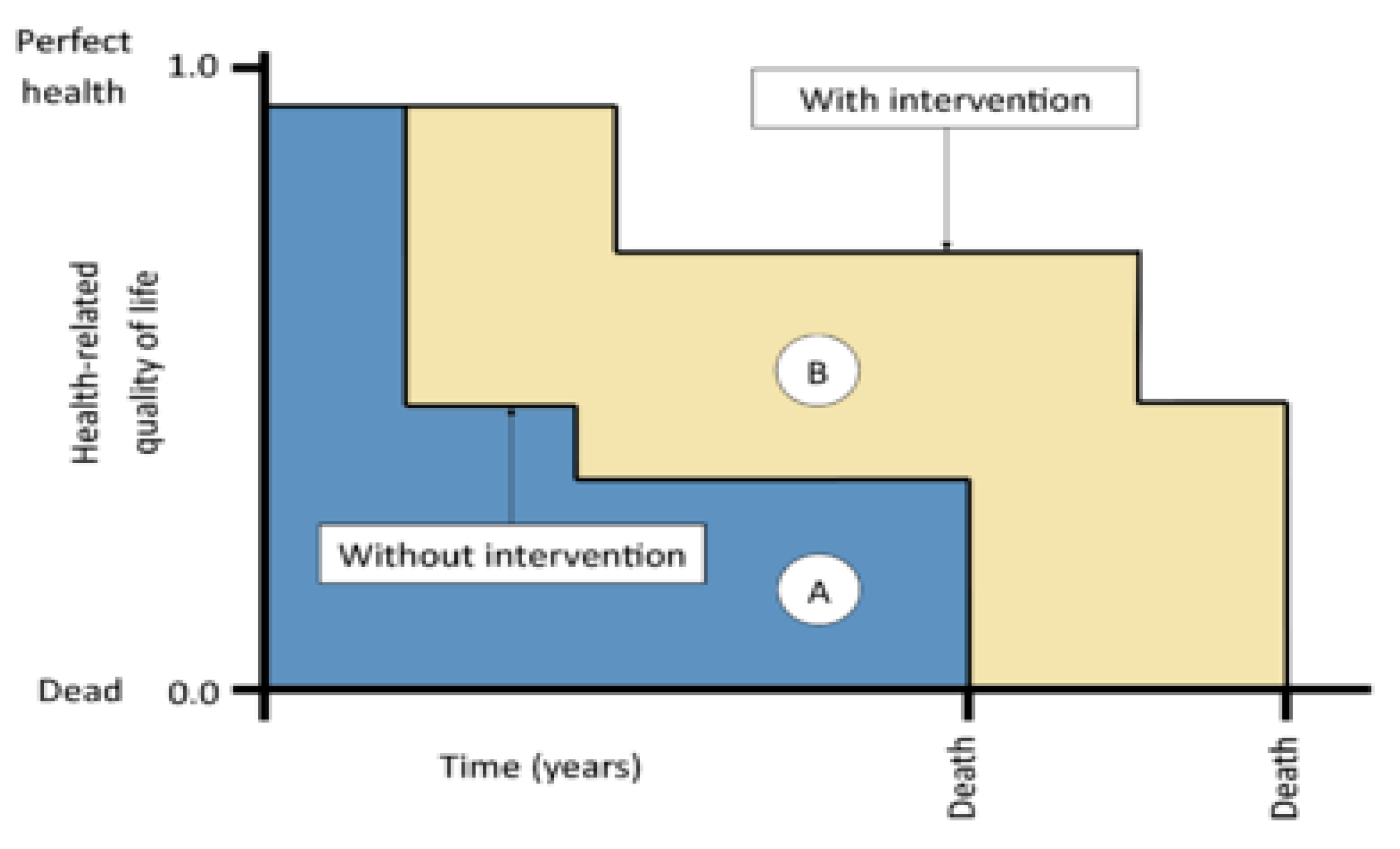
Quality-Adjusted Life Years (QALYs) provide an estimate of how many additional months or years a person may gain with a reasonable quality of life as a result of treatment. QALY has long been an important academic standard in the United States and in many other countries for evaluating the extent to which medical treatments improve or extend patients’ lives. When evidence demonstrates that a medical treatment improves or extends life, these data are used to calculate the number of QALYs gained from the treatment. The additional benefit provided by a treatment can then be compared with the additional health benefits provided by alternative treatments for the same patient population. In calculating QALYs, utility values range from 1, representing perfect health, to 0, representing death. For example, if an individual lives in perfect health for one year, this is equivalent to 1 QALY. This can be expressed as follows: 1 life year multiplied by a utility value of 1 equals 1 QALY. In another example, if an individual remains in perfect health for only six months of a year, this would be equivalent to 0.5 QALYs. This can be expressed as follows: 0.5 life years multiplied by a utility value of 1 equals 0.5 QALYs. If an individual has a utility value of 0.5 and lives for one year, this would be calculated as 1 life year multiplied by a utility value of 0.5, resulting in 0.5 QALYs. For example, an intervention that provides an average life expectancy of 12 years with a utility value of 0.5 would be equivalent to 6 QALYs. The relationship between quality-adjusted life years is presented in Figure 6.
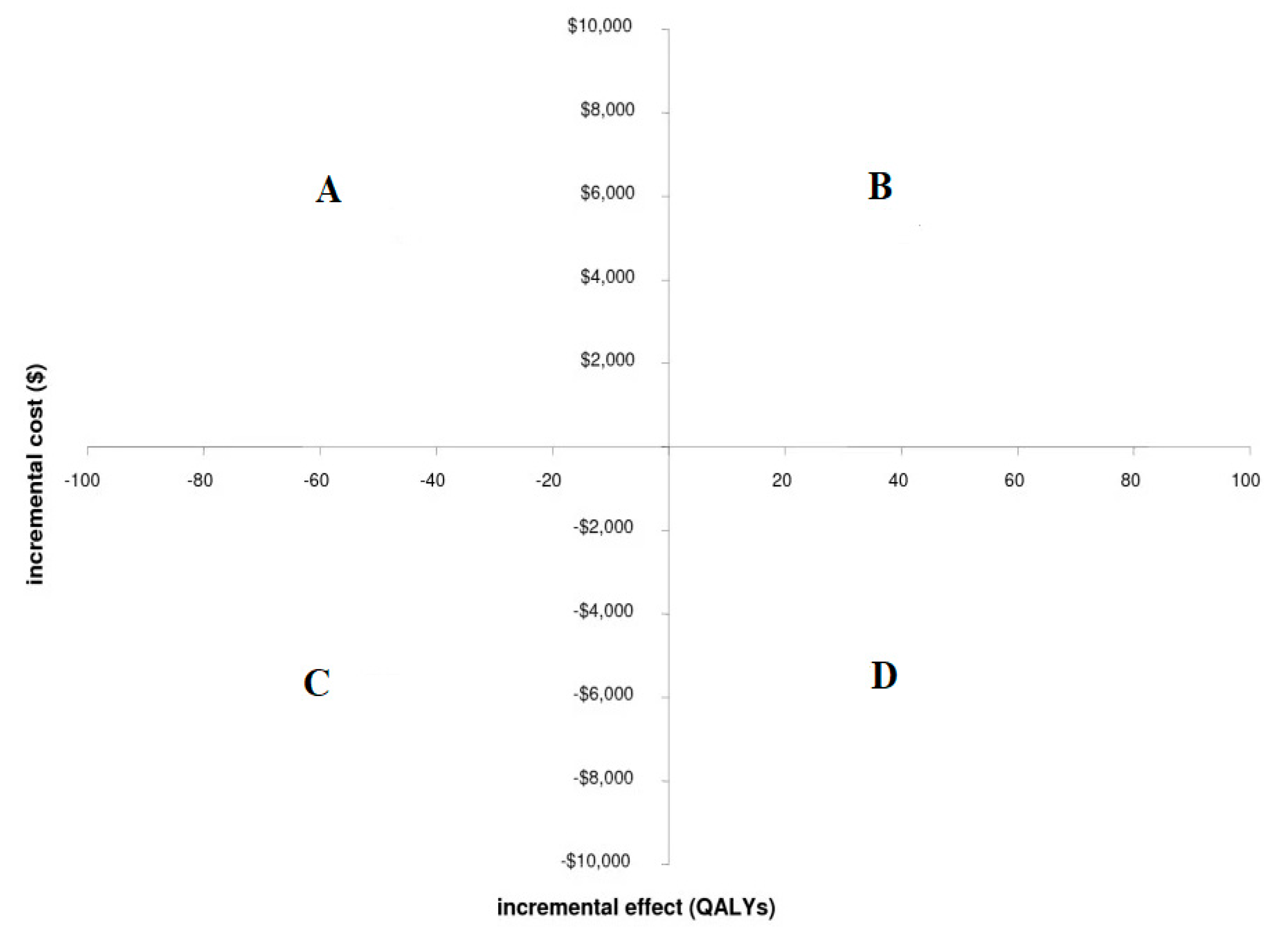
After estimating costs and benefits, cost-effectiveness analysis identifies the additional resources required to achieve an improvement in outcomes, such as survival or quality-adjusted life years (QALYs), when one health intervention is compared with another. These results are expressed as the Incremental Cost-Effectiveness Ratio (ICER). This concept measures the additional cost required to achieve one additional unit of health gain. ICER is calculated by dividing the difference in total costs between two interventions by the difference in their total health benefits. The fundamental purpose of the ICER concept is to evaluate both the health outcomes and the costs that would result if a treatment were implemented compared with the alternative of not implementing the treatment. The incremental cost and incremental effect can be illustrated using the cost-effectiveness plane shown in Figure 7 [39].
In the figure above, the horizontal axis represents incremental cost and the vertical axis represents incremental effectiveness, dividing the plane into four quadrants, each with a different interpretation. If the ICER falls in quadrant D, where costs are negative and effects are positive, the intervention is more effective and less costly than the comparator. In such cases, the intervention is considered dominant and is always regarded as cost-effective. If the ICER falls in quadrant A, where costs are positive and effects are negative, the comparator intervention is dominant, meaning the intervention is more costly and less effective, and therefore it is not considered cost-effective. Although there is no officially accepted cost-effectiveness threshold in the United States, interventions with an ICER below $150,000 per QALY are generally considered to provide good value. Some researchers have suggested that a reasonable threshold may be up to three times the country’s per capita gross domestic product [40].
A large number of cost-effectiveness studies on disease-modifying therapies (DMTs) have been conducted; however, these studies are heterogeneous in structure and methodology and generally focus on the relative value of treatments while often not adequately accounting for treatment adherence and treatment switching. Cost-effectiveness studies of DMTs for multiple sclerosis conducted in the United States have reported ICER values exceeding $150,000 per QALY [41]. In addition, studies have shown ICER values exceeding $900,000 per QALY for interferons and glatiramer acetate, and sensitivity analyses have indicated that these therapies could meet acceptable threshold values if DMT prices were reduced in the United States [42]. One of the major barriers to establishing a consistent standard for comparison is the lack of consensus regarding which treatment is most appropriate for MS. In another study, Hawton and colleagues, in a review of multiple studies, concluded that nearly three-quarters of the evaluated interventions could be considered comparable to supportive care.
This methodological heterogeneity and lack of consensus regarding optimal treatment strategies may partly stem from unmeasured or inconsistently measured determinants of health-related quality of life. In particular, psychiatric comorbidities—frequently observed in individuals with MS—represent a potentially underrecognized source of variability in cost-effectiveness outcomes. Since QALY calculations integrate health-related quality of life dimensions, psychiatric symptoms such as depression and anxiety significantly influence utility weights and may distort cost-effectiveness outcomes if not explicitly accounted for. Given the high prevalence of psychiatric comorbidities in individuals with MS, failure to incorporate structured assessment of depressive and anxiety symptoms into economic models may lead to biased estimations of treatment value. Utility decrements associated with untreated or undertreated psychiatric conditions may be incorrectly attributed to disease progression rather than modifiable mental health factors.
During this process, no consensus has been reached due to uncertainty in cost-effectiveness estimates. One of the main underlying reasons is the additional statistical complexity associated with calculating confidence intervals for ratios such as the Incremental Cost-Effectiveness Ratio (ICER). To address these challenges, several alternative methods have been proposed for calculating confidence intervals, including the Fieller theorem and bootstrap methods [43,44]. Although these methods were developed to address statistical complexity, the lack of consensus regarding the most appropriate treatment for multiple sclerosis (MS) continues to contribute to uncertainty.
Because incremental differences in effectiveness among disease-modifying therapies (DMTs) are more uncertain compared with supportive care, studies evaluating the comparative value of DMTs tend to produce higher ICER estimates. The key approach in this context is to include supportive care as a comparator when evaluating all DMTs and to present cost-effectiveness estimates that consider all relevant comparisons and potential value assessments.
Based on the available evidence, it has been suggested that instead of applying a standard pricing policy for all patients, it is necessary to evaluate costs and health outcomes individually for each patient, and that value can be improved through outcome-based and goal-oriented payment models rather than volume-based payment systems.
The Institute for Clinical and Economic Review, a United States-based organization, conducted a comprehensive cost-effectiveness analysis of all disease-modifying therapies (DMTs) used for both relapsing-remitting MS and primary progressive MS as part of its clinical and economic evaluation of MS treatments and diagnostics [45]. The study was conducted in two stages: first, direct medical costs were evaluated from the healthcare system perspective; second, indirect costs, including productivity loss and work loss, were evaluated from a societal perspective, and similar results were observed in both analyses. In this study, drug costs were calculated based on Wholesale Acquisition Cost (WAC) prices after applying Medicaid rebates. The ICER values calculated for all DMTs were found to be well above the accepted threshold value of $150,000. ICER values ranged between $185,000 and $360,000 per QALY for IFN-β1b (Extavia™) and IFN-β1a (Rebif™), respectively, and alemtuzumab was the only therapy with an ICER value below the threshold. This relatively lower ICER value is believed to be related to its dosing structure and assumptions regarding the need for additional annual dosing.
In the economic model developed for relapsing-remitting multiple sclerosis (RRMS), disease progression over time was analyzed across 20 distinct health states based on the Expanded Disability Status Scale (EDSS). The effect of each disease-modifying therapy (DMT) on disability progression, compared with supportive care (placebo), was estimated using a network meta-analysis. The results indicated that monoclonal antibody therapies, including alemtuzumab, daclizumab, natalizumab, and ocrelizumab, had the greatest impact on reducing disability progression. These were followed by oral dimethyl fumarate, interferons including pegylated IFN-β1a and IFN-β1b, and the oral targeted immunomodulator fingolimod, while glatiramer acetate, teriflunomide, and other interferons demonstrated more limited effects.
From the perspective of generic glatiramer acetate, ICER values per QALY exceeded the accepted threshold for all DMTs except Extavia and alemtuzumab (Lemtrada), and therefore most DMTs were not considered cost-effective at current prices. In addition, alemtuzumab (Lemtrada) was found to be both a lower-cost and more effective treatment option.
For ocrelizumab (Ocrevus™, 2017), the ICER value could not be calculated due to insufficient pricing data; however, it was estimated that, in order for the ICER per QALY to fall below the accepted threshold, a Medicaid rebate of approximately 10% off the Wholesale Acquisition Cost (WAC) price would be required. For other DMTs used in MS treatment, it was estimated that discounts ranging from 50% to 90% off WAC prices would be necessary for ICER values per QALY to fall within accepted cost-effectiveness thresholds.

4. Discussion and Possible Solutions

The pricing trends of medications used in the treatment of multiple sclerosis (MS) are being examined by all stakeholders, and recent surveys and studies have concluded that the primary priority should be the implementation of appropriate pricing policies. In the United States, initiatives and policy proposals aimed at addressing structural problems in the pharmaceutical sector have begun to emerge. Legislative efforts are ongoing to require pharmaceutical manufacturers to provide greater pricing transparency for high-cost drugs, including justification for pricing based on factors such as excessive pricing, acquisition costs, research and development expenditures, marketing costs, and production costs. Increased transparency in drug pricing is of critical importance for decision-makers. Greater transparency would make high prices and profit margins more visible and could encourage both pharmaceutical manufacturers and policymakers to pursue a more balanced approach between cost and risk.
In addition, increased regulatory oversight in recent years has encouraged pharmaceutical manufacturers to adopt more moderate pricing strategies and to keep prices below certain threshold levels. Another major issue is the uncertainty arising from the difference between list prices and net prices.
Various rebates and discounts are applied throughout the pharmaceutical distribution channel, and these vary across public payers, including Medicaid, Medicare, and the Department of Veterans Affairs (VA), as well as private payers, leading to price differences across payers. Manufacturers of branded drugs are often reluctant to offer large discounts because discounts provided in the private market also lower the Medicaid Best Price, which reduces manufacturer revenue. This situation contributes to increases in list prices and to the lack of transparency surrounding Pharmacy Benefit Manager (PBM) rebates. In addition, the extent of savings achieved from contract-based discounts negotiated with manufacturers is often not shared with patients, and for drugs subject to partial exemptions or coinsurance, patient cost-sharing is often calculated based on the WAC list price rather than the net price [46] As a result, patients are exposed to high out-of-pocket expenditures. Furthermore, in recent years, increases in both list prices and rebate amounts have widened the gap between list and net prices [47].
Medicare is a health insurance program for individuals above a certain age and for younger individuals with specific disabilities or medical conditions. Although Medicare is the largest single purchaser of prescription drugs in the United States, existing legislation restricts the government from directly negotiating drug prices with pharmaceutical manufacturers. Medicaid, in contrast, is a joint federal and state program that provides healthcare services to certain low-income populations. Funded by both federal and state governments, Medicaid is legally required to receive the lowest price available to most purchasers under the Medicaid Best Price rule. The Medicaid Best Price rule is the primary mechanism that ensures manufacturers provide Medicaid with the lowest net price offered to any purchaser in the United States. This price is achieved through a mandatory rebate calculated based on the Average Manufacturer Price (AMP).
The key issue is that, similar to other public services, Medicare should be able to use its purchasing power more effectively to generate substantial savings for both patients and the government. However, due to current legislative restrictions, the potential impact of price negotiations on total pharmaceutical spending remains uncertain.
In the context of DMT treatment, the price advantage of generic drugs has provided significant economic relief. Except for oral therapies, most DMTs are considered biologic drugs, and generic manufacturers have historically faced barriers to market entry through existing regulatory and patent pathways. In 2025, a biosimilar version of glatiramer acetate (Glatopa™) was introduced to the market as one of the first generic DMT treatment options. After the approval of glatiramer acetate (Glatopa™, 2015), it was accepted as interchangeable with Teva’s Copaxone™ 20 mg formulation. However, the complexity of production due to its polymer structure and Teva’s patent and litigation strategies slowed market entry. Although generic versions entered the market in 2015, they did not lead to substantial price reductions because only one or two competitors were able to enter the market. In recent years, particularly after 2020, the number of generic drugs has increased as competition has intensified and barriers related to monopoly pricing and patent protection have gradually weakened.
Several clinical and policy proposals have suggested that the cost of DMTs could be reduced through alternative dosing strategies. Clinical and pharmacological studies support less frequent dosing for certain therapies, including fingolimod (Gilenya™, 2010), glatiramer acetate (Copaxone™, 1996), and natalizumab (Tysabri™, 2004). In addition, recent studies have shown that less frequent infusion regimens, such as once or twice annually, may remain clinically effective.
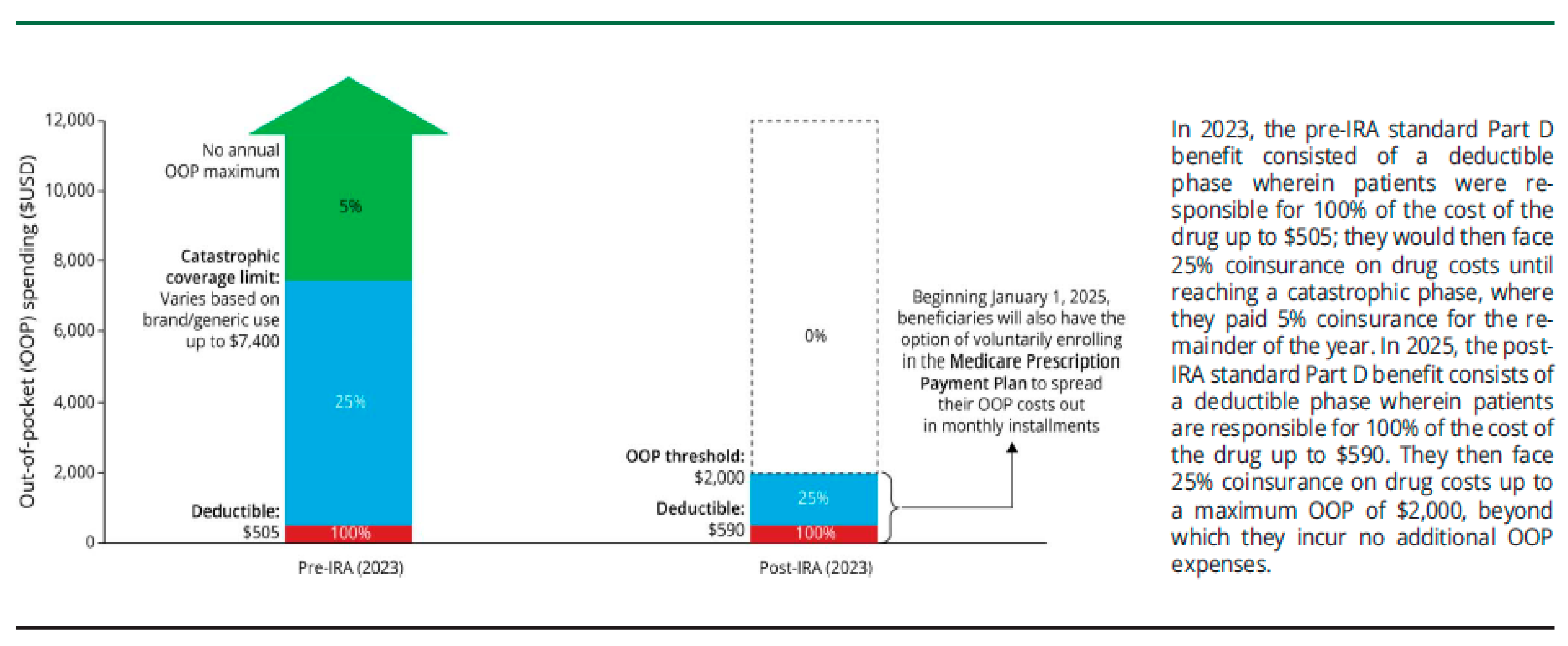
The Inflation Reduction Act (IRA), enacted in 2022, introduced policies granting the government expanded authority to determine the prices of certain drugs covered under Medicare. While this policy may discourage pharmaceutical manufacturers in terms of pricing strategies and future drug development decisions, it is also expected to affect access to drugs covered under Medicare Part D. The IRA also introduced reforms related to annual out-of-pocket (OOP) spending and the Medicare Prescription Payment Plan (MPPP), which allows OOP costs to be spread over monthly payments. The Medicare Part D provisions of the IRA may reduce OOP costs for DMT treatments in MS by enabling patients to access medications more consistently through pharmacies. This effect is illustrated in Figure 8 below [48].
The high and continuously increasing costs of disease-modifying therapies (DMTs) for multiple sclerosis (MS) are a major concern for patients, physicians, society, and other stakeholders. Although DMTs can significantly improve patients’ quality of life, the rate of increase in drug prices continues to exceed inflation, creating substantial challenges in ensuring affordability. In particular, the high cost of DMTs and difficulties in timely access to medications can lead to psychological stress among many patients. Studies on cost-effectiveness indicate that the clinical benefits provided by DMTs do not fully justify their high costs, which further exacerbates issues related to economic accessibility. Depression, is another psychiatry disorder that frequenty accompany with MS, is one of the strongest predictors of DMT non-adherence. Psychiatric comorbidities such as depression and cognitive dysfunction may partially explain variations in adherence observed across cost-effectiveness studies. Beyond non-adherence, psychiatric comorbidities may contribute substantially to both direct and indirect healthcare costs through increased hospitalization rates, more frequent outpatient visits, reduced adherence to DMTs, elevated indirect costs (e.g., early retirement and reliance on Social Security Disability Insurance), and increased suicide risk [31,32].The findings discussed in this review underscore the need to incorporate psychiatric assessment and intervention into value-based MS management frameworks. Routine screening for depression and anxiety in neurology settings may facilitate early identification of modifiable factors that influence both quality of life and treatment adherence.
Collaborative neuropsychiatric care models, in which neurologists and mental health professionals work in coordination, may improve symptom recognition, optimize adherence to DMTs, and enhance overall functioning. Given that treatment non-adherence and reduced quality of life negatively affect cost-effectiveness outcomes, early psychiatric intervention may indirectly improve the economic value profile of high-cost DMTs. From a health policy perspective, integrating structured mental health care into MS treatment pathways may represent not only a clinical necessity but also a cost-conscious strategy aligned with value-based healthcare principles.
Evidence from numerous studies shows that MS creates a substantial economic burden due to both direct and indirect costs, that the costs of secondary progressive MS are higher than those of relapsing-remitting MS, and that there is a linear relationship between disease severity, treatment adherence, relapse frequency, and costs. In addition, cost estimates and their distribution across cost components vary across countries. Economic evaluations indicate that, depending on local conditions, disease-modifying therapies (DMTs) for relapsing-remitting MS are often not cost-effective [8].
From a societal perspective on MS, considering that the cost-effectiveness of DMTs does not significantly decline over a patient’s lifetime, lower-cost oral formulations, alternative dosing strategies, and generic versions may have a significant impact on improving cost-effectiveness.
In the United States, factors such as a poorly regulated consumer market and a pharmaceutical industry structured around high-risk and high-return investments contribute to high prescription drug prices. Addressing the underlying drivers of high drug prices would likely lead to major changes in pharmaceutical purchasing policies in the United States. Policy proposals at the federal and state levels include implementing price increase caps, limiting out-of-pocket expenditures, promoting bulk purchasing, enabling lower-cost drug importation, and negotiating with pharmaceutical manufacturers outside the United States [6].
Neurologists can also contribute to improving cost-effectiveness in several ways. First, when clinically appropriate, they may prefer lower-cost DMT options. Second, they may prescribe lower-priced generic versions of glatiramer acetate when appropriate [9]. In addition, neurologists can raise awareness on various platforms about the burden of high drug costs on patients and collaborate with professional organizations. For example, the American Academy of Neurology identified prescription drug pricing as a priority issue in 2025 in order to increase awareness of this issue [29].

5. Conclusions

Country-specific characteristics significantly influence the results of cost-effectiveness analyses, and treatment and healthcare cost data can vary substantially across countries. Even when the same basic modeling approach is used, QALY estimates and incremental costs may differ across settings. Although studies consistently show that multiple sclerosis (MS) is a costly disease, cost estimates vary between countries.
For these reasons, policymakers, decision-makers, neurologists, and all relevant stakeholders should base their decisions regarding the costs associated with the disease and the cost-effectiveness of disease-modifying therapies (DMTs) on local conditions and context-specific evidence in order to achieve more accurate and effective policy outcomes.

Author Contributions

“Conceptualization, S.K. and Z.K.; methodology, A.K.; software, S.K.; validation, M.K., S.K. and Z.K.; formal analysis, M.K.; investigation, S.K.; resources, A.K.; data curation, S.K.; writing—original draft preparation, A.K.; writing—review and editing, S.K.; visualization, Z.K.; supervision, M.K.; project administration, M.K.; funding acquisition, Z.K. All authors have read and agreed to the published version of the manuscript.”.

Funding

This research received no external funding.

Institutional Review Board Statement

Not applicable.

Data Availability Statement

All data analyzed during the current study are available from the corresponding author on reasonable request.

Acknowledgments

In this The authors have reviewed and edited the output and take full responsibility for the content of this publication.”.

Conflicts of Interest

The authors declare no conflicts of interest.

Abbreviations

The following abbreviations are used in this manuscript:
MS Multiple sclerosis
DMTs disease-modifying therapies
CIS Clinically Isolated Syndrome
RRMS Relapsing-Remitting Multiple sclerosis
PPMS Primary Progressive Multiple sclerosis
SSDI Social Security Disability Insurance
DMF dimethyl fumarate
MPPP Medicare Prescription Payment Plan
IRA Inflation Reduction Act
PBMs Pharmacy Benefit Managers
VA Veterans Affairs
AMP Average Manufacturer Price
WAC Wholesale Acquisition Cost
QALY The Quality-Adjusted Life Year
ICER the Incremental Cost-Effectiveness Ratio
OOP out-of-pocket

References

  1. Korsukewitz, C.; Wiendl, H. Emerging trends and challenges in multiple sclerosis in Europe: rethinking classification and addressing COVID-19 impact. Lancet Reg Health Eur. 2024, 44, 101017. [Google Scholar] [CrossRef]
  2. Walton, C.; King, R.; Rechtman, L.; Kaye, W.; Leray, E.; Marrie, R.A.; et al. Rising prevalence of multiple sclerosis worldwide: insights from the atlas of MS, third edition. Mult Scler J. 2020, 26(14), 1816–21. [Google Scholar] [CrossRef]
  3. Bebo, B.; et al. The economic burden of multiple sclerosis in the united States. Neurology 2022, 98(18), e1810–e7. [Google Scholar] [CrossRef]
  4. Available online: https://www.nationalmssociety.org/managing-ms/treating-ms/disease-modifying-therapies/cost-of-ms.
  5. Hartung, D.M. Economics of multiple sclerosis disease-modifying therapies in the USA. Curr Neurol Neurosci Rep. 2021, 21(7), 28. [Google Scholar] [CrossRef] [PubMed]
  6. Hartung, D.M.; Bourdette, D. Addressing the rising prices of disease-modifying therapies for multiple sclerosis. JAMA Neurol. 2019. Epub ahead of print 26 August 2019. [Google Scholar] [CrossRef] [PubMed]
  7. Whetten-Goldstein, K.; Sloan, F.A.; Goldstein, L.B.; Kulas, E.D. A comprehensive assessment of the cost of multiple sclerosis in the United States. Mult Scler. 1998, 4(5), 419–425. [Google Scholar] [CrossRef]
  8. Simoens, S. Societal economic burden of multiple sclerosis and cost-efectiveness of disease-modifying therapies. Front. Neurol. 2022, 13, 1015256. [Google Scholar] [CrossRef]
  9. Kister, I.; Corboy, J.R. Reducing costs while enhancing quality of care in MS. Neurology 2016, 87, 1617–1622. [Google Scholar] [CrossRef]
  10. Zimmermann, M.; Brouwer, E.; Tice, J.A.; et al. Disease-modifying therapies for relapsingremitting and primary progressive multiple sclerosis: a cost-utility analysis. CNS Drugs 2018, 32(12), 1145–1157. [Google Scholar] [CrossRef]
  11. McKenna, A.; Lin, G.A.; Whittington, M.D.; et al. Oral and monoclonal antibody treatments for relapsing forms of multiple sclerosis: effectiveness and value. J Manag Care Spec Pharm. 2023, 29(7), 857–861. [Google Scholar] [CrossRef] [PubMed]
  12. Lezzoni, L.I.; Ngo, L. Health; Disability, and life insurance experiences of working-age persons with multiple sclerosis. Mult Scler. 2007, 13, 534–546. [Google Scholar]
  13. Soini, E.; Joutseno, J.; Sumelahti, M.-L. Cost-utility of first-line disease-modifying treatments for relapsing–remitting multiple sclerosis. Clin Therapeut 2017, 39(3), 537–57.e10. [Google Scholar] [CrossRef]
  14. Huygens, S.; Versteegh, M. Modeling the cost-utility of treatment sequences for multiple sclerosis. Value Health 2021, 24(11), 1612–9. [Google Scholar] [CrossRef] [PubMed]
  15. Thompson, A.J.; Baranzini, S.E.; Geurts, J.; Hemmer, B.; Ciccarelli, O. Multiple sclerosis. Lancet (London, England) 2018, 391(10130), 1622–36. [Google Scholar] [CrossRef]
  16. Solaro, C.; Gamberini, G.; Masuccio, F.G. Depression in multiple sclerosis: epidemiology, aetiology, diagnosis and treatment. CNS Drugs 2018, 32(2), 117–33. [Google Scholar] [CrossRef] [PubMed]
  17. Ivanova, J.I.; Birnbaum, H.G.; Samuels, S.; Davis, M.; Phillips, A.L.; Meletiche, D. The cost of disability and medically related absenteeism among employees with multiple sclerosis in the US. Pharmacoeconomics 2009, 27(8), 681–691. [Google Scholar] [CrossRef]
  18. Adelman, G.; Rane, S.G.; Villa, K.F. The cost burden of multiple sclerosis in the United States: a systematic review of the literature. J Med Econ 2013, 16(5), 639–647. [Google Scholar] [CrossRef]
  19. Hartung, D.H.; Gabriel, N.; Gellad, W.F.; Cameron, T.; Feeder, N.M.; Herhandez, I. Changes in List and Net Prices for Multiple Sclerosis Disease-Modifying Therapy, 2013 to 2021. Neurology Journal 2026, 16(2), e200597. [Google Scholar] [CrossRef]
  20. Daniel, H. Stemming the escalating cost of prescription drugs: a position paper of the american college of physicians. Ann Intern Med 2016. [Google Scholar] [CrossRef]
  21. Tag, T.; Rubinstein, E. AMCP Guide to Pharmaceutical Payment Methods, 2013 Update (Version 3.0). Academy of Managed Care Pharmacy 2013, 1083–4087. [Google Scholar]
  22. Hung, A.; Dickson, S. A primer on prescription drug pricing benchmarks in the United States. J Manag Care Spec Pharm 2025, 31(12), 1326–1335. [Google Scholar] [CrossRef]
  23. Dabora, M.C.; Turaga, N.; Schulman, K.A. Financing and distribution of pharmaceuticals in the United States. JAMA 2017, 381, 21–22. [Google Scholar] [CrossRef]
  24. Gusovsky, A.V.; Lin, C.C.; Kerber, K.; Reynolds, E.L.; Callaghan, B.C.; Burke, J.F. Costs are still on the rise for commonly prescribed branded neurologic medications. Neurology. 2024, 103(10), e210029. [Google Scholar] [CrossRef] [PubMed]
  25. Hartung, D.M.; Johnston, K.A.; Geddes, J.; Bourdette, D.N. Effect of generic glatiramer acetate on spending and use of drugs for multiple sclerosis. Neurology 2020, 94(13), e1407–e1414. [Google Scholar] [CrossRef]
  26. Rome, B.N.; Tessema, F.A.; Kesselheim, A.S. US spending associated with transition from daily to 3-times-weekly glatiramer acetate. JAMA Internal Medicine. 2020, 180(9), 1165–1172. [Google Scholar] [CrossRef]
  27. Hartung, D.M. Health economics of disease-modifying therapy for multiple sclerosis in the United States. Sage Journals 2021. [Google Scholar] [CrossRef]
  28. Hartung, D.M. Economics and Cost-Effectiveness of Multiple Sclerosis Therapies in the USA. Neurotherapeutics 2017, 14, 1018–1026. [Google Scholar] [CrossRef]
  29. American Academy of Neurology. AAN position statement: prescription drug prices. Available online: https://www.aan.com/policy-and-guidelines/policy/priority-issues/ (accessed on 4 March 2026).
  30. Banahan, B.F.; Datar, M.; Mendonca, C.M.; Bentley, J.P.; Phillips, A.L.; Stewart, M. Effect of medicare part d coverage on adherence with disease modifying drug therapy for multiple sclerosis. Annual Meeting of the Academy of Managed Care Pharmacy, San Francisco, 18– 20 April 2012. [Google Scholar]
  31. Reynolds, M.W.; Stephen, R.; Seaman, C.; Rajagopalan, K. Healthcare resource utilization following switch or discontinuation in multiple sclerosis patients on disease modifying drugs. J Med Econ 2010, 13(1), 90–98. [Google Scholar] [CrossRef]
  32. Ivanova, J.I.; Bergman, R.E.; Birnbaum, H.G.; Phillips, A.L.; Stewart, M.; Meletiche, D.M. Impact of medication adherence to diseasemodifying drugs on severe relapse, and direct and indirect costs among employees with multiple sclerosis in the US. J Med Econ 2012, 15(3), 601–609. [Google Scholar] [CrossRef] [PubMed]
  33. Steinberg, S.C.; Faris, R.J.; Chang, C.F.; Chan, A.; Tankersley, M.A. Impact of adherence to interferons in the treatment of multiple sclerosis: a non-experimental, retrospective, cohort study. Clin Drug Investig 2010, 30(2), 89–100. [Google Scholar] [CrossRef] [PubMed]
  34. Kaplan, R.S.; Porter, M.E. How to Solve the Cost Crisis in Health Care. Harv Bus Rev 2011, 89(9), 46–52. [Google Scholar] [PubMed]
  35. Egdom, L.S.E.; Lagendijk, M.; Kemp, M.H.; Dam, J.H.; Mureau, M.A.M.; Hazelzet, J.A.; Koppert, L.B. Implementation of Value Based Breast Cancer Care. European Journal of Surgical Oncology 2019, 45(7), 1163–1170. [Google Scholar] [CrossRef] [PubMed]
  36. Weiler; Ross, D. Transforming Health Care Through Value-Based Reimbursement; New England Employee Benefits Council, USA, 2019. [Google Scholar]
  37. Briggs, A.H.; Goldstein, D.A.; Kirwin, E.; Meacock, R.; Pandya, A.; Vanness, D.J.; et al. Estimating (quality-adjusted) life-year losses associated with deaths: With application to COVID-19. Health Economics 2020. online version ahead of print. [Google Scholar] [CrossRef]
  38. Black, W. Maliyet-etkinlik düzlemi: Maliyet-etkinliğin grafiksel gösterimi. Tıbbi Karar Verme. 1990, 10, 212–214. [Google Scholar]
  39. Neumann, P.J.; Cohen, J.T.; Weinstein, M.C. Updating cost-effectiveness— the curious resilience of the $50,000-per-QALY threshold. N Engl J Med 2014, 371(9), 796–797. [Google Scholar] [CrossRef]
  40. Yamamoto, D.; Campbell, J.D. Cost-effectiveness of multiple sclerosis disease-modifying therapies: a systematic review of the literature. Autoimmun Dis 2012, 784364. [Google Scholar] [CrossRef]
  41. Noyes, K.; Bajorska, A.; Chappel, A.; et al. Cost-effectiveness of disease-modifying therapy for multiple sclerosis: a populationbased study. Neurology 2011, 77(4), 355–363. [Google Scholar] [CrossRef]
  42. Briggs, A.H.; Wonderling, D.E.; Mooney, C.Z. Pulling cost-effectiveness analysis up by its bootstraps: a non-parametric approach to confidence interval estimation. Health Economics 1997, 6, 327–340. [Google Scholar] [CrossRef]
  43. Lothgren, M.; Zethraeus, N. Definition, interpretation and calculation of cost-effectiveness acceptability curves. Health Economics 2000, 9, 623–630. [Google Scholar] [CrossRef]
  44. ICER. Disease-Modifying Therapies for Relapsing-Remitting and Primary-Progressive Multiple Sclerosis: Effectiveness and Value. Final Evidence Report; Institute for Clinical and Economic Review, 2017. [Google Scholar]
  45. Dusetzina, S.B.; Conti, R.M.; Yu, N.L.; Bach, P.B. Association of Prescription Drug Price Rebates in Medicare Part D With Patient Out-of-Pocket and Federal Spending. JAMA Intern Med 2017, 177, 1185–1188. [Google Scholar] [CrossRef]
  46. Aitken, M. Understanding Medicine Use and Expenditure in the U.S. 2025, IQVIA Institute for Human Data Science. Available online: https://www.iqvia.com/insights/the-iqvia-institute/reports-and-publications/reports/.
  47. Li, P.; Lin, J.K.; Klebanoff, M.J.; Palkar, R.; Chahin; S. Doshi, J.A. Reducing the Out-of-Pocket Costs of Disease-Modifying Therapies for Medicare Beneficiaries With Multiple Sclerosis. Neurol Clin Pract. 2025, 15, e200536. [Google Scholar] [CrossRef] [PubMed]
  48. Sullivan, S.D. Medicare Drug Price Negotiation in the United States: Implications and Unanswered Questions. Value in Health 2023, 26(3), 394–399. [Google Scholar] [CrossRef] [PubMed]
  49. CMS. 2026. Available online: https://data.cms.gov/summary-statistics-on-use-and-payments/medicare-medicaid-spending-by-drug/medicare-part-d-spending-by-drug (accessed on 4 March 2026).
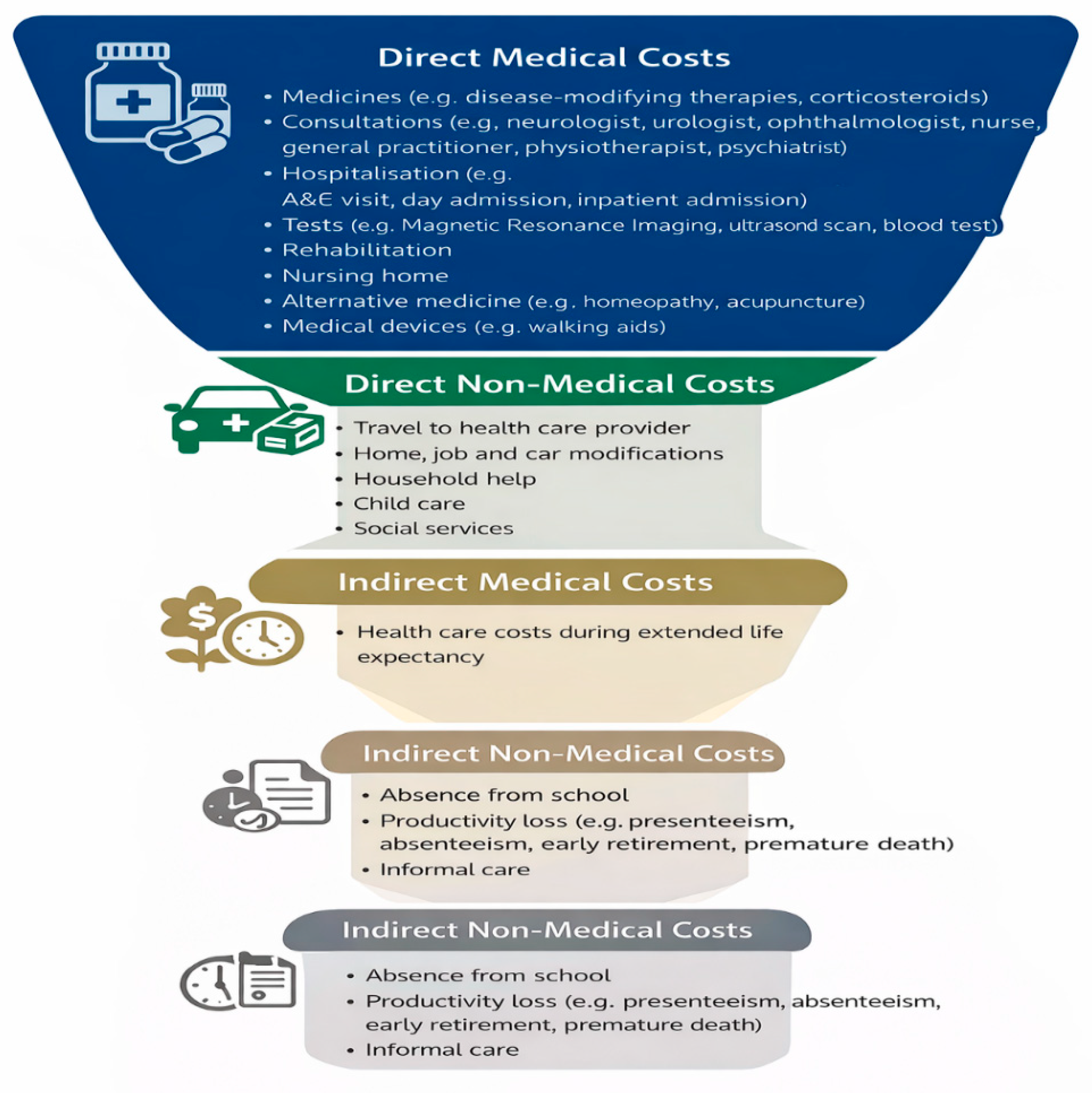
Figure 1. Cost Components of the Societal Economic Burden of MS.
Preprints 207686 g001
Figure 2. Flow of Funds and Pharmaceutical Products in the Drug Distribution System.
Preprints 207686 g002
Figure 3. Trends in annual price for DMTs for multiple sclerosis; 1993 to 2023.
Preprints 207686 g003
Figure 4. Trends in annual WAC DMTs for MS by class ( US 1993–2024).
Preprints 207686 g004
Figure 5. Trends İn Annual Price For Dmts For MS By Class (US 1993–2024).
Preprints 207686 g005
Figure 6. The Relationship between Quality-Adjusted Life Years (QALYs).
Preprints 207686 g006
Figure 7. Incremental Cost-Effectiveness Ratio (ICER) Plane.
Preprints 207686 g007
Figure 8. Medicare Part D Prescription Drug Benefit Cost-Sharing Structure Before and After the Inflation Reduction Act (IRA).
Preprints 207686 g008
Disclaimer/Publisher’s Note: The statements, opinions and data contained in all publications are solely those of the individual author(s) and contributor(s) and not of MDPI and/or the editor(s). MDPI and/or the editor(s) disclaim responsibility for any injury to people or property resulting from any ideas, methods, instructions or products referred to in the content.
Copyright: This open access article is published under a Creative Commons CC BY 4.0 license, which permit the free download, distribution, and reuse, provided that the author and preprint are cited in any reuse.
Prerpints.org logo

Preprints.org is a free preprint server supported by MDPI in Basel, Switzerland.

Subscribe

Disclaimer

Terms of Use

Privacy Policy

Privacy Settings

© 2026 MDPI (Basel, Switzerland) unless otherwise stated