
Submitted:
07 February 2024
Posted:
08 February 2024
Read the latest preprint version here
Abstract
This study derives space travel pricing by Walrasian Equilibrium, which is logical reasoning from the general relativity theory (GRT), the accounting equation, and economic supply and demand functions. The Cobb-Douglas functions embed the endogenous space factor as new capital to form the space travel firm’s production function, which is also transformed into the consumer’s utility function. The market equilibrium then occurs at the equivalence of supply and demand functions, like the GRT presents the equivalence between the spatial geometric tensor and the energy-momentum tensor, which explains the principles of gravity and the motion of space matter in spacetime. The mathematical axiomatic set theory of the accounting equation explains the equity premium effect that causes a short-term accounting equation inequality, then reaches the equivalence by suppliers’ incremental equity through the closing accounts process of the accounting cycle. On the demand side, the consumption of space travel can be assumed as a value at risk (VoR) investment to attain the specific spacetime curvature. Spacetime market equilibrium is then achieved to construct the space travel pricing model. The methodology of econophysics and analogy method was applied to infer the space travel pricing by the model of profit maximization, single-minded, and envy-free pricing in unit-demand markets. Results show that space travel pricing remains the principle of market equilibrium but needs to be extended to the spacetime tensor.
Keywords:
Space travel price
; general relativity theory
; accounting equation
; equity premium
; axiomatic set theory
; Cobb-Douglas functions
1. Introduction
Space tourism began with Dennis Tito’s private trip to the International Space Station, spending 20 million US dollars in 2001 [1]. With the emergence of private space companies such as SpaceX, Blue Origin, and Virgin Galactic, there has been a growing interest in a market to make space travel more accessible to private individuals [1,2]. Space tourism has many attributes that differ from Earth tourism, like untraditional suppliers, selected tourists, and asymmetric market equilibria [3]. One of the unique attributes of space travel is its ultra-expensive prices. For example, the Virgin Galactic reservation quantity increased from less than 100 in 2006 to over 1,000 in 2023, and the bidding price increased from USD 250,000 to 450,000 [4]. The first research question is, why the space travel is so expensive? This study aims to infer the space travel pricing mechanism by the analogy of general relativity theory (GRT) in the physical field and the accounting equation in the economic field.
GRT, developed by Albert Einstein, discusses gravitation and has been tested as a solid scientific fundamental to physics and cosmology [5]. The theory describes gravity as the spacetime curvature bent by mass and energy. In GRT, mass and energy warp the fabric of space and time, affecting the motion of matter and the passage of spacetime itself [6]. It is worth discussing space travel behavior concerns about GRT because human travel has been flown above the Earth’s surface to space, reaching the height from zero to the nonzero curvature of spacetime [7]. Space travel pricing can not be derived from the airplane pricing models because the former attains nonzero spacetime curvature behind the Kármán line, and the latter fly flat spacetime curvature below 20 Km height [8]. The second research question is how to derivate the space travel pricing model. The accounting equation with axiomatic set theory, the production and utility functions embedded space factor, and pricing problems in computer science are adopted to infer space travel pricing.
The accounting equation, assets equal to the sum of liabilities and equity, forms the basis of accounting principles [9]. Juárez [10] used a mathematical axiomatic set theory indicating the inequality of the accounting equation. The analysis determined that the sets of assets do not equal liabilities plus equity without financial meaning. However, this study infers that inequality happens in a dynamic adjusting period when the expected space travel profit causes equity premium effects; thus, the inequality of the accounting equation only happens in a short period. In accounting, the net income will be brought forward to become an incremental equity to balance the accounting equation after the closing account stage in the accounting cycle. The space travel pricing model can then be derived during the adjusting period of the supplier’s accounting equation. Moreover, this study explains the pricing model from the economic supply side and demand and market equilibrium perspectives. The production and consumer functions of market equilibrium are discussed when integrating the principles of GRT and the accounting equation in solving the space travel pricing questions.
2. Mathematics of General Relativity Applied in Space Travel
2.1. The Mathematics of General Relativity Applied on Space Travel
GRT mathematics involves differential geometry and tensor calculus, where concepts like manifolds, tangent spaces, covariant differentiation, and curvature are rigorously defined [11]. At the core of GRT are the Einstein Field Equations, which describe how Einstein tensor equals energy-momentum-tensor [12], as indicated in Equation (1). GRT presents that matter tells spacetime how to curve, and curved spacetime tells matter how to move [13], as indicated in Figure 1.
Where is the Ricci curvature tensor; R is the Ricci scalar; is the metric tensor; is the energy-momentum tensor; G is the Newtonian constant of gravitation; c is the speed of light, and are the spacetime coordinates.
The implication of GRT on space travel is flying to a nonzero curvature, the equivalent of energy-momentum is needed according to the transformation of energy efficiency based on a firm’s space technology [14]. Equation (1) can be realized as the space vehicle flying to the designated orbit with specific spacetime curvature, which needs to reach the required cosmic velocity depending on the energy efficiency [15]. The space technology involved includes mixed-fuel, engine technology, reusable launch vehicles, electromechanical and communication systems, ground control systems, as well as intelligent manned space vehicles [16]. Therefore, Equation (1) represents the energy distribution equation required for traveling to the geometrical space orbit. In other words, a supplier must offer the equivalent energy-momentum at the same level as the orbital energy distribution [17].
2.2. The premise of capital: Accounting Equation
The accounting equation has been recognized as the standard system businesses use to record financial transactions including space travel deals at the equilibrium pricing in this study. The Equation represents the equality relationship between a company’s assets and liabilities plus owner’s equity [18], which is the premise of capital in this study, as shown in Equation (2), which can be metaphoric to the GRT’s Einstein and energy-moment tensors in Equation (1).
Assets = Liabilities + Owner’s Equity
Equation (2) means that the value of assets (A) equals and comes from the funding value of liabilities (L) and owner’s equity (E) [19]. However, Juárez [10] argued the accounting equation’s inequality by applying axiomatic set theory and predicate logic. Using the axiom of union, the set C comprises the elements claimed on the liabilities subset L and the equity subset E of the capital subsets. By the axiom of extensionality, the sets A and C are compared. The axiom of specification allows determining that the capital units of each subset of C have similar capital units delivered to the subsets of A. Accordingly, the subset of A is not congruent with the subsets of C and, due to this lack of correspondence, A≠C , and A≠L ⋃ E. The analysis determined that the sets of assets are not equal to the sets of liabilities and equity, concluding that assets are not equal to liabilities plus equity. This inequality is interpreted within the restrictions of applying the set theory to financial data and the algebraic sum without financial meanings [20].
Nevertheless, we found that studies of Juárez [10] and [20] might have committed Russell’s paradox, which a predicativist explanation can solve, the Cantorian solutions, or particular zig-zag solutions [21]. Ludwig Wittgenstein’s Tractatus Logico-Philosophicus claimed that no proposition can contain itself; similarly, a set cannot contain itself [22]. The sets A and C cannot contain themselves, which means they can contain each other. A given connection set can also solve Russell’s paradox of the inequity of the accounting equation. The spacetime set S can connect the conditions of accounting equation from inequality to equality, as shown in Equation (3).
∀A ∀C (A = C ⇔ ∀S (S ∈ A ⇔ S ∈ C)).
Thus, we can infer that A = C , C = L ⋃ E , A = L ⋃ E , in general, A = L ⋃ E, but the Zermelo-Fraenkel set theory is necessary [23]. Juárez [10] accounting equation inequality was deduced only by the mathematical set theory without financial meanings originally [10,20]. However, the physical element of spacetime set S can be implicated to connect the accounting equation, which can be interpreted with financial meanings. The set S implies that space becomes a new production factor for a supplier to offer a space travel product if and only if the accounting equation sustains, as indicated in equation (3). The short-term dynamic accounting equation inequality issue of Equation (2) can be explained by a short-term dynamic adjusting process of the equity premium generated by capital investment when incorporating the spacetime element of a space travel firm during the accounting period [24]. When the accounting cycle is complete, Equation (3) equality is sustained with the spacetime element at the end of an accounting period.
2.3. Equilibrium Pricing Based on Production and Consumption Functions of Space Travel
The space industry development is proper to apply the economic neo-classical one-sector growth model due to its capital investment with endogenous spacetime production factor in the production function [25], as indicated by K(S) and in Figure 2. The potential outputs can be produced by the production factors Labor, L, and capital, K(S), on the spacetime curvature surface. The equilibrium output is achieved when the capital investment meets labor savings. In other words, a space firm’s capital investment in advancing space technology can produce space travel products for tourists flying orbits in different space curvatures [26]. The accounting equation elements present the capital to produce the potential output of space travel products. The Cobb-Douglas production function can express the labor factor L, and the capital investment K(S) with the technological progress factor, g, as indicated in Equation(4). [27]. The equilibrium output is committed when the investment capital equals savings, as shown in Figure 2.
Where Qs = total production, A = total factor productivity, and = output elasticities of capital and labor, as well as g is the constant rate of technical progress.
The Cobb-Douglas functional form is used in the production theory and has become standard in microeconomic consumer theory applied as a utility function, where Qs becomes U for utility[28]. The K(S) is then replaced with consumption items. When the utility function is maximized, subject to a budget constraint B, the individual will optimally distribute their budget among his consumption item, C(S), where C is consumption, and S is the space factor. In other words, the consumer will choose his preferred product C(S) of space travel at a price p under budget constraint B. The utility-maximizing problem is then presented as Equation (5).
Qd = f (p, C(S))
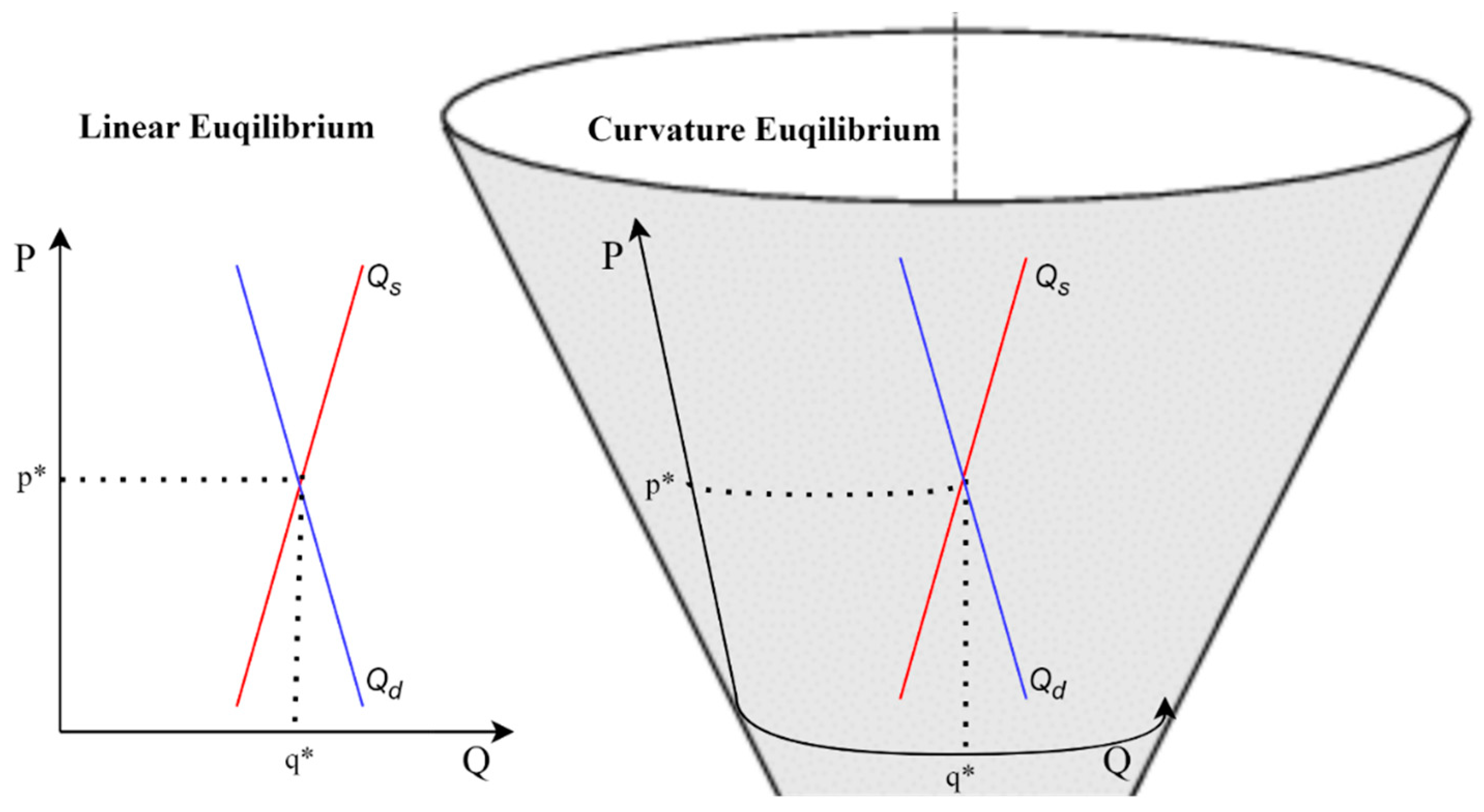
The equilibrium pricing can then be determined by the intersection of Qs and Qd, as shown in Figure 6.
2.4. Space Travel Pricing Process
Based on equations (1) to (5) and given ceteris paribus except valuables related to the accounting equation [29,30], a space firm’s funding sources of liabilities and owner’s equity are distributed to its assets in space capital [31]. It can be analogized to the equality of energy-moment tensor and Einstein’s tensor. A space firm uses the space capital to reach the geometric coordinate: a specific spacetime curvature of Einstein’s tensor [32] that generates equity premium influencing its stock pricing Ps,and then the space travel pricing Pp. The loop will be continued until the investment effect is offset by competition, as indicated in Figure 3. The operating revenue from space travel will be the incremental investment to influence the equity premium and space travel pricing level [33]. The causality of the space travel pricing and the supplier’s market value is also presented in Figure 3 [34,35].
3. Methodology
This study is an interdisciplinary research covering the fields of physics and economics to infer the space travel pricing model on GRT, accounting equation, and economic functions. The methodology applies econophysics, which was introduced by analogy with similar terms that describe applications of physics to different fields [36]. From the beginning, Econophysics was the application of the principles of physics to the study of financial markets under the hypothesis that the economic world behaves like a collection of electrons or a group of water molecules that interact [37]. It has always been considered that the econophysicists, with new tools of statistical physics and the recent breakthroughs in understanding chaotic systems [38]. Econophysics has alternative names, such as financial physics, arising initially from its new development of two different disciplines: finance and physics [39].
The methodology has been applied to help finance research with many innovative theories. One of the pricing models is the Black, Scholes, and Merton (BSM) pricing model, which is used to evaluate stock options by applying the thermodynamic Equation to finance [40]. The BSM pricing model involves a principle-theory-type approach as the paradigm of econophysics methodology [41]. Various principles going into the pricing model possess the status of the postulates of empirical generality concerning the behavior of economic agents. Crucially, econophysicists, also using the statistical physics analogy, adopt more of a constructive-theory-type approach [41]. To bridge the gap between physics and economics, this study adopts the analogy method of the econophysics methodology, as indicated in Figure 4, to link the attributes of the two fields for the following inference of space travel pricing [1]. Figure 4 indicates that the analogy attributes of physics and economics are paired with similar meanings. It helps infer the pricing model, no matter whether the scale is the absolute time frame or the relative spacetime tensor.
4. Results and Discussions
4.1. Proposition development
This study follows the methodology of econophysics, applying GRT to infer space travel pricing. Thus, the GRT spacetime construct needs to be updated in the pricing model [1]. The assumption of the traditional pricing theory is that time and space are independent. The Earth flight pricing model generally takes spatial distance as a primary factor with various pricing strategies for business classes and services [42]. Time is an independent variable in considering price making. The farther the flying distance, the higher the ticket price can be observed in the flight market. Time is only an independent factor that corresponds to the space distance. Temporal span does not necessarily have an equal proportionality with the space transition [43]. For example, the price of a direct flight in a short time is high, which implies that time and space are independent variables of pricing behavior.
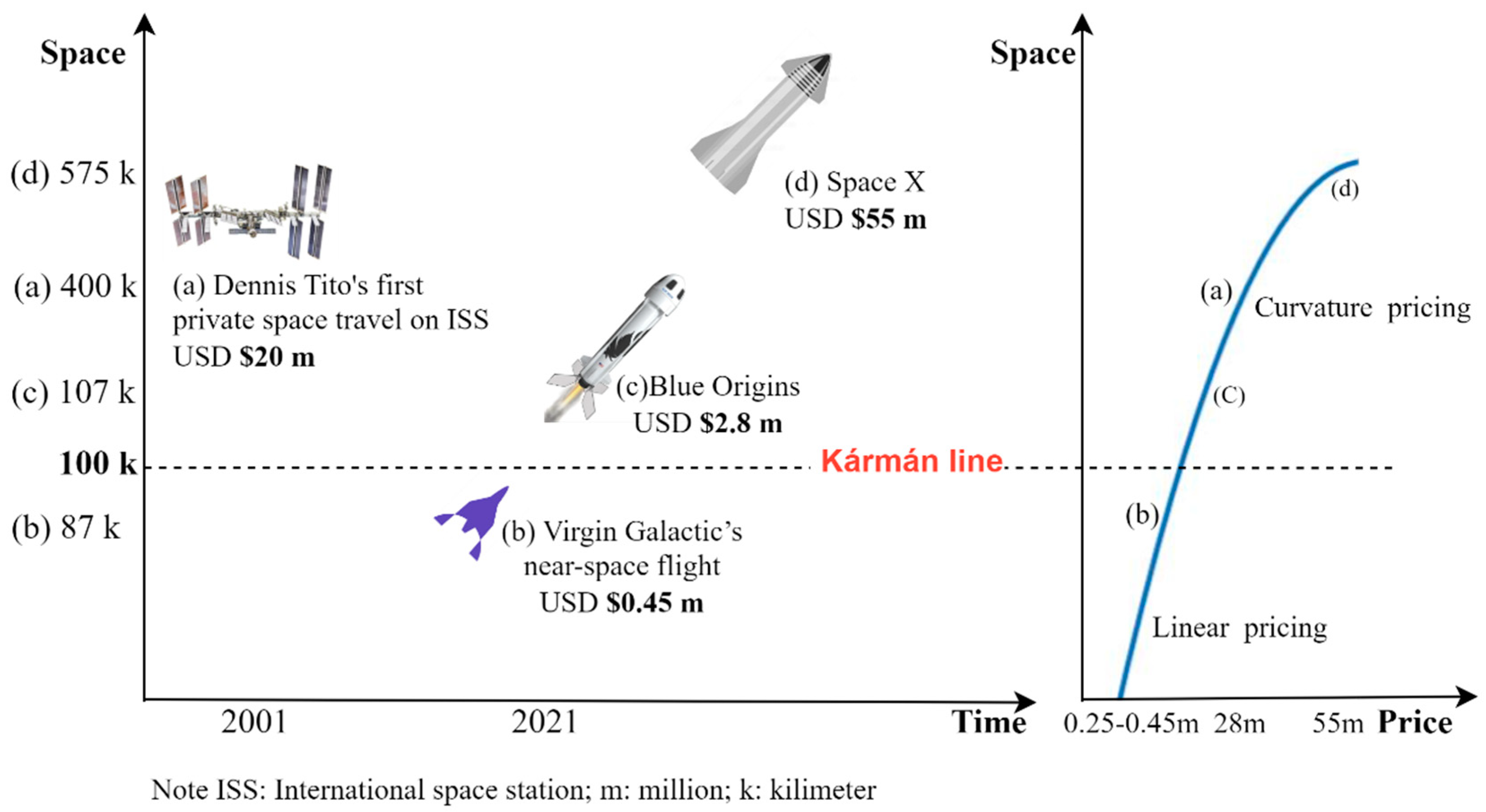
The space pricing model should be updated after applying the spacetime tensor construct. According to the time dilation in GRT spacetime, the pricing model must be interpreted using the Minkowski or Schwarzschild spacetime formula [44]. In the space travel pricing behavior, we observe that Virgin Galactic, Blue Origins, and SpaceX have various pricing, as shown in Figure 5. Blue Origins flies about 107 km above the Earth’s surface, which is about 1.2 times higher than Virgin Galactic flies a height of 87 km, but the ticket price is six times the difference. SpaceX’s orbital altitude is about 550 kilometers, which is about five times higher than Blue Origins’s space altitude with a 20-time difference in price. The relationship between pricing levels and spacetime coordinates is nonlinear [1], as shown in Figure 5.
This study argues that space travel pricing concerns the equity premium effect, which depends on the spaceship firm’s capability of reaching designed spacetime curvature. The higher the attitude, the higher the equity premium, like SpaceX and Virgin Galactic. We can observe the pricing behaviors involved with the spacetime curvatures of the spacecraft companies in Figure 5. Thus, this study summarizes the proposition 1 as follows:
Proposition 1:Given the capital investment of a supplier’s spacetime curvature technology in the accounting equation, the profit-maximization pricing of a space travel firm is positively influenced by the space capital.
This study proposes a spacetime pricing model that echoes GRT, which presents the equality relationship between Einstein’s tensor and energy-moment tensor. A space supplier is willing and able to provide its space capital mapping with the equivalent energy-momentum tensor. The Revenue for attaining required spacetime curvature can be referred to the space travel pricing behavior, including production factors, cost, and elasticity. A space traveler is willing and able to pay to fly to a specific orbital spacetime curvature. The expenditure for achieving the attitude can be referred to the space travel demanding pricing behavior, including a consumer’s motivation, utilities, and elasticity. Given the market equilibrium on dealt transactions, the spacetime pricing model reflects not only the supply side but also the demand side.
Proposition 2: Based on market equilibrium, the spacetime pricing derivations apply to the supply side and the demand side.
4.2. Pricing Results
Market pricing is a critical signal to guide participants in assessing the product value and making transaction decisions [45]. The space travel pricing problems and approximate results are for the economic agents to decide investment and consumption in the space travel market, which is critical in a nascent industry. The equilibrium pricing echoes the principle of the GRT about the laws of sciences having the same form in all admissible frames of reference [46]. In other words, the laws of economics have the same form in both supply and demand frames of reference. Thus, the market equilibrium has always been the economic invariant like other scientific fields.
Equation (1), GRT, is a field theory in physics, equation (2), accounting equation, is a field theory in economics, and Equation (3) to (5) open the dialogue between the two field theories by using the spacetime element to link the two sets of physics and economics in the space travel era. The deduction of the space travel pricing model based on the mathematical logic presents a positive correlation between space travel pricing and GRT. The research result approximates the pricing problems in computer science on the themes of profit maximization, single-minded, and envy-free pricing in unit-demand markets [47,48,49]. The profit maximization with single-minded pricing is carried out by a space travel supplier determined by its capital investment based on the accounting equation (2) that echoes proposition 1. Envy-free pricing can be interpreted in a unit-demand auction of space travel where each bidder receives a ticket that maximizes his utility, and the auction can maximize the supplier’s profit, which echoes proposition 2. The pricing problems are initially non-deterministic polynomial-time hard (NP-hard). However, many algorithms and models have been developed to get proper approximations. For example, Fernandes et al. [50] derivated four mixed integer linear programming formulations for the pricing problem and experimentally compared them to previous literature that concluded three models with economic interpretations. Corresponding to the pricing-inferring result of this study, we can consider the variant of the space travel prices restricted to being chosen from a geometric series, which corresponds to the spacetime curvatures of the space orbits to meet the pricing requirement of supply and demand [51].
An approximation algorithm builds on the profit maximization, single-minded, and envy-free pricing work in the economics literature concerning Walrasian Equilibria (WE) [52]. Given a value matrix V , a Walrasian Equilibrium (p,M) consists of an envy-free pricing p and a matching M such that all unmatched items have price zero. The following theorem characterizes Walrasian Equilibria in the unit-demand pricing problem [47].
Theorem 1. Let (p, M) be a Walrasian Equilibrium. Then, M is a maximum weight matching on the value matrix V; furthermore, for any maximum matching, M0 (p, M0) is also a Walrasian equilibrium [47].
For a value matrix V, we let (V ) denote the weight of a maximum weight matching MM(V ). For an item j, let V−j denote the value matrix with item j removed, i.e., the matrix obtained by deleting column j from V. The following algorithm finds the Walrasian Equilibrium with the highest prices to meet maximum profit and utility.
Algorithm MaxWEP: Maximum Walrasian Prices.
Input: Value matrix V.
For each item j, let j = (V ) − (V-j ).
Output: and MM(V ).
Based on proposition 2, V can be the maximum output on the supply side or can be the maximum utility on the demand side, as shown in Figure 2.
4.3. Discussions
4.3.1. Supply Side: The Supply Capability of Attaining Space Curvatures
In the beginning of commercial space travel, the pricing strategy was primarily dominated by the suppliers, which means the consumers were price takers due to over-demanding. Space travel can be dealt with only when the supplier invests the space capital to achieve a specific space curvature. The space supplier should integrate the fundings of liabilities and equity of the accounting equation (2) to develop its space capital to achieve the production factors of space in Equation (1). The accounting cycle implies: First, the incremental cash flows from the pricing strategy can be regarded as an incremental element of the energy-momentum tensor to attain the incremental spacetime curvature, the Einstein tensor. Second, the successful space launch and travel service will then generate the equity premium because of the event effect. Third, the event effect will raise the supplier’s bidding price to increase profits, which will carry forward to the next period when the accounting cycle is completed. Fourth, the incremental equity enlarges the equity premium to form a maximum profit accounting cycle. The accounting cycle continues to increase the amounts of the accounting equation (2) until the equity premium is offset by the competition of other competitors. That is, the price of space travel reflects the attainable curvature of the supplier’s capital investment that supports proposition 1.
4.3.2. Demand Side: Space Travel Value-at-risk Investment
One of the characteristics of space travel is its high-risk attribute, similar to adventure tourism, with the target market customers. These risk lovers prefer risky products, such as the extreme sports tourism market. However, risk-lover travelers have different risk tolerance and preferences; for example, travelers who prefer to climb the world’s highest mountain peak are not the same as those who travel space. No matter what kind of risk lovers, the demand utility can typically be measured by value-at-risk (VaR), which determines the potential or the probability of loss in the assessed entity. VaR can also be written as a distortion risk measure given by the distortion function [53], as shown in Equation (4).
It can be implied that a space traveler is considered an investor who will lose the spending on space travel at the condition of g(x) = 0 in Equation (4), implying that a space journey purchase is a loss-inducing investment. The VaR model can assess the investment. The VaR investment from consumers becomes the supplier’s incremental equity. This will cause the equity premium for value-added capital that helps the supplier invest its space capital to attain the space curvatures. This is a pricing model where the demand side pays the price to support the supply side in achieving the expected space curvatures that support Proposition 2.
4.3.3. Market Equilibrium: Spacetime Equilibrium
Based on the prerequisites of equation (1) to equation (5), this study infers the space travel pricing model to the economic supply and demand reflected in the economic market equilibrium. The energy-momentum tensor provided by suppliers’ space capital can satisfy the demand of space travelers’ requirements to reach specific spacetime curvatures. On the supply side, the suppliers are willing and able to invest space capital to the spacetime curvature matching the energy-moment tensor of the orbital altitude. On the demand side, there is a price that consumers are willing and able to pay for a particular spacetime curvature to meet their space travel requirement. The market equilibrium occurs at the price that both supply and demand agree with their expected spacetime curvature of space travel. However, we should convert the supply and demand from the traditional three-dimensional time and space independent framework to the spacetime four-dimensional framework. Notably, the market equilibria of Earth and space tourism differ. The space travel market equilibrium attains the curvilinear demand and supply intersection, which causes the difference in pricing models between Earth and space travel, as shown in Figure 6 [1]. Through interdisciplinary collaboration, we can examine space travel behaviors and test the research propositions and hypotheses for constructing a space travel knowledge system. For example, testing the hypotheses from Propositions 1 and 2 can reveal the difference between space and Earth tourism through interdisciplinary models and artificial intelligence (AI) simulations.
Figure 6.
Economic equilibria of time and spacetime references.
5. Conclusions
5.1. Conclusion
This study logically applies the mathematic principles of GRT, the accounting equation, economic functions, and computing algorithm to deduce the space travel pricing model according to the economic supply, demand, and market equilibrium behaviors. GRT has been generalized by many empirical studies in physics and cosmology. This study applies GRT to infer space travel economic behaviors, especially the pricing behavior. The results show that the geometric tensor equals the energy-momentum tensor of GR theory, which can be analogically reasoned to the axiomatic set theory of the accounting equation, assets equal liability plus owner’s equity. The accounting equation presents the capital investment in space factor to produce space travel production. The space travel pricing responds to the market value of the supplier with its production function of the spacetime factor. In addition, the demand side’s consumption function can be assumed as a VaR investment to echo the supplier’s production function. Maximum Walrasian Prices are then deducted to convey the commitment to market equilibrium. In summary, the space travel pricing mechanism is still guided by the invisible hand of market equilibrium following the supply and demand behaviors; however, the spacetime tensor must be transformed in the pricing model, which is different from the Earth market equilibrium.
The space travel pricing adjusting process is the inequality of the accounting equation that happens because of the equity premium effect on the capital investment of space factor in a short period. However, the accounting equation will remain equal after the completion of the accounting cycle due to the incremental cash flows from revenue becoming the incremental equity. In other words, an equity premium caused by capital investment increases a value-added equity premium in the accounting equation in advance. The net income will still be brought forward as the increment of equity, resulting in a fixed-term equality of the accounting equation, which will be equal on both sides as the GRT. The value-added equity premium enables the supplier to invest in space capital that transforms the energy-momentum tensor required to achieve a specific curvature of space. On the demand side, space travel pricing assumes that consumer spending on a VoR investment, and this consumption investment will echo the supply side’s accounting equation sets. Thus, we can conclude that space travel pricing remains the result of an economic market equilibrium between supply and demand based on the transactions that have been dealt with. The scientific invariant still applies to space economic behaviors even though there are differences between space and Earth tourism.
5.2. Research limitations and suggestions
Space travel is a nascent industry and is a significant tourist attraction. The research limits come from the availability of empirical data because the market is still immature with few data. After enough space trips with empirical studies, this study's results will respond more to market behaviors. At the same time, spacetime-related theories have to be developed to explain the reality of space economic behaviors to implement the four-dimensional spacetime tensor. The research directions of innovative fields can be studied from Earth to Space, from independent space and time to integrated spacetime scales, from financial random walk to incremental random walk, and from referential time series to proper time series analyses. The innovative theories will bring a new scientific vision when we conduct studies in the space market. For example, compared to the proper time series analysis, the traditional time series would present a higher risk because of significant fluctuations. It is one of the market abnormalities that await researchers to explore in space studies.
Interdisciplinary theory construction requires cross-domain understanding and interdisciplinary communication between scholars in different fields. However, the academic culture of each field is conservative with its academic terminologies and theories. Interdisciplinary cooperation is necessary for innovative scientific theories. Moreover, scholars’ in-person cross-domain learning, and research in different fields are more creative and effective in making breakthroughs. This study makes analogical reasoning between the GR theory of physics, economics, and computer science with connections of the three fields through econophysics methodology. However, the more mathematical inference is needed to explore the physical connotation.
References
- Peng, K.-L., et al., Proposing spacetime scale for space tourism economics. Tourism Economics, 2023. 29(6): p. 1671–1678. [CrossRef]
- Lampkin, J. and R. White, The Global Space Industry, in Space Criminology: Analysing Human Relationships with Outer Space. 2023, Springer. p. 25-47.
- Olya, H.G.T. and H. Han, Antecedents of space traveller behavioral intentions. Journal of Travel Research, 2020. 59(3): p. 528-544. [CrossRef]
- Dileep, M.R. and F. Pagliara, Space Tourism, in Transportation Systems for Tourism. 2023, Springer. p. 269-288.
- Wu, E.T., What Are the Truths of Gravity and General Relativity. IOSR Journal of Applied Physics (IOSR-JAP), 2022. 14(01).
- Perlov, D., et al., The Fabric of Space and Time. Cosmology for the Curious, 2017: p. 59-82. [CrossRef]
- Penprase, B.E., Spacetime and Curved Space, in Models of Time and Space from Astrophysics and World Cultures. 2023, Springer. p. 129-161.
- May, A., The Space Business: From Hotels in Orbit to Mining the Moon–How Private Enterprise is Transforming Space. 2021: Icon Books.
- Luo, S. and F. Song, Principles-based versus rules-based: accounting standards precision and financial restatements in China. Asian Review of Accounting, 2022. 30(4): p. 581-615. [CrossRef]
- Juárez, F., The accounting equation inequality: A set theory approach. Global Journal of Business Research, 2015. 9(3): p. 97-104.
- Dolan, B.P., Einstein's general theory of relativity: A concise introduction. 2023: Cambridge: Cambridge University Press.
- Barukčić, I., Unified field theory. Journal of Applied Mathematics and Physics, 2016. 4(08): p. 1379. [CrossRef]
- Carroll, S.M., Spacetime and geometry. 2019: Cambridge University Press.
- Rodal, J.J., A Machian wave effect in conformal, scalar–tensor gravitational theory. General Relativity and Gravitation, 2019. 51(5): p. 64. [CrossRef]
- Wu, J., Y. Xu, and Q. Bai, Introduction to Space Science. 2021: Springer.
- Simplício, P., A. Marcos, and S. Bennani, Reusable launchers: development of a coupled flight mechanics, guidance, and control benchmark. Journal of Spacecraft and Rockets, 2020. 57(1): p. 74-89. [CrossRef]
- Seo, B.R., Future of space travel. Space Travel for the Masses: History, Current Status, Problems, and Future Directions, Worcester Polytechnic Institute. 2013: Worcester Polytechnic Institute.
- Kimmel, P.D., J.J. Weygandt, and D.E. Kieso, Financial accounting: tools for business decision-making. 2020: John Wiley & Sons.
- Prasad, S., C.J. Green, and V. Murinde, Company financing, capital structure, and ownership: A survey, and implications for developing economies. 2001: SUERF Studies.
- Juárez, F. The foundations of balance sheet and the inequality of the basic accounting equation from the viewpoint of set theory. in Global Conference on Business & Finance Proceedings. 2015. Institute for Business & Finance Research.
- Conti, L., Russell’s paradox and free zig zag solutions. Foundations of Science, 2023. 28(1): p. 185-203. [CrossRef]
- Ludwig, W., Tractatus logico-philosophicus. 1989: Akadémiai Kiadó.
- Makridis, O., Basics of Set Theory, in Symbolic Logic. 2022, Springer. p. 405-458.
- Okuyama, Y. and S.E. Chang, Modeling spatial and economic impacts of disasters. 2004: Springer Science & Business Media.
- Johnson, H.G., The neo-classical one-sector growth model: A geometrical exposition and extension to a monetary economy. Economica, 1966: p. 265-287. [CrossRef]
- Swan, P.L., Is Investment Into Infrastructure Needed to Achieve Affordable Space Launch?, in ASCEND 2023. 2023. p. 4604.
- Mirman, L.J., The steady state behavior of a class of one sector growth models with uncertain technology. Journal of Economic Theory, 1973. 6(3): p. 219-242. [CrossRef]
- Tohamy, S.M. and J.W. Mixon Jr, Illustrating consumer theory with the CES utility function. The Journal of Economic Education, 2004: p. 251-258.
- Morrell, P.S., Airline finance. 2021: Routledge.
- Van Benthem, J., P. Girard, and O. Roy, Everything else being equal: A modal logic for ceteris paribus preferences. Journal of philosophical logic, 2009. 38: p. 83-125. [CrossRef]
- Chen, X., Cosmic inquiries. 1999: Columbia University.
- Renn, J., The genesis of general relativity: Sources and interpretations. Vol. 250. 2007: Springer Science & Business Media.
- Cyril, U.M., O.J. Echobu, and M.C. Chukwuemeka, Evaluation of the Effect of Financial Factors on Shareholders’ Value of Listed Pharmaceutical Firms in Nigeria. International Journal of Finance and Banking Research, 2019. 5(5): p. 114-125.
- Liu, Z., et al., Two-period pricing and strategy choice for a supply chain with dual uncertain information under different profit risk levels. Computers & Industrial Engineering, 2019. 136: p. 173-186. [CrossRef]
- Alaagam, A., The relationship between profitability and stock prices: Evidence from the Saudi banking sector. Research Journal of Finance and Accounting, 2019. 10(14).
- Capoani, L., Theory of Commercial Gravitational Fields in Economics: The Case of Europe. Networks and Spatial Economics, 2023: p. 1-40. [CrossRef]
- Savoiu, G. and I.I. Siman, History and role of econophysics in scientific research. Econophysics: background and applications in economics, finance, and sociophysics, 2013: p. 3-16.
- Săvoiu, G. Statistical thinking and statistical Physics. in Proceedings of International Conference Econophysics, New Economics & Complexity, Hyperion University and Hyperion Research & Development Institute, Victor Publishing House, Bucharest. 2008.
- Savoiu, G. and C. Andronache, The potential of econophysics for the study of economic processes. Econophysics background and applications in economics, finance, and sociophysics, 2013: p. 91-133.
- Morales-Bañuelos, P., N. Muriel, and G. Fernández-Anaya, A Modified Black-Scholes-Merton Model for Option Pricing. Mathematics, 2022. 10(9): p. 1492. [CrossRef]
- Rickles, D., Econophysics and the complexity of financial markets, in Philosophy of complex systems. 2011, Elsevier. p. 531-565.
- Phlips, L., The economics of price discrimination. 1983: Cambridge University Press.
- Müller, C., et al., Customer-centric dynamic pricing for free-floating vehicle sharing systems. Transportation Science, 2023. 57(6): p. 1406-1432. [CrossRef]
- Klainerman, S. and J. Szeftel, Global Nonlinear Stability of Schwarzschild Spacetime under Polarized Perturbations:(AMS-210). Vol. 210. 2020: Princeton University Press.
- Ariely, D. and I. Simonson, Buying, bidding, playing, or competing? Value assessment and decision dynamics in online auctions. Journal of Consumer psychology, 2003. 13(1-2): p. 113-123. [CrossRef]
- Cosgrove, J.K., Einstein’s Principle of Equivalence and the Heuristic Significance of General Covariance. Foundations of Physics, 2021. 51: p. 1-23. [CrossRef]
- Guruswami, V., et al. On profit-maximizing envy-free pricing. in SODA. 2005.
- Chalermsook, P., et al. Improved hardness results for profit maximization pricing problems with unlimited supply. in International Workshop on Approximation Algorithms for Combinatorial Optimization. 2012. Springer.
- Bucarey, V., et al., Models and algorithms for the product pricing with single-minded customers requesting bundles. Computers & Operations Research, 2021. 127: p. 105139.
- Fernandes, C.G., et al. The envy-free pricing problem and unit-demand markets. in International Symposium on Combinatorial Optimization. 2014. Springer.
- Fernandes, C.G., et al., The unit-demand envy-free pricing problem. arXiv preprint arXiv:1310.0038, 2013. [CrossRef]
- Gul, F. and E. Stacchetti, Walrasian equilibrium with gross substitutes. Journal of Economic theory, 1999. 87(1): p. 95-124. [CrossRef]
- Sepanski, J.H. and X. Wang, New Classes of Distortion Risk Measures and Their Estimation. Risks, 2023. 11(11): p. 194. [CrossRef]
Figure 1.
The spacetime curvature and matter movement.
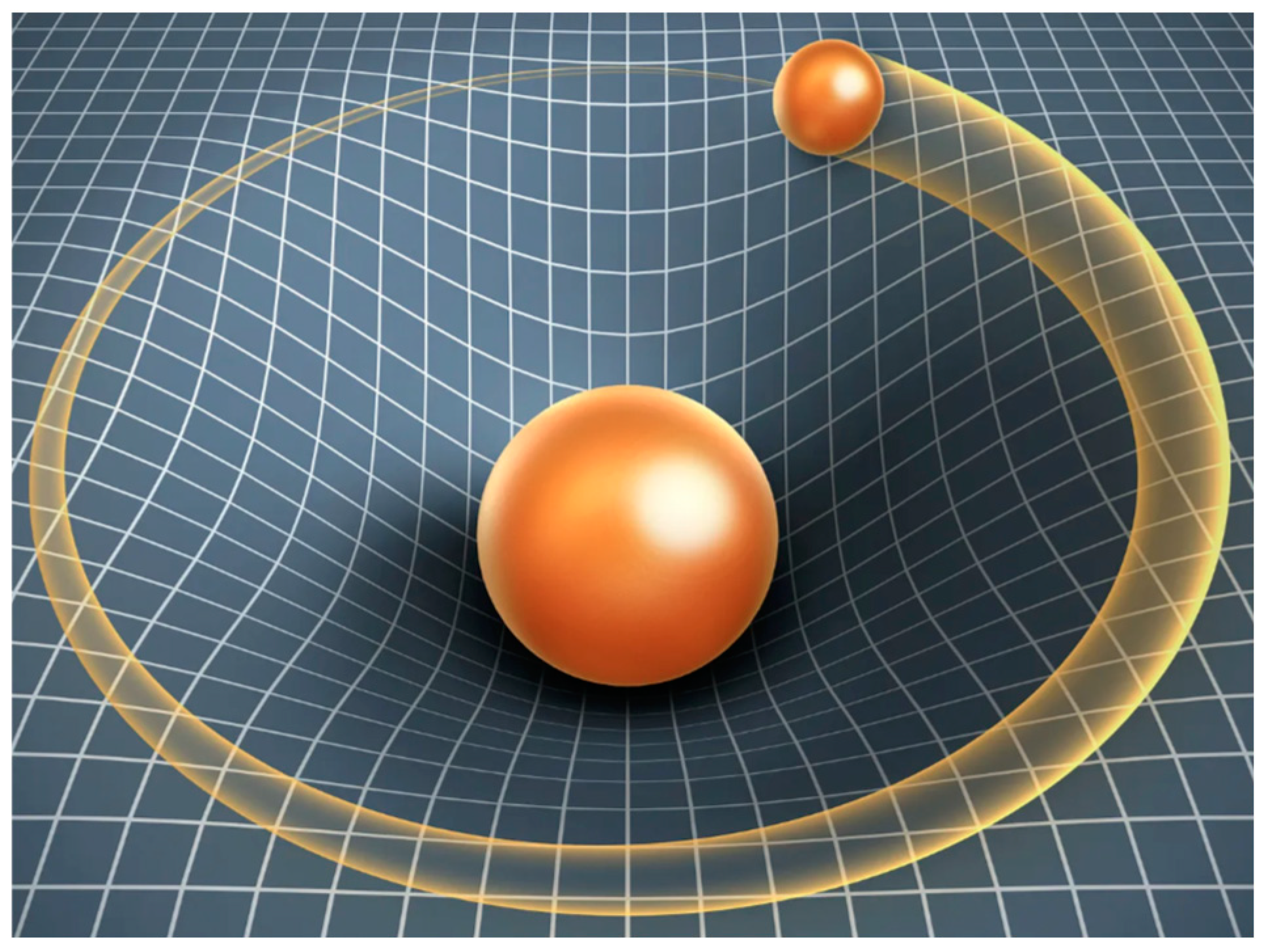
Figure 2.
The spacetime production function.
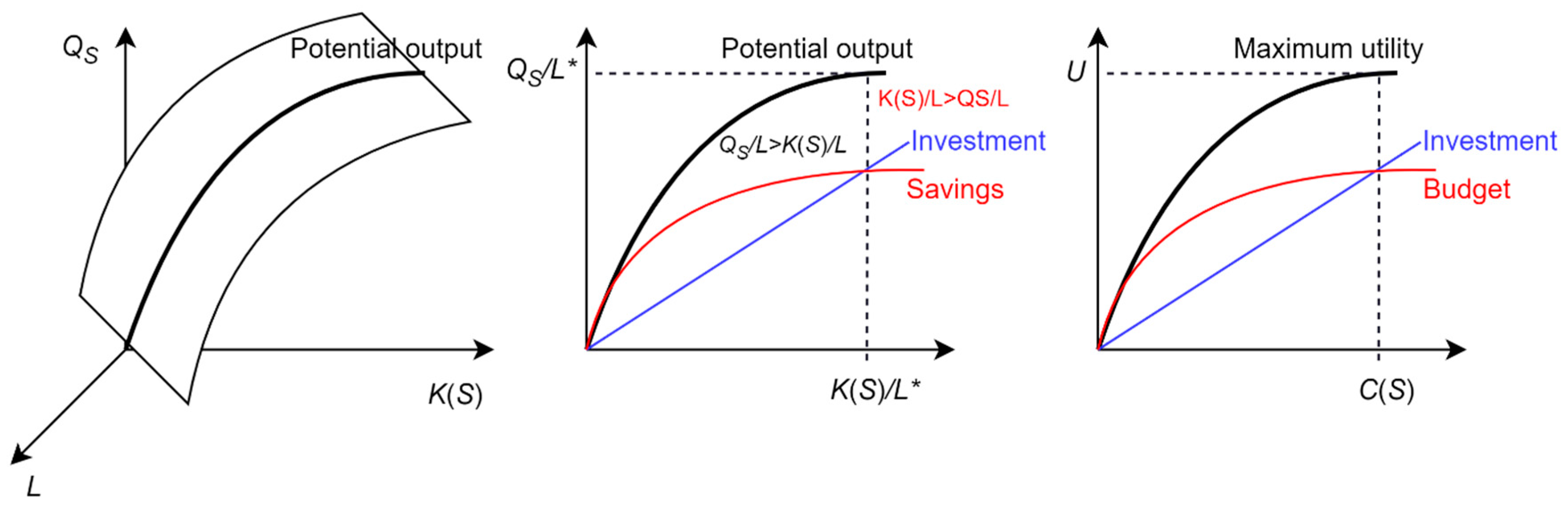
Figure 3.
The space travel pricing derivation.
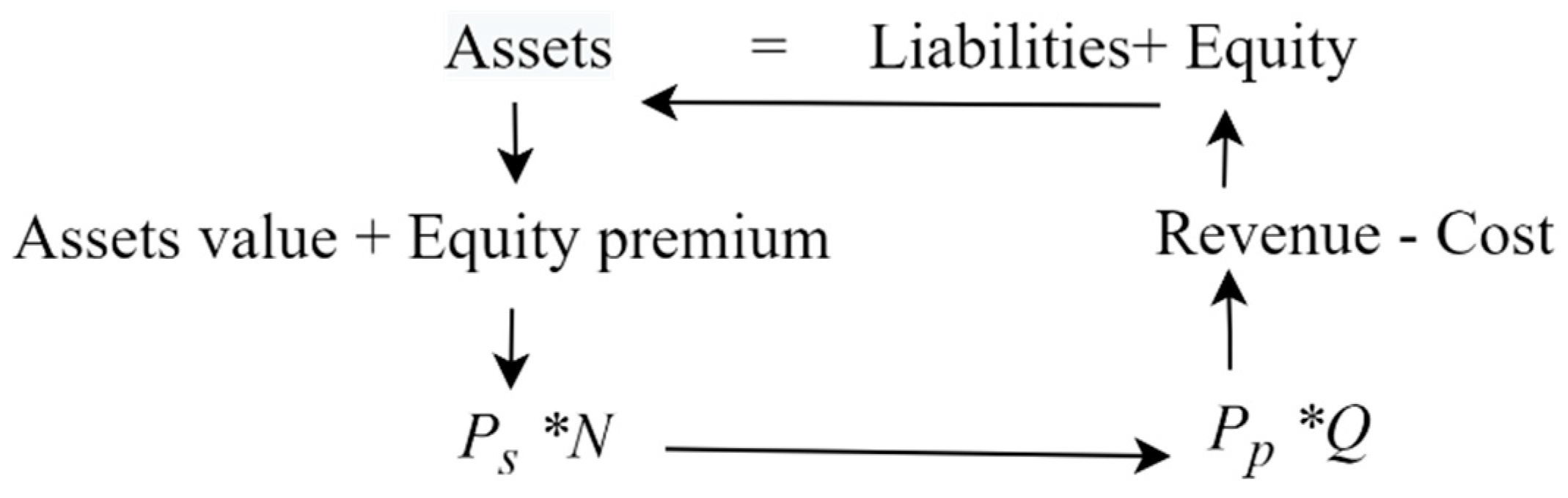
Figure 4.
Analogy method.
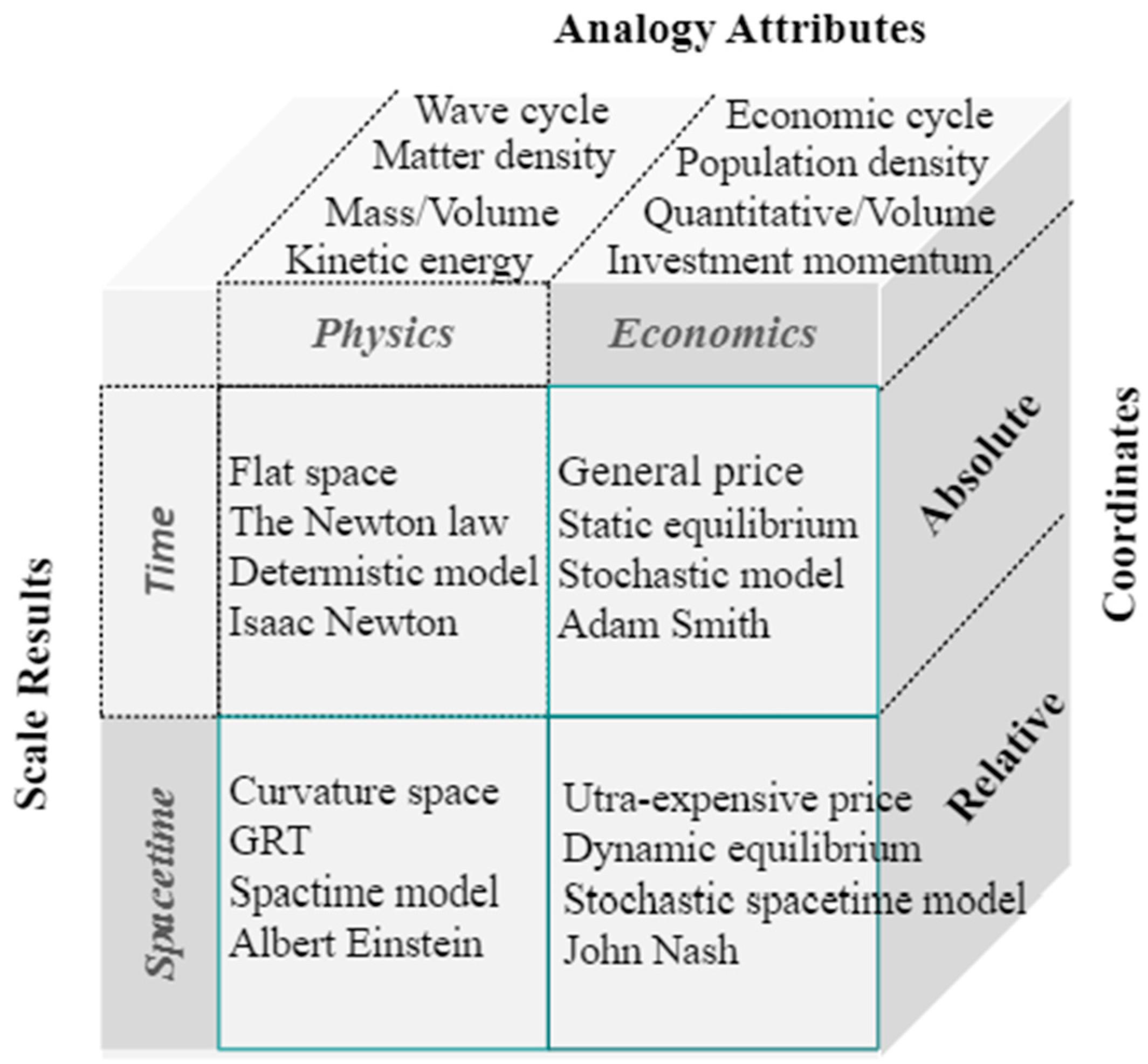
Figure 5.
Space travel prices at different altitudes.
Disclaimer/Publisher’s Note: The statements, opinions and data contained in all publications are solely those of the individual author(s) and contributor(s) and not of MDPI and/or the editor(s). MDPI and/or the editor(s) disclaim responsibility for any injury to people or property resulting from any ideas, methods, instructions or products referred to in the content. |
© 2024 by the authors. Licensee MDPI, Basel, Switzerland. This article is an open access article distributed under the terms and conditions of the Creative Commons Attribution (CC BY) license (https://creativecommons.org/licenses/by/4.0/).
Copyright: This open access article is published under a Creative Commons CC BY 4.0 license, which permit the free download, distribution, and reuse, provided that the author and preprint are cited in any reuse.


