

Submitted:
21 March 2026
Posted:
23 March 2026
You are already at the latest version
Abstract
Transcranial electrical stimulation (tES) is a promising non-invasive therapeutic approach for Parkinson’s disease (PD), with the potential to modulate dysfunctional motor networks without the procedural risks associated with deep brain stimulation. This study compared the effects of three transcranial stimulation modalities on both motor and non-motor symptoms in PD. We conducted a randomized controlled study in which 26 patients with PD were assigned to one of three stimulation protocols: amplitude-modulated transcranial pulsed current stimulation (am-tPCS), multi-path spatial targeting with amplitude-modulated transcranial pulsed random noise stimulation (MP-am-tPRNS), or amplitude-modulated transcranial pulsed random noise stimulation (am-tPRNS). Stimulation was delivered bilaterally over the primary motor cortex and supplementary prefrontal regions through electrodes placed at C3/C4 and Fp1/Fp2 according to the international 10–20 system. Primary outcomes included changes in motor and cognitive function measured using the 8-Item Unified Parkinson’s Disease Rating Scale (UPDRS-8), along with quantitative tremor analysis derived from standardized 20–30-second video recordings. The results showed that am-tPCS was the only protocol to produce a statistically significant improvement in tremor amplitude, with a 4.6% reduction (p < 0.05). However, all three protocols improved overall UPDRS-8 scores. Specifically, am-tPRNS significantly improved non-motor subscale scores by 54.8% and overall UPDRS-8 scores by 20.3%, while the multi-path spatial targeting protocol significantly improved motor subscale scores by 29.5% (p < 0.05). At the individual level, tremor-band power reductions of up to 77% and UPDRS-8 improvements of up to 64% were observed, supporting the potential of amplitude-modulated tES as a meaningful intervention for PD motor symptoms. No adverse events were reported. These findings suggest that distinct tES modalities exert differential effects on motor and non-motor PD symptomatology. Future work will investigate a longer treatment period of 12 weeks to capture cumulative neuroplastic changes necessary for robust and sustained motor improvement.
Keywords:
transcranial electrical stimulation
; Parkinson’s disease
; tremor analysis
; UPDRS-8
1. Introduction
Parkinson’s Disease (PD) is a movement disorder characterized by the degeneration of dopaminergic neurons in the Substantia Nigra. It is clinically diagnosed based on its defining motor symptoms, which include resting tremor, rigidity, and bradykinesia. Patients with PD further exhibit postural imbalances, disturbances in gait, and non-motor symptoms such as cognitive dysfunction, sleep disturbances, and urinary incontinence [1]. Over the past decades, there has been tremendous effort in developing treatments that help manage the symptoms of the disease. The most commonly used pharmacological treatment involves dopamine replacement through levodopa. While effective in managing motor symptoms in the early stages of the disease, it does not treat non-motor symptoms, has significant side effects, and does little to hinder disease progression [2]. Thus, there is a pressing need to develop novel therapeutics that reduce disease progression, improve non-motor symptoms, and quality of life.
Neuromodulation has recently gained traction as a treatment option for PD. Deep brain stimulation (DBS) targeting the substantia nigra and globus pallidus internus has been shown to be highly effective in treating motor symptoms in the advanced stages of the disease [3]. However, it is an invasive method and poses safety risks for patients. Consequently, the development of non-invasive neuromodulation approaches is essential to reduce procedural risk while maintaining therapeutic benefit. One such approach is transcranial electric stimulation (tES), wherein a low-intensity current is applied to the patient’s scalp to modulate neuronal activity. tES is advantageous because it is easy to set up, can be administered at low cost, and has minimal side effects [4].
A key mechanistic hypothesis underlying the use of tES in PD is the corticospinal tract hypothesis. In healthy motor function, the primary motor cortex (M1) generates descending electrical signals that travel through the corticospinal tract to modulate activity in deep subcortical structures, including the subthalamic nucleus (STN) and substantia nigra. In PD, degeneration of dopaminergic neurons disrupts these downstream signalling pathways, leading to pathological synchronization in the basal ganglia and the characteristic motor deficits of the disease. Transcranial electrical stimulation applied over M1 is theorized to re-engage this corticospinal pathway by inducing suprathreshold or near-suprathreshold current that propagates axonally from the cortex through the internal capsule and pyramidal tract toward the STN and substantia nigra [4]. By modulating activity in these subcortical targets non-invasively, tES may partially replicate the therapeutic mechanism of DBS without requiring surgical implantation. In the present study, stimulation electrodes were positioned over the primary motor cortex (M1/M2; electrode positions C3 and C4 per the international 10–20 system) and the supplementary prefrontal regions (electrode positions Fp1 and Fp2), with the active stimulation channel directed contralateral to the body’s dominant symptomatic side to maximize corticospinal engagement ipsilateral to the affected limbs.
A further mechanistic consideration is the role of backpropagating action potentials in the therapeutic response. When pulsed current stimulation is applied at sufficient intensity and frequency, it generates action potentials not only in an anterograde (descending) direction along the corticospinal tract but also in a retrograde (backpropagating) direction toward cortical and subcortical soma. These backpropagating action potentials are hypothesized to influence synaptic plasticity by depolarizing dendritic membranes and activating voltage-gated calcium channels, thereby modulating long-term potentiation (LTP) and long-term depression (LTD) at targeted synapses. In the context of PD, backpropagating action potentials generated at the level of the motor cortex may travel retrogradely along corticospinal axons to influence the excitability of STN and substantia nigra circuits, potentially disrupting the pathological beta-band (13–30 Hz) synchronization that drives tremor and bradykinesia [4]. The amplitude-modulated pulsed waveforms used in this study, particularly the am-tPRNS protocol, may be especially well-suited to generating these bidirectional conduction effects due to their stochastic modulation properties, which reduce neuronal adaptation and sustain corticospinal pathway engagement across the stimulation period.
The aim of this study was to evaluate the differential effects of three transcranial stimulation modalities on motor and non-motor symptoms in patients with Parkinson’s disease. Using a randomized controlled design, a cohort analysis was conducted on 26 participants divided into three groups based on the stimulation device used. The protocols tested include: (i) amplitude-modulated transcranial pulse stimulation (am-tPCS), (ii) multi-path spatial targeting with amplitude-modulated transcranial pulsed random noise stimulation (MP-am-tPRNS), and (iii) amplitude-modulated transcranial pulsed random noise stimulation (am-tPRNS). The primary endpoints assessed include changes in cognitive and motor function measured by 8-Item Unified Parkinson’s Disease Rating Scale (UPDRS-8) scores. Quantitative changes in motor symptoms were assessed through tremor analyses using 20–30-second video recordings.
2. Materials and Methods
2.1. Patients and Stimulation Protocols
The dose-response study was carried out at Medicare Hospital in Rawalpindi, Pakistan. The study was conducted in accordance with IRB regulations and was approved by the Medicare Research Ethics Committee at Medicare Hospital . The conditions of approval were as follows: (i) any protocol changes require resubmission of trial documents and (ii) any adverse effects have to be reported annually to the committee.
N = 26 patients between the ages of 30 and 80 with a diagnosis of stage IV/V Parkinson’s Disease were recruited for the trial. All patients that received stimulation acted as their own historical controls. Patients were divided into 3 groups based on device stimulation protocol, the parameters for which are detailed in Table 1.
2.2. MDS-UPDRS-8 Assessment
The MDS-UPDRS-8 (Movement Disorder Society–Unified Parkinson’s Disease Rating Scale) is a comprehensive tool used to assess both motor and non-motor aspects of Parkinson’s disease, characterizing the overall extent and burden of the condition. In this study, the UPDRS-8 was used which comprises eight questions organized into three sections [5]. Part 1 evaluates non-motor experiences of daily living and is completed by the investigator based on information provided by the patient and caregiver. Part 2 assesses motor experiences of daily living through a self-administered questionnaire, which is subsequently reviewed by the investigator for accuracy and completeness. Part 3 examines motor complications, integrating observations from both the investigator and the patient. The overall UPDRS-8 score is computed by adding the scores from all 3 parts. The scores for each section of the UPDRS-8 scale are summarized in Table 2.
2.3. Resting Tremor Detection
Patients were instructed to sit comfortably at a table in a well-lit room with their hands resting palm-down on a white tablecloth, positioned approximately shoulder-width apart. Each participant’s hands were recorded from a top-down perspective using a smartphone camera maintained at a distance of approximately 30 cm from the hands. Videos were recorded for 20 seconds before and after each treatment session.
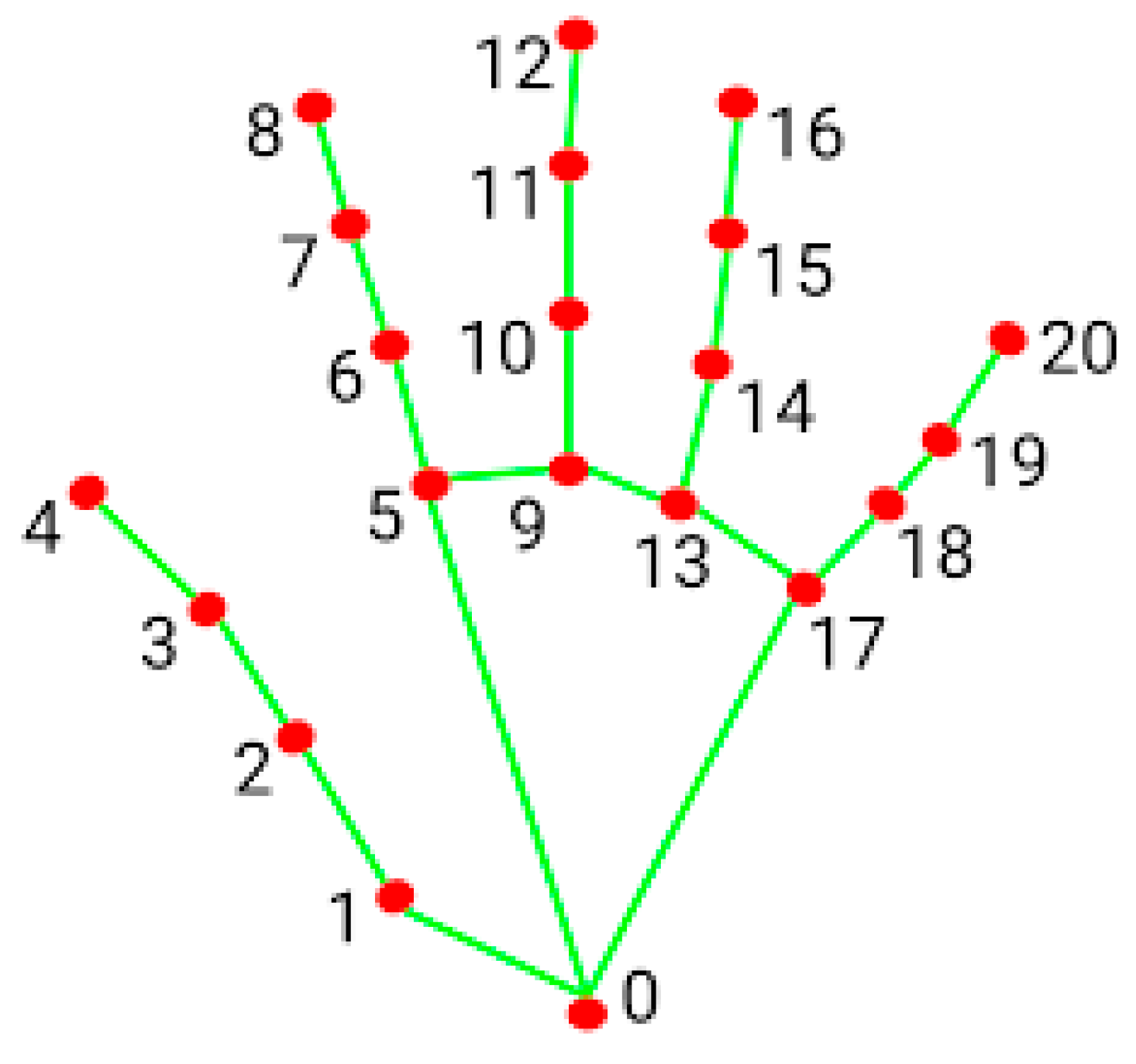
The MediaPipe (Google) hand-tracking algorithm was used to detect and track hand positions across each video. MediaPipe returns the x and y coordinates of 21 landmarks on each hand relative to the frame dimensions (Figure 1) [6]. Videos recorded in varying orientations were automatically adjusted before landmark extraction. Candidate rotations (0°, 90°, 180°, and 270°) were evaluated based on detection performance, and the optimal rotation was selected. Predominant finger direction was estimated from wrist-to-fingertip vectors to determine horizontal or vertical frame splitting for left/right hand assignment.
To maximize detection performance, three approaches were applied to each frame: (i) full-frame detection (two hands), (ii) split-frame detection (one hand per half), and (iii) split-frame detection with overlapping halves (10% overlap). The approach yielding the highest proportion of frames with both hands detected was selected. Missing detections were imputed using the most recently detected landmarks or a reference landmark template. Phase correlation was implemented to correct for camera motion, estimating global translational shifts between consecutive frames and subtracting these from the landmark coordinates.
2.4. Quantification and Analysis of Resting Tremor
Landmark data from videos recorded before and after each treatment session were exported as .csv files. The first 1–1.5 seconds of each recording were removed to exclude noise associated with initial camera or hand adjustment. Days for which either the pre- or post-treatment recording was missing were excluded (n = 8). Hands with less than 1% detection rate within a recording were excluded. Patients with incomplete data across study days were also excluded (n = 2).
Tremor was quantified by computing the frame-to-frame displacement of hand landmarks. For each of the 21 landmarks, x and y coordinate time-series were extracted. Linear interpolation was used to substitute missing values if they comprised less than 50% of the recording. The resulting time-series data were centred and filtered using a second-order Butterworth bandpass filter with cutoff frequencies of 3–12 Hz to isolate tremor-related motion. Pathological tremor refers to involuntary oscillatory movement occurring within the 3–12 Hz frequency range, which encompasses both the resting tremor range (3–6 Hz) characteristic of Parkinson’s disease and the essential tremor range (6–12 Hz). Displacement per landmark was computed as the Euclidean distance (d) between consecutive frames:
where Δx and Δy represent frame-to-frame changes in x and y coordinates, respectively. For each recording, displacement values were averaged across all 21 landmarks per hand to obtain a representative tremor signal.
Figure 1.
21-point skeleton diagram of MediaPipe hand landmarks.
From the tremor signal, mean and RMS tremor amplitudes per hand were computed for each recording. Patient-level averages were calculated across all recordings, and group-level means were computed by averaging across patients within each device group. Frequency-based tremor metrics were derived by estimating the power spectral density (PSD) using Welch’s method. These metrics included: (i) dominant frequency, defined as the frequency with maximum power in the 3–12 Hz range; (ii) tremor-band power, calculated as the area under the PSD curve; and (iii) sub-band power within specific ranges: 0–3 Hz (below tremor), 3–6 Hz (resting tremor), 6–12 Hz (essential tremor range), and 12–15 Hz (above tremor).
All statistical analyses were performed in Python (version 3.10). Outliers for amplitude metrics were flagged as values exceeding ±3 SDs from the mean. Treatment effects were assessed using paired t-tests comparing pre- and post-treatment metrics. Device-specific differences were evaluated using a two-way mixed ANOVA with post-hoc comparisons.
2.5. Analysis of MDS-UPDRS-8 Scores
The MDS-UPDRS-8 test was administered by the Neurology team at Medicare Hospital under the supervision of Dr. Ahmed, Assistant Professor of Neurology at Holy Family Hospital, Rawalpindi, who served as the Principal Investigator. Patient and investigator responses to the UPDRS-8 questionnaire were recorded in an Excel database. Baseline was defined as the UPDRS measurement taken before neurostimulation; Endline was defined as the measurement taken 15 days after treatment initiation. Patients missing either baseline or endline measurements were excluded (n = 1). Only three patients had an initial 5-day follow-up with a 7–10-week post-stimulation follow-up; this data was excluded to maintain consistency across groups. Patients with baseline MDS-UPDRS-8 data only and no post-treatment data were excluded (n = 3). For patients with two baseline scores, values were averaged to obtain a single representative baseline (n = 2).
All statistical analyses were conducted in Python (version 3.12). Paired t-tests were conducted between mean baseline and endline measurements for each device group to assess: (i) the effect of stimulation on mean overall MDS-UPDRS-8 scores; and (ii) the effect of stimulation on mean MDS-UPDRS-8 scores for each section (Parts 1–3). A one-way ANOVA with post-hoc tests was performed to analyse differences in the change in mean overall MDS-UPDRS-8 scores across device groups.
3. Results
3.1. Tremor Analysis
3.1.1. Mean Resting Tremor Amplitude Across Treatment Days by Neurostimulation Protocol
Figure 2 shows time-series representations of mean tremor amplitude across the MP-am-tPRNS device, am-tPCS device, and am-tPRNS device groups over the 15-day treatment period. For all three groups, there is acute (day-to-day) variability in tremor response to treatment.
In Figure 2D (MP-am-tPRNS device, right hand), an elevated amplitude hump was observed around Day 8. This increase is attributed to high intra-individual variability in the MP-am-tPRNS group and does not represent a systemic worsening. Individual patient data confirm that the elevation is driven by a subset of patients with markedly higher baseline amplitudes; group-level means subsequently returned toward baseline values by Day 15.
3.1.2. Effect of Treatment Type on Mean Resting Tremor Amplitude (3–12 Hz)
Mean tremor amplitude significantly decreased in the am-tPCS device group post-treatment (Δ = −4.6%, p = 0.03). The am-tPRNS device group demonstrated a decrease in mean tremor amplitude (Δ = −16.9%); however, this change did not reach statistical significance (p = 0.31), likely attributable to inter-individual variability in which one participant exhibited a markedly higher baseline amplitude. The MP-am-tPRNS device showed a non-significant increase in mean tremor amplitude following treatment (Δ = +5.0%, p = 0.64). A one-way ANOVA revealed no significant effect of treatment type on mean tremor amplitudes (F(2,21) = 0.97, p = 0.40) (Figure 3).
At the individual patient level, responses varied considerably across all device groups (Table 3). The largest reduction in mean Euclidean amplitude observed in any individual patient was −39.8% (MP-am-tPRNS device, Patient 5, left hand), while the largest peak-to-peak amplitude reduction was −67.2% (MP-am-tPRNS device, Patient 1, left hand). These represent the maximum individual responses and should not be interpreted as typical outcomes; individual results varied substantially, including patients who showed no change or a transient increase.
3.1.3. Effect of Treatment Type on Dominant Tremor Frequency
Figure 4 depicts device-specific changes in dominant tremor frequency before and after stimulation, averaged across treatment days. The am-tPCS device group demonstrated a 10.8% decrease in dominant tremor frequency (p = 0.13). The am-tPRNS device group showed negligible change (Δ = +0.6%, p = 0.91). The MP-am-tPRNS device group exhibited a 5.0% increase in dominant frequency post-treatment (p = 0.69). A one-way ANOVA revealed no statistically significant differences in the effect of treatment type on dominant tremor frequency (F(2,21) = 0.97, p = 0.40).

Table 4.
Post-Treatment Changes in Mean Tremor Amplitude and Dominant Frequency Across Device Groups.
Table 4.
Post-Treatment Changes in Mean Tremor Amplitude and Dominant Frequency Across Device Groups.
| Metric | Device | % Change (Mean ± SEM) | p-value |
|---|---|---|---|
| Mean Amplitude | MP-am-tPRNS | +4.96 ± 10.30 | 0.64 |
| am-tPRNS | −16.89 ± 15.49 | 0.31 | |
| am-tPCS | −4.58 ± 1.56 | 0.03* | |
| Dominant Frequency | MP-am-tPRNS | +5.00 ± 11.89 | 0.69 |
| am-tPRNS | −0.61 ± 5.19 | 0.91 | |
| am-tPCS | −10.79 ± 5.97 | 0.13 |
Note. Positive values indicate post-treatment increase; negative values indicate decrease (improvement for amplitude and frequency metrics). * p < 0.05. SEM = standard error of the mean.
3.1.4. PSD Representations of Tremor Frequency Across Device Groups
Post-treatment changes in spectral band power across the resting tremor frequencies (3-6 Hz) were evaluated by computing PSD curves (Figure 5). The am-tPRNS device group demonstrated reduced spectral power bilaterally following treatment; the MP-am-tPRNS group showed increased spectral power post-treatment in both hands; and the am-tPCS group showed mixed effects, with decreased power in the right hand and negligible change in the left hand.
3.1.5. Percentage Changes in Spectral Band Power Across Device Groups
Figure 6 represents percentage changes in spectral power across four frequency bands: 0–3 Hz (low frequency), 3–6 Hz (resting tremor range, defined as involuntary oscillatory activity within the 3–6 Hz band), 6–12 Hz (essential tremor range, defined as involuntary oscillatory activity within the 6-12 Hz band), and 12–15 Hz (high-frequency oscillations).
At the group level, the am-tPCS device produced the largest reduction in pathological tremor-band (3–12 Hz) power in the left hand (−62.3% within the resting tremor band range and −70.2% within the essential tremor band range), while the MP-am-tPRNS device produced a −18.6% reduction in the right hand within the resting tremor band range and −41.4% within the essential tremor band range. The am-tPRNS device showed increases in tremor-band power at the group level, driven in part by high inter-patient variability (Table 5).
At the individual level, the maximum pathological tremor-band power reduction observed across the cohort was up to 77% in the 3–12 Hz band. This represents the peak individual response and reflects the upper bound of treatment effect in this study population.
3.2. MDS-UPDRS-8 Analysis
3.2.1. Mean Baseline and Endline MDS-UPDRS-8 Scores by Section and Device
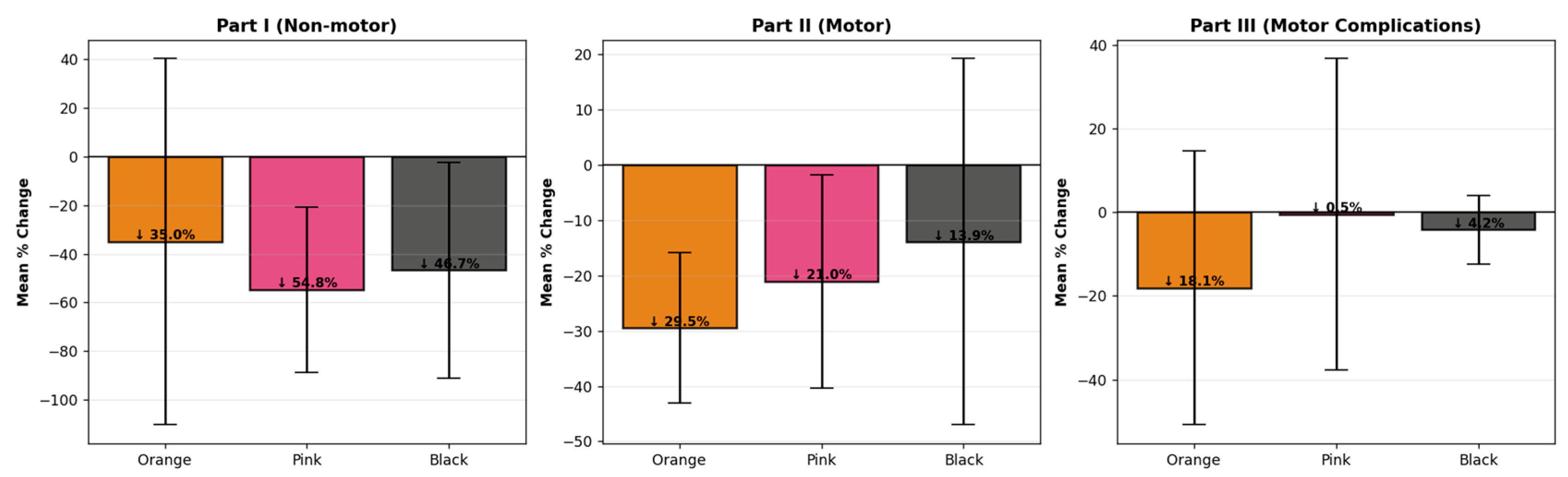
Overall, Parts 1 and 2 of the UPDRS-8 questionnaire demonstrated a general decrease in scores following treatment across all devices, indicating improvement in both non-motor and motor symptoms. Stimulation with the am-tPRNS device produced a significant improvement in non-motor scores (t(8) = 3.42, p = 0.01*), while stimulation with the MP-am-tPRNS device produced a significant improvement in motor scores (t(6) = 4.00, p = 0.01*) (Figure 7).
3.2.2. Baseline and Endline Overall MDS-UPDRS-8 Scores by Device
Part 1 and 2 scores of the UPDRS-8 decreased following treatment across all devices, indicating improvement in both non-motor and motor symptoms. A significant improvement in overall mean UPDRS-8 scores was observed in patients receiving stimulation with the am-tPRNS device (t(8) = 2.57, p = 0.04) (Figure 8).
At the individual level, the maximum MDS-UPDRS-8 improvement observed was a 64.3% reduction (Patient 5; baseline score 14, endline score 5). Individual improvements across the cohort ranged from 14% to 64.3% among patients who showed improvement. One patient (Patient 4) showed a transient worsening of +3 points; four patients (Patients 19, 22, 23, 25) showed no change. These individual-level findings are consistent with the variability expected in a small-sample, heterogeneous PD population.
3.2.3. Effect of Stimulation on the Change in Absolute Overall MDS-UPDRS-8 Scores
The absolute change in MDS-UPDRS-8 scores was calculated as the difference between Day 15 and baseline measurements, averaged within each treatment group. Overall, device type did not have a statistically significant effect on the change in MDS-UPDRS-8 scores (F (2, 23) = 1.31, p = 0.30), and all devices comparably improved MDS-UPDRS-8 scores (Figure 9).
3.2.4. Mean Percentage Change in Overall MDS-UPDRS-8 Scores by Stimulation Type
MDS-UPDRS-8 scores improved by 26.4% in patients using the MP-am-tPRNS device, 19.0% in those using the am-tPCS device, and 20.3% in those using the am-tPRNS device (Figure 10). A one-way ANOVA revealed no statistically significant differences among device types, indicating all three devices achieved comparable improvements in MDS-UPDRS-8 scores (F (2, 23) = 0.11, p > 0.05).
3.2.5. Mean Percentage Change in MDS-UPDRS-8 Component Scores by Stimulation Type
The am-tPRNS device produced the greatest percentage improvement in non-motor scores, while the MP-am-tPRNS device improved motor and motor complication scores the most (Figure 11). No statistically significant differences were observed between device types (p > 0.05, one-way ANOVA).
Figure 8.
present the baseline and endline overall MDS-UPDRS-8 scores for each patient group. 8A displays group-level variation in mean overall MDS-UPDRS-8 scores using a bar plot. 8B shows both group-level and individual-level variation of the overall MDS-UPDRS-8 scores through a box-and-whisker plot. The circles represent the scores per patient at baseline and day 15 respectively. Note. Results with p-values < 0.05 are considered significant.
Figure 8.
present the baseline and endline overall MDS-UPDRS-8 scores for each patient group. 8A displays group-level variation in mean overall MDS-UPDRS-8 scores using a bar plot. 8B shows both group-level and individual-level variation of the overall MDS-UPDRS-8 scores through a box-and-whisker plot. The circles represent the scores per patient at baseline and day 15 respectively. Note. Results with p-values < 0.05 are considered significant.
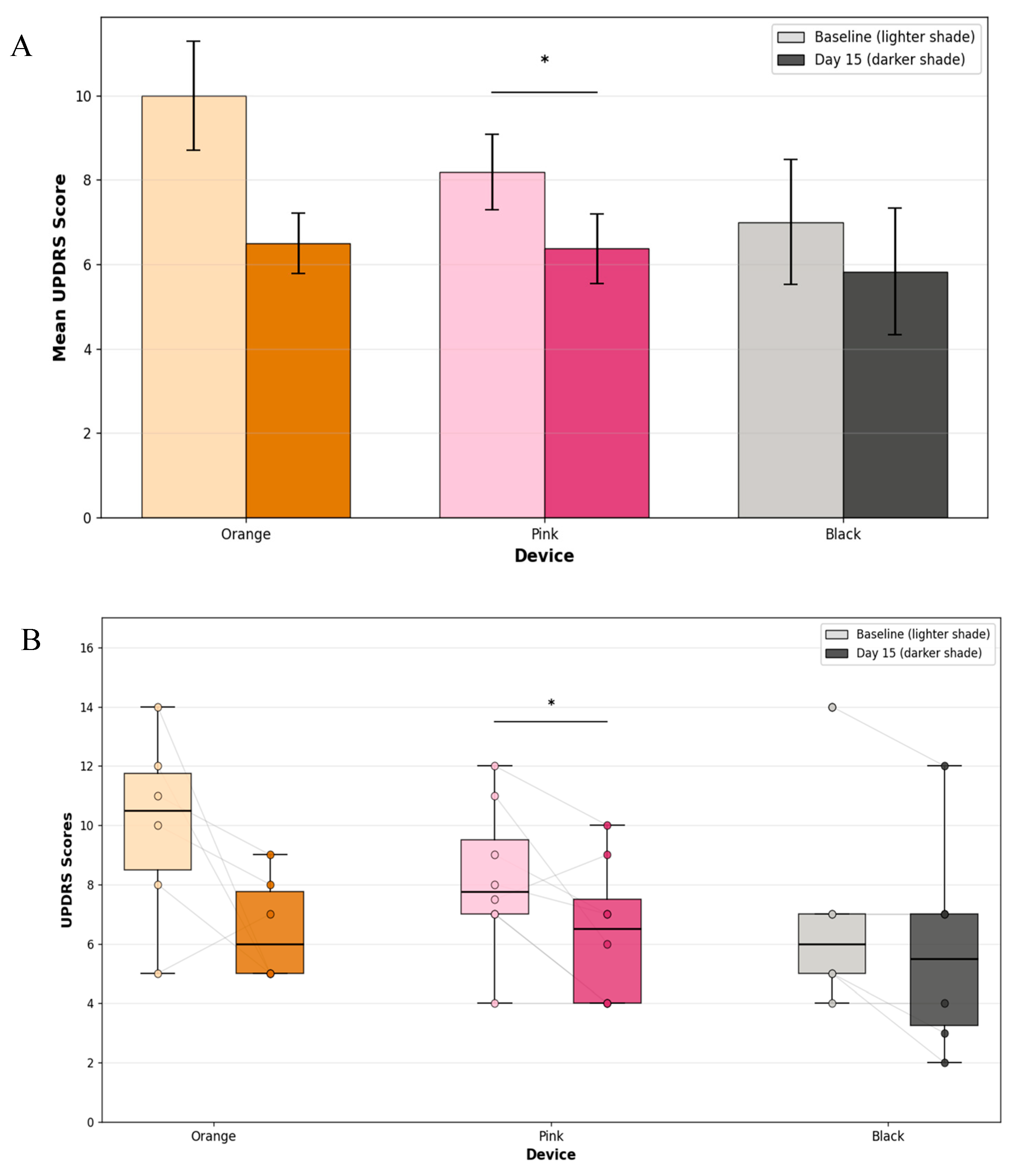
Figure 9.
illustrates the results of a one-way ANOVA conducted to evaluate the effect of neurostimulation device type on changes in absolute MDS-UPDRS-8 scores. Note. CI indicates confidence intervals.
Figure 9.
illustrates the results of a one-way ANOVA conducted to evaluate the effect of neurostimulation device type on changes in absolute MDS-UPDRS-8 scores. Note. CI indicates confidence intervals.
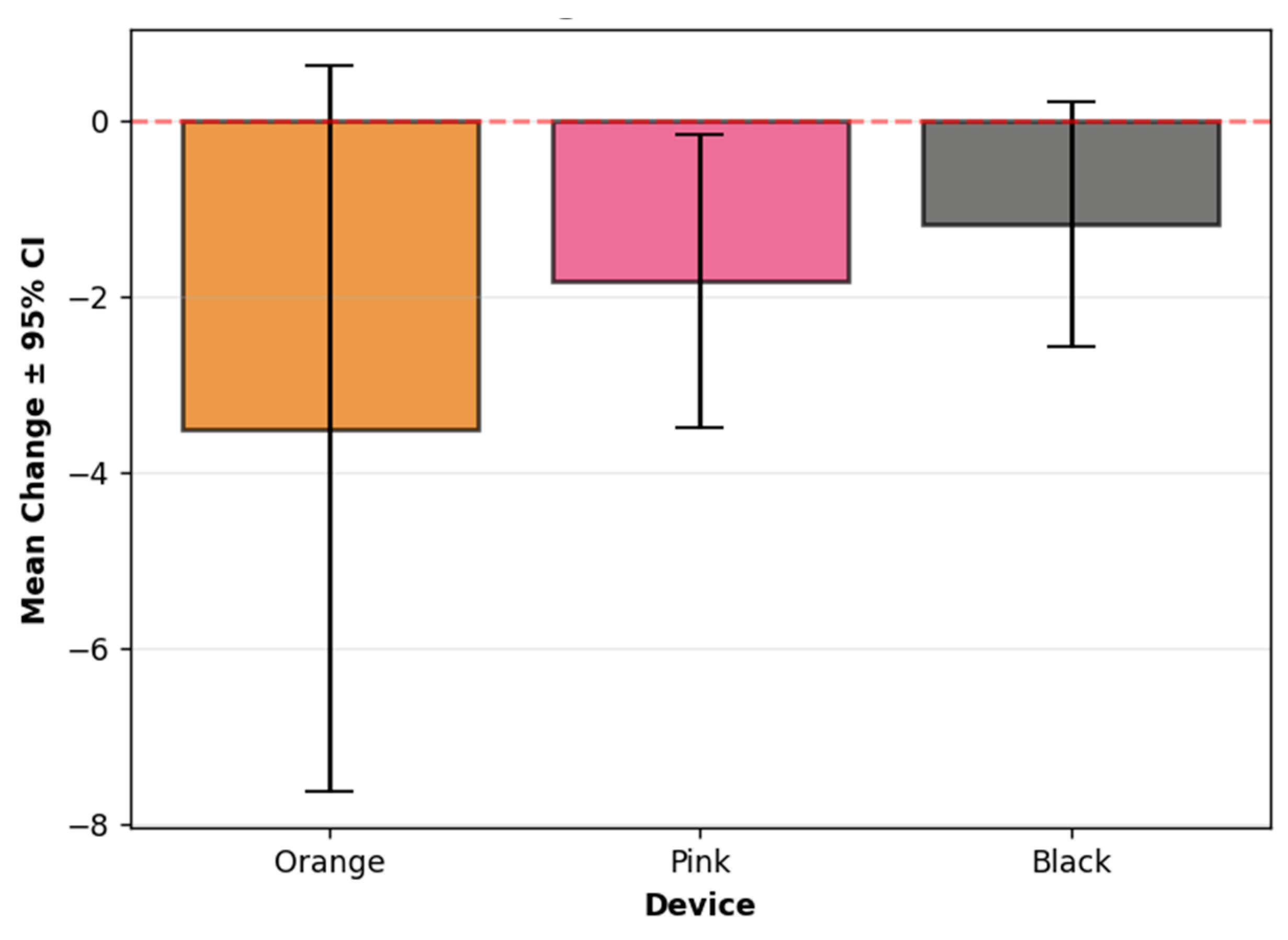
Figure 10.
illustrates the impact of the different neurostimulation protocols on overall % change in MDS-UPDRS-8 scores. Note. ↓ indicates improvement in scores.
Figure 10.
illustrates the impact of the different neurostimulation protocols on overall % change in MDS-UPDRS-8 scores. Note. ↓ indicates improvement in scores.
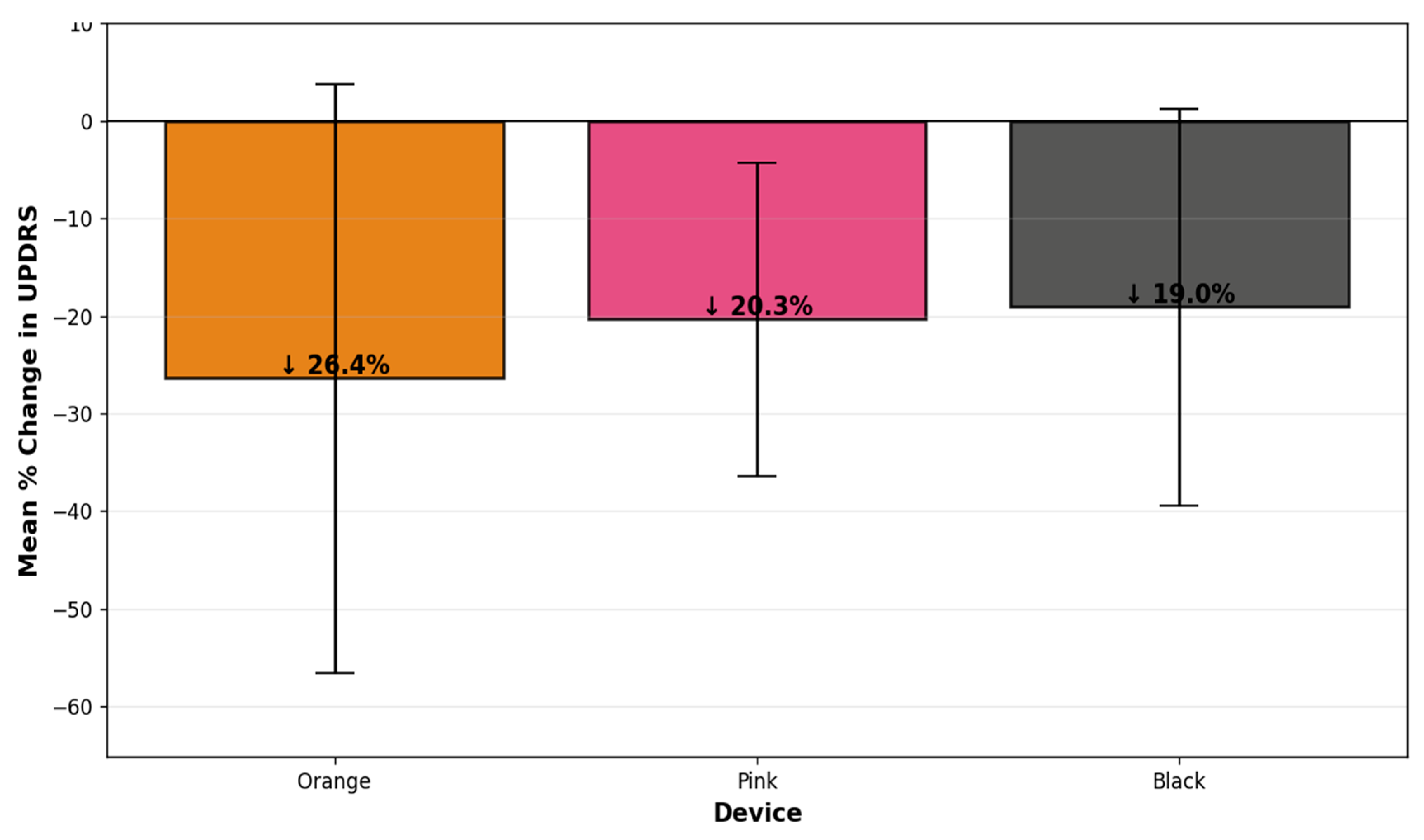
Figure 11.
shows the effect of the different neurostimulation protocols on the percentage change across MDS-UPDRS-8 components. Note. ↓ indicates improvement in scores.
Figure 11.
shows the effect of the different neurostimulation protocols on the percentage change across MDS-UPDRS-8 components. Note. ↓ indicates improvement in scores.
4. Discussion
This study evaluated three neurostimulation devices (MP-am-tPRNS, am-tPCS, and am-tPRNS) for the treatment of Parkinson’s disease symptoms, with MDS-UPDRS-8 scores and resting tremor changes as the primary endpoints.
In terms of tremor improvement, the am-tPCS bipolar device performed better than the MP-am-tPRNS and am-tPRNS devices. It was the only protocol to produce a statistically significant decrease in mean tremor amplitude (−4.6%, p < 0.05*) and demonstrated the strongest trend toward reducing tremor-band spectral power in the 3–12 Hz range, corresponding to the typical resting and essential tremor range. However, the am-tPCS device was evaluated in a smaller cohort (n = 6) and therefore requires validation in a larger sample. The am-tPRNS device showed the largest trend toward amplitude reduction (−16.9%) and the greatest bilateral improvement in tremor spectral band power at Day 15 relative to Day 1. These changes did not reach statistical significance, likely due to inter-patient variability inflated by one high-baseline outlier.
Across overall clinical outcomes, all devices were associated with improvements in MDS-UPDRS-8 scores, and specific protocols produced statistically significant gains in both motor and non-motor symptom domains. The am-tPRNS device significantly improved non-motor symptoms (Part 1) and overall MDS-UPDRS-8 scores, whereas the MP-am-tPRNS device produced significant improvements in motor symptoms (Part 2). When comparing the magnitude of improvement between devices using one-way ANOVA, no statistically significant differences were found, indicating that the three devices produced broadly comparable therapeutic effects.
At the individual patient level, substantial treatment responses were observed. Reductions in tremor-band power reached up to 77% in the 3–12 Hz band, the maximum peak-to-peak tremor amplitude reduction reached 67.2%, and the maximum MDS-UPDRS-8 improvement reached 64.3%. The am-tPRNS device yielded the largest improvement observed in any patient, with a 64.3% reduction in overall MDS-UPDRS-8 score (Patient 5; baseline, 14; endline, 5). These individual-level results likely represent the upper bound of treatment response in this study and are consistent with the heterogeneous response profile expected in a small, diverse PD population. Together with the absence of serious adverse events across all patients and treatment sessions, these findings support a favourable safety and preliminary efficacy profile that justifies well-powered follow-up trials.
This study has several limitations. First, the small sample size limited statistical power, and recording quality was affected by handheld smartphone capture at 30 fps, which introduced motion artifacts that phase correlation only partially corrected. The use of a tripod-mounted, stabilized setup at 60+ fps is recommended for future studies. Second, measurement variability was introduced by inconsistent recording heights and, in some sessions, by patients wearing jewellery that occluded hand landmarks. These factors can be controlled more effectively in future experiments.
Third, and most critically, the 15-day stimulation duration represents a significant constraint on the interpretability of these results. Three weeks of daily stimulation is likely insufficient to induce the cumulative neuroplastic changes required for robust motor improvement. A companion rs-fMRI study of am-tPCS in Alzheimer’s disease [7] demonstrated that a 12-week protocol produced marked functional connectivity gains across hippocampal, temporal, and default mode network regions, effects that were undetectable at three weeks. Motor network reorganization in PD likely demands a comparable duration. The moderate MDS-UPDRS-8 improvements (19–26%) and trend-level tremor reductions observed here are therefore best interpreted as early signals, and future studies should adopt a minimum 12-week protocol to reach the therapeutic ceiling of this intervention.
For future work, the priority is a 12-week placebo-controlled trial of am-tPRNS in a larger PD cohort. The intervention would use stimulation delivered via C3/C4 and Fp1/Fp2 electrodes, with outcomes assessed through standardized tripod-mounted video recordings and overnight OFF-medication MDS-UPDRS-8 evaluations to minimize variability. The corticospinal tract hypothesis and the proposed backpropagating action potential mechanism both suggest that cumulative neuroplastic effects may become more detectable and clinically meaningful over this extended treatment period. Incorporating neuroimaging endpoints, particularly task-based and resting-state fMRI, would enable direct investigation of the corticospinal and basal ganglia circuit changes hypothesized to underlie symptom improvement, analogous to the imaging approach used in the companion Alzheimer’s disease study by Salkhori et al. [7].
Beyond trial design, future work should also characterize the responder profile of this technology. The substantial inter-patient variability observed here, ranging from no change to 64% MDS-UPDRS-8 improvement, suggests that baseline disease characteristics, medication status, cortical excitability, and possibly genetic factors may moderate treatment response. Identifying early-responder biomarkers through EEG-based cortical activity monitoring or resting tremor frequency profiling could allow clinicians to stratify patients and personalize stimulation protocols. This approach mirrors the precision neuromodulation paradigm being pursued in DBS programming and would position non-invasive tES as a scalable, home-based complement to existing Parkinson’s disease management.
5. Conclusions
In summary, this study establishes proof-of-concept for amplitude-modulated transcranial electrical stimulation as a safe and potentially effective intervention for Parkinson’s disease motor and non-motor symptoms. The corticospinal tract pathway provides a compelling mechanistic rationale for the observed improvements, and the backpropagating action potential hypothesis offers a testable framework for optimizing waveform parameters in future iterations. With appropriate extension of treatment duration, larger and more rigorously controlled trial designs, and the integration of neuroimaging to validate pathway engagement, non-invasive tES has the potential to become a meaningful addition to the Parkinson’s disease therapeutic landscape by being accessible, low-cost, and deliverable at home.
Conflicts of Interest
The authors have no conflicts of interest to declare.
Informed consent statement
Informed consent was obtained from all subjects involved in the study.
Acknowledgments
The study and trials were supported by the Medicare Hospital in Rawalpindi, Pakistan. We acknowledge the doctors, clinical research associates, and software engineers for their clinical, scientific and technical assistance.
References
- Moustafa, Ahmed A et al. “Motor symptoms in Parkinson’s disease: A unified framework.” Neuroscience and biobehavioral reviews vol. 68 (2016): 727-740. [CrossRef]
- Fabbri, Margherita et al. “Response of non-motor symptoms to levodopa in late-stage Parkinson’s disease: Results of a levodopa challenge test.” Parkinsonism & related disorders vol. 39 (2017): 37-43. [CrossRef]
- Hariz, Marwan, and Patric Blomstedt. “Deep brain stimulation for Parkinson’s disease.” Journal of internal medicine vol. 292,5 (2022): 764-778. [CrossRef]
- Ni, Rui et al. “Novel Non-invasive Transcranial Electrical Stimulation for Parkinson’s Disease.” Frontiers in aging neuroscience vol. 14 880897. 12 Apr. 2022. [CrossRef]
- Hauser, R. A., Lyons, K. E., & Pahwa, R. (2012). The UPDRS-8: a brief clinical assessment scale for Parkinson’s disease. The International journal of neuroscience, 122(7), 333–337.
- Zhang, Fan, et al. “MediaPipe Hands: On-Device Real-Time Hand Tracking.” arXiv, 18 June 2020, arXiv:2006.10214.
- Salkhori, F., et al. “Frontal Lobe Electrical Stimulation Enhances Connectivity in Alzheimer’s Disease Networks: Evidence from rs-fMRI.” New Insights in Brain-Computer Interface Systems, edited by N. H. Kashou, IntechOpen, 2024. [CrossRef]
Figure 2.
Figure 2. shows time series representations of the mean tremor amplitude across the treatment period for each device group. (A, B) illustrate changes in mean tremor amplitude for the MP-am-tPRNS group. (C, D) represent changes in mean tremor amplitude for the am-tPRNS group and (E, F) depict the same for the am-tPCS group. (A, C, and E) illustrate changes in mean tremor amplitude for the left hand over time, whereas (B, D, and F) depict corresponding changes for the right hand.
Figure 2.
Figure 2. shows time series representations of the mean tremor amplitude across the treatment period for each device group. (A, B) illustrate changes in mean tremor amplitude for the MP-am-tPRNS group. (C, D) represent changes in mean tremor amplitude for the am-tPRNS group and (E, F) depict the same for the am-tPCS group. (A, C, and E) illustrate changes in mean tremor amplitude for the left hand over time, whereas (B, D, and F) depict corresponding changes for the right hand.
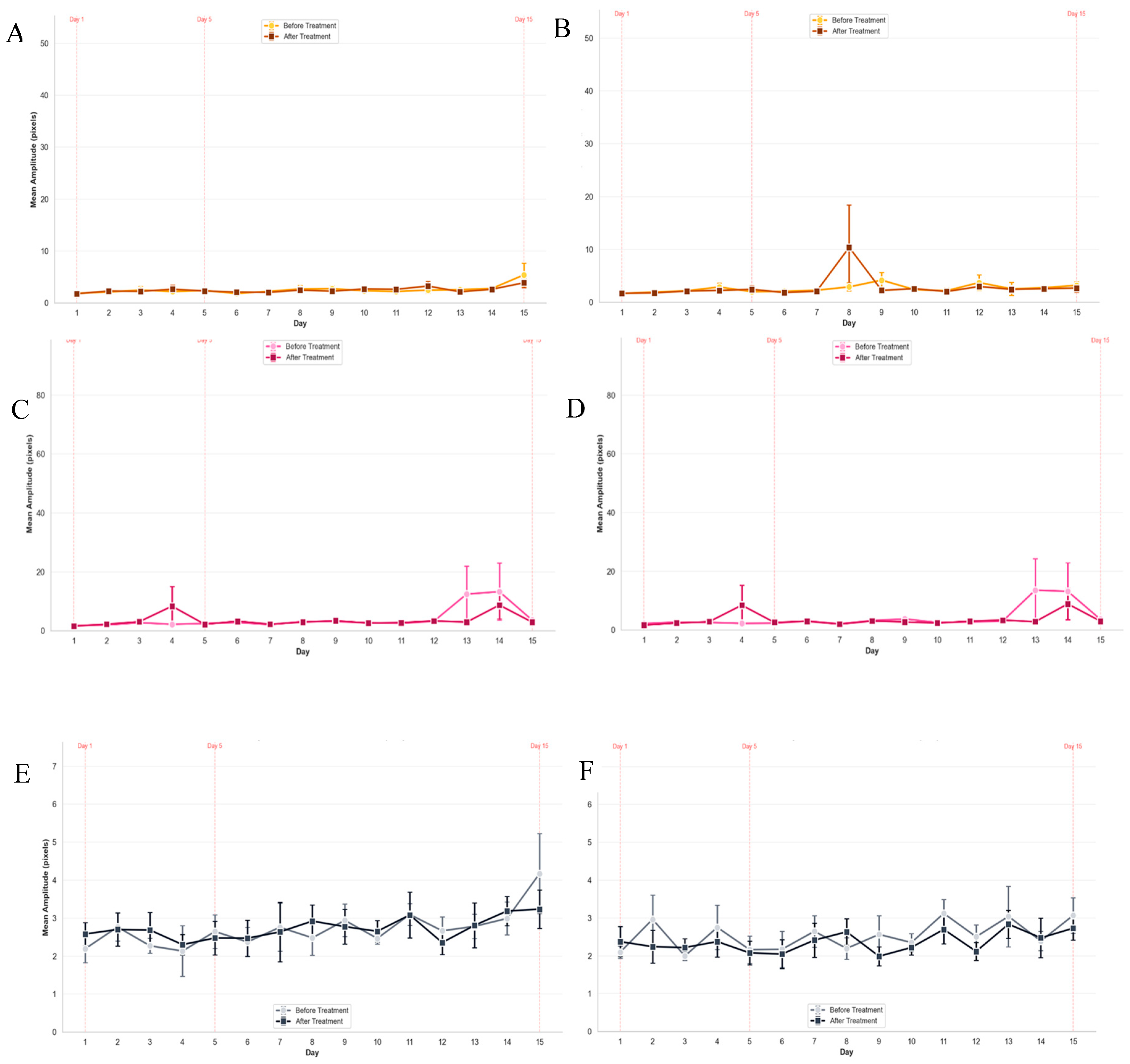
Figure 3.
shows device-specific changes in mean tremor amplitude before and after stimulation, averaged across treatment days. Individual patient data are shown as paired lines; group-level data are represented by box plots.
Figure 3.
shows device-specific changes in mean tremor amplitude before and after stimulation, averaged across treatment days. Individual patient data are shown as paired lines; group-level data are represented by box plots.
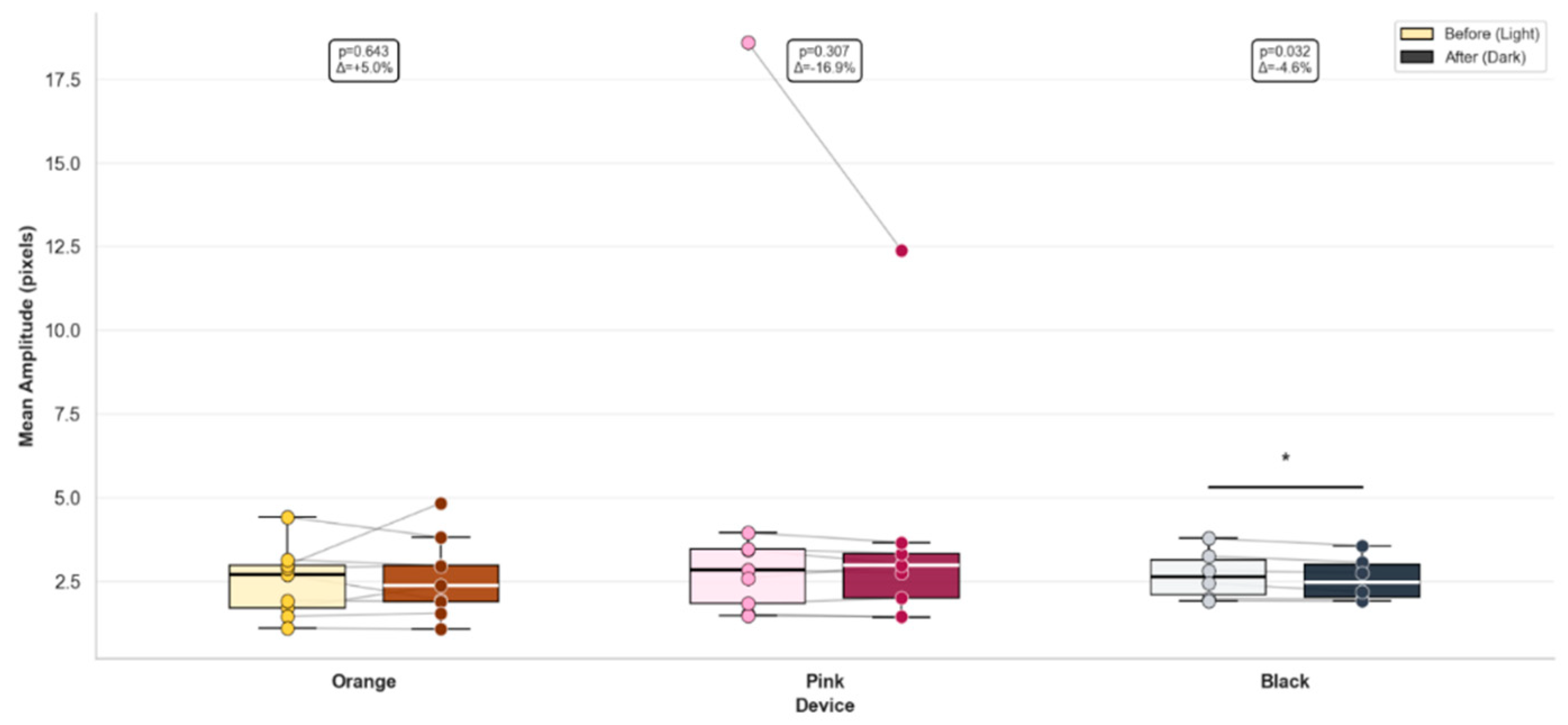
Figure 4.
depicts device-specific changes in dominant tremor frequency before and after stimulation, averaged across treatment days. Individual patient data are shown as paired lines, while group-level data are represented by box plots. Note. The Δ values denote the % change in dominant tremor frequency from pre to post treatment. The p-values represent the significance of the paired t-tests comparing dominant frequencies before and after treatment for each device. Results with p-values < 0.05 are considered significant.
Figure 4.
depicts device-specific changes in dominant tremor frequency before and after stimulation, averaged across treatment days. Individual patient data are shown as paired lines, while group-level data are represented by box plots. Note. The Δ values denote the % change in dominant tremor frequency from pre to post treatment. The p-values represent the significance of the paired t-tests comparing dominant frequencies before and after treatment for each device. Results with p-values < 0.05 are considered significant.
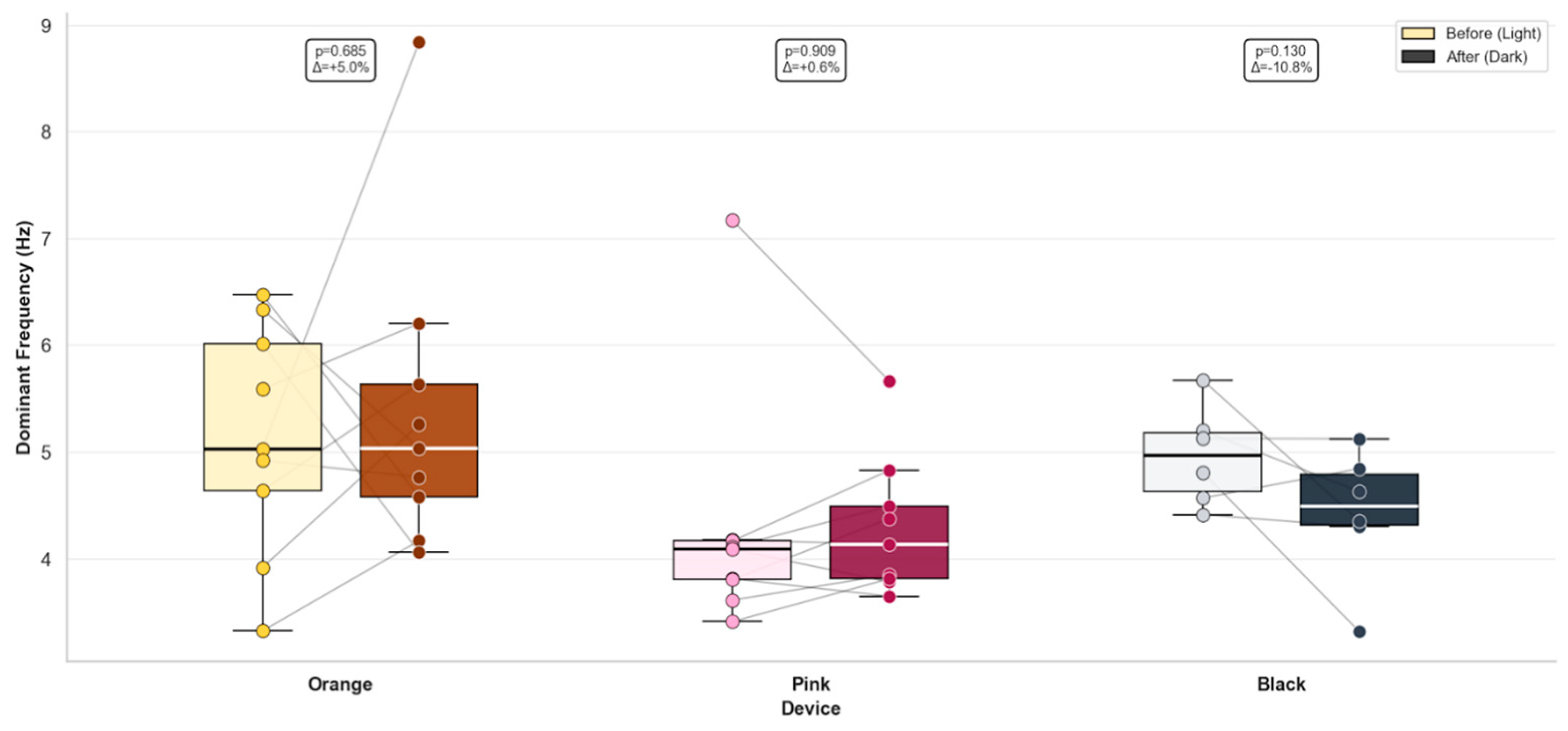
Figure 5.
depicts the power spectral density (PSD) comparisons between Day 1 (pre-treatment) and Day 15 (post-treatment) for the (A) left and (B) right hands across device groups. Note. The grey shaded region denotes resting tremor frequency (3-6 Hz).
Figure 5.
depicts the power spectral density (PSD) comparisons between Day 1 (pre-treatment) and Day 15 (post-treatment) for the (A) left and (B) right hands across device groups. Note. The grey shaded region denotes resting tremor frequency (3-6 Hz).
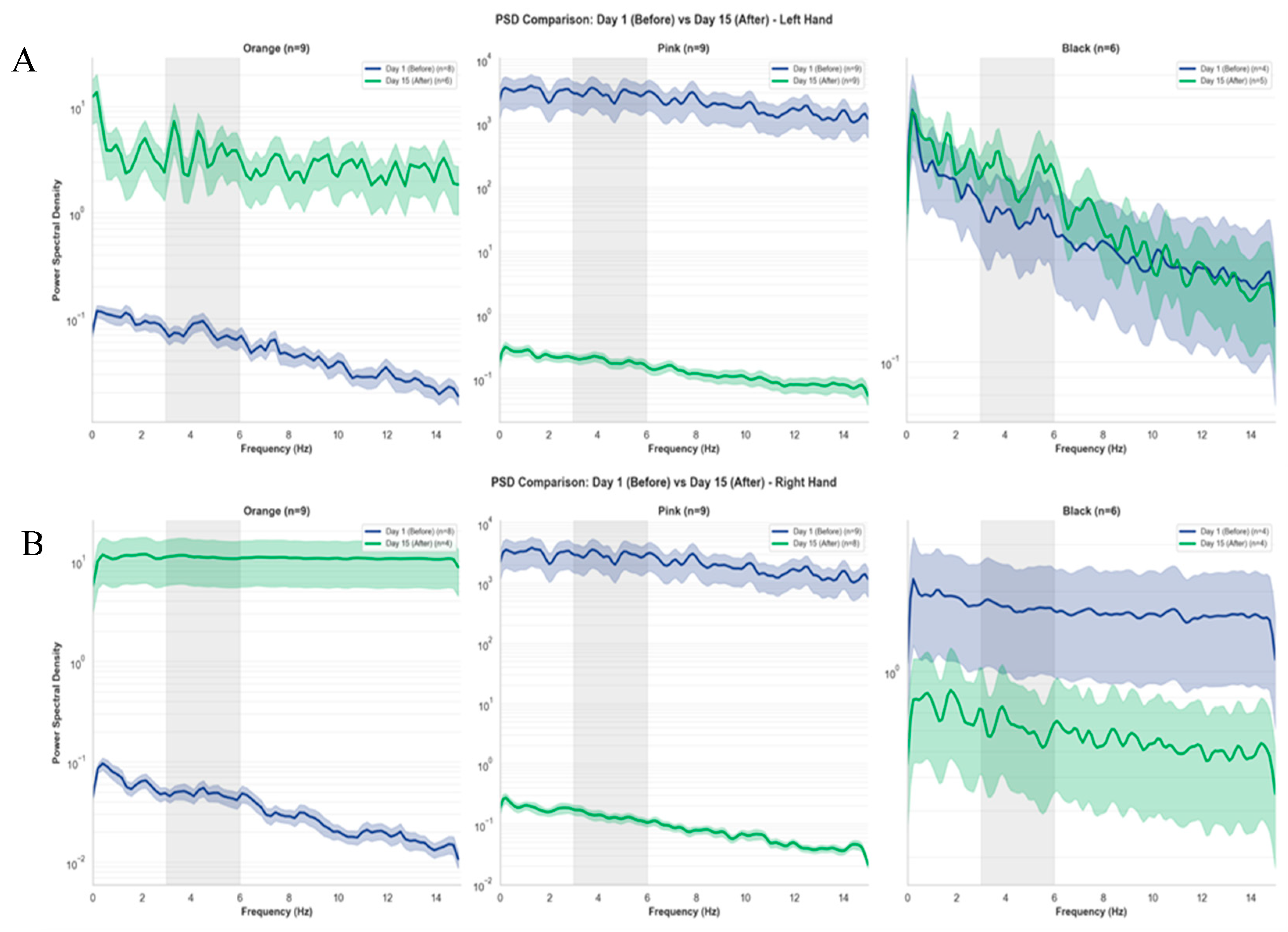
Figure 6.
represents the percentage change in spectral power across four frequency bands. (A) shows changes in the right hand, where resting tremor band power (3-6 Hz) increased by 39.4% after am-tPRNS treatment and decreased by 18.6% after MP-am-tPRNS treatment. (B) shows changes in the left hand, where resting tremor band power increased by 39.4% with am-tPRNS and decreased by 62.3% with am-tPCS. Note. Decrease in tremor spectral band power indicates an improvement in tremor symptomatology.
Figure 6.
represents the percentage change in spectral power across four frequency bands. (A) shows changes in the right hand, where resting tremor band power (3-6 Hz) increased by 39.4% after am-tPRNS treatment and decreased by 18.6% after MP-am-tPRNS treatment. (B) shows changes in the left hand, where resting tremor band power increased by 39.4% with am-tPRNS and decreased by 62.3% with am-tPCS. Note. Decrease in tremor spectral band power indicates an improvement in tremor symptomatology.
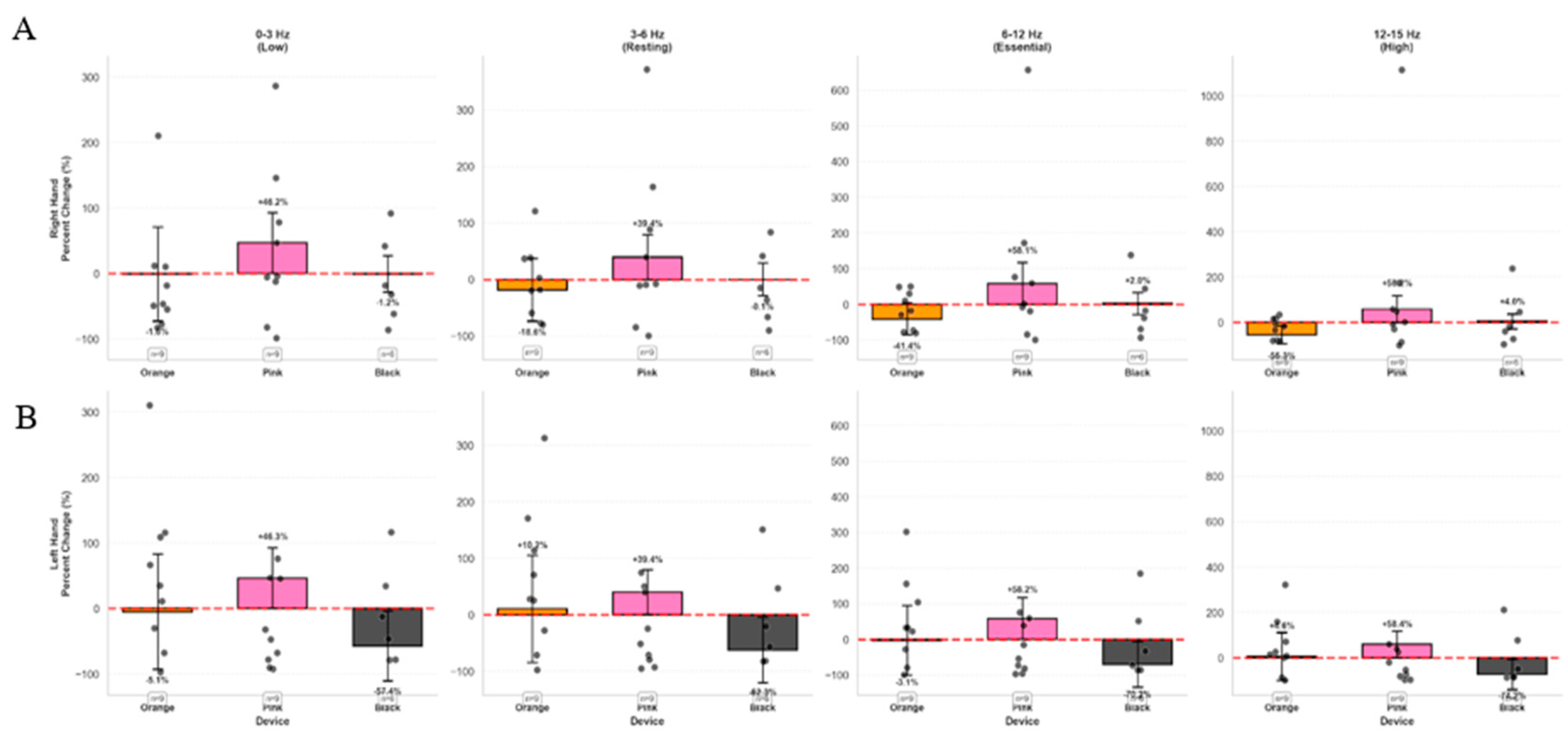
Figure 7.
presents the mean baseline and endline MDS-UPDRS-8 scores for each questionnaire section. Note. Results with p-values < 0.05 are considered significant.
Figure 7.
presents the mean baseline and endline MDS-UPDRS-8 scores for each questionnaire section. Note. Results with p-values < 0.05 are considered significant.
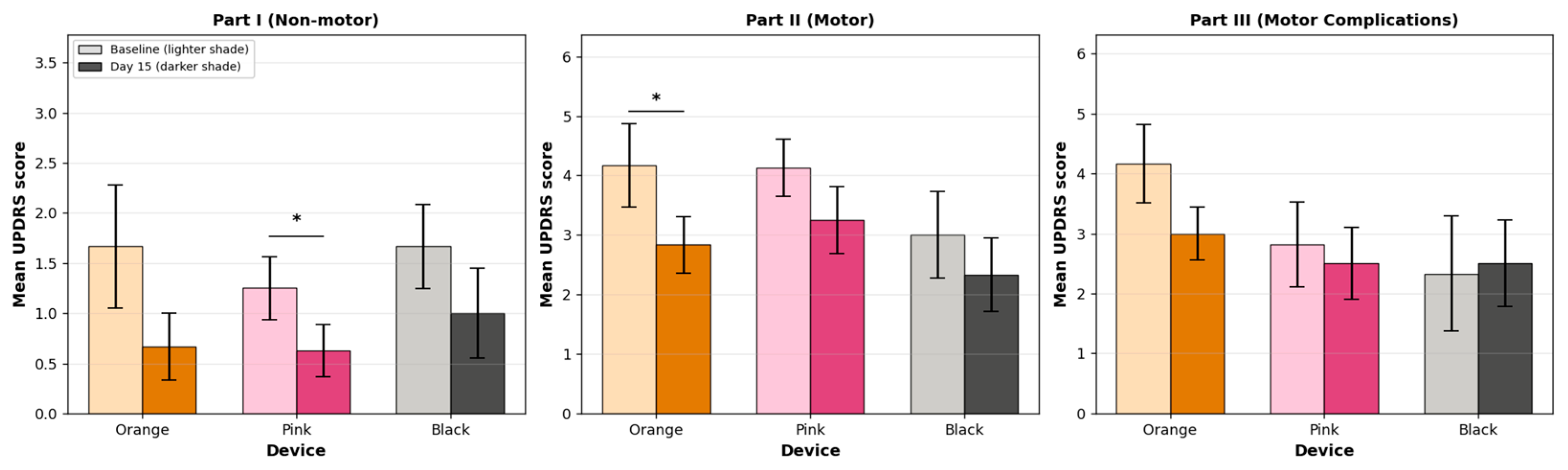
Table 1.
Device Protocols and Parameters.
| Device | Protocol | Parameters | n |
|---|---|---|---|
| Orange | Multi-Path am-tPRNS | 1000 Hz base, 2 Hz main frequency, 4-electrode rotation at 10-second intervals | 10 |
| Pink | am-tPRNS | 1000 Hz base, random frequency distribution, stochastic modulation, 4-electrode array | 10 |
| Black | am-tPCS | 1000 Hz base, 50% duty cycle, biphasic polarity switching, 2-electrode bipolar | 6 |
Table 2.
Score indications for each section of the UPDRS-8 scale.
| Score | Part 1 | Part 2 | Part 3 | |||||
|---|---|---|---|---|---|---|---|---|
| Intellectual impairment | Mood | Rest tremor upper extremity | Finger taps | Gait walking | Off time | Dyskinesia duration | Dyskinesia disability | |
| 0 | None | No depression | None | Normal | Normal | None | None | Not disabling |
| 1 | Mild. Consistent forgetfulness with partial recollection of events | Periods of sadness or guilt greater than normal, never sustained for days or weeks. | Slight and infrequently present | Mild slowing and/or reduction in amplitude. | Walks slowly, may shuffle with short steps. | 1-25% of day. | 1-25% of day. | Mildly disabling |
| 2 | Moderate memory loss, with disorientation and moderate difficulty handling complex problems. Mild but definite | Sustained depression (1 week or more). | Mild in amplitude and persistent. Or moderate in amplitude, but only intermittently present. | Moderately impaired. Definite and early fatiguing. May have occasional arrests in movement. | Walks with difficulty, but requires little or no assistance; may have some festination, short steps, or propulsion. | 26-50% of day. | 26-50% of day. | Moderately disabling |
| 3 | Moderate in amplitude and present most of the time. | Severely impaired. Frequent hesitation in initiating movements or arrests in ongoing movement. | 51-75% of day. | 51-75% of day. | Severely disabling | |||
| 4 | Marked in amplitude and present most of the time. | 76-100% of day. | 76-100% of day. | |||||
Table 3.
Individual Patient Amplitude Range (All Devices Combined).
| Metric | Max Reduction | Notes |
|---|---|---|
| Mean Euclidean amplitude | −39.8% (Patient 5, Left, MP-am-tPRNS ) | Largest single-patient reduction observed |
| Peak-to-peak amplitude | −67.2% (Patient 1, Left, MP-am-tPRNS ) | Peak-to-peak analysis; individual result |
| Dominant frequency | −24.4% (Patient 10, Right, MP-am-tPRNS ) | Largest frequency reduction observed |
| Patients with no change | 4 patients (Pts 19, 22, 23, 25) | Across all device groups |
Note. Individual results vary substantially. Maximum values represent single-patient peaks and do not represent group averages. All directions of effect are present across patients.
Table 5.
Statistical Summary of Changes in Tremor Spectral Power Across Device Groups and Hands.
| Metric | Device | Hand | % Change (Mean ± SEM) | p-value |
|---|---|---|---|---|
| Spectral Power (0–3 Hz) | MP-am-tPRNS | Left | −5.09 ± 88.20 | 0.96 |
| MP-am-tPRNS | Right | −1.58 ± 72.14 | 0.98 | |
| am-tPRNS | Left | +46.26 ± 46.43 | 0.35 | |
| am-tPRNS | Right | +46.20 ± 46.29 | 0.35 | |
| am-tPCS | Left | −57.43 ± 53.49 | 0.33 | |
| am-tPCS | Right | −1.17 ± 28.01 | 0.97 | |
| Spectral Power (3–6 Hz)ᵃ | MP-am-tPRNS | Left | +10.24 ± 94.90 | 0.92 |
| MP-am-tPRNS | Right | −18.58 ± 55.55 | 0.75 | |
| am-tPRNS | Left | +39.45 ± 39.68 | 0.35 | |
| am-tPRNS | Right | +39.45 ± 39.57 | 0.35 | |
| am-tPCS | Left | −62.34 ± 57.97 | 0.33 | |
| am-tPCS | Right | −0.07 ± 28.99 | 1.00 | |
| Spectral Power (6-12 Hz)ᵃ | MP-am-tPRNS | Left | −3.08 ± 97.26 | 0.98 |
| MP-am-tPRNS | Right | −41.42 ± 44.52 | 0.38 | |
| am-tPRNS | Left | +58.15 ± 58.51 | 0.35 | |
| am-tPRNS | Right | +58.08 ± 58.27 | 0.35 | |
| am-tPCS | Left | −70.21 ± 63.60 | 0.32 | |
| am-tPCS | Right | +2.01 ± 30.68 | 0.95 | |
| Spectral Power (12–15 Hz) | MP-am-tPRNS | Left | +4.64 ± 105.06 | 0.97 |
| MP-am-tPRNS | Right | −55.27 ± 39.82 | 0.20 | |
| am-tPRNS | Left | +58.15 ± 58.51 | 0.33 | |
| am-tPRNS | Right | +58.37 ± 58.90 | 0.35 | |
| am-tPCS | Left | −74.22 ± 66.97 | 0.32 | |
| am-tPCS | Right | +4.05 ± 32.20 | 0.91 |
Note. ᵃ 3–12 Hz is the pathological tremor frequency range (encompasses resting tremor 3–6 Hz and essential tremor 6–12 Hz bands). No group-level changes reached statistical significance (all p > 0.05). High inter-patient variability is the primary driver of non-significance. SEM = standard error of the mean.
Disclaimer/Publisher’s Note: The statements, opinions and data contained in all publications are solely those of the individual author(s) and contributor(s) and not of MDPI and/or the editor(s). MDPI and/or the editor(s) disclaim responsibility for any injury to people or property resulting from any ideas, methods, instructions or products referred to in the content. |
© 2026 by the authors. Licensee MDPI, Basel, Switzerland. This article is an open access article distributed under the terms and conditions of the Creative Commons Attribution (CC BY) license (http://creativecommons.org/licenses/by/4.0/).
Copyright: This open access article is published under a Creative Commons CC BY 4.0 license, which permit the free download, distribution, and reuse, provided that the author and preprint are cited in any reuse.


