
Submitted:
28 April 2026
Posted:
07 May 2026
You are already at the latest version
Abstract
Feline pseudomembranous cystitis (PMC) is an infrequent condition characterized by acute urinary disturbances. This study examines the diagnostic criteria, surgical interventions, and postoperative management strategies to furnish clinical guidance. A retrospective analysis was conducted on the clinical data of a 3-year-old neutered male golden tabby cat (weighing 4 kg) presenting with acute urinary retention. The diagnosis of PMC was established through clinical manifestations, abdominal ultrasonography, and laboratory tests, followed by cystotomy and targeted postoperative management. The surgical procedure lasted one hour with a blood loss of 5 mL, and spontaneous urination resumed by the fourth postoperative day. Ultrasound examination on the twelfth day revealed normal bladder mucosa, and the infection had resolved without recurrence during the follow-up period. Cystotomy with complete pseudomembrane removal effectively treats severe feline pseudomembranous cystitis. Careful preoperative assessment, precise surgery, and postoperative treatment guided by drug sensitivity greatly reduce risks and enhance outcomes. Key to recovery are thorough pseudomembrane removal and proper bladder irrigation.
Keywords:
cat
; pseudomembranous cystitis
; cystotomy
; urinary catheter care
; anti-infection treatment
1. Introduction
Feline Lower Urinary Tract Disease (FLUTD) is a prevalent clinical syndrome encountered in veterinary practice, primarily impacting the bladder and urethra of cats [1]. The clinical manifestations of FLUTD typically includes symptoms such as dysuria, hematuria, pollakiuria, and urinary incontinence [2,3]. Rather than being a singular disease entity, FLUTD encompasses a range of etiologies, including feline idiopathic cystitis (FIC), urinary tract infections (UTIs), urolithiasis, urethral obstruction, and neoplasia [4]. Epidemiological studies reveal that FLUTD accounts for approximately 0.5% to 2% of feline clinical admissions, with about 7% to 8% of outpatient cases involving lower urinary tract issues. Among the various etiologies of FLUTD, FIC is the most common, representing 50% to 70% of all cases [4,5].
Within the FLUTD spectrum, pseudomembranous cystitis (PMC) is a rare yet clinically significant variant.Characterized by the formation of a fibrinous pseudomembrane on the bladder mucosa, PMC is structurally composed of fibrin, inflammatory cells, necrotic tissue, and blood components, adhering to the mucosal surface as membranous or cord-like structures. Pathologically, PMC is frequently associated with severe mucosal ulceration, hemorrhage, and necrosis [6]. Imaging modalities, particularly ultrasonography, reveals hyperechoic cord-like or septate structures within the bladder lumen, which may occasionally cause bladder lumen septation or urethral obstruction [7,8].
Approximately 80% of PMC cases are linked to urethral blockage, with some cases showing bladder mineralization or chronic cystitis [9]. The exact pathophysiology of PMC remains incompletely understood, but it is generally attributed to severe bladder inflammation, overdistension secondary to urethral obstruction, ischemic necrosis, and chronic infection. Given the clinical overlap between PMC and other FLUTD conditions such as uncomplicated cystitis, urolithiasis, or urethral obstruction, misdiagnosis or delayed treatment is common, which can exacerbate disease complexity and increase management challenges [4].
In this study, we present a case of feline pseudomembranous cystitis complicated by rare mineralized pseudomembrane formation. We systematically analyze its clinical presentation, imaging characteristics, laboratory results, surgical management, and postoperative care. Additionally, we review relevant literature to discuss diagnostic approaches and therapeutic strategies, aiming to provide valuable references for clinicians encountering similar rare cases and enhance the recognition and management of PMC.
2. Case Presentation
A 3-year-old neutered male British Shorthair cat (Golden Gradient), weighing 4 kg, was maintained as a solitary indoor pet within a household environment, exhibiting a timid and sensitive disposition. The cat had consistently received vaccinations and deworming treatments according to the recommended schedule. Its diet comprised commercially available cat food, and it was provided with filtered household water for hydration. On July 1, 2025, the owner observed that the cat was experiencing pollakiuria and dysuria. Attempts at self-administered treatment were unsuccessful in alleviating these symptoms. Subsequently, on July 4, the cat was admitted to a local veterinary hospital, where it was diagnosed with urethral obstruction and underwent catheterization, indwelling urethral catheterization, and fluid therapy. Despite these interventions, the cat exhibited recurrent symptoms necessitating repeated catheterization, with no significant improvement observed after two weeks of treatment. Consequently, on July 19, 2025, the cat was referred to our hospital for further diagnostic evaluation and management.
Upon admission, the feline patient exhibited lethargy and presented with coarse, lackluster fur. Abdominal palpation identified distension, characterized by a distended and firm urinary bladder, eliciting pronounced pain responses, such as vocalization and struggling, upon pressure application to the bladder region. The physical examination yielded the following findings: body temperature at 38.6℃ (reference range: 38.0~39.2℃), respiratory rate at 36 breaths per minute (normal range: 15~30 breaths per minute), heart rate at 150 beats per minute (normal range: 120~140 beats per minute), and blood pressure at 120/80 mmHg (normal systolic blood pressure in felines: 100~160 mmHg). The cat frequently adopted a posture indicative of micturition but was unable to void urine, suggesting acute uroschesis. Following emergency catheterization, turbid urine with a reddish-brown hue was evacuated, resulting in a slight alleviation of the abdominal distension.
3. Diagnosis and Treatment
3.1. Clinical Diagnosis
The diagnosis of pseudomembranous cystitis complicated by uroschesis in the cat was established based on the following criteria:
- Clinical manifestations, including pollakiuria, dysuria, uroschesis, abdominal distension, and bladder tenderness;
- Ultrasonographic evidence, such as bladder wall thickening and the presence of intravesical hyperechoic pseudomembranous structures (Figure 1);
- Laboratory findings, which revealed elevated inflammatory markers, significant presence of red and white blood cells in the urine, and a positive urine culture with drug-resistant strains;
- The exclusion of other lower urinary tract disorders, including urolithiasis and bladder neoplasia.
3.2. Preoperative Preparation and Anesthesia
A comprehensive preoperative assessment was conducted to evaluate the cat’s physical condition and identify any potential contraindications for surgery. This assessment included routine blood tests, biochemical analyses, coagulation function tests, and a chest X-ray. Additionally, bladder evacuation was achieved through indwelling catheterization, and the surgical site was meticulously shaved and disinfected in advance. Anesthesia Protocol: Preoperative sedation and analgesia were achieved using a combination of butorphanol (0.2 mg/kg, administered intravenously) and medetomidine (2 μg/kg, administered intravenously). Following sedation, anesthesia was induced with propofol (2 mg/kg, administered intravenously) until the cat reached a state of unconsciousness, at which point endotracheal intubation was performed. Anesthesia maintenance was achieved with isoflurane (1.5% to 2.0%) in conjunction with oxygen inhalation. Intraoperative fluid therapy was administered using lactated Ringer’s solution at a rate of 10 mL/kg/h to ensure hemodynamic stability. Intraoperative monitoring encompassed electrocardiography, blood oxygen saturation (SpO₂), end-tidal carbon dioxide partial pressure (ETCO₂), and body temperature, with SpO₂ maintained at ≥95% and ETCO₂ within the range of 35 to 45 mmHg.
3.3. Surgical Procedure
The feline subject was positioned in dorsal recumbency, and the abdominal hair was clipped within a 10 cm radius of the anticipated incision site. The area was subsequently disinfected using chlorhexidine and 0.5% povidone-iodine, followed by the application of sterile surgical drapes. A midline abdominal incision, measuring approximately 3 to 5 cm, was executed from the xiphoid process to the pubic symphysis. The incision proceeded through the skin, subcutaneous tissue, and rectus abdominis sheath in a layered manner to facilitate exposure of the bladder. The bladder was carefully retracted from the abdominal cavity and enveloped in gauze moistened with normal saline to avert desiccation. A longitudinal incision, ranging from 1 to 2 cm, was made on the ventral bladder wall, taking care to avoid vascular structures. Upon inspection, a pseudomembrane was observed within the bladder (refer to Figure 2), characterized by a substantial amount of yellowish-brown, fragile material adhering to the bladder mucosa, accompanied by notable mucosal congestion and hemorrhage. The pseudomembrane was meticulously detached using hemostats and forceps, and the bladder lumen was repeatedly irrigated with warm normal saline until the effluent was clear. Following the complete removal of the pseudomembrane, the bladder incision was closed using absorbable sutures.
3.4. Laboratory Examinations
A routine hematological analysis revealed leukocytosis (24.45×10⁹/L, reference range: 5.5–19.5×10⁹/L), neutrophilia (18.69×10⁹/L, reference range: 3.12–12.58×10⁹/L), and mild hypohemoglobinemia (83 g/L, reference range: 85–153 g/L), indicative of severe systemic inflammation. Biochemical assays demonstrated significantly elevated levels of creatinine (496 μmol/L, reference range: 27–223 μmol/L) and urea nitrogen (15.6 mmol/L, reference range: 3.6–15.5 mmol/L), suggesting impaired renal function. The levels of alanine aminotransferase (101 U/L, reference range: 8.2–123 U/L) and aspartate aminotransferase (137 U/L, reference range: 19–157 U/L) remained within normal limits, indicating no apparent hepatic dysfunction. Following the restoration of consciousness, the feline was transferred to an intensive care unit oxygen chamber for continuous monitoring.
Urine microscopic examination (Table 1) showed significantly elevated levels of red blood cells (13021.10 cells/μL; normal 0-25 cells/μL), white blood cells (55712.20 cells/μL; normal 0-25 cells/μL), and transitional epithelial cells (5.98 cells/μL; normal 0-3 cells/μL), indicating severe urinary tract inflammation and mucosal damage typical of feline pseudomembranous cystitis. Urine culture revealed small, grayish-white, moist, raised colonies with α/γ hemolytic rings on blood agar medium (Figure 3) after 24 hours. Drug sensitivity tests (Table 2 and Table 3) showed the strain was sensitive only to vancomycin (MIC<2μg/ml) and linezolid (MIC<4μg/ml), with high resistance to penicillins, cephalosporins, and quinolones.
Figure Legend: This table shows the key urine sediment examination results of a feline pseudomembranous cystitis case, focusing on the core indicators related to the disease (cells, casts, crystals and pathogenic microorganisms) to reflect the urinary system abnormality caused by the disease. Notes: 1. Irrelevant indicators (e.g., waxy casts, cystine crystals, sperm) not related to feline pseudomembranous cystitis are deleted to simplify the table; 2. Unit explanation: “/μL” = per microliter (standard unit for urine sediment examination); 3. Positive mark criteria: “-“ = normal, “+” = mild abnormality, “++++” = severe abnormality; 4. The significant increase of RBC# and WBC# is the key characteristic of feline pseudomembranous cystitis, suggesting severe urinary tract inflammation and mucosal damage; 5. Slightly increased TEC# is related to urinary tract epithelial cell damage caused by inflammation; 6. No pathogenic microorganisms are detected, indicating non-infectious inflammation.
3.5. Surgary, Postoperative Management, Prognosis
The total duration of the surgical procedure was one hour, during which an intraoperative blood loss of 5 mL was observed, and no blood transfusion was necessary. Approximately ten minutes post-surgery, the feline patient regained spontaneous respiration, allowing for the removal of the endotracheal tube, and achieved full consciousness thirty minutes thereafter, at which point it was transferred to the Intensive Care Unit (ICU) for oxygen monitoring.
Postoperative ultrasonography (Figure 4) verified the complete excision of the intravesical pseudomembrane. The cat was subsequently placed in a controlled oxygen chamber, maintained at a constant temperature of 26±1 °C, humidity of 40%±5%, and oxygen concentration of 45%±5%, with continuous monitoring of vital signs and urinary output. Postoperative pharmacological management included vancomycin (15 mg/kg, intravenously, three times daily for ten days) for infection prophylaxis, meloxicam (0.1 mg/kg, subcutaneously, for three days) in combination with butorphanol (0.2 mg/kg, intravenously, for five days) for pain management, and oral salsalate (two tablets daily for three weeks) to facilitate bladder mucosal repair [9].
The nursing interventions implemented included securing the indwelling catheter to prevent traction, replacing the closed drainage bag daily, and cleansing the urethral orifice with diluted povidone-iodine solution. Postoperatively, the cat resumed drinking within 24 hours and was introduced to a digestible urinary prescription diet within 48 hours, maintaining a daily water intake of at least 50 ml/kg. The abdominal incision was inspected daily, with sutures removed 7 to 10 days postoperatively, and an Elizabethan collar was utilized to prevent wound licking. Follow-up care comprised urinalysis and ultrasonography conducted between 3 to 7 days and at 1 month postoperatively. Long-term management strategies included a permanent urinary prescription diet, stress reduction measures, and semi-annual physical examinations.
4. Discussion
Pseudomembranous cystitis (PMC) represents a rare variant of feline lower urinary tract disease (FLUTD), distinguished by the development of fibrinous pseudomembranes on the bladder mucosa [10]. In alignment with prior studies, the current case involves a neutered male cat, corroborating the epidemiological observation that PMC predominantly manifests in male cats [9]. The subject had a documented history of urethral obstruction and recurrent catheterization, which likely compromised the integrity of the bladder mucosal barrier, inciting inflammatory responses and subsequent fibrin deposition, culminating in pseudomembrane formation. This sequence aligns with the hypothesized pathogenesis of PMC: mucosal barrier disruption leading to inflammation, fibrin deposition, and pseudomembrane formation [11].
A distinctive aspect of this case is the rare mineralization of the pseudomembrane, an occurrence infrequently documented in the literature. We hypothesize that this mineralization is associated with the extended duration of the disease (approximately 20 days) and the chronic inflammatory milieu, wherein prolonged inflammation enhances mineral deposition in necrotic tissue and fibrin, resulting in mineralized pseudomembranes [12]. This finding supplements the clinical manifestations of PMC and suggests that for cats with prolonged FLUTD course, attention should be paid to the possibility of pseudomembrane mineralization during imaging examinations.
Ultrasonography is the preferred imaging modality for the diagnosis of PMC, as it effectively delineates the location, size, and distribution of intravesical pseudomembranes, while also being non-invasive and repeatable [10]. In the present case, preoperative ultrasonography successfully identified the pseudomembranous structures and bladder wall thickening, thereby providing a reliable foundation for diagnosis and surgical planning [7]. Urine microscopic examination and culture are essential for etiological diagnosis; the marked elevation in urinary red and white blood cells suggested severe mucosal inflammation and damage [10,13]. Furthermore, the drug sensitivity test revealed that the isolate was susceptible solely to vancomycin and linezolid, thereby informing the selection of targeted anti-infective therapy. This approach is crucial for enhancing the cure rate and minimizing recurrence.
In cases of PMC characterized by extensive pseudomembranes and persistent urethral obstruction, cystotomy emerges as the preferred surgical intervention. This procedure facilitates the direct excision of pseudomembranes and necrotic tissues, promptly alleviates obstruction, and mitigates the risk of progressive renal damage. The implementation of a two-layer suture technique in this context—comprising a continuous suture for the mucosal layer and an interrupted mattress suture for the seromuscular layer—effectively prevents bladder leakage and promotes mucosal healing, aligning with established surgical principles for PMC management. Additionally, postoperative administration of targeted medications, such as vancomycin for infection control and salsalate for mucosal repair, alongside standardized nursing care, including catheter management and dietary regulation, further enhances therapeutic outcomes and diminishes the likelihood of recurrence.
The positive prognosis of this case is intricately linked to three primary factors: 1) the complete excision of pseudomembranes and necrotic tissues during surgical intervention; 2) the implementation of targeted anti-infective therapy informed by drug sensitivity test outcomes; 3) adherence to standardized postoperative care and long-term management protocols. Prior research indicates that the recurrence rate of PMC ranges from 30% to 40%, underscoring the importance of sustained bladder mucosal repair and stress reduction in preventing recurrence. Consequently, we advocated for a 3-week course of oral salsalate and a long-term urinary prescription diet for the cat.
This case also offers several clinical insights: 1) In neutered male cats presenting with recurrent urethral obstruction unresponsive to conservative treatment, PMC should be considered, and timely ultrasonography should be employed to prevent misdiagnosis; 2) For drug-resistant strains identified in urine cultures, it is crucial to administer targeted anti-infective therapy based on drug sensitivity test results to avert ineffective treatment and disease progression; 3) The discovery of a mineralized pseudomembrane in this case adds to the clinical spectrum of PMC, highlighting the need for clinicians to recognize this rare variant during diagnostic evaluations.
It is important to acknowledge the limitations inherent in this study. Primarily, it is based on a single-case observation and does not benefit from the support of large-sample data. Additionally, a systematic pathological analysis of bladder mucosal tissue and the assessment of mucosal barrier indicators, such as glycosaminoglycans (GAGs), were not conducted, potentially limiting the depth of the discussion on pathogenesis. To enhance understanding of the pathogenesis of PMC and to optimize therapeutic strategies, future research should include multi-case retrospective studies and experimental investigations.
5. Conclusions
This study presents a case of feline pseudomembranous cystitis complicated by the uncommon formation of mineralized pseudomembranes. The diagnosis was established through clinical signs, ultrasonography, laboratory evaluations, and surgical exploration. A combination of cystotomy, targeted anti-infective therapy, analgesia, and mucosal repair treatment, along with standardized postoperative care and long-term follow-up, resulted in a favorable prognosis. In cases of PMC characterized by extensive pseudomembranes, persistent urethral obstruction, or concurrent renal impairment, surgical intervention proves effective in alleviating obstruction and excising lesions. Rigorous postoperative management and extended follow-up are essential for facilitating mucosal repair and minimizing the risk of recurrence. This case contributes to the understanding of the clinical manifestations of PMC (mineralized pseudomembrane) and offers valuable clinical insights for the diagnosis and management of similar rare cases.
Author Contributions
Conceptualization, Q.S. and C.R.; surgery and methodology, Q.S., X.L., Z.G., J.X., J.L., Q.W., Y,C. and Q.H.; data curation, X.L., Z.G., R.X. and J.X.; writing—original draft preparation, Q.S.; writing—review and editing, Q.S. and C.R.; supervision, C.R.; project administration, Q.S. and C.R.; funding acquisition, J.L. and C.R. All authors have read and agreed to the published version of the manuscript.
Funding
This research was supported by the Scientific Research Project of Higher Education Institutions in Anhui Province (Grant No. 2023AH051839/2024AH050302), the Scientific Research Foundation of Anhui Science and Technology University for Talent Introduction (DKYJ202005) Veterinary Science Peak Discipline Project of Anhui Science and Technology University (XK-XJGF002), Anhui Provincial postgraduate professional degree teaching case database (962) and Fengyang County Science and Technology Plan Project (2023CXCY04).
Institutional Review Board Statement
This study was reviewed and approved by Anhui Science and Technology University (AHSTU2020007, date 12 April 2025). All animal experiments were conducted in accordance with the International Guiding Principles for Biomedical Research Involving Animals.
Data Availability Statement
The original contributions presented in this study are included in the article. Further inquiries can be directed to the corresponding author(s).
Acknowledgments
We would like to express our sincere gratitude to Ringpai Pet Hospital Management Co., Ltd. for their valuable technical support and practical assistance provided during the animal surgical procedures of this study.
Conflicts of Interest
The authors declare no conflicts of interest.
References
- Buffington, C.A.T. Idiopathic cystitis in domestic cats—beyond the lower urinary tract. J. Vet. Intern. Med. 2011, 25, 784–796. [Google Scholar] [CrossRef]
- Kaul, E.; Hartmann, K.; Reese, S.; et al. Recurrence rate and long-term course of cats with feline lower urinary tract disease. J. Feline Med. Surg. 2020, 22, 544–556. [Google Scholar] [CrossRef]
- Junaid, J. The cat: Clinical medicine and management. Can. Vet. J. 2014, 55, 248. [Google Scholar]
- He, C.; Fan, K.; Hao, Z.; et al. Prevalence, risk factors, pathophysiology, potential biomarkers and management of feline idiopathic cystitis: An update review. Front. Vet. Sci. 2022, 9, 900847. [Google Scholar] [CrossRef] [PubMed]
- Buffington, C.A.T.; Westropp, J.L.; Chew, D.J. From FUS to Pandora syndrome: Where are we, how did we get here, and where to now? J. Feline Med. Surg. 2014, 16, 385–394. [Google Scholar] [CrossRef] [PubMed]
- Le Boedec, K.; Pastor, M.L.; Lavoué, R.; et al. Pseudomembranous cystitis, an unusual condition associated with feline urine outflow obstruction: Four cases. J. Feline Med. Surg. 2011, 13, 588–593. [Google Scholar] [CrossRef] [PubMed]
- Kuo, J.T.W.; Lopez, D.J.; Tollefson, C.R. Dysuria and stranguria in a 2-year-old neutered male cat. J. Am. Vet. Med. Assoc. 2025, 263, 1325–1327. [Google Scholar] [CrossRef] [PubMed]
- Wexler-Mitchell, E. Atlas of small animal ultrasonography. J. Feline Med. Surg. 2010, 12, 997. [Google Scholar] [CrossRef]
- Labelle, O.; Penninck, D.; Butty, E.M.; et al. Pseudomembranous cystitis in cats with presumed or confirmed mineralization: A retrospective study of 26 cases (2016–2021). J. Vet. Intern. Med. 2023, 37, 1806–1814. [Google Scholar] [CrossRef] [PubMed]
- Puccinelli, C.; Lippi, I.; Pelligra, T.; et al. Pseudomembranous cystitis: An uncommon ultrasound appearance of cystitis in cats and dogs. Vet. Sci. 2021, 8, 125. [Google Scholar] [CrossRef] [PubMed]
- Melo, H.J.; Silva, A.L.P.; et al. Pseudomembranous cystitis of a feline. Acta Vet. Bras. 2025, 19, 24–27. [Google Scholar] [CrossRef]
- Jadav, M.M.; Parmar, S.; Akash, B.; Mayani, A. Comparative evaluation of pseudomembranous and idiopathic cystitis in cats: A retrospective study from South Gujarat, India. Int. J. Adv. Biochem. Res. 2026, 10, 1383–1386. [Google Scholar] [CrossRef]
- Weese, J.S.; Blondeau, J.; Boothe, D.; et al. International society for companion animal infectious diseases (ISCAID) guidelines for the diagnosis and management of bacterial urinary tract infections in dogs and cats. Vet. J. 2019, 247, 8–25. [Google Scholar] [CrossRef] [PubMed]
Figure 1.
Preoperative ultrasound examination results (pseudomembrane in the bladder).
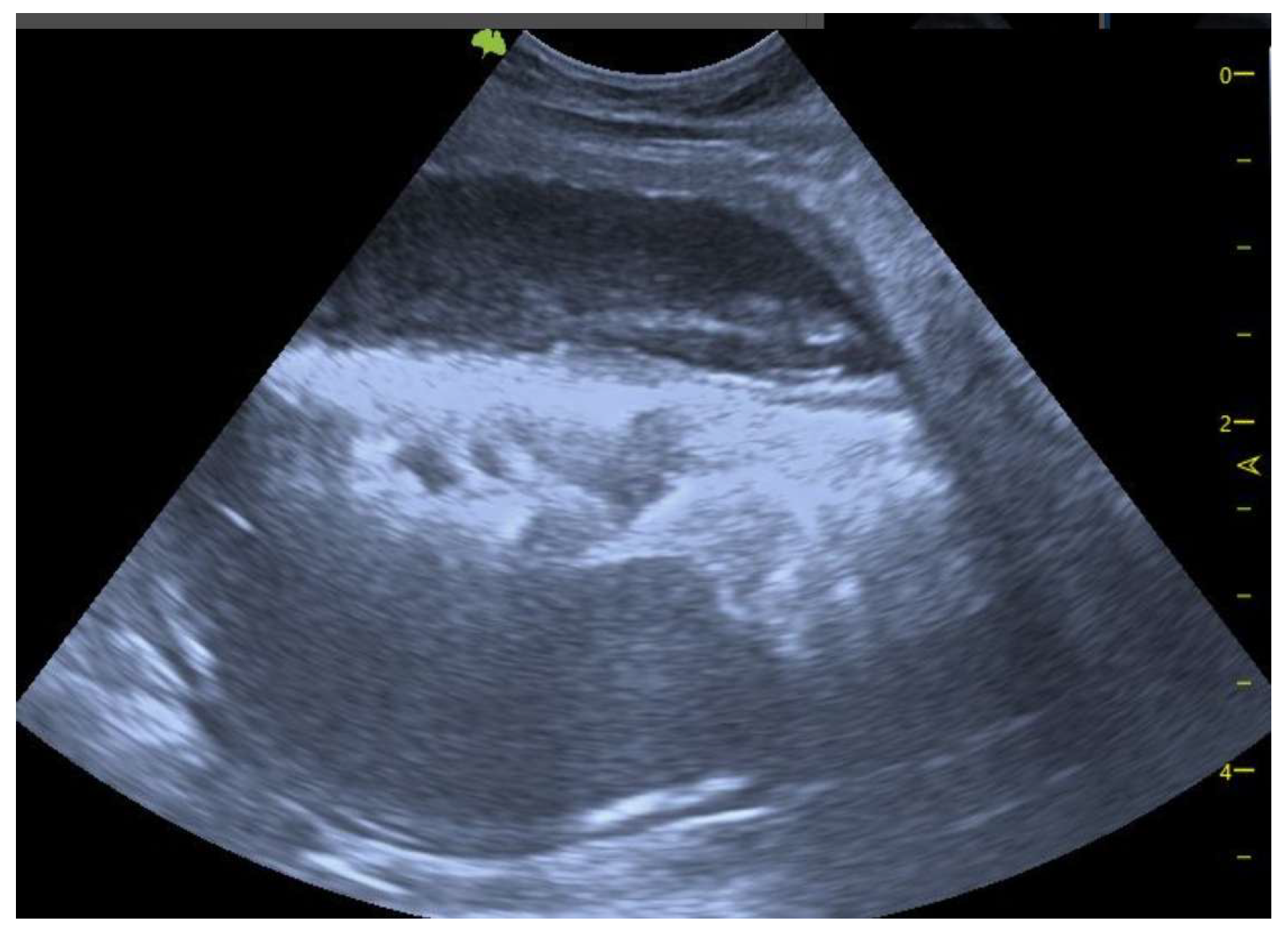
Figure 2.
Pseudomembrane removal in the bladder cavity during the operation and urine collection.
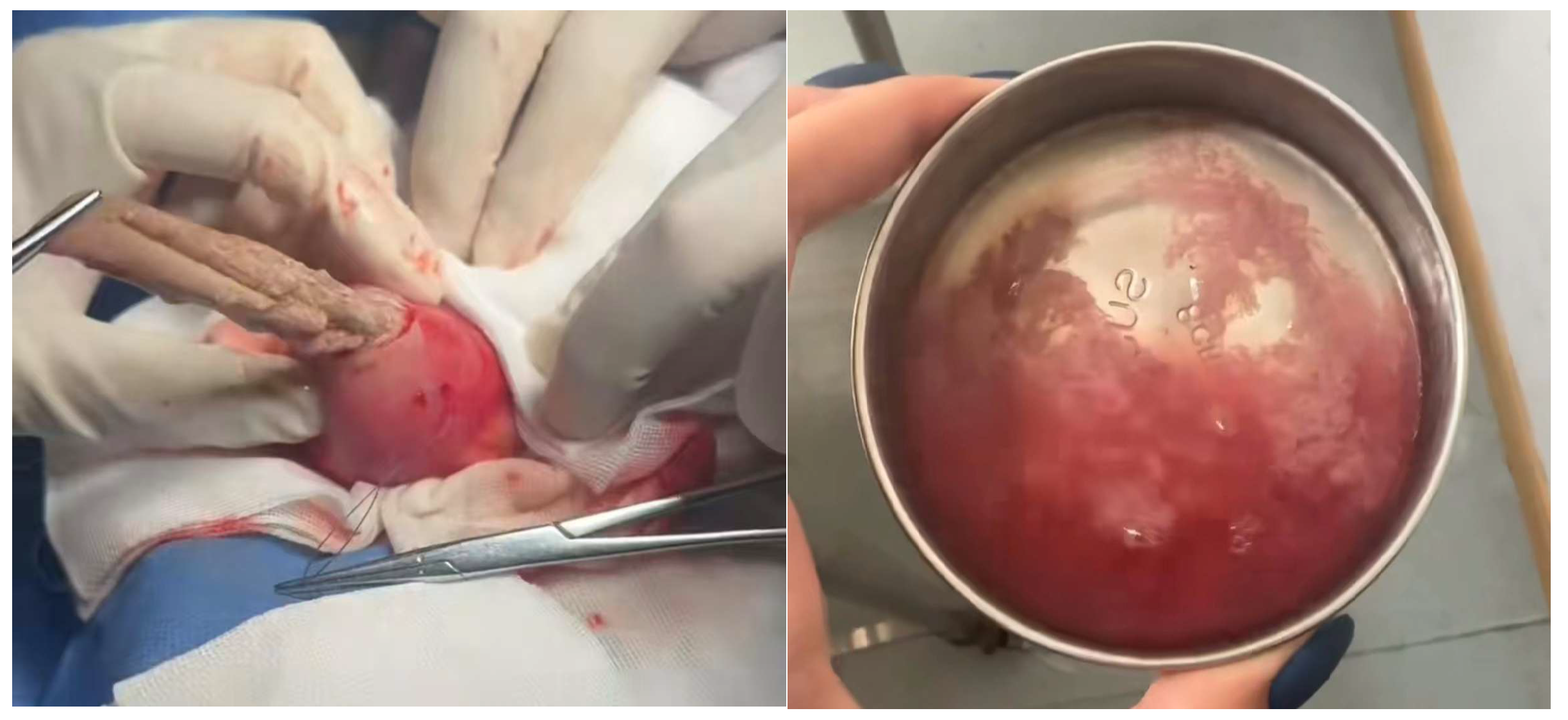
Figure 4.
Postoperative bladder ultrasound reexamination results.
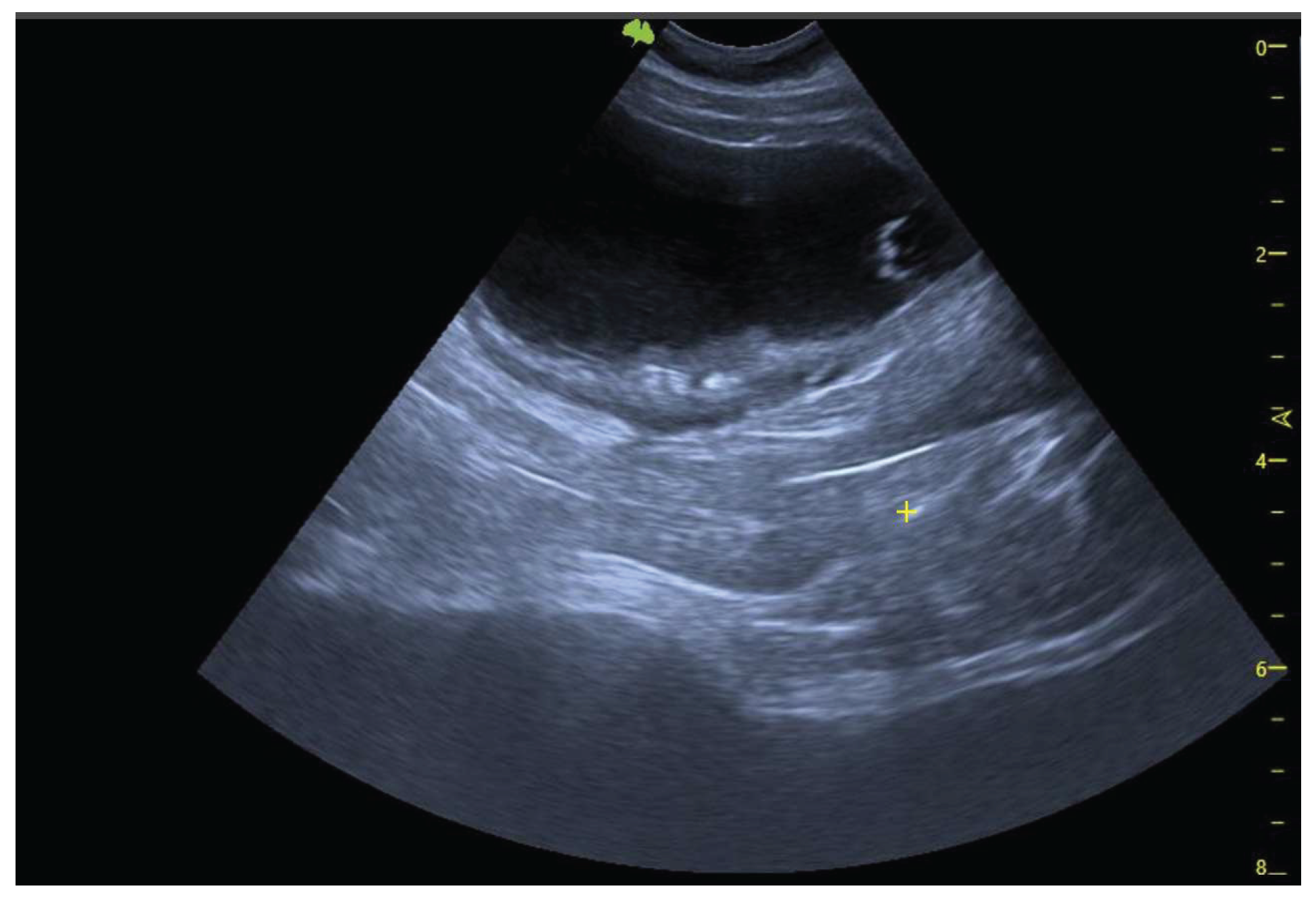

Table 1.
Key Urine Sediment Examination Indicators and Results of Feline Pseudomembranous Cystitis.
| Examination Category | Test Item | Abbreviation | Result/Unit | Reference Range | Positive Mark |
|---|---|---|---|---|---|
| Casts | Hyaline Casts | HYA# | 0.00 /μL | 0-0.8 /μL | - |
| Crystals | Calcium Oxalate Dihydrate Crystals | COD# | 0.00 /μL | 0-3 /μL | - |
| Cells | Red Blood Cells | RBC# | 13021.10 /μL | 0-25 /μL | ++++ |
| White Blood Cells | WBC# | 55712.20 /μL | 0-25 /μL | ++++ | |
| Transitional Epithelial Cells | TEC# | 5.98 /μL | 0-3 /μL | + | |
| Squamous Epithelial Cells | SEC# | 0.00 /μL | 0-7 /μL | - | |
| Pathogenic Microorganisms | Cocci | COS# | 0.00 /μL | 0-0 /μL | - |
| Bacilli | BAC# | 0.00 /μL | 0-0 /μL | - |
Table 2.
Drug Sensitivity Test Results (MIC Method).
| Drug | MIC Value (μg/ml) | Result |
|---|---|---|
| Penicillin | >32 | R |
| Cefoxitin | >32 | R |
| Vancomycin | <2 | S |
| Linezolid | <4 | S |
| Ciprofloxacin | >4 | R |
| Tetracycline | >16 | R |
Additional Notes: 1. Abbreviations: S = Sensitive, R = Resistant; 2. MIC method: The unit of MIC value is μg/ml; 3. Vancomycin and linezolid are the only sensitive drugs, which is consistent with the results described below.
Disclaimer/Publisher’s Note: The statements, opinions and data contained in all publications are solely those of the individual author(s) and contributor(s) and not of MDPI and/or the editor(s). MDPI and/or the editor(s) disclaim responsibility for any injury to people or property resulting from any ideas, methods, instructions or products referred to in the content. |
© 2026 by the authors. Licensee MDPI, Basel, Switzerland. This article is an open access article distributed under the terms and conditions of the Creative Commons Attribution (CC BY) license (http://creativecommons.org/licenses/by/4.0/).
Copyright: This open access article is published under a Creative Commons CC BY 4.0 license, which permit the free download, distribution, and reuse, provided that the author and preprint are cited in any reuse.


